
REVIEW · JAPANESE COOKING CLASSES
Kyoto: Morning Japanese Bento Cooking Class
Morning Bento in Kyoto is a treat.
This 3-hour class is a hands-on way to understand how Japanese lunch becomes portable art. I especially like the step-by-step English instruction and the calm pace, so even first-timers can keep up while learning the tricks behind a tidy bento. You might cook with instructors such as Mei, Mae, Tomoko, Yukari, Coco, or Ikari, depending on the session.
I also like that you finish with a bento lunch you made yourself, not just a demo you watch from the sidelines. Many classes include written recipes too, plus enough variety to make the morning feel like more than one simple dish.
One thing to consider: there is no hotel pickup, and the meeting place at Cooking Sun can be a bit tricky to find without a map app.
In This Review
- Key things to know before you go
- Why Kyoto Morning Bento Classes Feel Like a Cheat Code
- What You Cook, and Why Those Dishes Matter
- Cooking Sun in Kyoto, and How the Class Actually Runs
- Learning Sushi, Tempura, Teriyaki Chicken, and Miso Soup Step by Step
- Bento Lunch: The Part You Actually Care About
- Instructors and Small-Group Energy (Tomoko, Yukari, Mei, Mae, Coco, Ikari)
- Price and Value: Is $67 a Smart Kyoto Use of Time?
- Practical Tips So Your Bento Comes Out Looking Like Bento
- Who Should Book This Kyoto Bento Cooking Class
- Should You Book This Morning Bento Class or Skip It?
- FAQ
- What dishes do you learn to make in this Kyoto bento class?
- How long is the cooking class?
- Is the class taught in English?
- What is included in the $67 per person price?
- Is hotel pickup or drop-off included?
- Can you accommodate dietary requirements?
- Do you get recipes to take home?
- Where is the meeting point?
- Can I cancel, and can I reserve without paying right away?
Key things to know before you go
- Hands-on cooking in a short 3-hour window, with multiple dishes made from start to finish
- English-speaking instructors, with practical guidance while you cook
- A bento lunch you assemble and eat right after, so nothing feels wasteful or rushed
- Small-group energy, including sessions reported as small as 2 people and around 8 people
- Dietary flexibility when requested, including no-shellfish meal options
Cook it yourself instead. Other kitchens in Kyoto
- Sushi Making in Kyoto! Same-day bookings welcome!
★ 5.0 · 713 reviews - Kyoto: Ramen Cooking Class at a Ramen Factory with Souvenir
★ 4.9 · 532 reviews - Kyoto: Ramen, Gyoza, and Onigiri Cooking Class
★ 5.0 · 445 reviews - The Original Small-Group Sushi Making Class in Kyoto
★ 5.0 · 436 reviews
Why Kyoto Morning Bento Classes Feel Like a Cheat Code
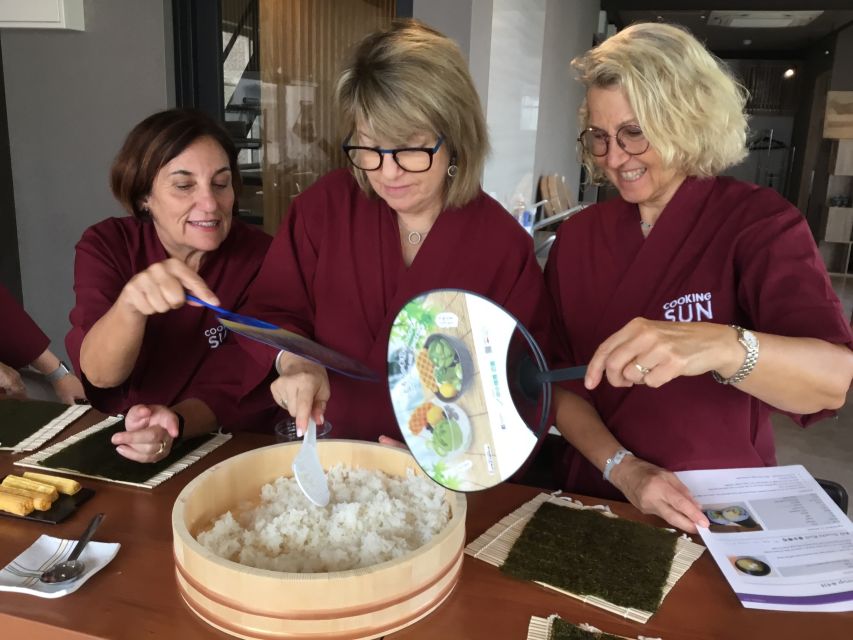
Kyoto mornings have a different mood. Streets are calmer. Your brain is awake. And a food class at this hour makes sense because you spend the rest of the day fueled and curious.
What I like about this type of bento cooking class is that it turns Japanese food culture into something you can actually do. You are not memorizing terms. You are building boxes, arranging flavors, and learning why Japanese lunch thinking is so methodical.
You also get that classic bento satisfaction: everything has a job. The salty meets the savory. Something bright adds balance. Something warm gives comfort. Then it all goes into one tidy container.
The bento concept itself comes from long ago. Bento is traced back to the late Kamakura Period, roughly 1185 to 1333, and it has grown into a daily staple. So when you pack your own, it feels less like a novelty and more like a living tradition.
What You Cook, and Why Those Dishes Matter
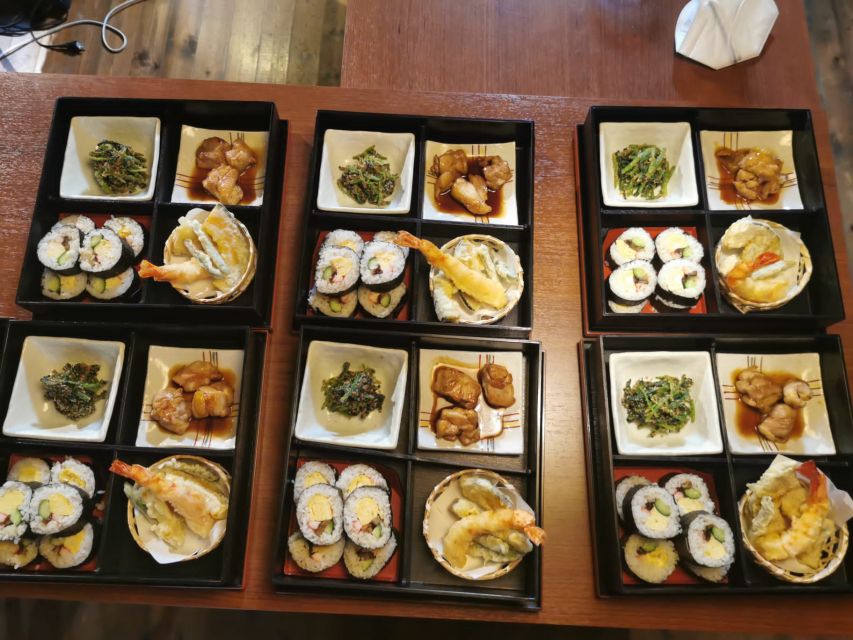
This class teaches you how to make a set of Japanese favorites that travel well in a bento format. You can expect instruction around these core items:
- Sushi
- Tempura
- Teriyaki chicken
- Miso soup
And if the menu feels bigger than you expected, that is normal. People have reported making around six or seven dishes in a single session, within the 2.5 to 3-hour timeframe. That means you get breadth, without losing the focus of bento-style cooking.
Here is why these dishes are smart choices for a first class in Kyoto.
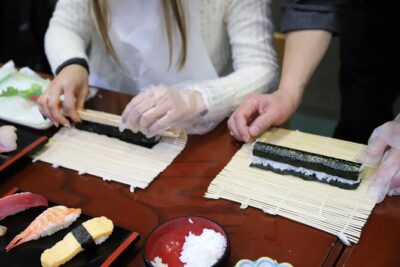
Sushi for structure and precision
Sushi teaches you to think in portions. It is about shaping, balance, and keeping components neat enough to live next to other foods. In bento, neatness is not just aesthetics, it helps flavors stay distinct.
Tempura for technique without drama
Tempura often intimidates people because it looks technical. But a good class breaks it down into steps you can follow, then plate it so it works in the box. You learn how texture becomes a feature, not just a result.
Teriyaki chicken for flavor that scales
Teriyaki is sweet-savory comfort. In bento form, it also teaches you how to keep a main protein satisfying without overpowering the other items. It is the kind of dish that makes you think, I can recreate this at home.
Miso soup for warmth and contrast
Miso soup gives you a contrast to fried or vinegary flavors. It also makes the meal feel complete. Even when your bento focus is on solid foods, soup grounds the whole experience.
Cooking Sun in Kyoto, and How the Class Actually Runs
You meet at Cooking Sun, Funayacho, Shimogyo Ward, Kyoto, Kyoto 600-8466. Since there is no hotel pickup or drop-off, you will want to plan a simple route and arrive a few minutes early. One review noted the location was not easy to find, which is a polite way of saying: check your map before you head out.
A typical flow goes like this:
- You arrive for the 2.5 to 3-hour session.
- You collect ingredients, plus your apron and utensils.
- Your chef demonstrates the steps and shares practical tricks for making bento dishes look good.
- Then you cook, following along.
- When everything is done, you eat your bento lunch.
One important detail that matters for expectations: this is not a knife-skills class. Some prep is already handled, so you can focus on cooking and assembly rather than spending the morning learning a dozen cutting techniques.
In many sessions, instructors provide helpful written recipes. People have also praised the class for being paced well, with enough time to make several dishes and then eat them.
Also, expect the room to feel active. You will smell ingredients, handle utensils, and watch how the chef keeps things organized. That is where the bento logic really clicks.
- PERFECT KYOTO 1-Day Bus Tour★ 5.0 · 13,518 reviews
- Kyoto: Fushimi Inari, Kinkakuji, Bamboo Grove 1 Day Bus Tour★ 4.8 · 4,316 reviews
- Kyoto: Tea Ceremony in a Traditional Tea House in Kiyomizu★ 4.9 · 3,519 reviews
- Kyoto Geisha Walking Tour: Gion District & Hidden Gems★ 4.7 · 3,273 reviews
- Kyoto: Tea Ceremony Ju-An at Jotokuji Temple★ 4.9 · 3,207 reviews
Learning Sushi, Tempura, Teriyaki Chicken, and Miso Soup Step by Step
If you worry you might not be a natural in the kitchen, you will probably relax here. The instruction is structured and clear, and the experience is hands-on.
For sushi, you learn how the pieces come together and how to keep everything looking intentional. Bento sushi is about compact portions, so the class tends to emphasize control, not speed.
For tempura, you learn the basics of working with ingredients and getting that signature texture. You also see how to plate it so it fits with the rest of the box. That last part matters, because tempura is one of those foods that can feel like it loses its magic if you treat it wrong at home.
For teriyaki chicken, the technique is about getting flavor right. You are building a dish you can repeat later without needing a fancy supply chain. Many people said the dishes were easy to recreate, and that is the point of choosing teriyaki for a class like this.
For miso soup, you learn a warm, comforting counterbalance. It also makes your meal feel more like a full Japanese lunch rather than a set of snacks.
Across these dishes, the chefs also share the small bento tricks: how to arrange so it looks appealing, and how to think about what goes together in a box. Those tricks are exactly why this kind of class is worth doing in Japan instead of just watching videos later.
Bento Lunch: The Part You Actually Care About
Then comes the best part: you eat what you make.
The lunch is a real meal, not a token bite. Reviews describe the bento as delicious, with people genuinely wanting to cook the items again at home. That is a good sign, because it suggests the class teaches flavors that survive repetition.
Another nice touch is that instructors can adapt meals when you ask. People have mentioned no-shellfish versions, and vegetarian options as well. If you have dietary needs, you should advise them when booking so the class can plan appropriately.
You also get the satisfaction of seeing your work assembled into something coherent. Bento is not just lunch, it is an edible “layout.” When you plate it yourself, you get why Japanese cuisine pays attention to order, color, and balance.
If you are bringing family, this is a strong choice too. Reports include parents cooking alongside twin 10-year-olds, with the class staying fun and accessible for kids.
Instructors and Small-Group Energy (Tomoko, Yukari, Mei, Mae, Coco, Ikari)
One theme shows up again and again: the instructors are patient, clear, and tuned to the group.
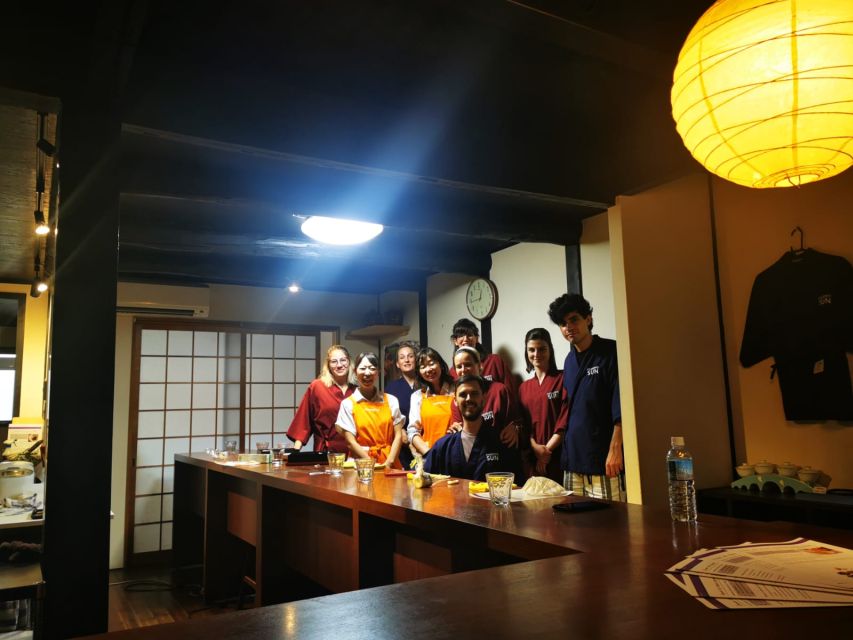
In reviews, instructors like Tomoko and Yukari have been praised for being excellent teachers, with lots of little tips. Others mentioned hosts such as Mei and Mae, and sessions with Coco and Ikari. People also noted multiple teachers in the kitchen at once, making it easier to get help without waiting.
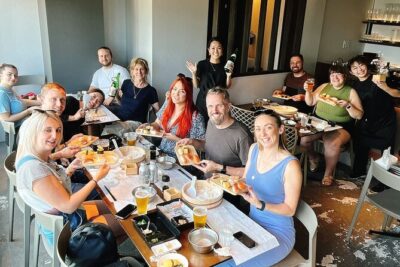
Small group size helps. Some people reported groups of about 8, others said 4, and at least one session was just 2 participants. Smaller groups typically mean:
- You get clearer feedback
- The chef can correct small mistakes quickly
- The class feels less like a factory and more like a cooking lesson
This matters for value. At $67 for 3 hours with ingredients and lunch included, the real worth is how well you are supported while you cook.
Price and Value: Is $67 a Smart Kyoto Use of Time?
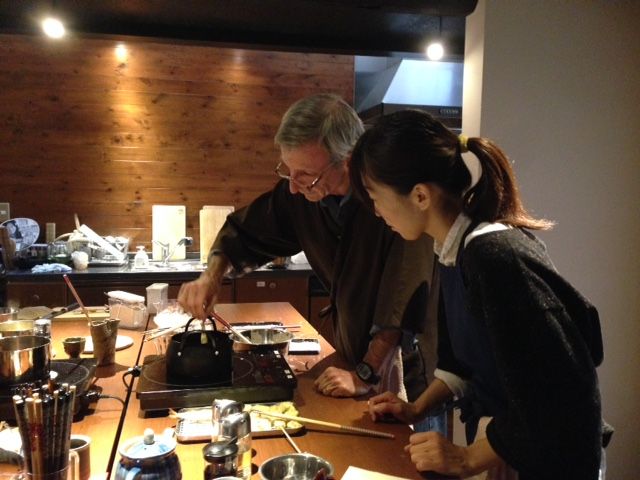
At $67 per person for about 3 hours, this class is not a bargain. But it is also not overpriced in a “tourist trap” way.
Here is what your money covers:
- Cooking class instruction
- Ingredients
- Apron and utensils
- Lunch
You also often leave with written recipes, plus practical know-how for how to recreate dishes at home. Some people even said they bought equipment used in class to keep cooking after they return.
So the value equation looks like this: you are paying for a guided kitchen experience that feeds you, gives you materials, and teaches you a repeatable skill. For many visitors, that is exactly what they want from Kyoto, not just another line on a sightseeing checklist.
The only real cost you should budget for is your time and transport to the meeting point. With no hotel pickup, you will need to get there yourself.
Practical Tips So Your Bento Comes Out Looking Like Bento
A few things will make your morning smoother.
Bring an appetite and keep your expectations realistic
You can make multiple dishes in 3 hours, but the class is still a group cooking rhythm. You will likely be working step by step, not rushing like a cooking show.
Expect some prep already done
This helps beginners a lot. One review specifically said it is not a knife-skills class. That means the focus is cooking and assembly, not sharpening your blade technique.
Plan for dietary questions early
If you are vegetarian or need no-shellfish, mention it when booking. People reported the chefs could accommodate these needs when asked.
Use the written recipes at home
Many people highlighted the recipes as helpful. When you get back, you will be glad you have them, especially for ingredient sourcing and timing.
Arrive ready to find Cooking Sun
Since there is no pickup, give yourself a little buffer. One review said the meeting point was not easy to find. A quick map check solves that.
Who Should Book This Kyoto Bento Cooking Class
This fits best if you want a Kyoto experience that is hands-on, useful, and genuinely fun.
Book it if you:
- Want to learn Japanese home-style cooking, not just eat it
- Like practical skills you can repeat after your trip
- Enjoy small-group instruction and clear English guidance
- Want a bento lunch experience that is more meaningful than a restaurant meal
- Are traveling with family and want an activity that can include kids
It might be less ideal if:
- You strongly prefer sightseeing over hands-on activities
- You dislike self-guided logistics since there is no hotel pickup
- You expect a heavy knife-focused technique course (this class is not framed that way)
Should You Book This Morning Bento Class or Skip It?
I think you should book it if you want an efficient Kyoto morning with a clear outcome: multiple Japanese dishes, a bento lunch you assembled yourself, and instructions plus recipes you can use later. At $67 for a 3-hour class that includes ingredients, utensils, and lunch, it is a fair value play when your goal is skill plus food, not just photos.
Skip it only if you do not care about cooking and just want to watch. Also, if you are not comfortable getting to the meeting point on your own, factor in that there is no hotel pickup.
If you like the idea of learning why bento works so well, and you want a morning that ends with a meal you made, this class is a solid choice.
FAQ
What dishes do you learn to make in this Kyoto bento class?
You learn how to make sushi, tempura, teriyaki chicken, and miso soup. Some sessions also include several additional dishes within the class time.
How long is the cooking class?
The duration is about 3 hours, with sessions running in a 2.5 to 3-hour range.
Is the class taught in English?
Yes. The instructor teaches in English.
What is included in the $67 per person price?
The price includes the cooking class, ingredients, apron and utensils, and lunch.
Is hotel pickup or drop-off included?
No. Hotel pickup and drop-off are not included.
Can you accommodate dietary requirements?
Yes, you should advise of any dietary requirements when booking. There have been examples of no-shellfish meal versions and vegetarian accommodation when requested.
Do you get recipes to take home?
Many participants mention that you receive helpful written recipes, and the guidance supports repeating the dishes at home.
Where is the meeting point?
The meeting point is Cooking Sun, Funayacho, Shimogyo Ward, Kyoto, Kyoto 600-8466.
Can I cancel, and can I reserve without paying right away?
Free cancellation is available up to 24 hours in advance for a full refund. You can reserve now and pay later to keep plans flexible.
Kitchens You Can Book Into
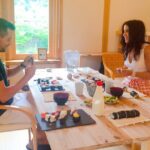
Newest Kyoto write-ups from the Loving Japan desk

Japanese Cooking Classes, side by side.
 ★ 5.0Sushi Making Tokyo Roll and Authentic Japanese Sushi ClassFrom $593,971 reviews
 ★ 4.9Roll and Authentic Sushi Making Class in AsakusaFrom $581,957 reviews
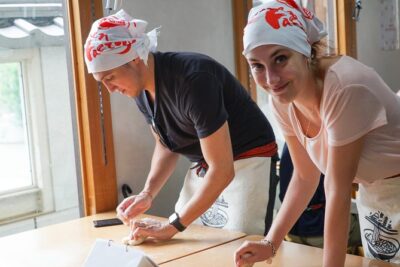 ★ 5.0Ramen Cooking Class at Ramen Factory in KyotoFrom $1311,937 reviews
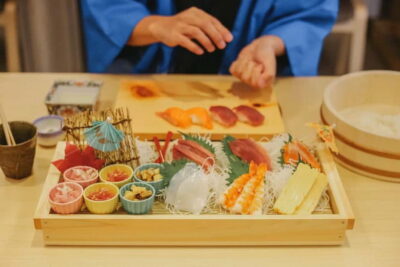 ★ 4.9Sushi Making Class in a Happi Coat near a Famous SpotFrom $421,377 reviews
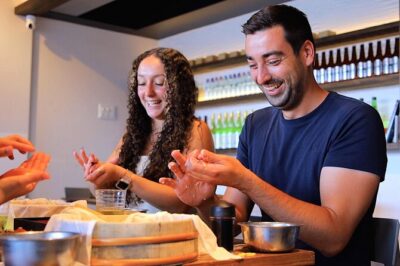 ★ 5.0Sushi Making Osaka Roll and Authentic Japanese Sushi ClassFrom $311,220 reviews
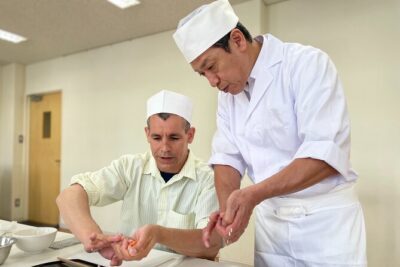 ★ 5.0Tokyo Sushi Making Class in Tsukiji with Professional ChefFrom $491,177 reviews
 ★ 5.0Ramen & Gyoza Cooking Class in Tokyo with Local Supermarket VisitFrom $122823 reviews
 ★ 5.0Tsukiji Fish Market Guided Tour and Sushi Making with Pro ChefFrom $104775 reviews
Filed on these lists too