
REVIEW · KYOTO TEA CEREMONIES AND MATCHA
Matcha Experience with of Japanese Tea Tasting in Tokyo
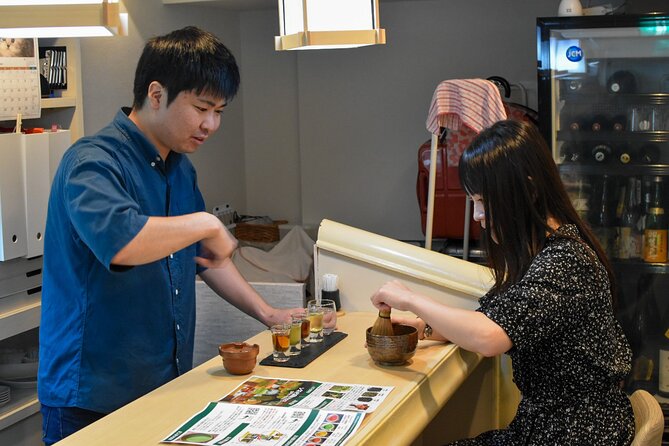
Fresh matcha, calm nerves, and real tea talk. This 1.5-hour small-group class (max five) takes you beyond ordering matcha at a cafe by letting you taste multiple Japanese teas side by side, then make your own matcha with a bamboo whisk. I especially liked learning from Chisei, a former tea farmer in Kyoto (and a practicing pharmacist), and watching how he connects farming choices to flavor in the cup.
Two things I loved most: the lineup is broad, you try matcha plus sencha, kabuse-cha, gyokuro, deep steamed sencha, hoji-cha, brown rice tea, and Japanese black tea, and you actually get to do the ceremony step, not just taste. The homemade sweets, made by Rina, also add a smart, practical pairing angle that you can repeat at home.
One possible drawback: if you only want a quick matcha latte and zero structure, this class may feel like more education than you expected for a $57.98 ticket.
In This Review
- Key Takeaways Before You Go
- Why This Tiny Tokyo Tea Class Feels Worth It
- What You Get for $57.98 (And Why It Adds Up)
- Meeting Point at Henn Na Hotel, Sports Bar Leaf (No Guessing)
- The 90-Minute Flow: Welcome, Compare, Sip, Then Make
- Welcome Drink: Seasonal First Sip and Quick Tea Setup
- The Tea Comparison Part: How Leaves, Color, and Aroma Teach You
- Black Tea and Homemade Sweets: Pairing With a Purpose
- Matcha Making With a Bamboo Whisk, Ousucha First
- Matcha Latte and Hojicha Latte: Two Ways to Enjoy Later
- Bonus Details That Make It Feel Real, Tea Leaves and Ponzu
- Chisei and Rina: The Duo That Turns Tasting Into Learning
- Who Should Book This Matcha Trip
- Should You Book It? My Honest Take
- FAQ
- How long is the Matcha Experience with Japanese Tea Tasting in Tokyo?
- What is the group size limit?
- What teas and drinks are included?
- Do I get to make matcha?
- Where do I meet the tour?
- Is free cancellation available?
Key Takeaways Before You Go
- Max group size of five means you get real Q and A, not a rushed demo
- Former Kyoto tea farmer Chisei explains cultivation and processing in plain, usable terms
- Side-by-side tasting lets you compare sencha, kabuse-cha, gyokuro, and more without guesswork
- Hands-on matcha (Ousucha) with a bamboo whisk gives you a repeatable skill
- Homemade sweets by Rina make the tasting feel like a full experience, not just sips
- Matcha and hojicha lattes are included, so the class covers both classic and modern cravings
Sit down somewhere quieter. Other tea rooms we booked
- Matcha Making Class in Tokyo with Authentic Japanese Sweets Set
★ 5.0 · 744 reviews - Tokyo: Traditional Tea Ceremony with a Tea Master
★ 5.0 · 528 reviews - Tokyo: Matcha Making Experience with Mochi Sweets in Asakusa
★ 4.9 · 388 reviews - Tokyo: Matcha and Kimono Experience
★ 4.7 · 219 reviews
Why This Tiny Tokyo Tea Class Feels Worth It
Tokyo is packed with tea stops, but most are one flavor at a time. This one is different. You start with a seasonal welcome drink, then move through a guided sequence where each tea has a purpose, a processing method, and a distinct taste you can actually notice.
I like the pace. In about 90 minutes, you go from tea history and cultivation basics to tasting, to making matcha. It’s the kind of “small effort, big payoff” activity that fits well between sightseeing blocks, without turning your day into a classroom marathon.
The group size matters too. With a cap of five, questions get answered clearly and directly. In this kind of hands-on food experience, that attention changes everything.
What You Get for $57.98 (And Why It Adds Up)
At $57.98 per person, you’re not paying for a plain beverage ticket. You’re paying for a full mini program: multiple tea varieties, matcha making, plus snacks and latte-style options.
Here’s the value in practical terms. A typical cafe matcha might cost about the same range if you order a few things, but you won’t get:
- a guided comparison of multiple teas from different processing styles
- training on matcha technique using a bamboo whisk
- pairing sweets designed to work with tea flavors
- enough time to ask questions and adjust for what you like
Also, the tour is app-friendly in the real world. You receive a mobile ticket, which is a tiny thing, but it helps when you’re moving around a busy city.
Meeting Point at Henn Na Hotel, Sports Bar Leaf (No Guessing)
You’ll meet at matcha tripJapan, on the 2nd floor of Henn Na Hotel. The address is Taito City, Kotobuki, 3-chōme 19-8, 2F スポーツバーLeaf.
Why this matters: it’s easy to plan around a hotel meeting point, and it’s near public transportation. Once you arrive, you can keep your travel momentum instead of spending time hunting down a vague storefront on a side street.
- Mt Fuji and Hakone 1-Day Bus Tour Return by Bullet Train★ 5.0 · 26,383 reviews
- 1-Day Tokyo Bus Tour★ 5.0 · 14,250 reviews
- Tokyo: teamLab Planets TOKYO Digital Art Museum Entry Ticket★ 4.6 · 9,779 reviews
- Mt Fuji & Hakone Cruise, Drum Show Bullet Train 1 Day from Tokyo★ 4.0 · 7,413 reviews
- Tokyo: Shinjuku Food Tour (13 Dishes at 4 Local Eateries)★ 5.0 · 6,603 reviews
The 90-Minute Flow: Welcome, Compare, Sip, Then Make
The session is built like a tasting menu. You’re not thrown into matcha right away. You’re trained to notice differences first, then you use that knowledge when you whisk.
You can expect these major steps:
- a welcome drink and an intro to what you’ll taste
- a comparison segment for multiple green teas
- homemade sweets with Japanese black tea
- hands-on matcha making (Ousucha)
- time to enjoy both matcha latte and hojicha latte
That structure is the difference between a fun sip and an experience you remember. You leave with a mental map of how Japanese tea styles differ, and you also leave with a method you can repeat at home.
Welcome Drink: Seasonal First Sip and Quick Tea Setup
You start with a seasonal welcome drink. During that first pour, Chisei explains what you’ll taste during the session. I like this because it gives you a simple lens before the tasting begins.
In hot weather, a cold welcome drink is a smart touch. One review specifically mentioned it helped during a heat wave, which is exactly what I look for in Tokyo tours: practical comfort, not just ceremony.
This part also sets expectations. You’ll learn enough to understand what you’re looking for in the cup, color, aroma, and the way each tea tastes slightly different even when they sound similar on a menu.
The Tea Comparison Part: How Leaves, Color, and Aroma Teach You
Next comes the comparison segment, where you taste in the “best way” for each tea. The key idea is that tea isn’t just a beverage, it’s a processed leaf. And processing changes everything.
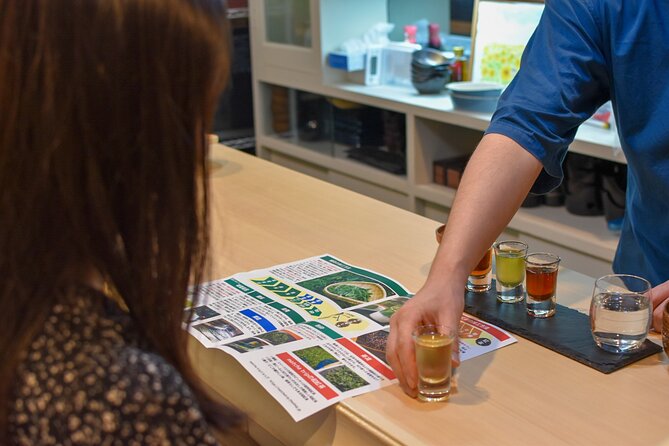
You’ll compare sencha, kabuse-cha, gyokuro, deep steamed sencha, brown rice tea (genmaicha), and hoji-cha. Before pouring, you look at the color and shape of the tea leaves. Then you make the tea and serve it so you can focus on color, fragrance, and taste.
This is one of the most useful parts for me, because it trains your senses. After you’ve watched tea leaves and then tasted them, you stop guessing. You start recognizing what “type” means in real life.
And yes, the pacing keeps it fun. It’s not endless lectures. It’s a sequence of tasting decisions you can actually make.
Black Tea and Homemade Sweets: Pairing With a Purpose
Then you shift gears. You enjoy Japanese black tea alongside homemade sweets chosen to match it.
This pairing matters because black tea and desserts can either clash or harmonize. Here, the sweet choices are intentional. The goal is to show you how tea can be dessert-friendly and how flavor balance changes when you use different tea profiles.
Rina’s sweets are repeatedly praised, including one review that called them the best thing on the whole trip. Even if you don’t go that far, it’s clear the snacks are part of what makes this class feel complete, not tacked on.
Matcha Making With a Bamboo Whisk, Ousucha First
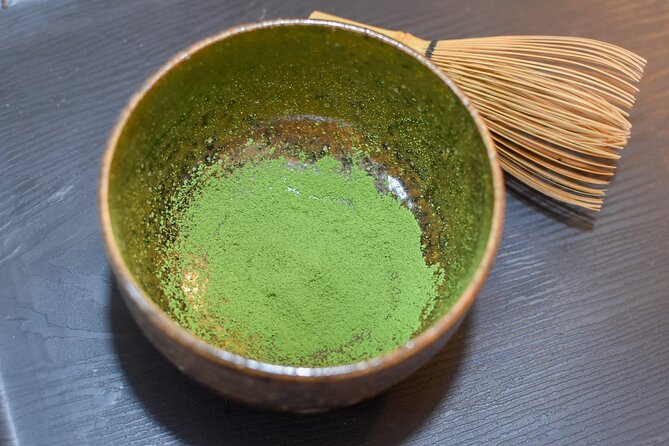
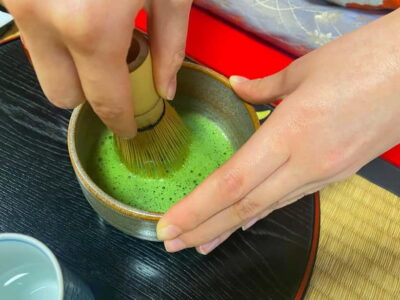
Finally, you make Ousucha (matcha) using a bamboo tea whisk.
Hands-on matcha is where the class becomes memorable. Watching matcha preparation is one thing. Doing it yourself is another. You learn how technique affects the drink, not just the ingredient.
A big practical bonus: the goal is not just to make one bowl. You’ll also be able to make matcha at home afterward. That’s the difference between a one-time souvenir experience and something you can bring into your daily routine.
If you’re a matcha beginner, don’t worry. You’re given enough structure to follow along, and because the group is tiny, questions don’t get lost in the room.
Matcha Latte and Hojicha Latte: Two Ways to Enjoy Later
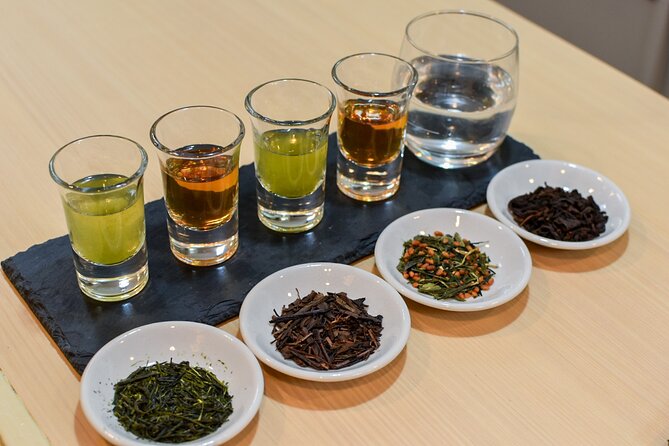
After the making portion, you get to enjoy both matcha latte and hojicha latte.
I like this because it acknowledges how people actually drink tea in modern Japan and abroad. Not everyone wants only ceremonial matcha. By including latte styles, you get a broader sense of how tea flavors can adapt.
Also, hoji-cha is roasted green tea, so its flavor tends to be calmer and warmer than brighter green teas. That makes it a nice counterpoint after the more intense matcha tasting.
Bonus Details That Make It Feel Real, Tea Leaves and Ponzu
One of my favorite “small but real” moments is the chance to eat tea leaves with ponzu, as taught during the session. It sounds unusual until you try it, then it makes sense as part of how tea can be experienced beyond sipping.
In food tours, I look for moments like this because they create a story you can share later. It also connects back to the bigger theme of the class: tea is an agricultural product with chemistry, texture, and flavor, not just a drink in a cup.
Chisei and Rina: The Duo That Turns Tasting Into Learning
This is run by Chisei and Rina, and their teamwork shows in how the experience flows.
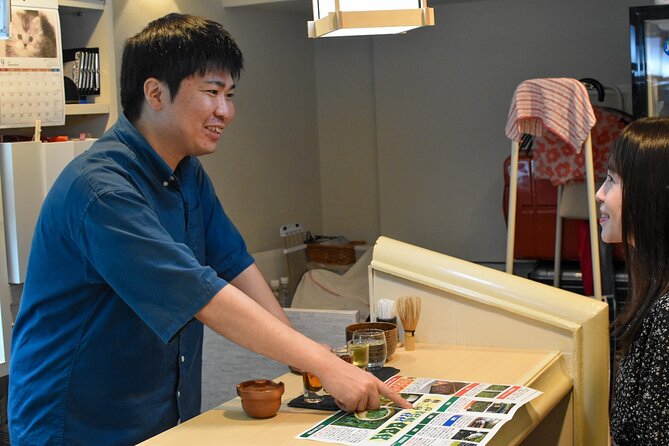
Chisei brings the tea-farming perspective from Kyoto, and he connects cultivation and processing to taste in a way that stays understandable. More than once, reviews highlight his clear explanations using diagrams and pictures. That kind of visual teaching is gold when you’re trying to remember differences across multiple teas.
Rina handles the sweets, and she also supports the session atmosphere. If you have allergy concerns, one review specifically said Chisei proactively asked about allergy conditions. So if you’re sensitive, tell them clearly so you can enjoy the snacks safely.
One more practical note: reviews mention English is strong. That matters because in a tasting class, nuance is where the fun is.
Who Should Book This Matcha Trip
This class is best for you if:
- you want more than a single cup and you like comparing flavors step by step
- you enjoy learning from someone with real background, not just reciting menu facts
- you want hands-on matcha making with a bamboo whisk
- you like tea but also like having dessert and latte options
- you prefer small-group experiences where questions actually get answered
It may not be ideal if:
- you’re in pure sightseeing mode and only want the quickest possible caffeine hit
- you dislike matcha flavors and don’t want to taste multiple teas
Good news: even if matcha isn’t your favorite drink, the tasting includes several other tea styles plus hojicha latte.
Should You Book It? My Honest Take
If you care about tea beyond the basics, this is a smart booking. For $57.98, you get a packed tasting sequence, homemade sweets, and actual matcha technique, all in a group limited to five. That combination is rare in Tokyo, where many food classes either oversell or underdeliver.
I’d especially recommend it early in your trip, or at least before you buy matcha souvenirs. You’ll taste your way into understanding what you like, and that makes shopping later much easier.
If you’re choosing between a matcha latte stop and this class, pick the class. You’ll leave with more than caffeine, you’ll leave with a set of senses and a method you can use back home.
FAQ
How long is the Matcha Experience with Japanese Tea Tasting in Tokyo?
It runs about 1 hour 30 minutes.
What is the group size limit?
The experience has a maximum of five travelers.
What teas and drinks are included?
You’ll be served multiple Japanese teas including hoji-cha, sencha, kabuse-cha, gyokuro, deep steamed tea, genmaicha (brown rice tea), and Japanese black tea, plus matcha varieties. You’ll also enjoy matcha latte and hojicha latte. The class includes homemade sweets.
Do I get to make matcha?
Yes. You’ll make Ousucha (matcha) using a bamboo tea whisk as part of the session.
Where do I meet the tour?
Meet at matcha tripJapan, 2F スポーツバーLeaf at Henn Na Hotel, 111-0042 Tokyo, Taito City, Kotobuki, 3-chōme 19-8.
Is free cancellation available?
Yes. You can cancel up to 24 hours in advance for a full refund, and changes within 24 hours are not accepted.
Kyoto by the Bowl

Newest Tokyo write-ups from the Loving Japan desk


Kyoto Tea Ceremonies and Matcha, side by side.
 ★ 4.9Tea Ceremony in a Traditional Tea House in KiyomizuFrom $493,519 reviews
 ★ 4.9Tea Ceremony Ju-An at Jotokuji TempleFrom $293,207 reviews
 ★ 4.345-Minute Tea Ceremony Lesson ExperienceFrom $222,378 reviews
 ★ 5.0World Heritage Kyoto & Nara Uji Authentic Matcha ExperienceFrom $1291,573 reviews
 ★ 4.9Tea Ceremony ExperienceFrom $251,426 reviews
 ★ 4.9Table-Style Tea Ceremony at a Kyo-MachiyaFrom $451,211 reviews
 ★ 4.8Kenrokuen Tea Ceremony ExperienceFrom $351,139 reviews
 ★ 5.0Kimono Tea Ceremony at Kyoto Maikoya, NISHIKIFrom $65911 reviews
Filed on these lists too