
REVIEW · KYOTO TEA CEREMONIES AND MATCHA
Tokyo: Traditional Tea Ceremony with a Tea Master
Matcha time, Tokyo style, in one calm hour. I like how this session is hands-on, with matcha you actually whisk yourself, and it also throws in a smart tasting lineup beyond just green tea, including wakocha.
Two standout parts for me are the step-by-step guidance from the tea master and the fact you get seasonal sweets from Ougiya while you taste. One thing to keep in mind: it is not suitable for wheelchair users, so if mobility is a concern, plan ahead.
In This Review
- Key things to love before you go
- Ocharu Tea Ceremony across from Tokyo University
- The one-hour flow: wakocha, Gyokuro tasting, and Ougiya wagashi
- Matcha making with a tea master’s step-by-step guidance
- How Gyokuro, wakocha, and Genmaicha differ on your tongue
- Certificate, group photo, and small extras that make it memorable
- Price and value for $38 per person
- Who this tea ceremony suits best, and who should plan differently
- Should you book this Tokyo matcha experience?
- FAQ
- Where is the meeting point for the Tokyo tea ceremony?
- How long does the tea ceremony last?
- How much does it cost?
- What languages are offered during the ceremony?
- What teas are included in the experience?
- Are Japanese sweets included?
- Do I receive anything to take home?
- Is this a pay-later booking?
- Is there free cancellation?
- Is the experience wheelchair accessible?
Key things to love before you go
- You get a guided flight of teas, from a welcome wakocha through Gyokuro and a Genmaicha finish.
- You make matcha yourself, using traditional tools, not just watching.
- Seasonal wagashi from Ougiya shows up alongside the tastings.
- A certificate and group photo make it feel like a true experience, not a quick demo.
- Location is easy: the tea room is across from Tokyo University.
- English instruction helps you follow every step and the reason behind it.
Sit down somewhere quieter. Other tea rooms we booked
- Matcha Making Class in Tokyo with Authentic Japanese Sweets Set
★ 5.0 · 744 reviews - Tokyo: Traditional Tea Ceremony with a Tea Master
★ 5.0 · 528 reviews - Tokyo: Matcha Making Experience with Mochi Sweets in Asakusa
★ 4.9 · 388 reviews - Tokyo: Matcha and Kimono Experience
★ 4.7 · 219 reviews
Ocharu Tea Ceremony across from Tokyo University
This is the kind of Tokyo cultural stop that works even when your schedule feels tight. The tea room is at Ocharu, and it is conveniently placed across from Tokyo University, so you are not hunting around the city for it.
To find it, look for the building with the green logo on the wall that says OCHARU. I’d show up about 5 minutes early for check-in, because this type of experience runs on a calm, timed flow.
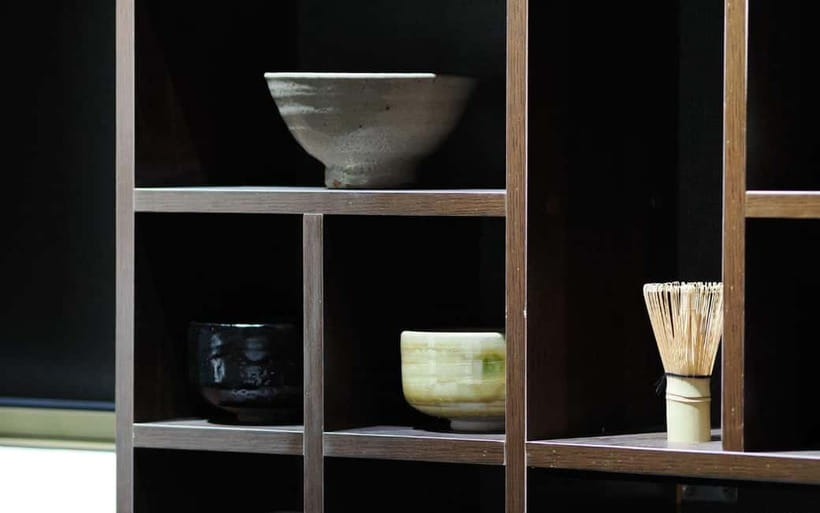
The room itself is designed for this kind of practice, so you do not feel like you are squeezing into a café corner. From what people describe, the vibe tends to be relaxed and friendly, with the tea master doing a good job keeping things clear and comfortable.
The one-hour flow: wakocha, Gyokuro tasting, and Ougiya wagashi
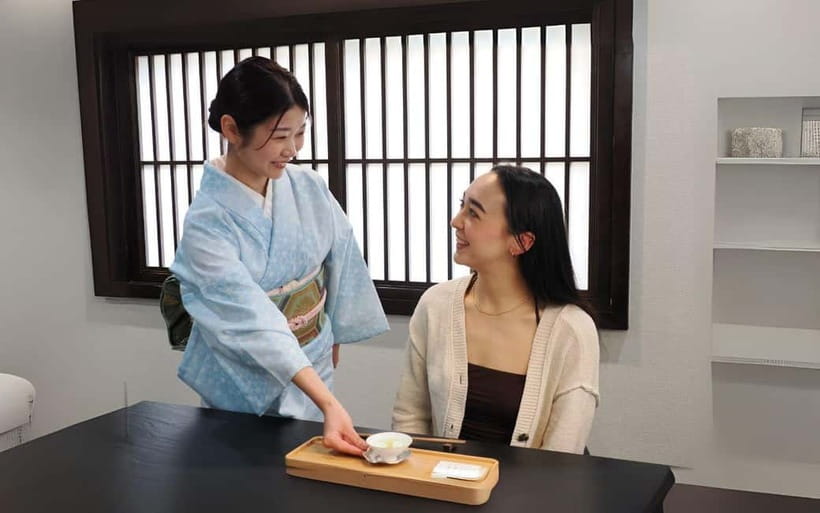
Your session starts with something approachable and distinctly Japanese: a welcome cup of wakocha, a Japanese black tea from Shizuoka. It comes with a traditional tea cake, and the pairing sets the tone. Instead of jumping straight into matcha, you warm up your palate first.
Next comes the main event tasting moment: the tea master prepares Gyokuro sencha, often described as top-grade green tea. You do not just sip. You get a chance to taste and pay attention to the tea leaves, which helps you understand why Gyokuro is treated like a special category rather than just another cup of green tea.
Then the session adds the sweet counterpoint with seasonal wagashi from Ougiya, a well-known confectioner. People repeatedly mention how the wagashi are a highlight, partly because they are seasonal and partly because they help you notice how the tea flavors change when you alternate tastes. It is a simple trick, but it makes the tea lessons stick.
If you care about small details, you will probably enjoy the parts where the tea master explains how to experience each step properly. Some participants note guidance on etiquette and even practical things like water temperature for best flavor, which is exactly the kind of knowledge you can use again at home.
Matcha making with a tea master’s step-by-step guidance
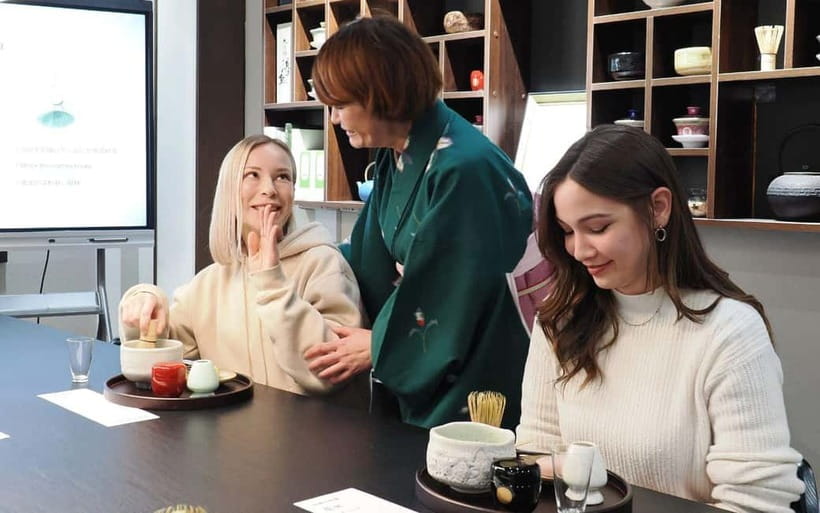
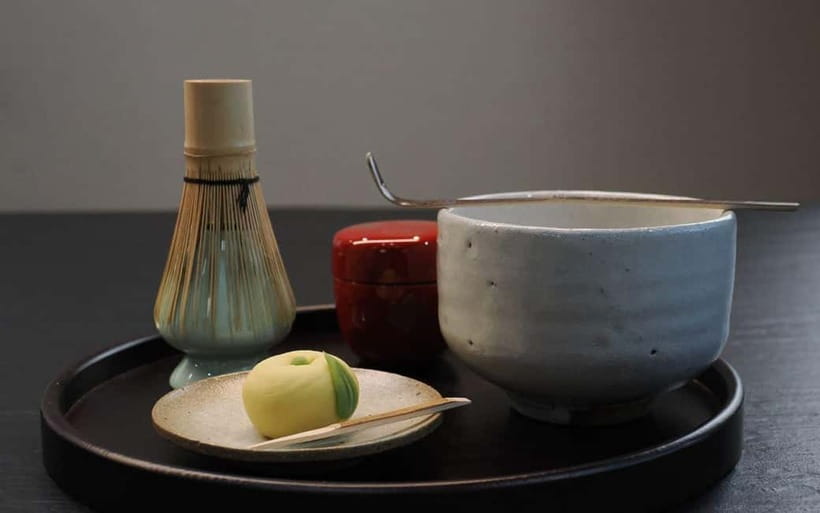
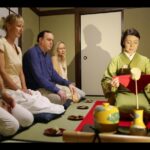
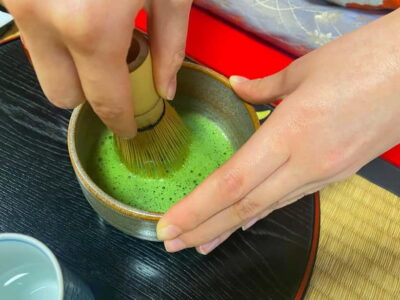
This is where the experience turns from tasting into doing. After the teas and sweets, you whisk your own matcha with the guidance of the tea master, using traditional utensils.
I like that this is not a hands-off workshop. People describe being allowed to try everything themselves, so you get that real muscle memory of how the whisking and technique feel. In sessions led by instructors like Ekiko, the delivery is often described as calm, clear, and interactive, which matters because matcha is one of those drinks where technique changes the result.
Expect the tea master to walk you through the process and what each tool is for. You are also guided on how to take in the flavor after preparation, not just how to complete the steps. That matters, because matcha can taste either flat or fresh depending on how it is made and how quickly you drink it.
Some participants also mention finishing touches like keeping certain utensils, such as chopsticks. Even if that detail is not guaranteed every time, it’s the kind of small souvenir that feels practical, not gimmicky.
- Mt Fuji and Hakone 1-Day Bus Tour Return by Bullet Train★ 5.0 · 26,383 reviews
- 1-Day Tokyo Bus Tour★ 5.0 · 14,250 reviews
- Tokyo: teamLab Planets TOKYO Digital Art Museum Entry Ticket★ 4.6 · 9,779 reviews
- Mt Fuji & Hakone Cruise, Drum Show Bullet Train 1 Day from Tokyo★ 4.0 · 7,413 reviews
- Tokyo: Shinjuku Food Tour (13 Dishes at 4 Local Eateries)★ 5.0 · 6,603 reviews
How Gyokuro, wakocha, and Genmaicha differ on your tongue
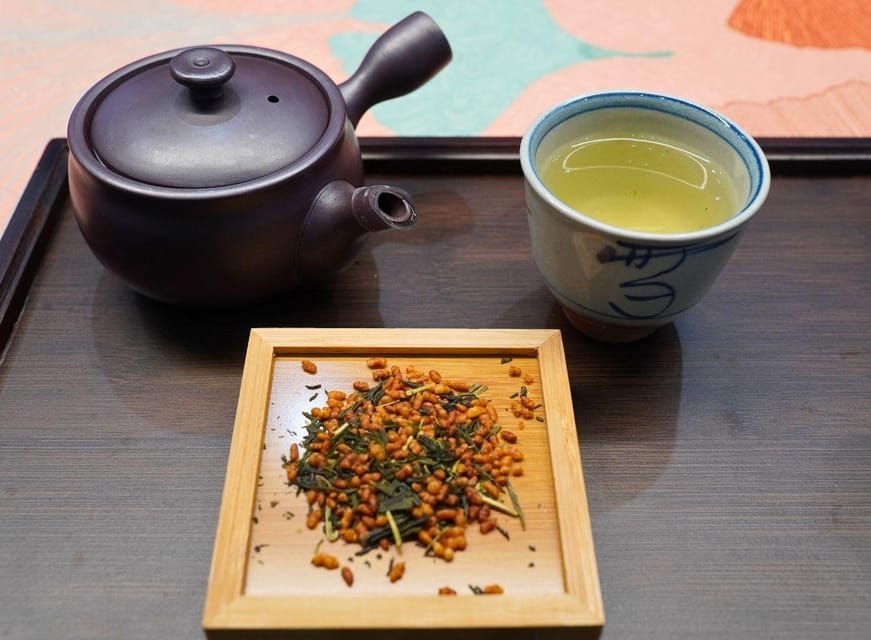
One reason this ceremony feels worth it is the variety. You are not just sampling one tea style. You taste four distinct directions of Japanese tea culture in about an hour.
Start with wakocha, a Japanese black tea. It is fruity and floral in character, and it pairs well with the welcome cake, which helps you get your bearings fast before the deeper green teas.
Then you move to Gyokuro, which many people associate with higher grade, delicate green flavors. Participants also mention learning distinctions between types of tea, like how sencha differs from matcha and what makes each one worth treating differently. This is the kind of lesson that turns you from a casual drinker into someone who can talk about tea without guessing.
Finally, the session ends with Genmaicha, a comforting blend of sencha and roasted rice from Niigata Prefecture. That roasted note gives you a softer landing after the more focused green tea flavors. It is a smart finish, because it helps your palate recover and makes the whole hour feel complete, not like you are just powering through.
If you are the type who likes to understand why something tastes the way it does, you may really enjoy how the tea master frames each tea by origin and purpose, not just flavor description.
Certificate, group photo, and small extras that make it memorable
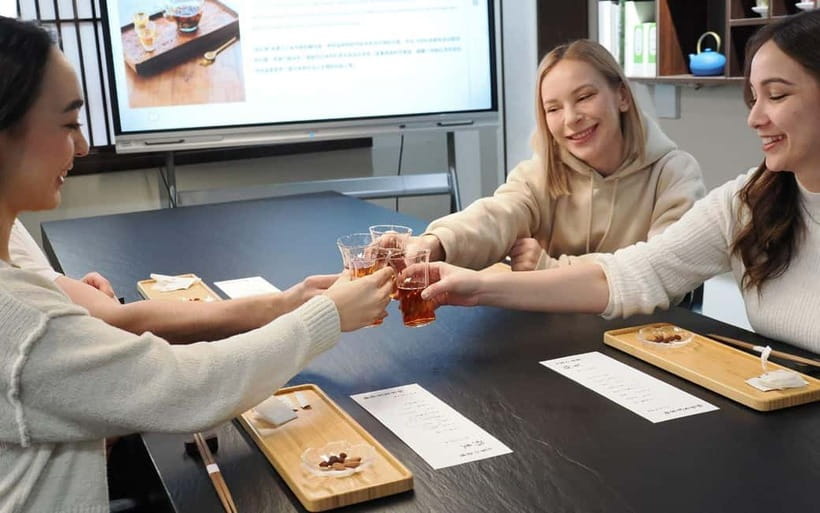
At the end, you get something tangible: a certificate of completion plus a group photo. People describe this as a nice keepsake, and it gives the session a clear ending point, not an abrupt walk-out after the last sip.
One detail that stands out from feedback is how personal it can feel. For example, one participant reports that the certificate included their name written in Japanese. Even if yours looks different, the key point is that you leave with proof that you actually did the steps, not just watched.
There may also be an option to grab more tea later. One review notes a small café downstairs where you can drink matcha and buy tea to take home. That’s not the main reason to book, but if you know you will want to keep the memory going, it’s a convenient extra.
If you want to add a light plan around it, the location makes that easy. You are across from Tokyo University, so you can often stitch this stop into a broader day around the nearby areas.
Price and value for $38 per person
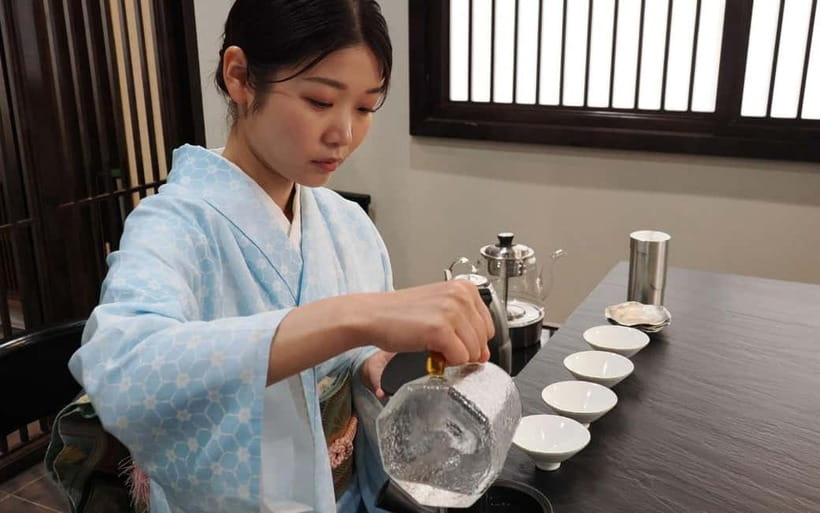
At $38 per person, this is priced like a hands-on cultural workshop, not like a quick tasting table. The value is in the package: multiple teas, seasonal wagashi, and a matcha session where you actively participate.
What makes it feel fair is that you are not paying for one single drink. You are paying for guided pacing across a sequence: welcome tea and cake, Gyokuro tasting, seasonal wagashi from Ougiya, your own matcha whisking, and a Genmaicha finale. Plus, you get the certificate and group photo.
If you’ve ever done tastings that feel like a sales pitch, this is a different vibe. Reviews lean toward calm, friendly instruction and plenty of chances to ask questions. People also point out that it helps both first-time tea drinkers and more experienced tea lovers, since the session includes comparisons and practical technique notes like water temperature.
In short: if you want more than a sip, you are in the right place. If you only want a quick green tea fix, you might find a cheaper option nearby, but you would miss the guided hands-on part.
Who this tea ceremony suits best, and who should plan differently
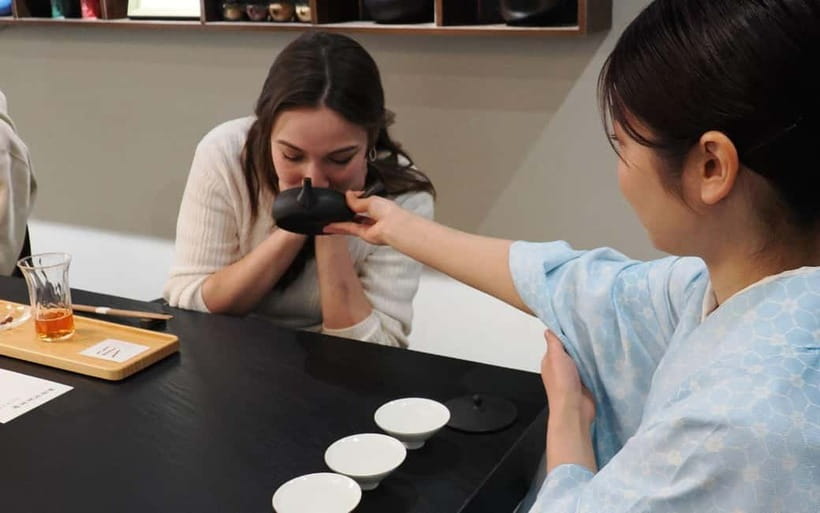
This works especially well if you want a Tokyo cultural activity that does not feel rushed. Descriptions emphasize a relaxed tone, with tea masters who engage, explain clearly in English, and keep it conversational.
It can also suit people who are new to tea. The ceremony structure helps you learn without prior knowledge, because each step builds on the last. Some people even mention that non-tea lovers enjoyed it, which is a good sign.
If you are traveling with kids, one review mentions a 10-year-old included in the session, and the guide made an effort to include him. That suggests it can work for families, as long as the child can sit for about an hour and participate respectfully.
The main “no” is mobility. The activity is not suitable for wheelchair users, so if that applies to you, look for a different format.
Also consider language comfort. The instructor is listed as English, and most descriptions praise communication clearly. Still, if you are very sensitive to accents, you may want to go in knowing you’ll rely on instruction and demonstrations more than perfect vocabulary.
Should you book this Tokyo matcha experience?
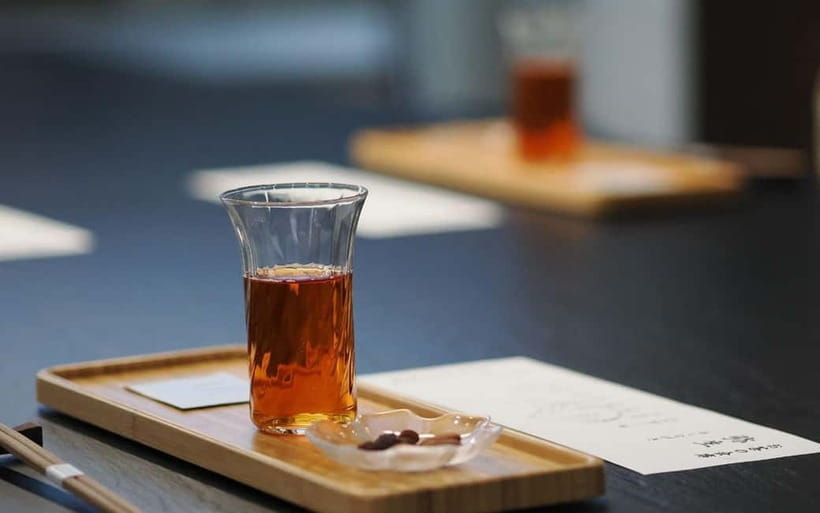
I think you should book if you want a real tea workshop with variety, not a quick tourist stop. It is a good fit when you care about technique and want to leave with something to remember, like the certificate and group photo.
Skip it if your only goal is grabbing a drink and moving on. This session takes about 1 hour, and it is designed for patient participation, with multiple tastings and a guided matcha-making step.
A final practical tip: plan it earlier in the day or when you have time to sit and enjoy the flavors. That hour works best when you let it be calm, because the point is learning how tea is meant to be experienced.
FAQ
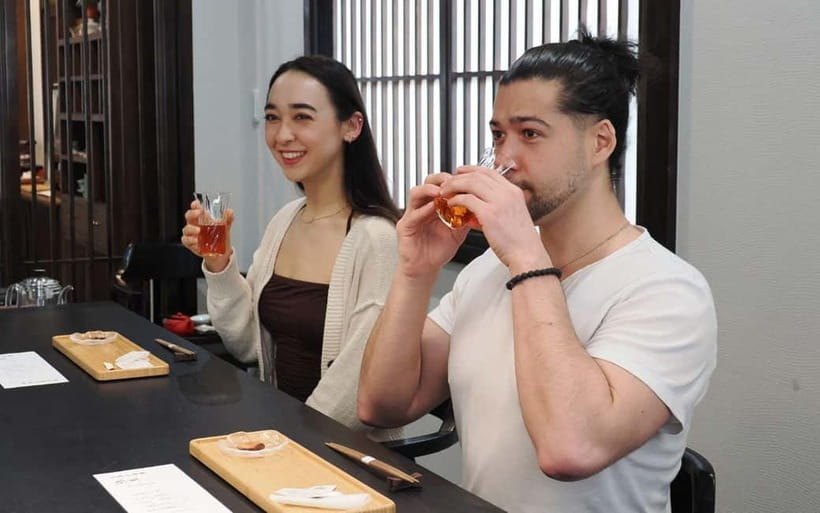
Where is the meeting point for the Tokyo tea ceremony?
The ceremony is at the Ocharu building, and the meeting point is easy to spot thanks to a green logo on the wall that says OCHARU. It is located across from Tokyo University.
How long does the tea ceremony last?
The experience lasts about 1 hour.
How much does it cost?
The price is $38 per person.
What languages are offered during the ceremony?
The instructor teaches in English.
What teas are included in the experience?
You get a welcome cup of wakocha, you taste Gyokuro sencha, you make and enjoy matcha, and you finish with a cup of Genmaicha.
Are Japanese sweets included?
Yes. You’ll enjoy seasonal wagashi sweets from Ougiya during the tasting.
Do I receive anything to take home?
Yes. You get a certificate and a group photo as keepsakes.
Is this a pay-later booking?
Yes. You can reserve now and pay later.
Is there free cancellation?
Free cancellation is available up to 24 hours in advance for a full refund.
Is the experience wheelchair accessible?
No. It is not suitable for wheelchair users.
Kyoto by the Bowl

Newest Tokyo write-ups from the Loving Japan desk


Kyoto Tea Ceremonies and Matcha, side by side.
 ★ 4.9Tea Ceremony in a Traditional Tea House in KiyomizuFrom $493,519 reviews
 ★ 4.9Tea Ceremony Ju-An at Jotokuji TempleFrom $293,207 reviews
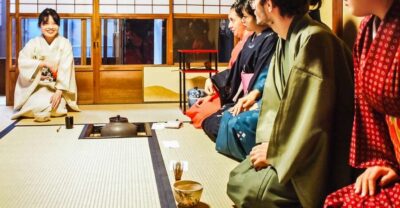 ★ 4.345-Minute Tea Ceremony Lesson ExperienceFrom $222,378 reviews
 ★ 5.0World Heritage Kyoto & Nara Uji Authentic Matcha ExperienceFrom $1291,573 reviews
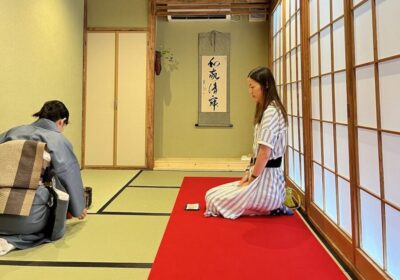 ★ 4.9Tea Ceremony ExperienceFrom $251,426 reviews
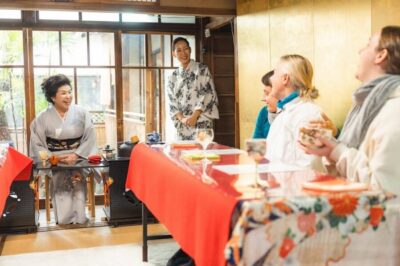 ★ 4.9Table-Style Tea Ceremony at a Kyo-MachiyaFrom $451,211 reviews
 ★ 4.8Kenrokuen Tea Ceremony ExperienceFrom $351,139 reviews
 ★ 5.0Kimono Tea Ceremony at Kyoto Maikoya, NISHIKIFrom $65911 reviews
Filed on these lists too