
REVIEW · SUMO WRESTLING EXPERIENCES
Tokyo: Family Sumo Workshop & Live Wrestling Show with Lunch
Tokyo’s sumo ring is closer than you think. In Ryogoku, you get former pro wrestlers, a family-style training session, and a chance to step into the dohyo yourself. I love the hands-on drills (shiko, teppo, suri-ashi) because they teach you what looks simple but takes real power, and I love the included lunch that actually tastes like sumo culture, not just a snack. One possible drawback: you will be on your feet and you may be invited to volunteer in the ring, so it helps to be comfortable with light physical activity.
This is also one of those rare Tokyo activities where the value comes from time. At about 105 minutes, you see a live exhibition, get photo time with the pros, then sit down for a hearty mini chanko hotpot that can be adjusted for many diets if you plan ahead.
In This Review
- Key things I’d circle before you go
- Ryogoku’s family sumo experience, from sacred ring to crowd energy
- The first half: stepping into the ring and learning the rituals behind sumo
- The live exhibition: seeing sumo at speed before you try it
- When you step into the dohyo: the padded suit challenge (and what it really teaches)
- Lunch time: mini chanko nabe and how it fits sumo training culture
- Price and value: what $60 buys you in central Tokyo
- Who should book this sumo workshop, and who might want a different plan
- Practical details that make the morning smoother
- Should you book this Tokyo family sumo workshop?
- FAQ
- How long is the Tokyo family sumo workshop with lunch?
- What is included in the $60 per person price?
- Do we have to fight in the ring?
- What should kids know before participating?
- Is the experience wheelchair accessible?
- What dietary options are available for lunch?
- What should I wear and do I need to remove shoes?
- Where do we meet and how do we find the guide?
Key things I’d circle before you go
- Ryogoku ring access: you’re inside the clay dohyo area with former pros, not watching from far away
- Real training basics: shiko leg stomps, teppo arm thrusts, and suri-ashi sliding footwork
- Live speed exhibition: you learn the rhythm of sumo before you try anything yourself
- Your turn in the ring: optional drills for spectators, but challengers can wear a padded suit
- Mini chanko lunch: protein-forward hotpot with vegan and allergy-friendly options on request
Morning practice or an evening show. Both reviewed
- Tokyo: Sumo Show and Dining Experience
★ 4.8 · 2,742 reviews - the SUMO show
★ 5.0 · 1,960 reviews - Tokyo Shinjuku Sumo Show & Experience with Photo
★ 5.0 · 1,750 reviews - Tokyo: Sumo Show and Experience in Shinjuku
★ 4.8 · 1,001 reviews
Ryogoku’s family sumo experience, from sacred ring to crowd energy
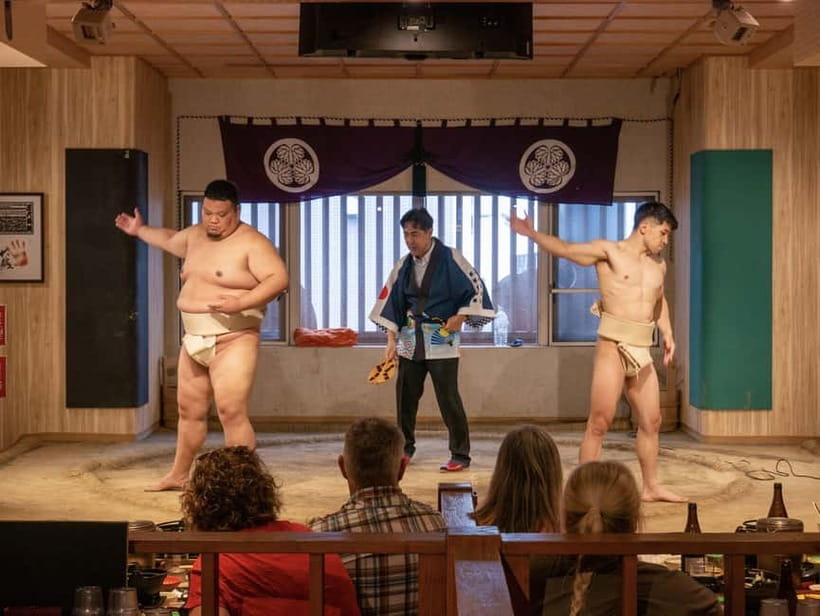
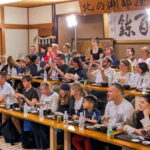
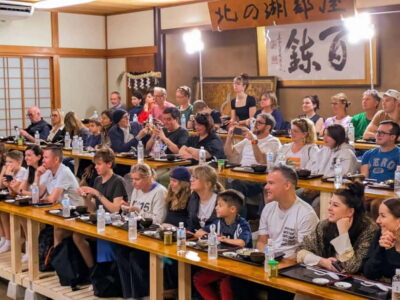
Ryogoku is where sumo feels most grounded. The neighborhood has that old-school, ritual-first vibe, and this activity leans into it by taking you into an intimate setting rather than hiding you behind distance and barriers. Former pro wrestlers guide the experience, and a bilingual MC explains what you are seeing, so the show lands for both kids and adults.
What makes it work well for families is the pacing. You get instruction, then a demonstration at full speed, then a chance to participate. That flow matters because sumo can be intimidating if you only watch. Here, you’re given the basics early, so when the action hits, you understand what to look for.
You should also know what to expect from the atmosphere. The ring has a lot of physical presence, and you’ll hear the impact and the slap of technique as the wrestlers show how matches move. If your group likes sports you can actually do, this format hits that sweet spot.
The first half: stepping into the ring and learning the rituals behind sumo
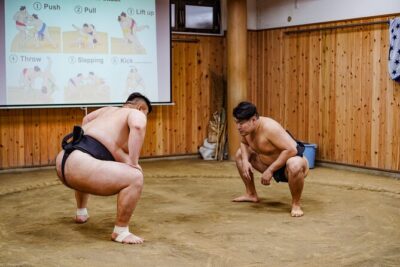
The start of the session focuses on the traditions and the mechanics. The MC breaks down what the rituals mean and why certain movements are part of the culture, like the salt tossing and the shiko stomps. Even if you are not a sumo fan yet, you get enough context to stop treating it like random theatrics and start seeing it as practiced order.
Then you get the basics. Expect three core elements:
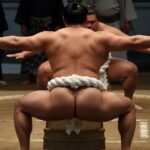
- Shiko: the leg stomps. You learn the stance and what the movement is trying to accomplish.
- Teppo: the arm thrusts. It’s a surprisingly technical way to generate power and pressure.
- Suri-ashi: sliding footwork. This is where you feel how foot placement controls the whole exchange.
Former pros demonstrate first, then they help you try. I like that the instruction is simple enough to follow in real time, but it still feels authentic. It’s not a generic “stand here and copy the pose” moment. You get corrections and guidance geared toward what sumo actually uses in bouts.
One practical note: ring drills are optional. Spectators can stay seated and watch, and you can film as you like. If you have a kid who is nervous, you can start in observer mode and switch later if they want to try the padded suit segment.
The live exhibition: seeing sumo at speed before you try it
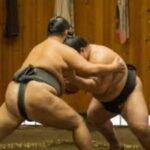
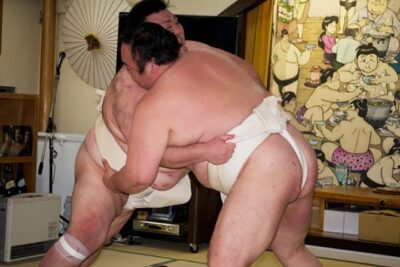
After the basics, the session turns into a full-speed exhibition match. This part is worth your attention even if you plan to skip the ring participation. It’s where you learn the rhythm of sumo: the pacing, the engagement, the way wrestlers take control with stance and timing instead of flashy tricks.
You’ll also notice how loud and physical sumo is. The contact is not background noise. It’s a big part of the sport’s character, and the ring setting makes it feel immediate. The MC keeps translating what matters so you know whether you’re watching a setup, a push, a grip battle, or a footwork adjustment.
If you are bringing kids, this is often the moment they start laughing and cheering, because the movement looks bigger and faster once you’ve just practiced the fundamentals. Reviews also consistently highlight how entertaining the wrestlers and the MC were, with humor mixed into clear instruction. That blend makes the exhibition feel less like a lecture and more like a family show with real sports training underneath.
Make something to take home. Other workshops
- Tokyo Shinjuku Chopsticks Making Class★ 5.0 · 1,763 reviews
- Chopstick Making Workshop in Ginza★ 4.8 · 1,366 reviews
- Tokyo Sumo Experience: Chanko & Mochi with a Former Pro★ 4.8 · 567 reviews
- Kintsugi Experience: Art of Golden Joinery in Tokyo★ 5.0 · 467 reviews
- Tokyo Chopstick Making Workshop with Artisan★ 5.0 · 466 reviews
When you step into the dohyo: the padded suit challenge (and what it really teaches)
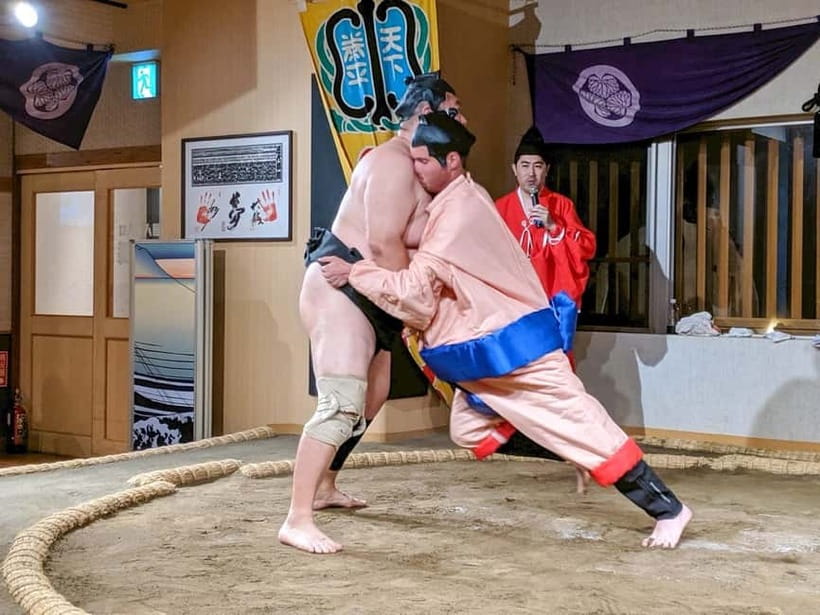
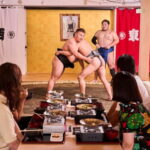
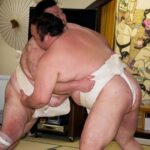
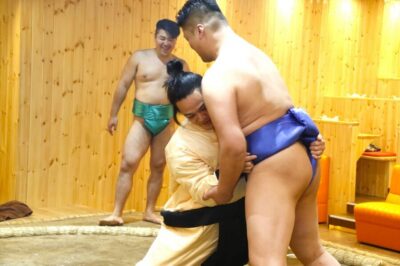
At the heart of the experience is the chance to challenge a wrestler in the ring. The format is set up to be safe and funny, not brutal. You may see volunteers go in wearing a padded sumo suit, and then the pros demonstrate how to engage without turning it into a dangerous collision.
This is where your expectations should be grounded. A sumo wrestler, especially one with pro training, will have serious strength and balance. Your goal is not to win. Your goal is to feel how leverage works: how foot position, grip, and timing decide everything.
That’s why it’s such a good family activity. Even if you get pushed around, you learn something real. You learn how quickly your body reacts when someone has better stance and better movement. And you get the sort of moment you remember long after you’ve forgotten the exact schedule of Tokyo attractions.
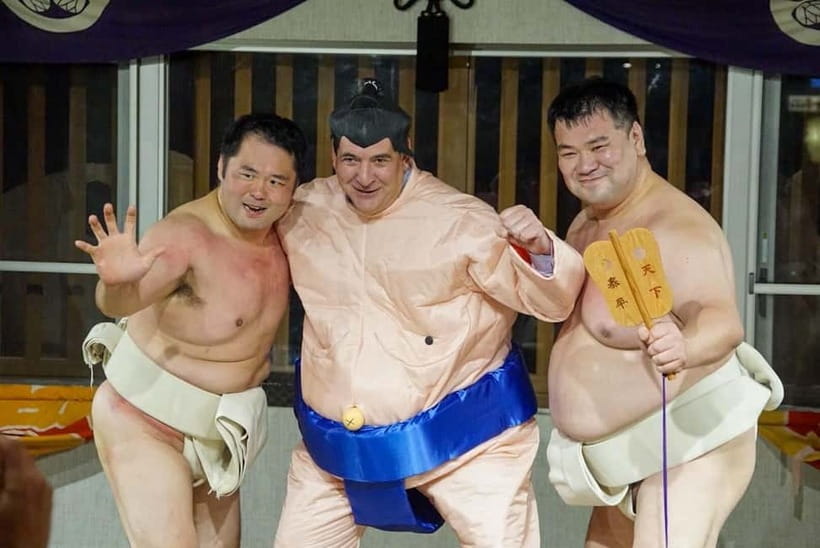
You also get photo time. Families can snap pictures with the wrestlers using their own cameras and phones, and some families even film or join the action if the staff allows it. If you care about capturing the day, this is better than waiting in line outside a stadium for a quick photo.
Lunch time: mini chanko nabe and how it fits sumo training culture
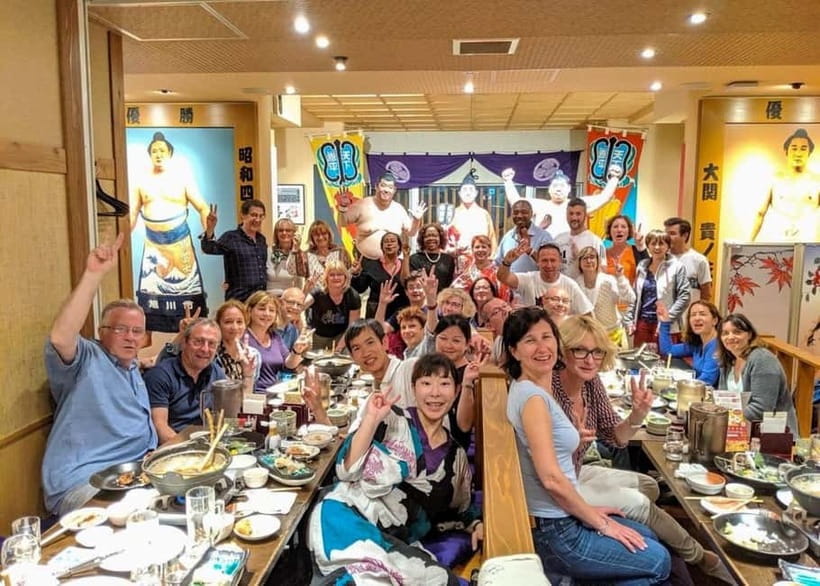
After the ring work and photos, you sit down for mini chanko hotpot. Chanko is the classic sumo meal, built around warm broth, protein, and vegetables. The food here is hearty, and people consistently comment that it’s more than enough, with portions large enough that you can actually feel satisfied for the rest of your day.
What makes lunch especially practical for families is the flexibility. They offer vegan, vegetarian, and allergy-friendly options if you request them in advance. That means you’re less likely to split the group or scramble for separate meals nearby.
Taste-wise, chanko is the kind of comfort food that makes sense after physical activity. It’s hot, filling, and designed for sustained energy, not a light bite. If you want the full effect, I’d plan to arrive ready for appetite. More than one family recommendation includes the idea that you should not eat a heavy meal right before, because the hotpot is filling.
Dietary and halal note to keep you confident:
- They can ensure no pork or alcohol is used, but they do not provide official halal certification.
- If you require strict cross-contamination avoidance, they cannot guarantee that level of separation.
So, for many diets, it works well. For the most strict medical or religious requirements, you’ll want to be upfront ahead of time.
Price and value: what $60 buys you in central Tokyo
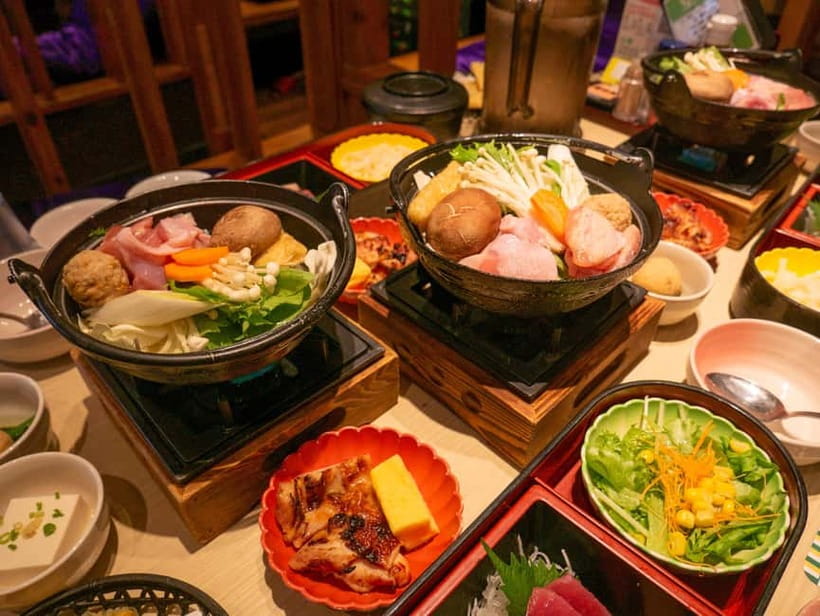
At $60 per person, the biggest question is whether it feels like a performance-only activity or something you actively participate in. Here, it leans strongly toward participation.
That price includes:
- Admission and ring access
- Former pro wrestlers with English support
- Interactive training, including equipment for ring challenges (padded suit)
- Mini chanko hotpot lunch with diet options on request
- Photo time with wrestlers
In Tokyo, that combination is where the value comes from. Many experiences give you one “wow moment,” like a show or a workshop. This gives you multiple moments tied together: you learn the moves, you watch them applied, you try a version of the challenge, and you eat a meal that connects directly to the sport’s culture.
Also, the time is compact. If you are planning a half-day block, about 105 minutes is easy to fit between other plans. You avoid the all-day grind that some sports workshops require.
One budgeting tip: you’ll still need to handle transport to the venue, and alcohol and extra menu items are not included. But since lunch is part of the package, you’re already covering the biggest cost piece for many families.
Who should book this sumo workshop, and who might want a different plan
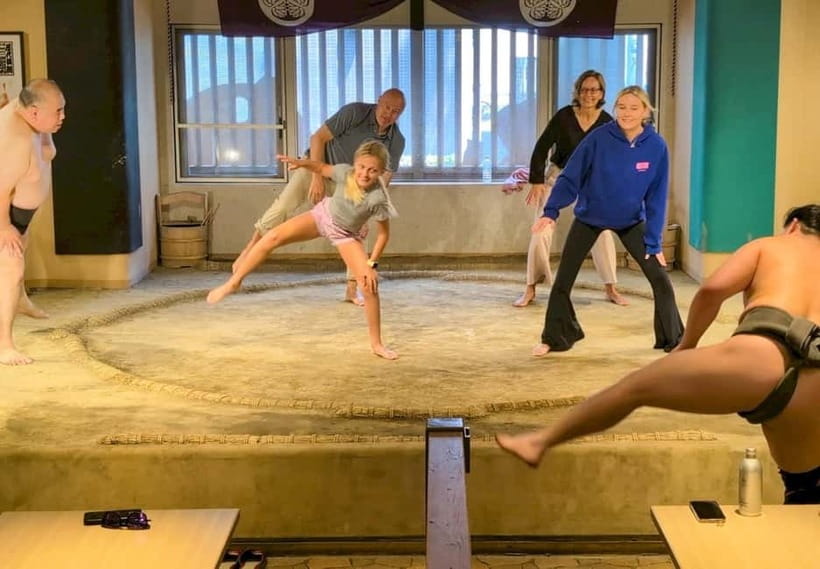
This works best if your group wants hands-on fun with authentic sports context. It’s a strong pick for families because the MC keeps things clear, the wrestlers bring personality, and kids can participate without needing prior sports experience.
It also suits adults who love Tokyo culture but want something active, not just museum time. The experience gives you specific movements to remember, like shiko and suri-ashi, and it teaches you why those matter in a match.
You might want to think twice if your group hates physical activities altogether. Even if you stay seated, the experience includes standing sections, and the ring challenge is available to volunteers. Volunteer challengers should be in good health, and you should dress for movement.
For travelers who are picky about food safety details, plan ahead. Ask about your dietary needs at least 48 hours before the tour. Vegan and allergy-friendly options are available, but cross-contamination cannot be guaranteed for strict avoidance.
Practical details that make the morning smoother
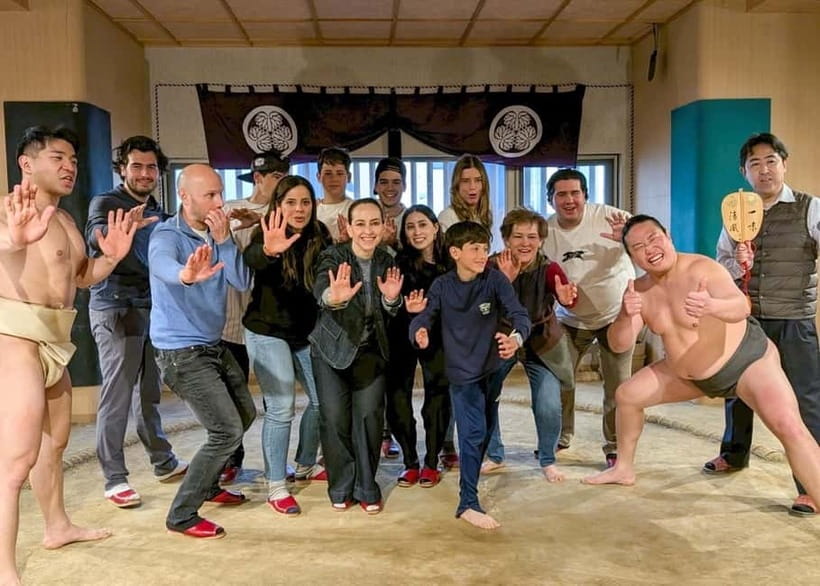
A few things help you avoid stress on arrival.
Start by aiming to be there before you enter. You should wait in front of the shop until the stated start time and not go inside early. Your guide meets you in front of the face-in-hole photo board, and the guide will be holding a smartphone displaying AlvaJapan.
For footwear, expect to remove your shoes once you’re in the ring area. Wear loose sportswear that you can move in. This matters because stomps, arm thrusts, and sliding footwork require mobility.
If you get turned around, use the provided WhatsApp contact to reach the team. Events can also depend on minimum participants, so if you really want this to happen for your travel dates, consider the private option.
Finally, cameras are welcome. You get free photo time with the wrestlers, and you can film during the program from your spot.
Should you book this Tokyo family sumo workshop?
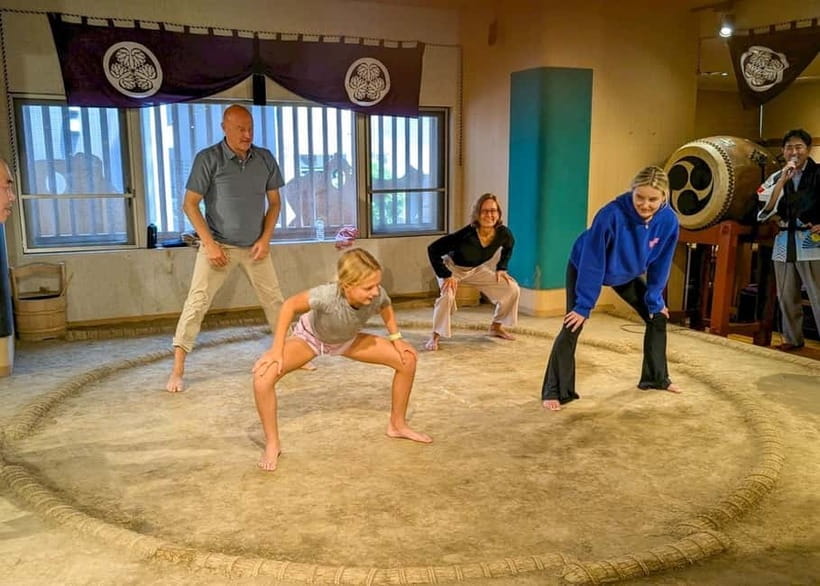
Book it if you want a Tokyo activity that combines real sports technique, humor, and a meal that actually fits the culture of sumo. It’s one of the better value formats because your ticket includes ring access, instruction, a live match, participation options, and lunch in one compact morning block.
Skip or reconsider if your group needs guaranteed strict dietary separation, or if nobody in your party wants any physical participation at all. Also, if you are looking for a passive spectator experience only, you may be happier with a standard sumo event ticket where you can just sit and watch all day.
If you match the vibe, you’ll leave with the kind of memory that feels personal: learning the basic moves, seeing how they look at full speed, then trying your own version in the ring, followed by a warm bowl of chanko.
FAQ
How long is the Tokyo family sumo workshop with lunch?
The experience is about 105 minutes total.
What is included in the $60 per person price?
Admission to the sumo venue and ring access, former professional wrestlers, English instruction and bilingual commentary, interactive training and ring challenge equipment, mini chanko hotpot lunch (with multiple diet options), and free photo time with the wrestlers.
Do we have to fight in the ring?
No. Ring drills are optional. Spectators can remain seated, film, and watch. Volunteer challengers may participate using a padded suit.
What should kids know before participating?
Children can participate as part of the group activities. Children under 5 are not provided meals under the child rate, and you should book children under 5 at the adult rate if they require meals. Children aged 6 and older cannot be booked at the child rate.
Is the experience wheelchair accessible?
Yes, the tour is wheelchair accessible.
What dietary options are available for lunch?
They offer mini chanko hotpot with vegan, vegetarian, halal, and allergy-friendly options on request, arranged in advance (at least 48 hours). They do not have official halal certification, and they can ensure no pork or alcohol is used, but they cannot guarantee avoidance of cross-contamination for strict requirements.
What should I wear and do I need to remove shoes?
Loose sportswear is recommended. Shoes must be removed on the ring.
Where do we meet and how do we find the guide?
You meet in front of the face-in-hole photo board at the shop. Your guide will be holding a smartphone displaying AlvaJapan. If you get lost, you can contact them on WhatsApp.
Made by Hand, and Yours to Keep

Practice Rooms and Show Nights
Newest Tokyo write-ups from the Loving Japan desk


Sumo Wrestling Experiences, side by side.
 ★ 4.8Sumo Show Experience with Chicken Hot Pot and a PhotoFrom $1036,678 reviews
 ★ 4.8Sumo Show and Dining ExperienceFrom $792,742 reviews
 ★ 5.0the SUMO showFrom $891,960 reviews
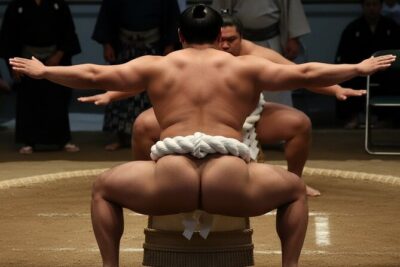 ★ 5.0Tokyo Shinjuku Sumo Show & Experience with PhotoFrom $791,750 reviews
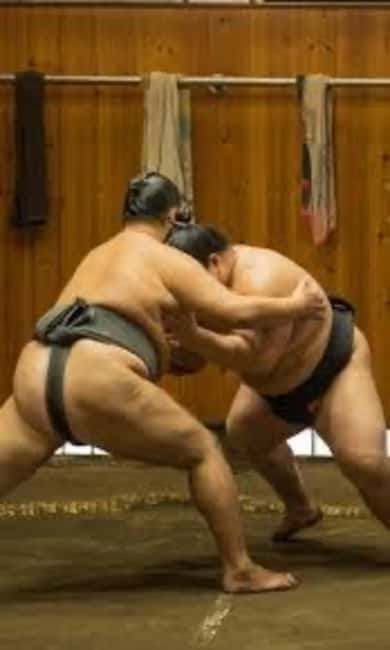 ★ 4.8Sumo Show and Experience in ShinjukuFrom $691,001 reviews
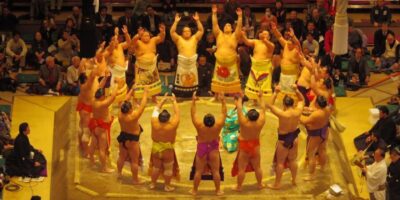 ★ 4.6Sumo Tournament Tour with Chair Seat TicketsFrom $141753 reviews
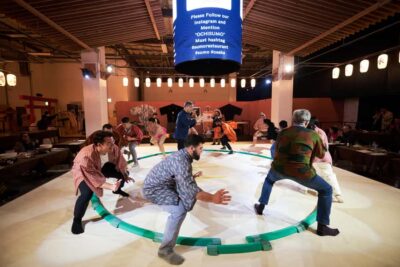 ★ 4.5Sumo Show & Experience w/ Optional Kimono & Hot PotFrom $77609 reviews
 ★ 5.0Authentic Sumo Experience in Tokyo: Enter the SanctuaryFrom $171603 reviews