
REVIEW · KYOTO TEA CEREMONIES AND MATCHA
Tokyo: Matcha Tasting and Making Experience
Matcha tastes different depending on where it grows. This Tokyo matcha tasting and making experience turns that idea into something you can actually taste, compare, and recreate at home. You start with a short intro, then work through multiple matcha types from different production areas before you make your own cup with a bamboo whisk.
I like two big things here. First, I love how the tasting is built around direct comparison, so you can notice shifts in color, fragrance, and flavor without guessing. Second, I love the hands-on part, because you do not just drink, you learn how to make matcha (and you get to choose which one you like best). One consideration: this is a class, not a long sit-down café hang, so if you want unlimited freeform sipping and zero instruction, you might feel a bit too scheduled.
In This Review
- Key highlights worth marking on your map
- Entering the Henn na Hotel, Asakusa Tawaramachi meeting point
- Welcome drink plus matcha history you can use
- The tasting flight: 10 matcha types from 5 production areas
- Ceremonial grade and matcha sold under the matcha name
- Choosing your favorite before you whisk
- Making your own Ousucha with a bamboo tea whisk
- Why this part is worth your time
- Matcha latte, hojicha latte, and sweets after the serious part
- Price and logistics: is $63 for 90 minutes good value?
- Who should book, and who might not love it
- Final verdict: should you book this Asakusa matcha class?
- FAQ
- Where is the meeting point for the matcha class?
- How long does the experience last?
- How much does it cost?
- Is the class taught in English?
- How many people are in the group?
- What will I taste during the experience?
- Can I make matcha myself?
- What drinks and sweets are included?
- Is there free cancellation?
Key highlights worth marking on your map
A 90-minute matcha format that stays focused
Matcha from 5 production areas, compared side by side
Guided by a former Kyoto tea farmer, Chisei
You whisk your own Ousucha after picking your favorite
Matcha latte, hojicha latte, and sweets included
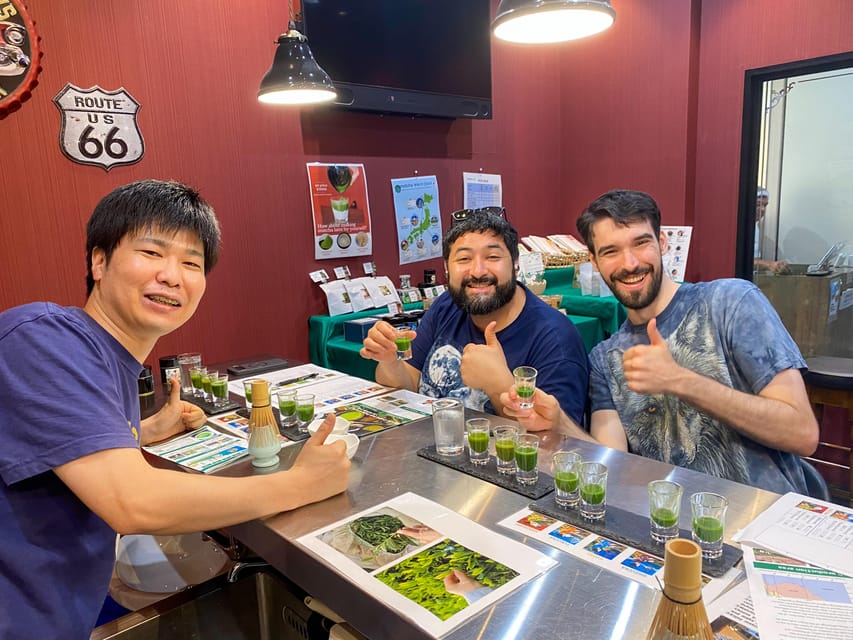
Small group limited to 5 participants, taught in English
Sit down somewhere quieter. Other tea rooms we booked
- Matcha Making Class in Tokyo with Authentic Japanese Sweets Set
★ 5.0 · 744 reviews - Tokyo: Traditional Tea Ceremony with a Tea Master
★ 5.0 · 528 reviews - Tokyo: Matcha Making Experience with Mochi Sweets in Asakusa
★ 4.9 · 388 reviews - Tokyo: Matcha and Kimono Experience
★ 4.7 · 219 reviews
Entering the Henn na Hotel, Asakusa Tawaramachi meeting point
This experience meets at a café inside Henn na hotel Asakusa Tawaramachi. The quick way to find it: go into the hotel, look for FamilyMart on the 1st floor, then head to the 2nd floor for the class.
The practical reason this matters is time. You only have 90 minutes, so you want to be in the right spot promptly, not wandering while your tasting clock runs out. Also, the group is small, so once you miss the start, you can end up standing around while everyone else starts comparing.
Welcome drink plus matcha history you can use
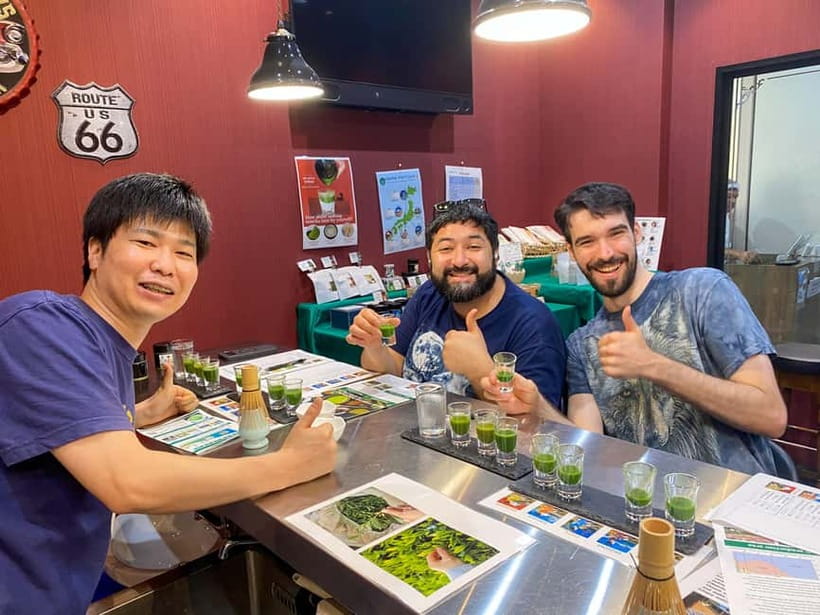
Right after you gather, you get a welcome drink. While you sip, your guide explains the basics of matcha, including what matcha is and how it is produced. You also get background on matcha’s history and cultivation methods, plus why matcha can taste different even when it is clearly the same drink.
I appreciated that the explanation is tied to what you are about to do. It does not feel like a lecture for its own sake. When you later get matcha in small portions, the talk helps you interpret what you are seeing: the color, the smell, and the way the taste develops in the cup.
The tasting flight: 10 matcha types from 5 production areas
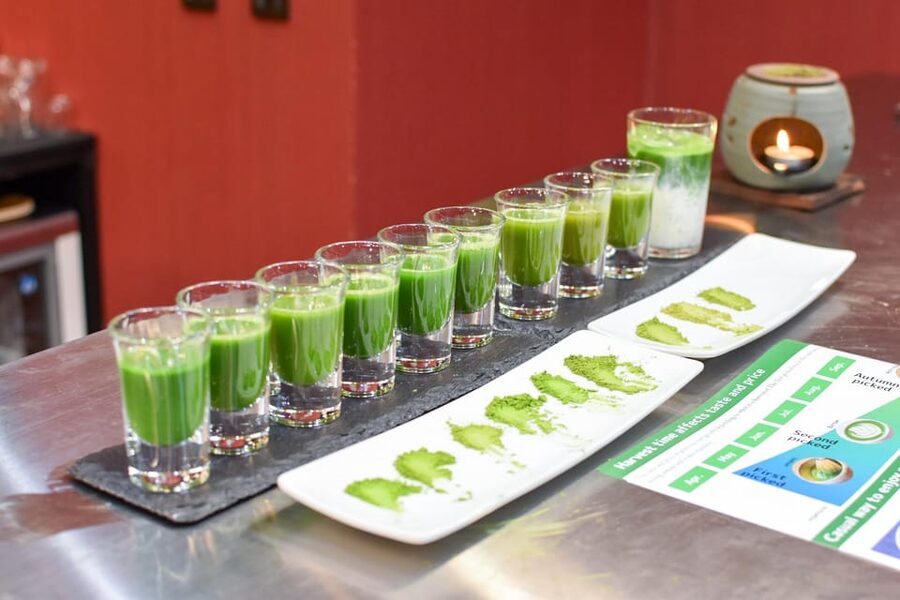
The heart of the experience is the comparison. You taste matcha from five representative production areas in Japan. The program is described two ways, and in practice it works like this: you sample 10 different types overall, with 8 kinds served for side-by-side comparison in small portions so you can focus on differences without getting overwhelmed.
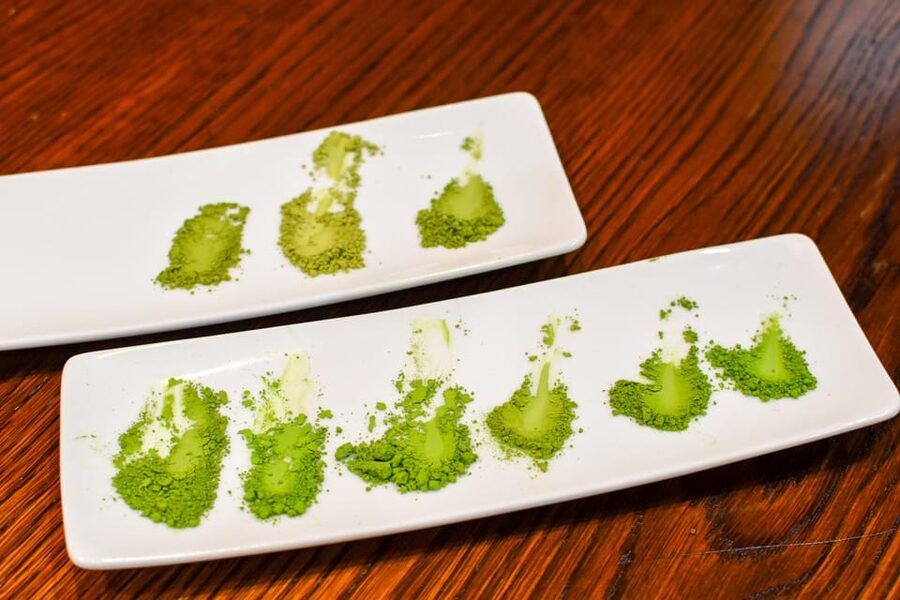
You start with looks. You are encouraged to pay attention to the color first. Then the guide makes and serves each matcha so you can smell and taste it in a structured way. This part is genuinely useful because so many matcha experiences stop at one cup and move on. Here, you are trained to notice how the cup changes as the source changes.
- Mt Fuji and Hakone 1-Day Bus Tour Return by Bullet Train★ 5.0 · 26,383 reviews
- 1-Day Tokyo Bus Tour★ 5.0 · 14,250 reviews
- Tokyo: teamLab Planets TOKYO Digital Art Museum Entry Ticket★ 4.6 · 9,779 reviews
- Mt Fuji & Hakone Cruise, Drum Show Bullet Train 1 Day from Tokyo★ 4.0 · 7,413 reviews
- Tokyo Mt Fuji 5th St & Hakone Cruise Bus Tour w/Bullet Train★ 4.4 · 5,024 reviews
Ceremonial grade and matcha sold under the matcha name
A smart detail: not every sample is the classic ceremonial-grade style. You try matcha that is ceremonial grade, and you also taste samples described as not defined as matcha, even though they are sold as matcha around the world.
That sounds nitpicky until you taste it. What you learn is simple but valuable: the label matcha does not always mean the same quality or production approach. When you later pick your favorite and make your own, you do it with your own experience as the judge, not marketing.
Choosing your favorite before you whisk
After the tasting and comparisons, you get to choose the matcha you liked best from what you tried. That matters because it turns the class into a personalized outcome. Instead of leaving with a general idea of matcha being green and pleasant, you leave with a specific preference.
This choice step also keeps the energy up. By the time you get to the hands-on part, you are not just participating. You are aiming at a goal: pick the one you want to reproduce.
Making your own Ousucha with a bamboo tea whisk
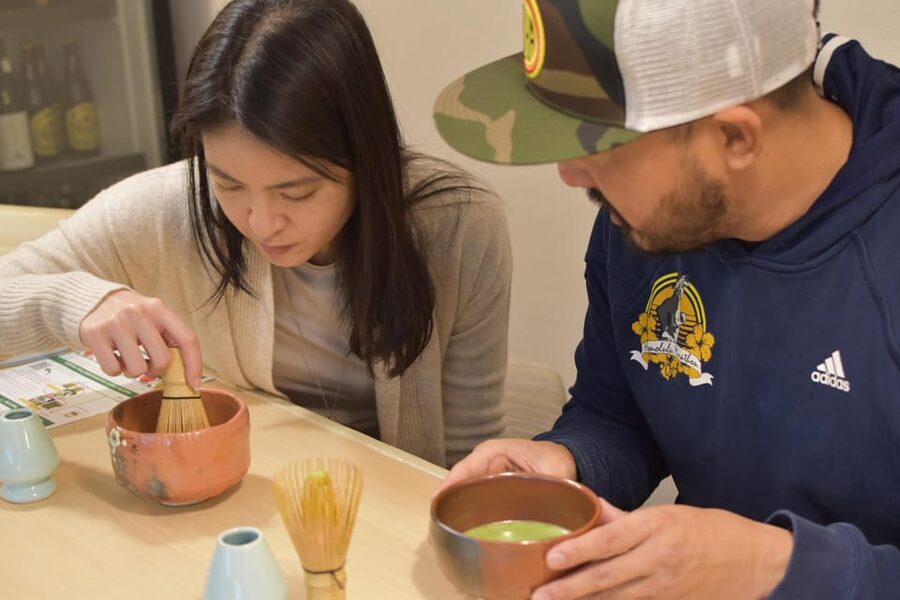
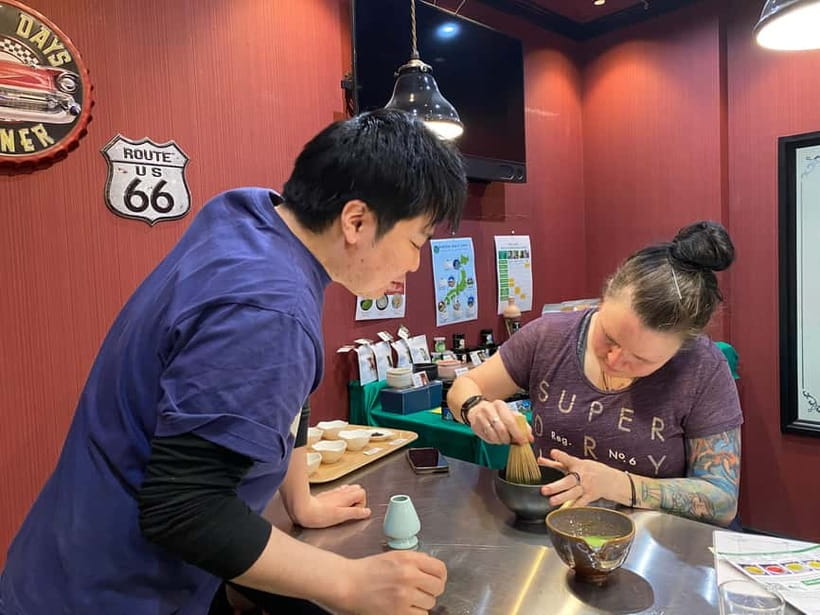
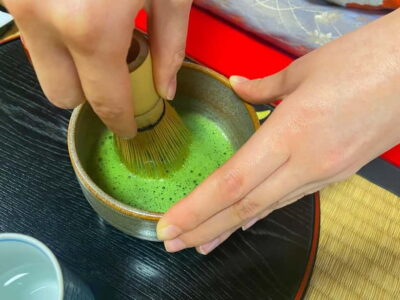
Now for the practical moment: the matcha making experience. You make matcha yourself using a bamboo tea whisk (the whisk type used for traditional preparation).
You start from your chosen sample and learn how to mix and whisk it so you get a proper cup. The class ends with you making Ousucha, essentially matcha prepared in the way you drink it as matcha, not just as a flavor ingredient.
Why this part is worth your time
I like hands-on classes for one reason: your senses remember. When you whisk, you feel how the powder behaves and you pay attention to what the cup looks and tastes like as it comes together. That gives you a real reference point for home.
Also, you are not forced into perfection. The goal is to understand the method enough that you can make it again later. The experience explicitly says you will be able to make matcha at home after the class.
Matcha latte, hojicha latte, and sweets after the serious part
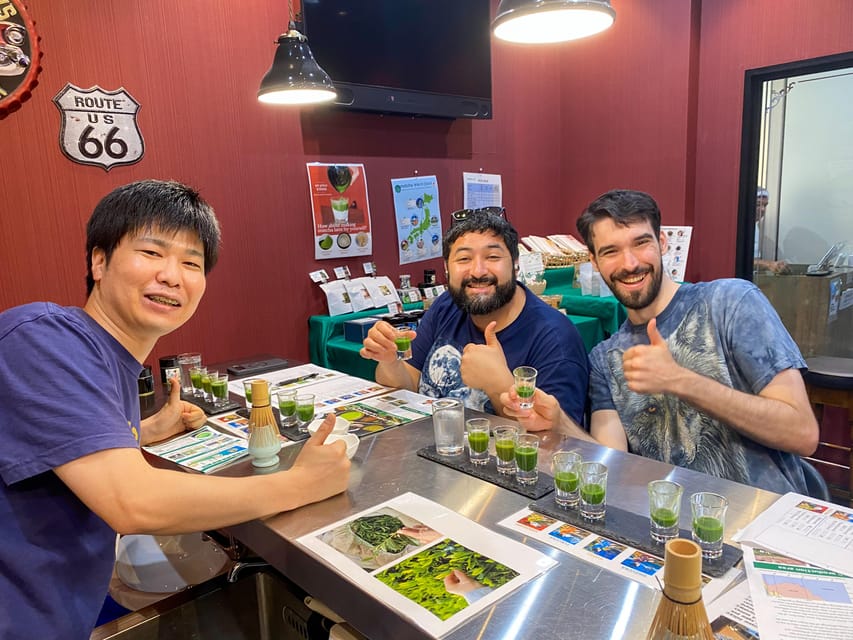
After all the matcha comparisons, the program shifts gears into comfort food. You get to enjoy matcha latte plus hojicha latte, along with matcha sweets.
Here is the useful detail: the matcha latte uses an original blend that is meant to go perfectly with milk. That is exactly what you want if you like matcha but also like it smoother. It is a reminder that matcha can work in different styles, depending on how you want it to taste.
I also like having hojicha alongside matcha. Even if your focus is green tea, hojicha gives you a different profile in the same session, so you can better understand what you like.
Price and logistics: is $63 for 90 minutes good value?
At $63 per person for 90 minutes, you are paying for three things in one slot: guided tasting, instruction, and hands-on preparation, plus drinks and sweets.
If you compare it to the cost of trying a bunch of matcha at shops one by one, the math can make sense quickly, especially because here you get structured comparisons from multiple production areas. You also get the method for making matcha, plus the tasting framework to interpret differences.
Two notes for value, though. First, transportation to the meeting point is not included, so budget that into your day. Second, the class is small, limited to 5 participants, so it runs with a tight schedule. You are paying for access to instruction, not just tea on tap.
Who should book, and who might not love it
This is a great fit if you want your Tokyo food-and-drink memories to have substance. I think it suits you if you like:
- tasting flights and comparing flavors directly
- learning from a real tea farmer background (your guide is a former tea farmer, Chisei, who grew tea in Kyoto for 6 years)
- doing one hands-on Japanese skill, not just watching
You might skip it if you mainly want a low-effort café experience with no instruction. This is interactive. You taste, learn, choose, whisk, and then eat and drink.
Final verdict: should you book this Asakusa matcha class?
If you like the idea of leaving with both a personal favorite matcha and the basic technique to make it at home, I’d book it. The strongest part is the comparison: you are guided to notice differences across five production areas, and the class helps you interpret what you are tasting instead of just sampling.
Also, the small-group size is a real plus. You are more likely to get questions answered, and the experience feels less crowded and more personal.
If your schedule is tight and you want one short, high-impact matcha-focused activity in Tokyo, this is the kind of class that earns its spot.
FAQ
Where is the meeting point for the matcha class?
The experience meets at a café inside Henn na hotel Asakusa Tawaramachi. There is a FamilyMart on the 1st floor, and you enter the hotel and go to the 2nd floor.
How long does the experience last?
The duration is 90 minutes.
How much does it cost?
It costs $63 per person.
Is the class taught in English?
Yes, the instructor teaches in English.
How many people are in the group?
The group is small, limited to 5 participants.
What will I taste during the experience?
You taste matcha from 5 different production areas, including multiple types, for side-by-side comparison, and you also enjoy matcha latte and hojicha latte.
Can I make matcha myself?
Yes. You choose a matcha you like best and make matcha using a bamboo tea whisk, ending with Ousucha.
What drinks and sweets are included?
The experience includes a welcome drink, matcha latte, hojicha latte, and matcha sweets.
Is there free cancellation?
Yes, you can cancel up to 24 hours in advance for a full refund.
Kyoto by the Bowl

Newest Tokyo write-ups from the Loving Japan desk






Kyoto Tea Ceremonies and Matcha, side by side.
 ★ 4.9Tea Ceremony in a Traditional Tea House in KiyomizuFrom $493,519 reviews
 ★ 4.9Tea Ceremony Ju-An at Jotokuji TempleFrom $293,207 reviews
 ★ 4.345-Minute Tea Ceremony Lesson ExperienceFrom $222,378 reviews
 ★ 5.0World Heritage Kyoto & Nara Uji Authentic Matcha ExperienceFrom $1291,573 reviews
 ★ 4.9Tea Ceremony ExperienceFrom $251,426 reviews
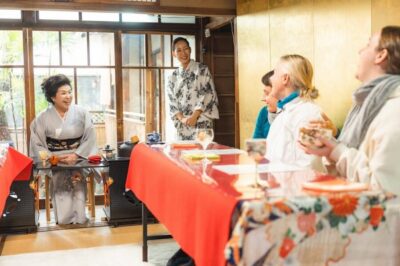 ★ 4.9Table-Style Tea Ceremony at a Kyo-MachiyaFrom $451,211 reviews
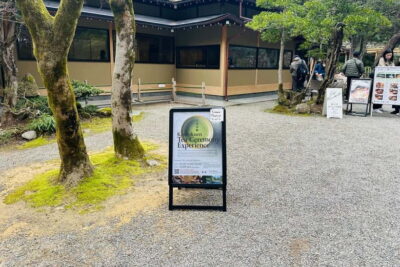 ★ 4.8Kenrokuen Tea Ceremony ExperienceFrom $351,139 reviews
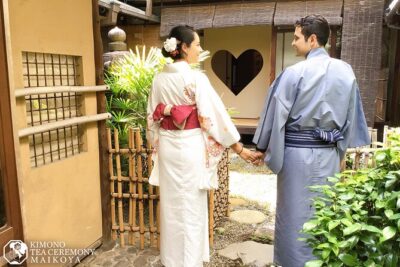 ★ 5.0Kimono Tea Ceremony at Kyoto Maikoya, NISHIKIFrom $65911 reviews
Filed on these lists too