
REVIEW · KYOTO TEA CEREMONIES AND MATCHA
Tokyo: Tea Ceremony Experience
Tea has a secret rhythm in Tokyo. This short experience at AN Tokyo Japanese Culture Experience turns a big tradition into something you can actually do during sightseeing, not something locked behind a long reservation and homework.
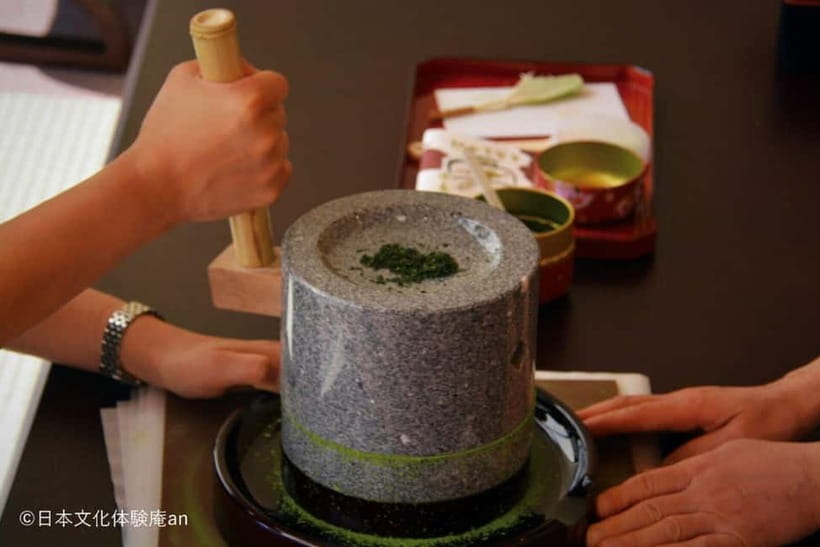
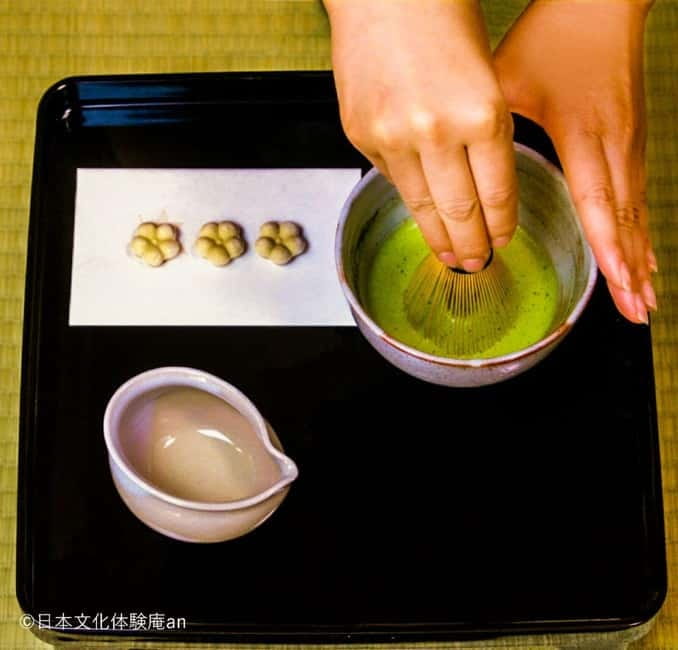
I like that it is hands-on: you watch a matcha grinding demo and then you make your own cup. I also like the tasting pairing, single-origin matcha with Japanese sweets called ohigashi.
The main thing to watch is the timing: the session runs on a tight 30-minute rhythm, and they will not hold it for delays. If you are often late on travel days, build in extra buffer to avoid stress.
In This Review
- Key reasons this tea ceremony works well for visitors
- 30 minutes at AN Tokyo: the quickest real matcha intro
- Step-by-step schedule: how your session unfolds
- The matcha moment: single-origin and you actually taste it
- Ohigashi sweets: the side dish that makes the tea experience complete
- What you learn from the quick lecture (and what you can skip)
- Instructor and language: Japanese first, English support as available
- Logistics that matter in a short, timed experience
- Price and value: why $7 feels fair for what you get
- Who should book this tea ceremony experience
- Practical tips to make your cup taste better (mentally and literally)
- Should you book this Tokyo matcha and tea ceremony?
- FAQ
- How long is the tea ceremony experience?
- How much does it cost?
- What is included in the experience?
- Do I get to make my own matcha?
- What time does it run in Tokyo?
- Is there English support?
- Is a completion certificate included?
- Are children allowed?
- What if I am late to the meeting point?
Key reasons this tea ceremony works well for visitors
- Make your own matcha in about half an hour, not a half-day class
- Single-origin matcha for a more specific, less generic taste
- Ohigashi sweets included, so you get the full flavor experience
- Short, clear structure with grinding, ceremony, and photo time
- Japanese instructor with English support as available
- Good value for a cultural activity you can fit between plans
Sit down somewhere quieter. Other tea rooms we booked
- Matcha Making Class in Tokyo with Authentic Japanese Sweets Set
★ 5.0 · 744 reviews - Tokyo: Traditional Tea Ceremony with a Tea Master
★ 5.0 · 528 reviews - Tokyo: Matcha Making Experience with Mochi Sweets in Asakusa
★ 4.9 · 388 reviews - Tokyo: Matcha and Kimono Experience
★ 4.7 · 219 reviews
30 minutes at AN Tokyo: the quickest real matcha intro
If your Tokyo plan is packed, this is the kind of activity that saves you. You get a real tea ceremony experience in 30 minutes, which is rare. It is long enough to do the ritual steps and taste properly, but short enough that you do not feel like you disappeared for half a day.
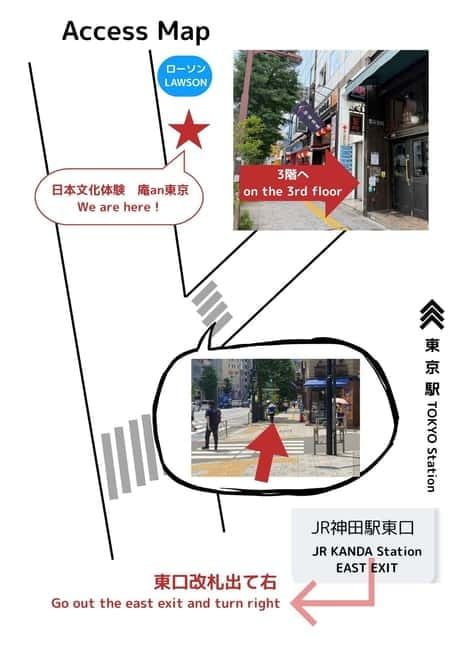
The location is at AN Tokyo Japanese Culture Experience, in Honshu, Japan. The coordinates are 35.6916541, 139.7715022, which makes it relatively easy to plug into your navigation app.
You do not need special preparation. You just show up, follow the instructor, and pay attention to the small details, like how matcha is prepared and how you pace the cup with the sweets.
Step-by-step schedule: how your session unfolds
This experience runs on a simple flow, so you know exactly what is coming next.
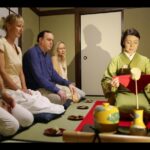
00:00 to about 20 minutes, the tea lesson and ceremony
- Start of the experience
- Explanation about tea
- Matcha grinding demonstration
- Tea-ceremony experience
- Picture time
In practical terms, the lesson is brief, and that is a good thing. You get just enough context to understand what you are doing, then you get to do it. The matcha grinding part matters because it turns matcha from a store product into something you can connect to the process.
The ceremony portion is where you stop watching and start participating. Even if you have never held a whisk before, the steps are guided, and you learn by doing.
Around 20 to 30 minutes, eating and drinking
- Eating and drinking time
- Room departure
That last stretch is your payoff. You do not just sip and rush out. You get a little time to enjoy the cup and the accompanying sweets so the experience does not feel like a checklist.
The matcha moment: single-origin and you actually taste it
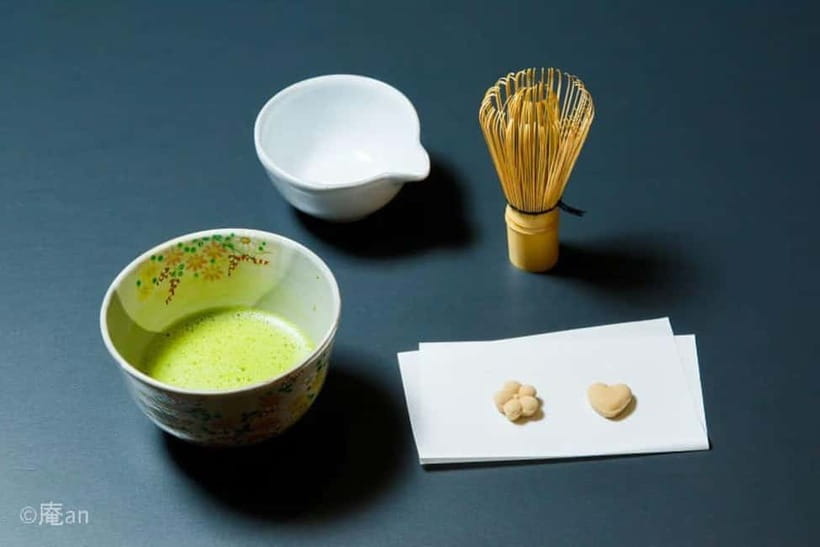
One of the biggest perks here is that the matcha is not treated like a generic drink. They use single-origin special Matcha, which means you are tasting a more specific style and character rather than something “average.”
Why you should care: matcha varies a lot. Even without being a matcha expert, you will notice differences in bitterness, aroma, and how the taste lingers. Single-origin matcha helps you notice those traits instead of smoothing everything out into one bland impression.
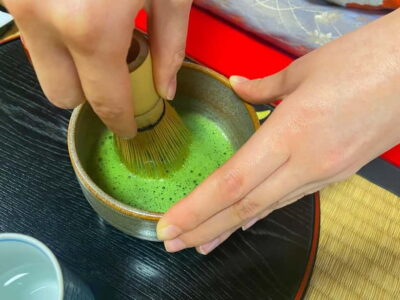
You also get a casual but real feeling for the ritual. You make matcha yourself after the grinding demo. That transforms the experience from “try a cup” into “understand the cup.”
- Mt Fuji and Hakone 1-Day Bus Tour Return by Bullet Train★ 5.0 · 26,383 reviews
- 1-Day Tokyo Bus Tour★ 5.0 · 14,250 reviews
- Tokyo: teamLab Planets TOKYO Digital Art Museum Entry Ticket★ 4.6 · 9,779 reviews
- Mt Fuji & Hakone Cruise, Drum Show Bullet Train 1 Day from Tokyo★ 4.0 · 7,413 reviews
- Tokyo Mt Fuji 5th St & Hakone Cruise Bus Tour w/Bullet Train★ 4.4 · 5,024 reviews
Ohigashi sweets: the side dish that makes the tea experience complete
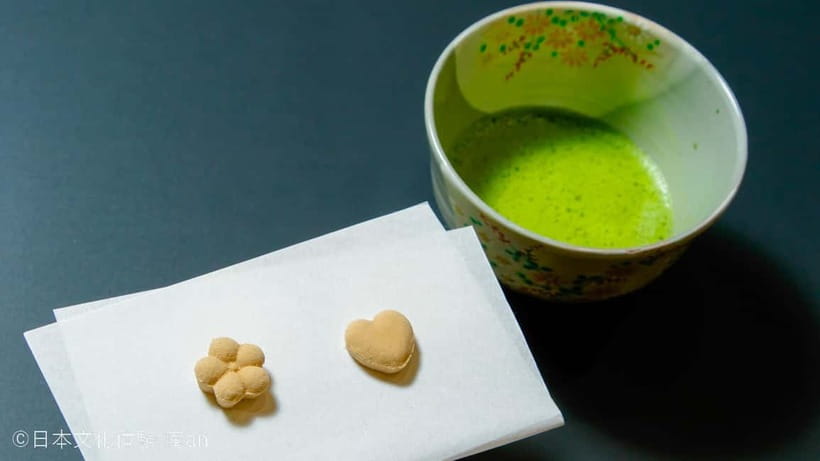
You get Japanese sweets called ohigashi, included with the session. This is not just a snack. The sweets are part of how tea ceremony balances taste and mood.
Here is the practical angle. Matcha can be bold and a bit bitter. Ohigashi typically shifts the experience with sweetness and texture, so the cup tastes smoother and more complete. If you are worried you might find matcha too intense, this pairing helps a lot.
Also, since your session is only 30 minutes, the inclusion of ohigashi is smart value. You are not forced to buy an extra dessert nearby just to finish the moment.
What you learn from the quick lecture (and what you can skip)
The “explanation regarding Tea” is built into the first part of the session. It is not a long lecture, so it stays useful.
What you can expect to get from that short talk:
- A simple sense of what tea ceremony is trying to do
- Why preparation steps matter
- How to approach the cup with attention
What you do not need: deep history facts or a perfect vocabulary. The focus is on doing and tasting. That is especially nice if your Japanese is limited, because the instructor’s guidance is tied to actions, not just explanations.
A small bonus from the overall experience style: it feels friendly. Based on recent feedback, people appreciated the pace, calling the explanations quick but still interesting. That is exactly how it should feel in a short class.
Instructor and language: Japanese first, English support as available
The instructor is Japanese. Language support is listed as English translation provided as much as possible.
So plan for this: you might hear more Japanese than you expect, but you will still be able to follow because the activity is physical and step-based. If you have specific language needs, it is best to ask ahead, since they say you can contact them to request more English translation.
Also note a key rule: those who do not participate in the experience will not be allowed to enter. That means you should be ready to join in, even if you are nervous about doing the steps.
Logistics that matter in a short, timed experience
This is one of those tours where small planning decisions change the day.
Operation hours are 10:00 to 17:00. If you book a time after 17:00, it is processed next day. Also, the experience is only 30 minutes long, and they do not hold the event for delays.
My advice: aim to arrive early enough that you are not rushing. Tokyo transfers can be smooth or chaotic. Give yourself margin so you can walk in calm, not sprinting into a ceremony.
If you care about photos, plan to treat “picture time” as part of the program. It happens near the end of the ceremony portion, so you will not want to be distracted during the actual ritual steps.
Price and value: why $7 feels fair for what you get
At $7 per person for a 30-minute cultural activity, you are paying for three things:
- Instruction and guidance through a traditional ritual
- The matcha making and tasting component
- Included ohigashi sweets
A lot of Tokyo cultural experiences that feel “quick” often charge more while giving you less actual participation. Here, you do more than watch. You grind matcha is demonstrated, and you take part in the tea-ceremony experience yourself. That participation is where the value lives.
Recent feedback also leaned toward value for money, with people describing it as a very nice activity. When a short activity still feels complete, it is usually because the tasting and sweets are included, and the time structure is tight.
Who should book this tea ceremony experience
This works best if you are:
- Doing Tokyo sightseeing with limited time
- Curious about matcha but do not want a long class
- Traveling as a couple or solo traveler who likes small, structured activities
- Interested in a cultural break that is not exhausting
It is also a good first stop if you want to understand what tea ceremony is before committing to a longer, more formal experience later.
If you hate time pressure, this might not be your match. The session is short, so there is less room to linger. But if you prefer a focused cultural activity, you will probably find it satisfying.
Practical tips to make your cup taste better (mentally and literally)
You do not need fancy tea knowledge. You just need a good mindset.
Do arrive ready to participate. The session expects active involvement. If you think you might sit it out, reconsider, because non-participants will not be allowed in.
Go easy on rush before the class. A tea ceremony feels best when your body is not in hurry mode. If you are coming off a long walk, take a few minutes to settle your breathing before you start.
Follow the instructor’s pace. Even if the steps look simple, focus on what your hands are doing. Tea ceremony attention is part of the experience, not a separate lesson.
Use picture time wisely. Capture the moment, then come back to the cup. The photo is a bonus, the taste is the point.
If transport delays happen, communicate early. One piece of recent feedback praised a lovely guide when transportation issues made someone not arrive on time. Still, the rules state they will not hold the event for delays, so your best strategy is prevention, not hope.
Should you book this Tokyo matcha and tea ceremony?
Yes, if you want a compact, real-feeling introduction to tea ceremony with single-origin matcha and included ohigashi. This is the kind of activity that slots into a day of temples, neighborhoods, and meals without swallowing your schedule.
I would not book it if you need a slow, flexible experience. The time is fixed, and they will not hold the session for delays. If you are the type who loves wandering and lingering, you might find the short format limiting.
If you are curious and you want hands-on matcha during Tokyo sightseeing, this is a strong choice.
FAQ
How long is the tea ceremony experience?
The experience is 30 minutes.
How much does it cost?
The price listed is $7 per person.
What is included in the experience?
You get an OTE-MAE set for the Japanese tea ceremony, plus matcha and Japanese sweets called ohigashi.
Do I get to make my own matcha?
Yes. After a brief explanation and a matcha grinding demonstration, you take part in the tea-ceremony experience where you can make your own matcha and enjoy it.
What time does it run in Tokyo?
Operation hours are 10:00 to 17:00. Reservations received after 17:00 are processed the next day.
Is there English support?
English translation is provided as much as possible. If you want to add it, you should contact them.
Is a completion certificate included?
No. If you want a completion certificate, it costs 300 JPY. For nominative certificates, you need to share your names in advance.
Are children allowed?
Children who sit on their parents’ laps are free of charge, for children under 2 years old only.
What if I am late to the meeting point?
They will not be able to hold the event to accommodate delays, and you should expect cancellation rules if you miss the timing.
Kyoto by the Bowl

Newest Tokyo write-ups from the Loving Japan desk


Kyoto Tea Ceremonies and Matcha, side by side.
 ★ 4.9Tea Ceremony in a Traditional Tea House in KiyomizuFrom $493,519 reviews
 ★ 4.9Tea Ceremony Ju-An at Jotokuji TempleFrom $293,207 reviews
 ★ 4.345-Minute Tea Ceremony Lesson ExperienceFrom $222,378 reviews
 ★ 5.0World Heritage Kyoto & Nara Uji Authentic Matcha ExperienceFrom $1291,573 reviews
 ★ 4.9Tea Ceremony ExperienceFrom $251,426 reviews
 ★ 4.9Table-Style Tea Ceremony at a Kyo-MachiyaFrom $451,211 reviews
 ★ 4.8Kenrokuen Tea Ceremony ExperienceFrom $351,139 reviews
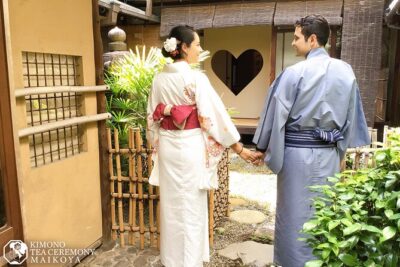 ★ 5.0Kimono Tea Ceremony at Kyoto Maikoya, NISHIKIFrom $65911 reviews
Filed on these lists too