
REVIEW · JAPANESE CRAFT AND CALLIGRAPHY WORKSHOPS
【Family Friendly】Traditional Mochi Pounding Experience
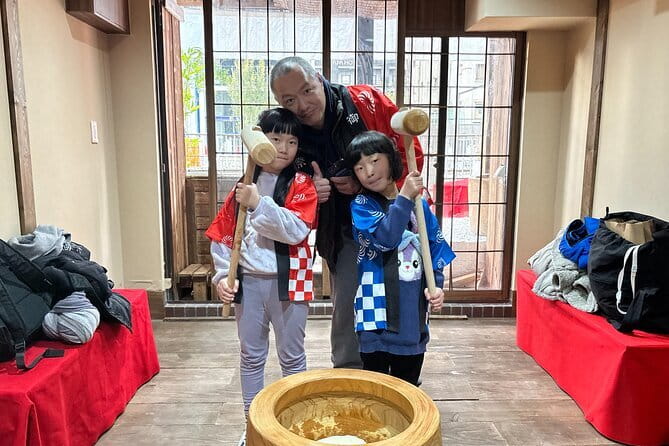
Mochi pounding is chaos you can eat. In Osaka’s Dotonbori area, you get a short cultural talk, then roll up your sleeves to pound steamed glutinous rice with traditional tools. I especially like the hands-on pounding and the fact that you finish with a real topping lineup and tea, not just a small bite.
The one thing to plan for is texture. Mochi is chewy and sticky, and the experience notes that elderly participants should have small portions because choking can be a risk. If you keep that in mind, it’s a fun, low-stress way to get a genuine taste of Japanese food culture.
In This Review
- Key highlights I think you’ll care about
- Mochi Pounding in Dotonbori: the easy, fun Osaka stop
- What you do step-by-step (and why each part matters)
- The 10-minute mochi story break
- Steaming the glutinous rice
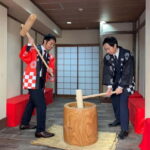
- Pounding and shaping with traditional tools
- The mochi tasting: five toppings, plus tea
- Family-friendly pacing for kids under 13
- Dietary options: what vegans and vegetarians should know
- Language support in Osaka: English and Chinese help
- Price and value: why $32.29 can make sense
- Timing, meeting point, and how to pair it with Dotonbori
- Who should book this mochi pounding experience
- Should you book it? My honest take
- FAQ
- How long does the mochi pounding experience take?
- Can children participate?
- What languages are offered?
- What will I do during the activity?
- What toppings are included with the mochi tasting?
- Are there options for vegans or vegetarians?
- Where is the meeting point in Osaka?
- What happens if I need to cancel or the weather is bad?
Key highlights I think you’ll care about
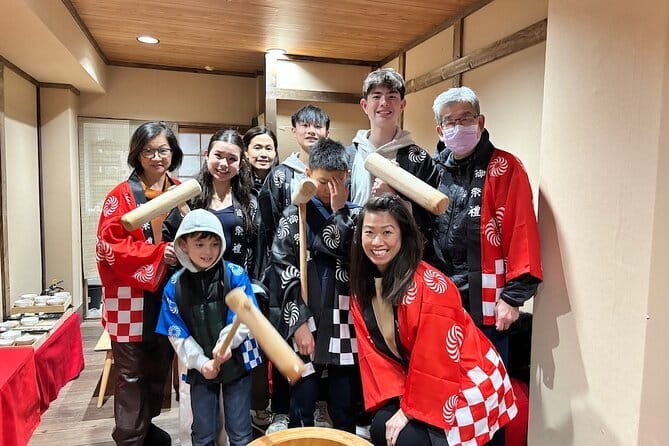
- Traditional tools and a real pounding process with mortar and pestle style technique
- A short 10-minute cultural intro so the activity feels more than just food prep
- Fresh mochi tasting with five topping options plus a cup of tea
- Family-friendly format for kids under 13, with patient instruction
- Small groups, up to 10 people, which helps keep the vibe lively but orderly
Make something to take home. Other workshops
- Osaka: Traditional Mochi Pounding Experience with Tasting
★ 4.9 · 306 reviews - 1.5〜2 Hours Traditional Kintsugi Work Shop in Namba Osaka
★ 5.0 · 75 reviews - 【For adult】Traditional Mochi Pounding Experience with Tasting
★ 5.0 · 67 reviews - Osaka: Private Japanese Calligraphy Experience
★ 5.0 · 66 reviews
Mochi Pounding in Dotonbori: the easy, fun Osaka stop
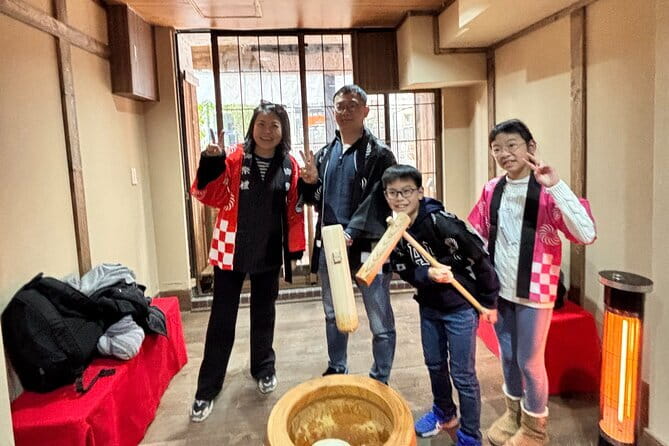
This is a classic hands-on food experience, built for people who want something memorable without committing to half a day. The meeting point is in the Dotonbori area, at Mochi Pounding Experience Osaka Oh Mochi, 2-chōme-4-11 Dōtonbori, Chuo Ward, Osaka (542-0071). Since it’s near public transportation, you can slot it into an evening schedule around Osaka’s most famous street food zone.
What makes it especially practical is the length. The tour runs about 1 hour, and the flow is set up so you’re active instead of just watching. That matters in Osaka, where you’re often doing a lot of walking already. When food is involved, you also want the event to end with something you can actually eat right away, and that’s exactly how this one works.
It also helps that the group size is capped at 10 travelers. Smaller groups usually mean better pacing, more guidance, and fewer moments where kids lose interest or adults feel like they’re waiting around. You also end back at the same meeting point, so you don’t have to figure out a separate route afterward.
What you do step-by-step (and why each part matters)
The experience is structured like a quick workshop with three main stages, plus tasting.
The 10-minute mochi story break
You start with about a 10-minute talk on the history and cultural significance of mochi pounding. It’s not a lecture that drags on. The goal is to give you enough context to understand what you’re doing when you start pounding. In Japan, mochi pounding is tied to seasonal celebrations and community rituals, so even a short intro helps the activity feel grounded instead of random.
- Osaka Go Karting Tour with Funny Costume★ 5.0 · 2,658 reviews
- Osaka Castle: Museum and Tower Entry Ticket★ 4.5 · 2,380 reviews
- Osaka: Shinsekai Food Tour with 13-15 Dishes at 5 Eateries★ 4.8 · 2,204 reviews
- Osaka Food Tour: 13 Dishes at 5 Local Eateries★ 5.0 · 2,149 reviews
- Hungry Osaka Street Food Tour:15 Tastings & 3 Drinks with a Local★ 5.0 · 1,727 reviews
Steaming the glutinous rice
Next comes the production part: you get involved with the steaming process of glutinous rice. This matters because mochi quality starts before anyone touches a mortar. Steam controls texture, and texture is basically the whole point with mochi. Even if you’re a first-timer, you’ll be able to connect the step you do with what you end up eating.
Pounding and shaping with traditional tools
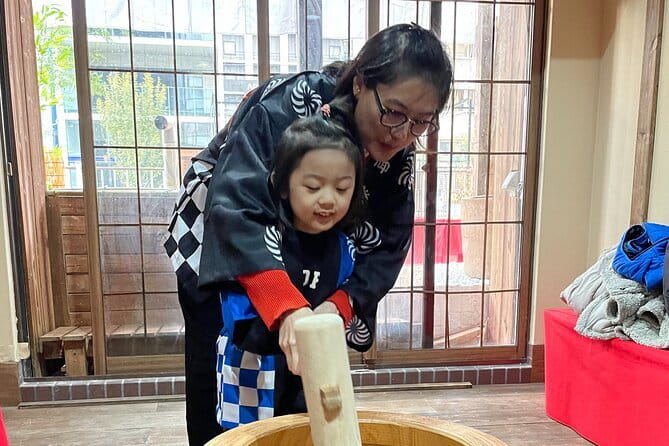
Then you use the traditional mortar and pestle tools to pound the steamed rice into mochi. This is the moment that turns food into a hands-on memory. Expect that chewy, sticky dough becomes smooth and workable as it’s pounded. There’s also an energetic rhythm to it, and part of the fun is joining in with the group energy during the pounding.
Practical note: mochi dough is meant to be handled. That can mean a little stickiness, but the instruction keeps it controlled, and the whole format is built to be doable for families.
The mochi tasting: five toppings, plus tea
The end of the experience is where you get the payoff. Fresh mochi is served so you can taste what you made. You’ll have it plain and also topped with seasonings and ingredients.
The lineup you can expect includes:
- Kinako, roasted soybean powder
- Sweet red bean paste
- Nori (seaweed)
- Sweet soy sauce
- Additional topping option(s) as part of the five total
You’ll also be served a cup of tea. That’s a smart pairing because tea cuts through sweetness and balances the chew. It also makes the ending feel complete, like a proper snack-meal rather than a tiny sample.
For food lovers, this is a big part of the value. You don’t just taste one version of mochi. You taste multiple flavors, and you can figure out what you like best so you can order it later in Osaka.
Family-friendly pacing for kids under 13
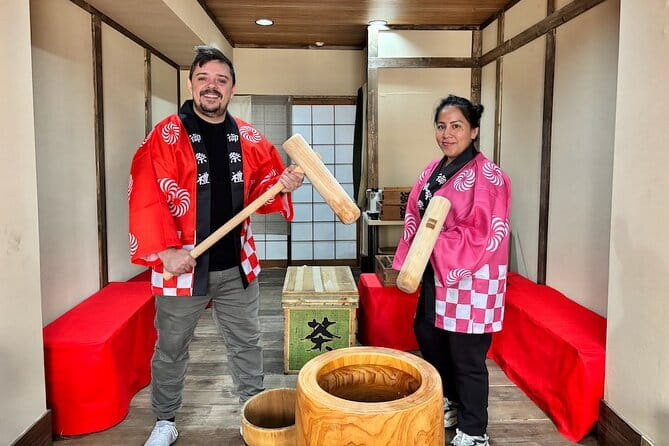
If you’re traveling with children, this is one of those activities that actually fits the family schedule. The experience explicitly welcomes children under 13, and it’s designed as a shared activity where kids can participate.
The rhythm works well for younger participants because you’re always switching tasks:
1) a short talk
2) a hands-on cooking step
3) pounding
4) tasting
That structure reduces the risk of kids getting restless. It also helps that the instructors teach patiently. You should feel comfortable asking questions, and kids typically enjoy the physical part, especially when everyone is doing it together.
One small consideration for families: mochi is chewy. If you have very young kids or picky eaters, guide portion sizes. Also, the experience notes that elderly participants should eat rice cakes in small portions due to choking risk, which is worth remembering for anyone who tends to eat too fast.
Dietary options: what vegans and vegetarians should know
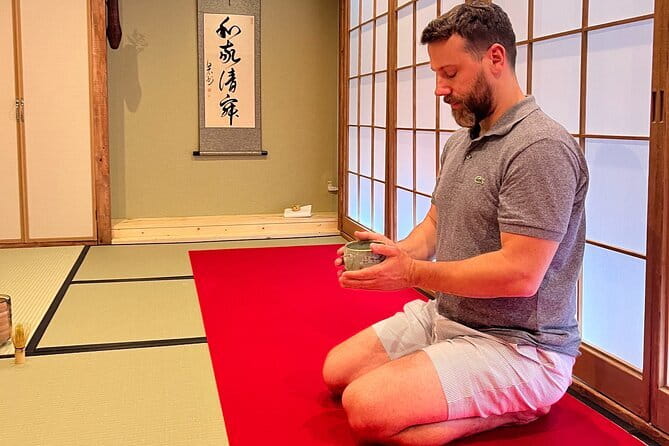
The experience states they accommodate dietary preferences, including vegetarian and vegan needs. That’s a big deal for Japan trip planning, because many traditional foods include ingredients you might not expect.
That said, the specific topping ingredients are only partially listed here. So the most practical move is to mention your dietary needs clearly when booking and ask how the toppings will be handled for your meal. The good news is the format makes it easier to adjust, because mochi is made from glutinous rice dough and then topped.
If you’re traveling with a mixed group, this setup reduces stress. Everyone can participate rather than being stuck waiting while others eat.
Language support in Osaka: English and Chinese help

This experience offers English and Chinese support. Chinese support is provided via slides or interpretation through ChatGPT. That’s helpful if you want to understand the cultural talk and the steps without guessing.
In practice, food-making classes are often easier than museum tours because you can follow demonstrations even if you miss a word. Still, having language support makes it much easier to ask questions and understand what the instructor wants you to do, especially during pounding.
If you’re comfortable with either English or Chinese, you’re in good shape. If you’re not, you can still likely follow along, but communication will be smoother with one of the supported languages.
Price and value: why $32.29 can make sense
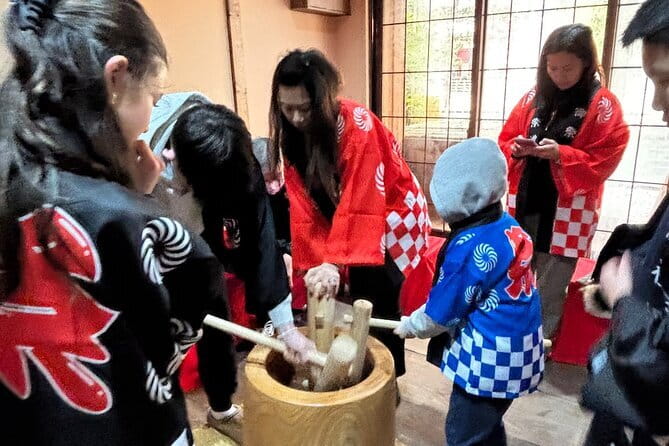
At $32.29 per person, this isn’t a free street-food snack. But it’s also not priced like a long private class. You’re paying for:
- a short history talk
- participation in steaming and pounding
- traditional tools and guided technique
- fresh mochi tasting with multiple toppings
- tea
That combination is what makes the value feel fair. You’re not paying only for the food, you’re paying for a structured activity that ends with a satisfying meal you can actually eat immediately.
Also, group size matters here. With a maximum of 10 people, the cost is shared across a smaller group, which usually helps with attention and pacing. For an activity that lasts about an hour, that’s a strong fit for a typical Osaka day.
If you’re comparing this to buying mochi at a shop, the difference is experience. The tasting is enjoyable, but the big value is getting hands-on with the process and leaving with a better sense of what mochi is and why it matters.
Timing, meeting point, and how to pair it with Dotonbori
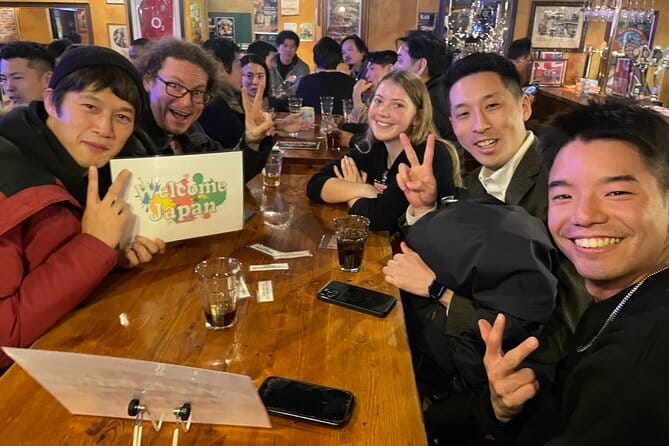
The experience lasts about an hour and returns you back to the meeting point. That makes it easy to plan around other Dotonbori sights. You’re in a high-foot-traffic area, so it’s smart to treat this as one anchor activity, then roam afterward.
A couple practical tips:
- Plan to arrive a few minutes early so you’re not rushing at the start.
- Wear shoes you can stand in. You’ll be participating during the pounding and you might spend a little time in place.
- If you’re combining it with evening street food, keep room for the mochi tasting. It’s filling in a chewy way.
One more detail: the experience requires good weather. If it gets canceled due to poor weather, you’ll be offered a different date or a full refund. So keep an eye on forecasts on the day you book.
Who should book this mochi pounding experience
Book it if:
- you love mochi and want the freshest version you can get
- you want a short, hands-on cultural activity in Osaka
- you’re traveling with kids under 13 and want an activity that keeps them engaged
- you’re a first-timer who likes learning the basics quickly (the intro is only about 10 minutes)
- you want a small group experience, not a crowded production line
Skip it or rethink if:
- you dislike sticky, chewy foods
- you’re looking for a long, multi-hour cooking course
- you have participants who struggle with chewy foods, and you cannot manage portions safely
- you need an activity that will run no matter the weather
Should you book it? My honest take
I think this is a great choice for most visitors to Osaka, especially if you’re already planning to spend time in the Dotonbori area. The small group size, the hands-on pounding, and the tasting with multiple toppings are the winning combo. It’s also one of the few food activities where kids can genuinely participate, not just watch.
If you’re debating between yet another food stop and an experience, this is the one that gives you both. You get mochi you can taste and a story you actually remember.
FAQ
How long does the mochi pounding experience take?
It lasts about 1 hour (approx.).
Can children participate?
Yes. The experience is available for children under 13, and it is family-friendly. Adults only can also join.
What languages are offered?
The experience is available in English and Chinese. Chinese is provided through slides or interpreted by ChatGPT.
What will I do during the activity?
You’ll receive a short talk about mochi pounding, then participate in steaming glutinous rice, pounding it with traditional tools to make mochi, and finally enjoy freshly made mochi with a cup of tea.
What toppings are included with the mochi tasting?
You’ll taste freshly pounded mochi plain or topped with five beloved Japanese seasonings and ingredients. Examples listed include kinako, sweet red bean paste, nori, and sweet soy sauce.
Are there options for vegans or vegetarians?
Yes. The experience accommodates dietary preferences, so vegans and vegetarians can participate.
Where is the meeting point in Osaka?
The start is Mochi Pounding Experience Osaka Oh Mochi, 2-chōme-4-11 Dōtonbori, Chuo Ward, Osaka 542-0071, Japan. It ends back at the meeting point.
What happens if I need to cancel or the weather is bad?
Cancellation is free up to 24 hours in advance for a full refund. If the experience is canceled due to poor weather, you’ll be offered a different date or a full refund.
Made by Hand, and Yours to Keep



Newest Osaka write-ups from the Loving Japan desk




Japanese Craft and Calligraphy Workshops, side by side.
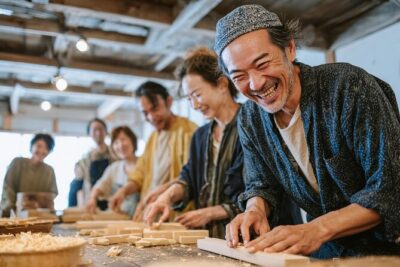 ★ 5.0Tokyo Shinjuku Chopsticks Making ClassFrom $201,763 reviews
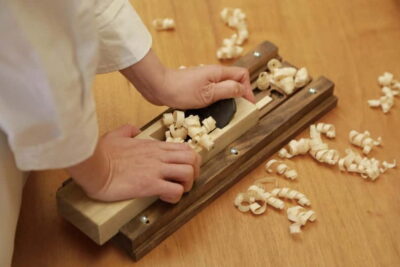 ★ 4.8Chopstick Making Workshop in GinzaFrom $251,366 reviews
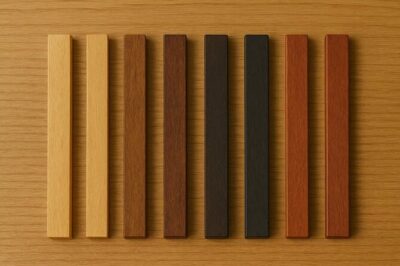 ★ 5.0Chopsticks Making Workshop in Gion with Engraving OptionFrom $15958 reviews
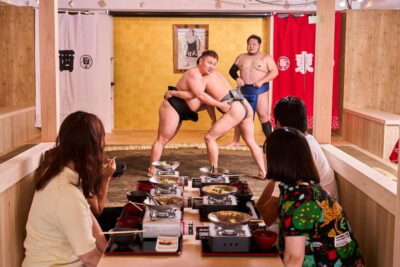 ★ 4.8Tokyo Sumo Experience: Chanko & Mochi with a Former ProFrom $103567 reviews
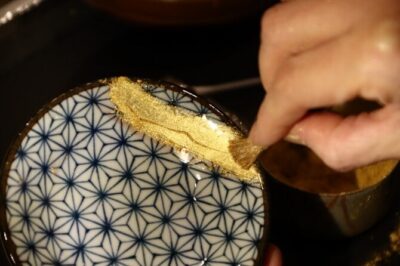 ★ 5.0Kintsugi Experience: Art of Golden Joinery in TokyoFrom $59467 reviews
 ★ 5.0Tokyo Chopstick Making Workshop with ArtisanFrom $26466 reviews
 ★ 4.9Matcha Making Experience with Mochi Sweets in AsakusaFrom $22388 reviews
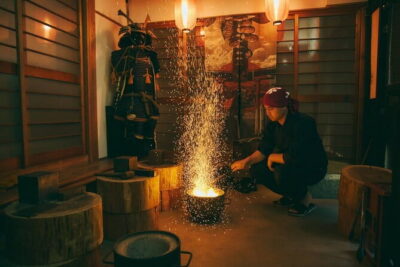 ★ 4.8Authentic knife making experience at a blacksmith in KyotoFrom $154350 reviews
Filed on these lists too