
REVIEW · JAPANESE CRAFT AND CALLIGRAPHY WORKSHOPS
Discover Japanese Tea Blending Techniques in Osaka
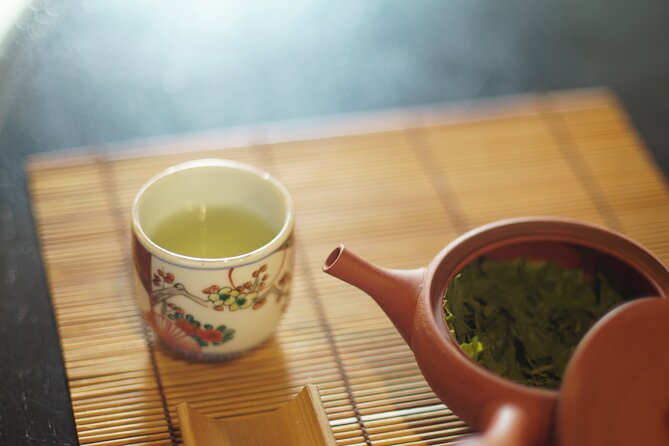
Tea blending in Osaka can be surprisingly fun. In this hands-on workshop, you personalize your Japanese tea experience, learn traditional brewing techniques, and then try modern touches like tea cocktails. You also get a chance to see a quieter slice of Osaka outside the usual tourist squeeze.
Two things I especially liked: the class stays small (max 3 travelers), so Ko can answer your questions while you’re working. And I really enjoyed learning how to brew multiple tea styles correctly, including tips that go beyond taste, like how to hold a teapot and why the technique matters.
One consideration: at $54.46 for about 2 hours, this is best if you genuinely want to taste, learn, and mix drinks. If you only want a quick, passive experience, you may feel the time crunch.
In This Review
- Key things you will remember from this Osaka tea workshop
- Osaka tea house time, starting near Namba Yasaka Jinja
- What you brew in the session: sencha, wakocha, oolong, hojicha, matcha
- Tea rituals with hands-on technique, including how to hold the teapot
- Tea cocktails in Osaka: fruit infusions and alcohol pairing with Japanese tea
- Traditional Japanese sweets and why they matter with tea
- Taking home tea samples and recipes you can use the next day
- Price, group size, and how to get strong value for $54.46
- Who should book this Osaka tea blending workshop?
- Should you book this Japanese tea blending experience in Osaka?
- FAQ
- What is the duration of the tea blending workshop in Osaka?
- Where does the workshop start?
- What time does it begin?
- How many people can join the class?
- What teas will I learn to brew?
- Will I make tea cocktails or just taste tea?
- Do I get anything to take home?
- Is free cancellation available?
Key things you will remember from this Osaka tea workshop

- You brew multiple tea types: sencha, wakocha (Japanese black tea), oolong, hojicha, and matcha
- You learn real brewing basics like temperature, technique, and handling tools
- Hands-on tea drinks with natural ingredients (like fruit) plus alcohol-infused versions
- A tea cocktail sampling plus traditional Japanese sweets during the session
- Take-home recipes and small tea samples so you can reproduce what you made later
- A small group feel with a maximum of 3 travelers, plus a friendly host in Ko
Make something to take home. Other workshops
- Osaka: Traditional Mochi Pounding Experience with Tasting
★ 4.9 · 306 reviews - 1.5〜2 Hours Traditional Kintsugi Work Shop in Namba Osaka
★ 5.0 · 75 reviews - 【For adult】Traditional Mochi Pounding Experience with Tasting
★ 5.0 · 67 reviews - Osaka: Private Japanese Calligraphy Experience
★ 5.0 · 66 reviews
Osaka tea house time, starting near Namba Yasaka Jinja
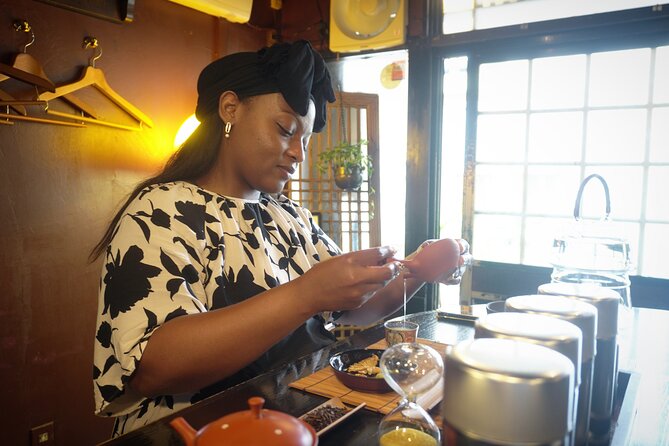
Your afternoon begins at the meeting point near Namba Yasaka Jinja (2-chōme-9-19 Motomachi, Naniwa Ward). The start time is 3:00 pm, and the activity runs around 2 hours, so it fits nicely between a morning in the city and an evening that’s free for dinner plans.
You’ll use a mobile ticket, and you should find the meeting area is close to public transportation. That matters because you are not starting in the loudest, most central tourist zone. Instead, you’re stepping into a more local-feeling pocket of Osaka, where the walk from the station to the tea space feels calmer than the big-ticket crowds.
The setting also helps. People describe the tea space as real tea-house style, not a sterile classroom. That makes a difference with tea, because the whole point is atmosphere, rhythm, and attention, not just consumption.
What you brew in the session: sencha, wakocha, oolong, hojicha, matcha
This workshop covers both traditional and more modern uses of Japanese tea. You don’t just get a single cup and a quick explanation. You work through a range of styles, and you learn how each one behaves.
Here’s the tea lineup you can expect:
- Sencha (green tea)
- Wakocha (Japanese black tea)
- Oolong (typically with a different aroma and mouthfeel than the greens)
- Hojicha (roasted tea, often rounder and more mellow)
- Matcha (powdered green tea)
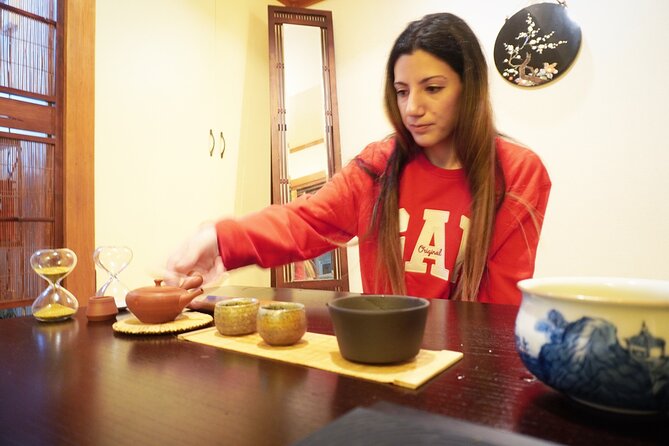
For each tea, you get instruction on how to brew it properly. The core basics include brewing temperatures, technique, and handling tools. That’s important because tea is temperature-sensitive. Too hot, and you can push bitterness. Too cool, and you might miss body and aroma. Even if you’ve made tea before, these are the kinds of small adjustments that create a real upgrade.
You also get context as you go: why the tea is prepared the way it is, and how tea culture shaped Japan over time. The goal is to connect the science and the practice to the bigger idea of Japanese tea rituals, so your tasting stops being random and starts making sense.
Tea rituals with hands-on technique, including how to hold the teapot
One of the best parts of this experience is that the lessons are practical. You’re not standing on the sidelines. You’re handling the tools and learning the physical steps that affect the cup.
A detail that comes up again and again is the emphasis on how you do it, not just what you do. People highlight learning things like how to hold a teapot correctly and the reasoning behind it. That kind of tip sounds small until you try it, then you realize it changes control, pour consistency, and how evenly tea infuses.
You also get guidance that helps you avoid common tea mistakes:
- Guessing at timing and temperature
- Oversteeping teas that are meant to be lighter
- Treating every tea like it takes the same brewing approach
And because it’s a tiny group, you’re more likely to get help in the moment. If you’re the type who learns by doing, this is where you’ll feel the value.
Ko’s style (from what people report) is both relaxed and sharp. You get the feeling that he wants you to understand, not just copy steps. That matters most when you’re learning tea by hand, because you’re building confidence for your future cups back home.
- Hungry Osaka Street Food Tour:15 Tastings & 3 Drinks with a Local★ 5.0 · 1,727 reviews
- Osaka: Tea Ceremony Experience★ 4.9 · 1,426 reviews
- Osaka Kickstart: Hotspots & Hidden Gems Tour★ 5.0 · 1,306 reviews
- Osaka: Hotspots & Hidden Gems Walking Tour Private or Group★ 4.9 · 1,300 reviews
- Deep Backstreet Osaka Tours (Option to add Dinner)★ 5.0 · 1,290 reviews
Tea cocktails in Osaka: fruit infusions and alcohol pairing with Japanese tea
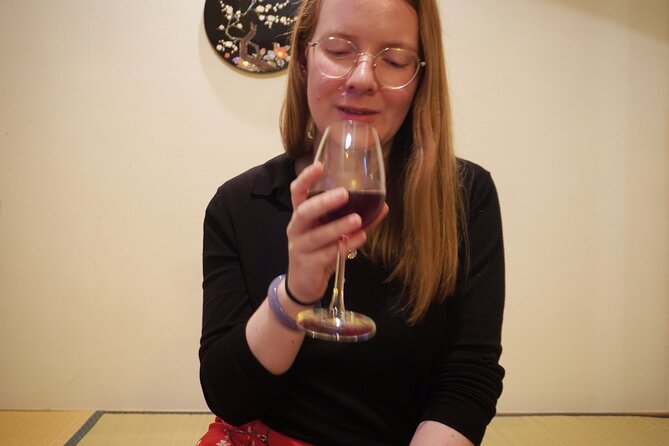
Here’s where the workshop turns from tradition into something you’ll actually want to repeat. After you learn the basics for brewing and tasting multiple tea styles, you shift into a hands-on activity where tea becomes a mixer.
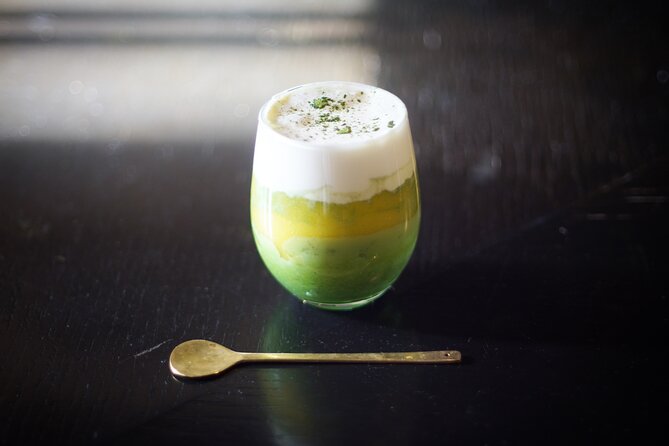
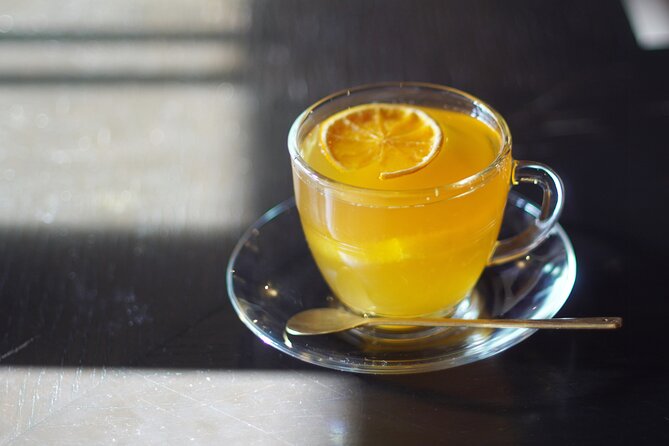
The workshop includes making tea drinks using natural ingredients like fruit and also infusing tea with alcohol. That blend of Japanese tea and modern drink-making is the signature twist: you keep the tea’s character, but you let ingredients and technique shape a new flavor direction.
This is also where personalization fits. The class aims to customize based on your tastes and preferences, so you’re not stuck with a single flavor profile. If you like something lighter, you’ll likely get options to steer the outcome. If you prefer deeper roasted notes, hojicha tends to be an excellent starting point for that vibe.
You’ll also sample at least one tea cocktail, and the idea is not just to taste, but to learn what makes it work. You learn how the tea’s base flavor pairs with the other ingredients, and why certain combinations feel balanced.
It’s a fun approach for couples too. You can compare how the drink changes when you adjust technique or ingredient choices, then talk about it while you’re still in the learning mode.
Traditional Japanese sweets and why they matter with tea
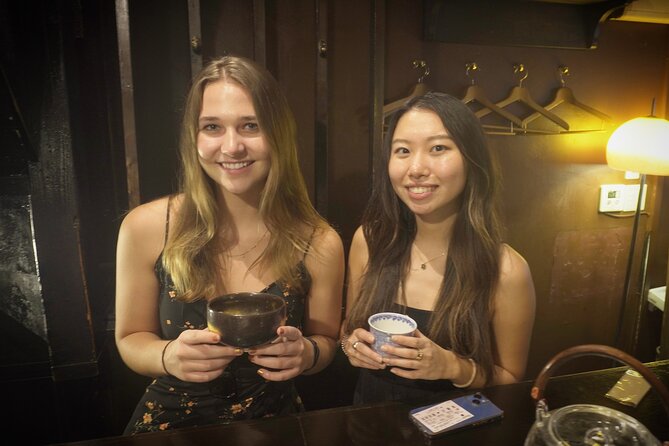
During the workshop, you’ll sample traditional Japanese sweets along with your tea tasting and drink-making. That’s not just a filler snack. Sweets are part of how Japanese tea experiences get structured, because they change the way you perceive bitterness, sweetness, aroma, and finish.
Even without knowing the exact sweets in advance, the value is clear: you taste how tea and sweet flavors interact in real time. That helps you understand why certain teas are commonly paired with certain styles of desserts.
If you love food details, treat this as a mini tasting lesson. If you just want the best cup possible, it’s still useful, because sweets highlight contrast, so you notice what each tea is really doing.
Taking home tea samples and recipes you can use the next day
The workshop ends with take-home goodies. You’ll leave with:
- Small samples of tea so you can brew again later
- Recipes for the beverages you learn to make
That part is key for value. A lot of food and drink classes end when you walk out the door. This one tries to extend the experience into your routine. If you buy tea later and never use it, it turns into clutter. If you have recipes plus the tea to match, you’re more likely to turn it into real home enjoyment.
It also helps you keep learning. Since you brew multiple tea types in the workshop, your future practice can be varied. You can recreate the one you loved most, then come back and try another tea style after you’ve mastered the basics.
One smart move: brew your first take-home cup the same way you did in class. Then experiment slightly, based on what you remember about temperature and technique. Tea is forgiving, but it responds fast to changes.
Price, group size, and how to get strong value for $54.46
At $54.46 per person for about 2 hours, you’re paying for instruction plus tasting plus the time spent making drinks. This is not just a beverage sampler. You’re learning technique across several tea styles, and you’re also making tea cocktails with fruit ingredients and alcohol infusion.
The small group size is part of why this can feel worth it. With a maximum of 3 travelers, you’re less likely to feel like you’re watching while someone else gets the attention. You can get corrections while your cup is in progress.
Also, the class gets booked fairly far ahead, with an average booking window of 60 days in advance. If your Osaka dates are fixed, you’ll want to lock it in early rather than gamble on last-minute availability.
If you’re comparing options, ask yourself this: do you want a guided learning experience that you can repeat at home? If yes, this price can make sense. If you mainly want a quick tea stop, you’d probably spend less elsewhere and miss the hands-on payoff.
Who should book this Osaka tea blending workshop?
This is a great pick if you:
- Love matcha, but want more than one-flavor tasting
- Want to learn how to brew different Japanese teas correctly
- Enjoy hands-on food experiences more than museum-style viewing
- Like trying modern twists, like tea cocktails, alongside tradition
- Are traveling in a duo or small group, because the class stays intimate
It may not be your best fit if:
- You want heavy sightseeing and don’t want to focus on brewing and tasting for 2 hours
- You prefer purely food-and-drink sampling without technique instruction
For couples, the vibe tends to be relaxed and conversation-friendly. Even if you don’t know tea basics, you’re brought in step by step, and the experience format supports learning through doing.
Should you book this Japanese tea blending experience in Osaka?
If you’re the kind of person who buys tea and then actually uses it at home, book it. The take-home samples and recipes make it more than a one-time souvenir moment. Plus, the combo of brewing multiple teas, learning technique, and finishing with tea cocktails and sweets gives you variety in just a couple of hours.
If you only drink tea occasionally, I’d still say it can be worth it, but only if you’re curious about how the flavor changes with temperature and method. This workshop rewards attention. You’ll leave with better cups, not just more memories.
FAQ
What is the duration of the tea blending workshop in Osaka?
The workshop lasts about 2 hours.
Where does the workshop start?
It starts at Namba Yasaka Jinja, 2-chōme-9-19 Motomachi, Naniwa Ward, Osaka, 556-0016, Japan.
What time does it begin?
The start time is 3:00 pm.
How many people can join the class?
The workshop has a maximum of 3 travelers.
What teas will I learn to brew?
The workshop covers sencha, wakocha (Japanese black tea), oolong tea, hojicha (roasted tea), and matcha.
Will I make tea cocktails or just taste tea?
You’ll learn about and make tea drinks, including a tea cocktail, and you’ll also sample a tea cocktail.
Do I get anything to take home?
Yes, you can take home recipes and small samples for the beverages you learn to make.
Is free cancellation available?
Yes. You can cancel up to 24 hours in advance for a full refund. Cancellation within 24 hours of the start time is not refundable.
Made by Hand, and Yours to Keep
Newest Osaka write-ups from the Loving Japan desk



Japanese Craft and Calligraphy Workshops, side by side.
 ★ 5.0Tokyo Shinjuku Chopsticks Making ClassFrom $201,763 reviews
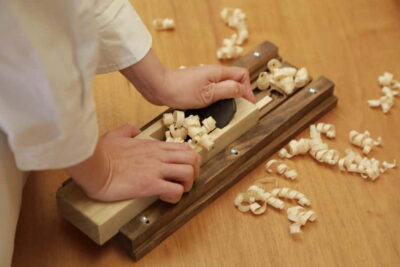 ★ 4.8Chopstick Making Workshop in GinzaFrom $251,366 reviews
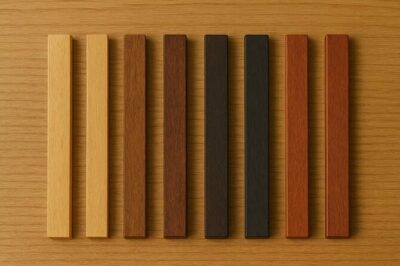 ★ 5.0Chopsticks Making Workshop in Gion with Engraving OptionFrom $15958 reviews
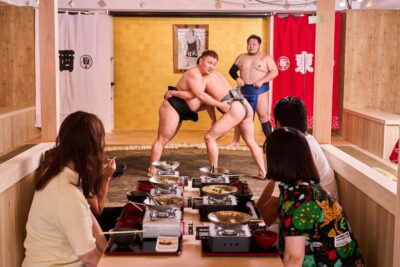 ★ 4.8Tokyo Sumo Experience: Chanko & Mochi with a Former ProFrom $103567 reviews
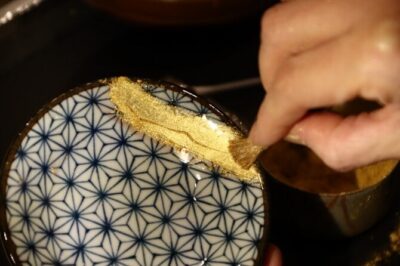 ★ 5.0Kintsugi Experience: Art of Golden Joinery in TokyoFrom $59467 reviews
 ★ 5.0Tokyo Chopstick Making Workshop with ArtisanFrom $26466 reviews
 ★ 4.9Matcha Making Experience with Mochi Sweets in AsakusaFrom $22388 reviews
 ★ 4.8Authentic knife making experience at a blacksmith in KyotoFrom $154350 reviews
Filed on these lists too