
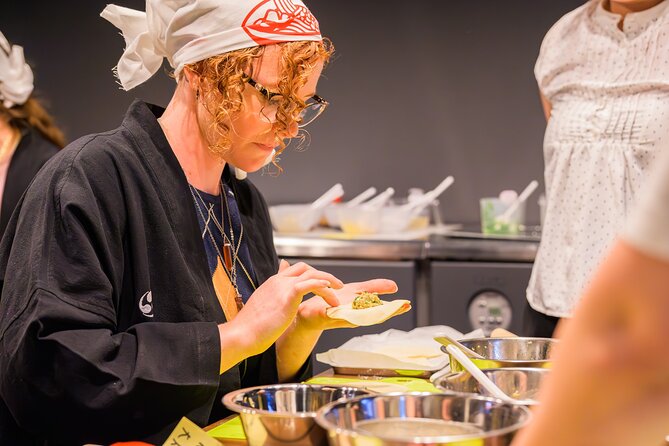
REVIEW · JAPANESE COOKING CLASSES
Gyoza Cooking Class in Kyoto: Traditional Japanese Dumplings
Gyoza becomes an easy art in Kyoto. In a traditional Kyoto townhouse, you’ll make gyoza from scratch and learn how the dish fits into Japanese food culture and samurai-era storytelling. You can even finish with optional samurai armor photos.
I especially like that you get to choose your filling and make wrappers from scratch, not just assemble dumplings. The big drawback to plan for is the price, at $118.19 per person, so it makes the most sense if you want a real cooking skill, not only a quick snack. After class, optional samurai armor dressing adds a fun, photo-friendly cap to the evening, and the group stays small.
In This Review
- Key highlights
- A hands-on Kyoto evening with real results
- From Chinese dumplings to Japanese gyoza culture
- Building your gyoza from scratch, step by step
- Cooking on a professional baking machine (and why that matters)
- Instructors who make the technique feel doable
- The optional samurai armor photos after you eat what you made
- Small group energy, personal stations, and what it feels like
- Price and value for a $118.19 per person cooking class
- Where to fit it into your Kyoto day
- Things to watch for before you go
- Should you book this gyoza class in Kyoto?
- FAQ
- How long does the gyoza cooking class last?
- What is included in the price?
- Do I need to bring my own transportation?
- How many people are in the class?
- Will we cook the gyoza with equipment or just by hand?
- Can I get a full refund if I cancel?
Key highlights
- Make the wrappers yourself, then learn the folding rhythm for gyoza pleats
- Choose your filling so the finished dumplings match your tastes
- Cook using a professional baking machine for consistent browning and crunch
- Small group size (max 20) with hands-on workstations
- Standout English-speaking instructors like Hama, Maya, and Ryo
- Take home a cooking souvenir, often an apron, with photo moments in samurai armor
Cook it yourself instead. Other kitchens in Kyoto
- Sushi Making in Kyoto! Same-day bookings welcome!
★ 5.0 · 713 reviews - Kyoto: Ramen Cooking Class at a Ramen Factory with Souvenir
★ 4.9 · 532 reviews - Kyoto: Ramen, Gyoza, and Onigiri Cooking Class
★ 5.0 · 445 reviews - The Original Small-Group Sushi Making Class in Kyoto
★ 5.0 · 436 reviews
A hands-on Kyoto evening with real results
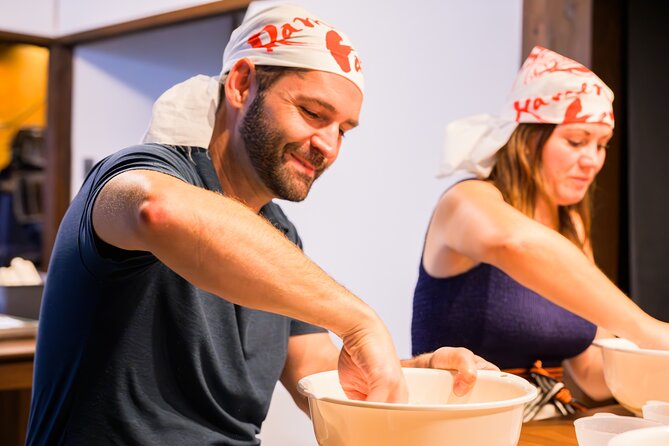
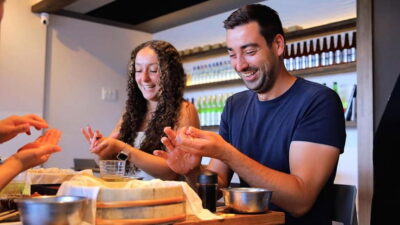
Kyoto has a lot of food experiences, but this one is built around doing. You arrive at a traditional Kyoto townhouse, then spend your time rolling wrappers, filling gyoza, and cooking them so you can taste what you made.
I like the practical feel of the class. You are not watching from across the room, and you are not just learning a generic recipe you cannot repeat later. You are learning a process, the kind that sticks.
The setting matters too. Cooking in a Kyoto townhouse gives the class a calmer rhythm than a crowded kitchen floor, and it keeps the experience focused. It also helps that the class runs about 1 hour 30 minutes, which is long enough to learn, but not so long you lose your energy.
From Chinese dumplings to Japanese gyoza culture
Gyoza began in China, then evolved into something with a clearly Japanese identity. In this class, you get the story side alongside the hands-on cooking, including how styles and sizes changed over time.
You are also taught a slice of Japanese history and samurai culture. The class ties the food to place and context, which is why it feels more like Kyoto than just a cooking demo. You are making dinner, yes, but you are also learning how Japan frames food and tradition.
This background is useful in a simple way. When you understand where a dish comes from, you cook with more attention, and you remember it better. The history is not heavy, it is there to make the technique feel meaningful.
Building your gyoza from scratch, step by step
The class is structured around three core skills: filling choices, wrapper making, and wrapping technique.
First, you pick a filling you like. That choice is a big part of why the experience feels personal, because your dumplings do not come out as the same one-size-fits-all outcome. When you can decide the inside, you also learn what flavors you actually enjoy with the classic gyoza cooking style.
Next, you make the wrappers from scratch. This is the part many cooking classes skip, but here it is front and center. Making dough and rolling it gives you a baseline you can recreate later, even after you return home.
Then comes the wrapping. You learn the mechanics of folding and sealing so the gyoza hold their shape. A lot of people find this part easiest when the steps are broken down clearly, and the instructor approach is repeatedly praised for being fun and easy to follow.
- PERFECT KYOTO 1-Day Bus Tour★ 5.0 · 13,518 reviews
- Kyoto: Fushimi Inari, Kinkakuji, Bamboo Grove 1 Day Bus Tour★ 4.8 · 4,316 reviews
- Kyoto: Tea Ceremony in a Traditional Tea House in Kiyomizu★ 4.9 · 3,519 reviews
- Kyoto Geisha Walking Tour: Gion District & Hidden Gems★ 4.7 · 3,273 reviews
- Kyoto: Tea Ceremony Ju-An at Jotokuji Temple★ 4.9 · 3,207 reviews
Cooking on a professional baking machine (and why that matters)
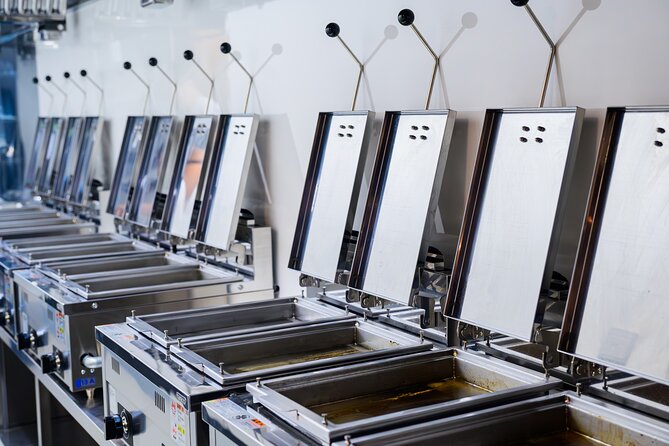
One reason gyoza tastes right in Japan is the way they are cooked. Here, you use a professional baking machine, which helps create that signature combination of browned bottoms and tender interiors.
This matters for you because it removes guesswork. You still practice technique, but you are not trying to invent the perfect heat and timing from scratch on a random pan at home. The machine helps standardize results, so you leave with dumplings that actually taste like gyoza should.
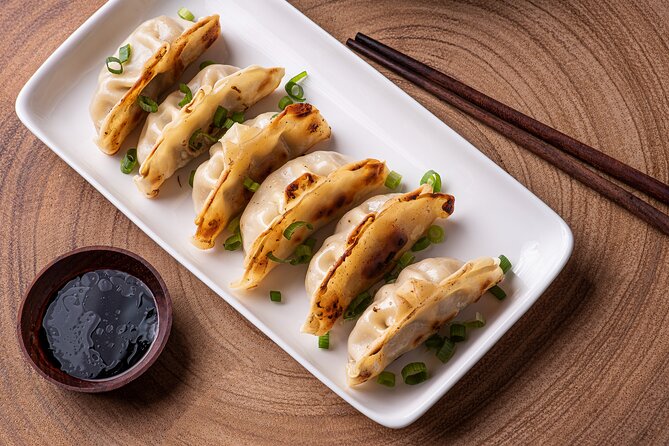
In terms of quantity, many participants come away with about 10 to 12 gyoza per person, which feels like a satisfying meal portion after all that work. You also get immediate feedback while cooking, so when something is off, the class format helps you correct it in real time.
Also, because the class is time-boxed, the pacing keeps you moving. You will not spend 45 minutes fussing with one step while the rest of the group waits.
Instructors who make the technique feel doable
The class is led by an English-speaking instructor, and the teaching style comes up again and again in the feedback.
Hama is repeatedly mentioned as the best teacher, with people praising how fun, warm, and clear she makes the process. Maya also gets strong notes for having English that is easy to follow and for keeping the class fun and not stressful. Ryo is highlighted as personable, and one review notes this kind of class works well for older kids and teens.
I take that as a good sign for you if you worry about feeling lost. When multiple instructors are singled out for clarity and friendliness, it usually means the teaching approach is built for real skill-building, not just performance.
One practical bonus is that some people mention paper practice and step-by-step guidance. If you are nervous about the folding, practice materials can be the difference between frustration and confidence. Even if your folding is not perfect on the first try, you will improve fast because you are making dumplings in sequence.
The optional samurai armor photos after you eat what you made
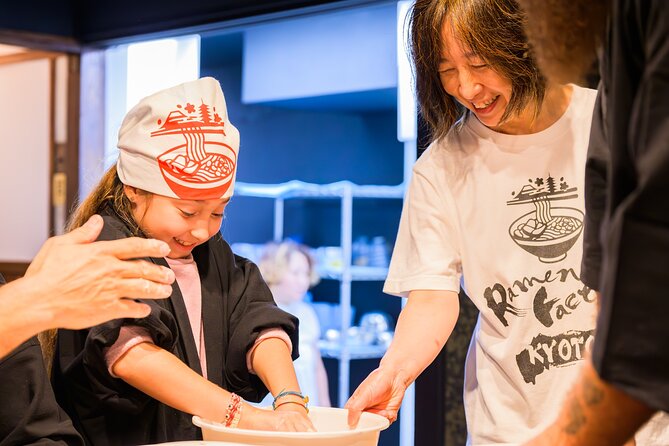
After cooking, you have the option to dress up in samurai armor and take memorable photos.
This is not presented as the main event, which I like. The class earns its keep on food craft first, then the armor becomes a playful add-on. If you love photos, you get them. If you do not, you can treat it as a light cultural costume moment rather than a required performance.
The timing is also smart. You finish the hands-on work, you taste your gyoza, then you shift into a more relaxed photo section. It helps the evening feel complete, especially for families.
One detail I especially appreciate from the overall tone of the experience is that the cultural part is not only in the costume. You also get history and context during the class itself, so the armor does not feel random.
Small group energy, personal stations, and what it feels like
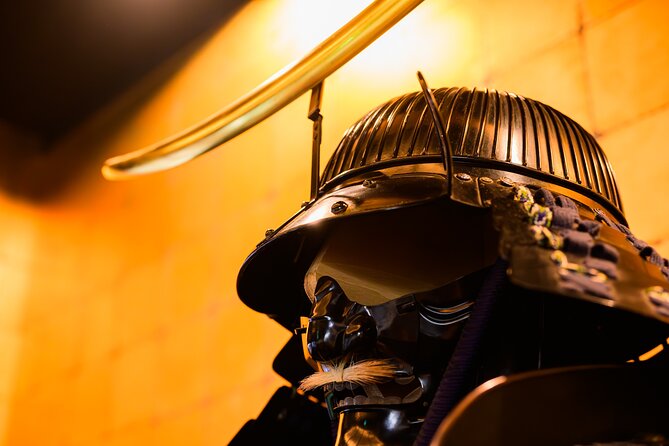
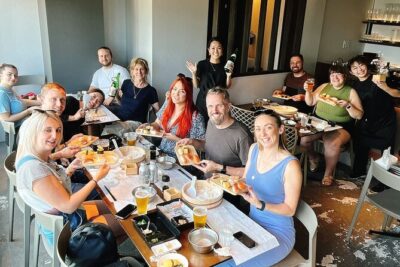
This activity caps at a maximum of 20 travelers. That small size keeps things from turning into a lecture. In practice, it usually means you have enough space and time to work, not just stand in line.
Reviews also point to personal working stations, which is exactly what you want for a technique-heavy food class. Folding dumplings needs counter space, clear tools, and time to ask questions. A smaller group makes those needs realistic.
Another interesting point: because group sizes can vary, you might find yourself in a very small group on some dates. One review mentions an only-person class that turned into a private-style experience with lots of history and time with the instructor. Even if your class is not private, the structure is set up to prevent the overly crowded vibe.
Price and value for a $118.19 per person cooking class
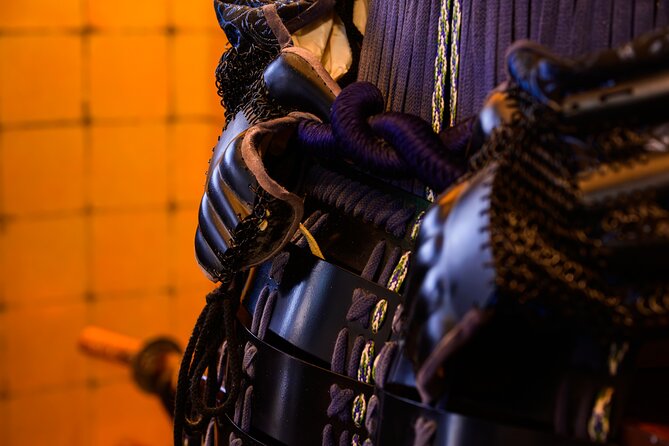
At $118.19 per person, this is not a cheap activity. You should treat it more like a skill-based evening than a casual street-food stop.
Here is where the value comes from:
- You make wrappers from scratch, not just filling and frying
- You choose the filling, so it fits your taste
- You cook using a professional baking machine for better results
- You get an English-speaking instructor plus all class tools
- You leave with practical know-how, plus a cooking souvenir like an apron (often mentioned)
If your goal is only to eat gyoza, you can find cheaper options around Kyoto. If your goal is to return home and actually recreate the process, the price starts to make more sense. This class is giving you a repeatable method, not just a one-time meal.
It is also worth thinking about time. The class is about 1 hour 30 minutes, which is a clean block in a busy Kyoto itinerary. You get a full experience without sacrificing your whole evening.
Where to fit it into your Kyoto day
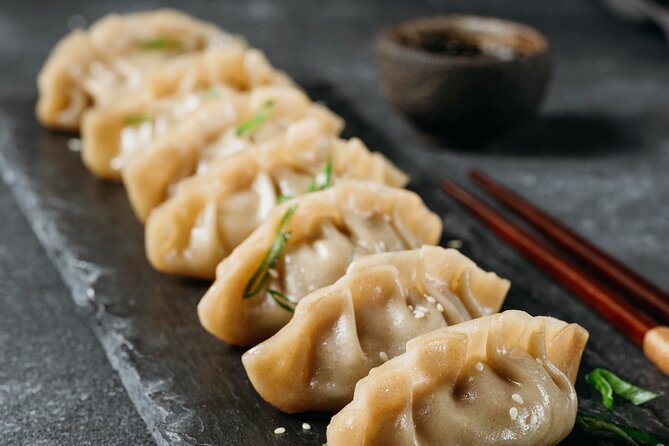
The meeting point is at 230-1 Kamimyōkakujichō, Nakagyo Ward, Kyoto, 604-0025, and the activity ends back at the same location. It is near public transportation, which helps if you are juggling multiple neighborhoods.
Because the class includes cooking on-site, plan to eat lightly beforehand. You will want an appetite, but you also do not want to arrive so full you lose the satisfaction of tasting your own dumplings. If you are doing other Kyoto food stops the same day, choose one big meal plus this class, not three heavy meals in a row.
This is a good fit for:
- Couples who want a shared hands-on memory
- Families with older kids who can follow instructions and enjoy making food
- Foodies who like technique, not just trying dishes
- Anyone who wants a Kyoto activity that is more than a photo stop
Things to watch for before you go
The biggest consideration is time and budget. You are paying for instruction plus equipment plus a structured meal of what you make, so it is best when you are ready to commit to the process.
Also, private transportation is not included. That means you should plan how you will reach Nakagyo Ward using public transit or a taxi or ride-share. The good news is the meeting point is near public transportation.
Finally, the samurai armor is optional. If you are traveling with limited photo energy, you can skip it. The core learning experience does not depend on doing the costume part.
Should you book this gyoza class in Kyoto?
Yes, if you want a hands-on Kyoto experience where you leave with more than photos. The class is built around real skill: making wrappers, choosing fillings, folding gyoza, and cooking them properly on a professional machine.
Book it especially if you have even a mild interest in cooking at home. This is one of the rare activities where your effort turns into something you can repeat.
If your main goal is bargain food or quick sightseeing, the price may feel steep. In that case, I would prioritize a less structured meal. But if you want an evening with genuine payoff, clear instruction, and an at-home recipe in your head, this gyoza class is a strong choice.
FAQ
How long does the gyoza cooking class last?
The class runs about 1 hour 30 minutes.
What is included in the price?
You get an English-speaking instructor and cooking tools provided for the class.
Do I need to bring my own transportation?
Private transportation is not included, so you will need to arrange how you get to the meeting point yourself.
How many people are in the class?
The class has a maximum of 20 travelers.
Will we cook the gyoza with equipment or just by hand?
You will cook the gyoza using a professional baking machine.
Can I get a full refund if I cancel?
Yes. You can cancel for a full refund up to 24 hours in advance of the experience start time.
Kitchens You Can Book Into
Newest Kyoto write-ups from the Loving Japan desk

Japanese Cooking Classes, side by side.
 ★ 5.0Sushi Making Tokyo Roll and Authentic Japanese Sushi ClassFrom $593,971 reviews
 ★ 4.9Roll and Authentic Sushi Making Class in AsakusaFrom $581,957 reviews
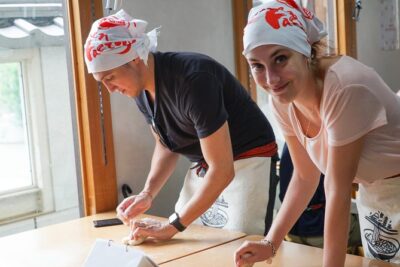 ★ 5.0Ramen Cooking Class at Ramen Factory in KyotoFrom $1311,937 reviews
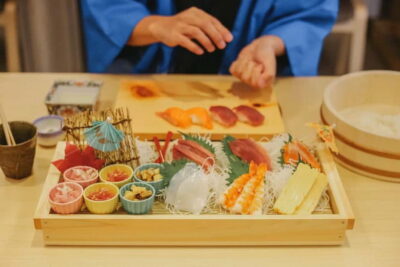 ★ 4.9Sushi Making Class in a Happi Coat near a Famous SpotFrom $421,377 reviews
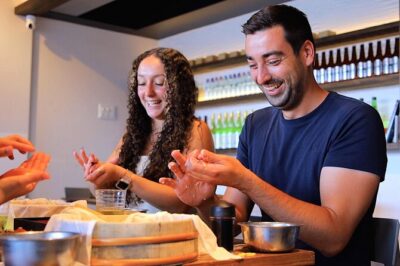 ★ 5.0Sushi Making Osaka Roll and Authentic Japanese Sushi ClassFrom $311,220 reviews
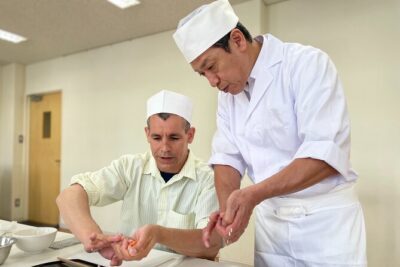 ★ 5.0Tokyo Sushi Making Class in Tsukiji with Professional ChefFrom $491,177 reviews
 ★ 5.0Ramen & Gyoza Cooking Class in Tokyo with Local Supermarket VisitFrom $122823 reviews
 ★ 5.0Tsukiji Fish Market Guided Tour and Sushi Making with Pro ChefFrom $104775 reviews
Filed on these lists too