
REVIEW · JAPANESE CRAFT AND CALLIGRAPHY WORKSHOPS
Ikebana Traditional Japanese Art of Flower Arranging
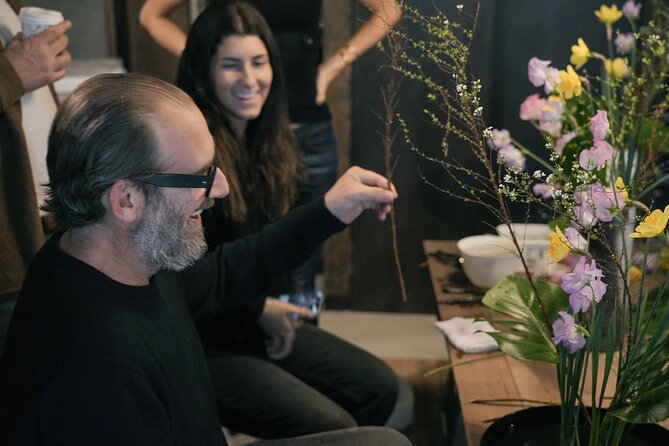
Ikebana turns flowers into something you can think with. This Kyoto class pairs hands-on arranging with a calm, traditional approach to balance and wabi-sabi simplicity. You will learn how to give freshly cut stems new purpose, using their natural shape instead of forcing them to behave.
I especially like that the instruction is practical and guided, so you are not just watching pretty bouquets happen. You also get two core beginner styles taught in a short 1 hour 30 minutes slot, with tips that help your arrangement last longer than you might expect.
One consideration: the class is brief, so you get a solid entry point, but you should not expect a deep lecture on every ikebana school or theory.
In This Review
- Key things to know before you go
- Why Ikebana Feels Different Than a Flower Workshop
- Price and Timing: What $72.26 Buys You in Kyoto
- Where You Meet in Kamigyo Ward (and How to Plan Your Walk)
- Inside the 90 Minutes: The Flow of Your Lesson
- Two Classic Styles: Nageire and Moribana Basics
- Nageire style (what you learn conceptually)
- Moribana style (what you learn conceptually)
- Seasonal Flowers: Why What You Use Matters
- Fresh-Flower Care Tips That Aim for Up to Two Weeks
- Mindfulness and Wabi-Sabi: Calm Instruction, Real Technique
- What You’ll Appreciate About the Instructor (Mana’s Style)
- Bringing Your Arrangement Home (and Making It Last)
- Best Fit: Who Should Book This Kyoto Ikebana Class
- Should You Book This Tour, or Skip It?
- FAQ
- How long is the Ikebana class in Kyoto?
- Where does the class take place?
- Is the class taught in English?
- How many people are in the class?
- What will I learn during the session?
- Do I get a ticket on my phone?
- Is there transportation nearby?
- What is the cancellation policy?
Key things to know before you go
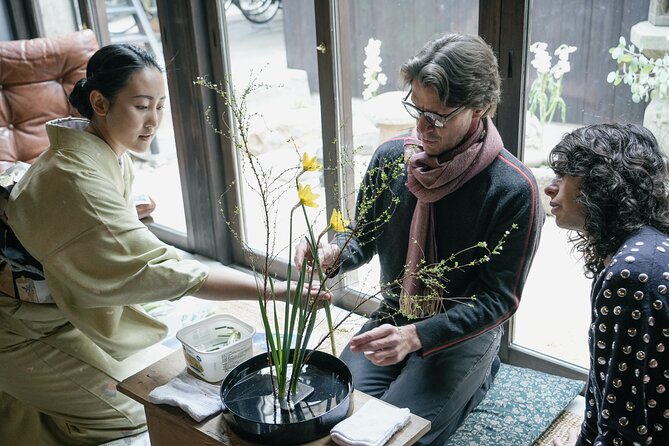
- Small group size (max 6), which means you can ask questions and get hands-on feedback
- English-speaking ikebana expert, so you can focus on technique, not translation
- Two classic beginner styles taught (Nageire and Moribana), so you can compare approaches fast
- Seasonal flowers and fresh-care guidance, with advice aimed at making blooms last up to two weeks
- Hands-on mindfulness through wabi-sabi aesthetics, not just a craft activity
Make something to take home. Other workshops
- Kyoto : Chopsticks Making Workshop in Gion with Engraving Option
★ 5.0 · 958 reviews - Authentic knife making experience at a blacksmith in Kyoto
★ 4.8 · 350 reviews - Kyoto: Calligraphy class at Buddhist temple in city center
★ 5.0 · 167 reviews - Roketsu dyeing experience: M course Roketsu Dyeing Experience
★ 5.0 · 163 reviews
Why Ikebana Feels Different Than a Flower Workshop
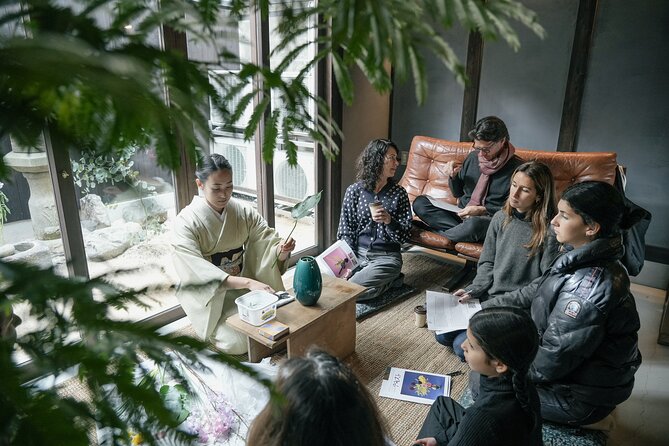
If you have done Western-style bouquet-making, ikebana will feel like a new language. The goal is not a full, rounded look. Instead, you arrange freshly cut flowers as living material, using each stem’s natural character to create harmony and balance.
The philosophy is built around the idea of giving life to the flowers by paying attention to how they are already shaped. That might sound poetic, but the practical result is that the stems, angles, and negative space all matter. You end up making decisions that feel calm and intentional, not rushed.
You also get the wabi-sabi angle, where simplicity and imperfection are part of the beauty. In a class like this, that mindset shows up immediately in how you handle the stems and how you judge the arrangement.
Price and Timing: What $72.26 Buys You in Kyoto
At $72.26 per person for about 1 hour 30 minutes, you are paying for a focused, guided, small-group experience in Kyoto. The value comes from three things: a live English-speaking instructor, seasonal flowers, and a structured format that gets you making something yourself, not just observing.
A short class can be a good thing. If you are on a tight Kyoto schedule, 90 minutes is a manageable slot where you still get a real takeaway. You are also likely to feel less overwhelmed than longer courses that require more pre-knowledge.
One more useful detail: the experience is often booked around 30 days in advance. If you are traveling in peak seasons or you want a specific day, lock in your spot early so you are not hunting last minute.
Where You Meet in Kamigyo Ward (and How to Plan Your Walk)
The class meets in Kyoto, Kamigyo Ward, Tanbayachō at 3481 シンフォニー北野東. The activity ends back at the meeting point, so you are not trying to catch a train in the middle of your session.
You will want to plan your arrival so you are not flustered when class starts. Since the meeting point is near public transportation, you can use the subway or bus and then do a short walk. Still, Kyoto streets can be a little maze-like, so give yourself a bit of buffer.
The upside of a fixed meeting point that doubles as the end point is that you can keep your day simple. You do not need to coordinate onward travel while you are also thinking about your finished arrangement.
- PERFECT KYOTO 1-Day Bus Tour★ 5.0 · 13,518 reviews
- Kyoto: Fushimi Inari, Kinkakuji, Bamboo Grove 1 Day Bus Tour★ 4.8 · 4,316 reviews
- Kyoto: Tea Ceremony in a Traditional Tea House in Kiyomizu★ 4.9 · 3,519 reviews
- Kyoto Geisha Walking Tour: Gion District & Hidden Gems★ 4.7 · 3,273 reviews
- Kyoto: Tea Ceremony Ju-An at Jotokuji Temple★ 4.9 · 3,207 reviews
Inside the 90 Minutes: The Flow of Your Lesson
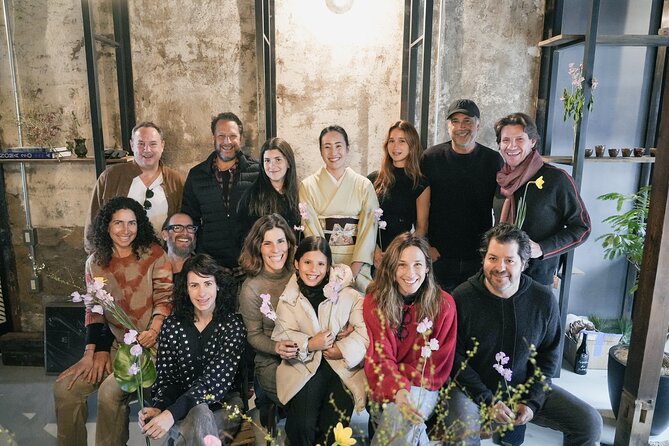
This is not a one-size-fits-all “watch and copy” session. The format is designed to get you from overview to your own arrangement quickly.
First, you get an introduction to the principles of ikebana. Then the instructor demonstrates two arrangements before you start making your own. That demo step matters because it shows you how the same materials can create very different outcomes, depending on the style.
After the demonstrations, you create your own arrangements with guidance. With a small maximum group size, the instructor can correct angles and spacing as you work, instead of leaving you to guess.
By the end, you should leave with something you can display at home, plus the know-how to keep it looking good longer than a typical “grab flowers and hope” bouquet.
Two Classic Styles: Nageire and Moribana Basics
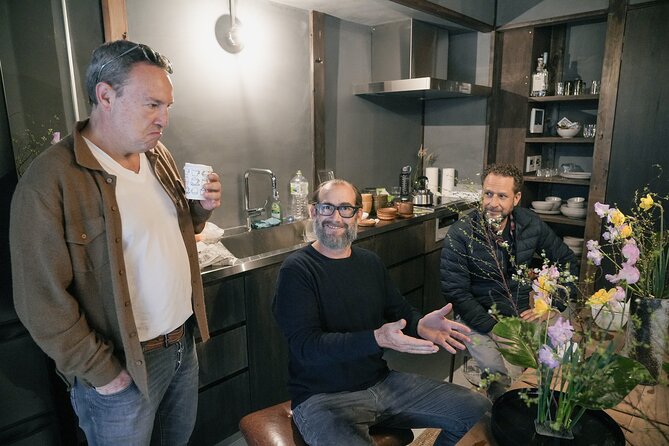
One of the strongest reasons to book this class is that you learn two quintessential beginner styles: Nageire and Moribana.
These are both foundational, and comparing them teaches you more than doing just one style. You start to understand how ikebana thinks about structure.
Nageire style (what you learn conceptually)
Nageire is often associated with a more free-form feeling, where stems look like they belong in a natural gesture. In practical terms, you learn to place stems with confidence, using their character while allowing a slightly dynamic, “leaning” mood.
Moribana style (what you learn conceptually)
Moribana leans toward a more structured look, guided by the container and the way stems rise from it. In class, this is where you practice creating balance and harmony through placement, not by filling every space.
If you are the kind of person who likes seeing options, this two-style approach is a win. You can choose which mood you prefer, and you will know how to replicate the basics with future flowers.
Seasonal Flowers: Why What You Use Matters
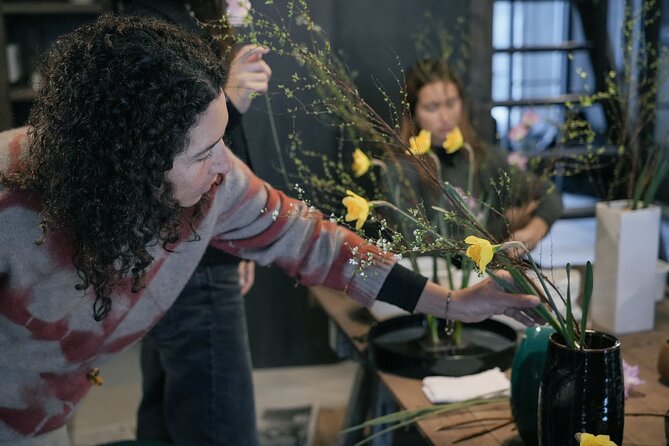
You are working with seasonal flowers, which changes the experience each time. That matters because ikebana is not meant to treat flowers like identical props. Seasonal stems bring different shapes, textures, and natural habits.
In class, you learn to use each flower’s strengths. This is where the “living flowers” concept becomes practical. When you arrange based on natural characteristics, you spend less time fighting the stems and more time composing with what they already offer.
Also, using seasonal flowers is part of how you learn to notice nature in everyday life. You start thinking, even after the class, about what a branch might look like in a vase, and how negative space can support the main stem instead of hiding it.
Fresh-Flower Care Tips That Aim for Up to Two Weeks
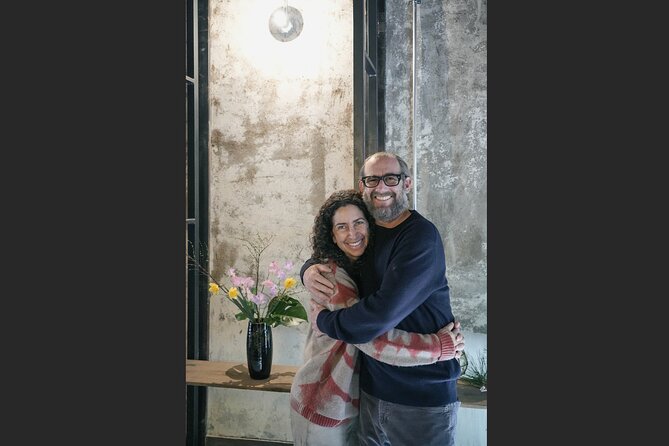
A big perk here is not just making an arrangement, but learning how to keep it fresh. The class includes tips and tricks to maintain your flowers, with guidance aimed at lasting up to two weeks.
Even without knowing every technique in advance, this kind of care advice is valuable because it sets you up to avoid the most common mistake: expecting cut flowers to perform like they are still on the plant.
You will likely learn how to handle freshness, plus what practical steps extend life once the stems are arranged. If you have ever bought flowers that faded in a couple of days, you will appreciate that the instructor is thinking beyond the workshop.
Take this seriously at home. The arrangement you make in class is only as good as the care you give after you leave.
Mindfulness and Wabi-Sabi: Calm Instruction, Real Technique
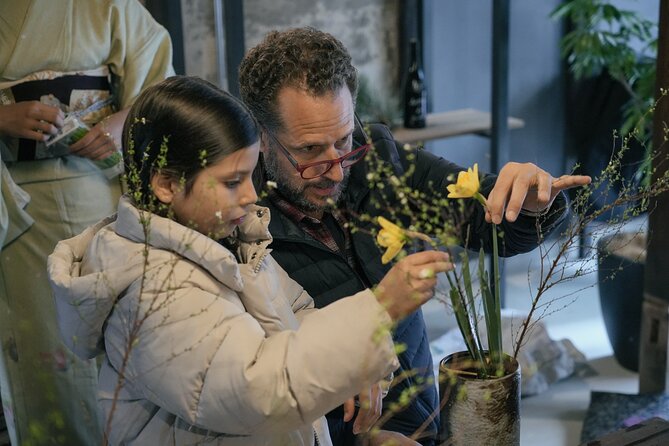
The class describes ikebana as a mindfulness practice, and you can feel how that connects to the physical work. When you are choosing angles, adjusting stem height, and stepping back to evaluate balance, you are naturally slowing down.
This is where wabi-sabi fits. Instead of chasing a perfect, symmetrical outcome, you learn to accept that a slightly imperfect placement can still be beautiful if it supports the whole composition.
From the instructor perspective, the lesson is not only technical. It includes the philosophical meaning behind ikebana, while still keeping the steps clear enough for beginners.
If you want a break from loud, fast sightseeing, this is a good match. It is quiet, hands-on, and focused on attention rather than performance.
What You’ll Appreciate About the Instructor (Mana’s Style)
The instructor name you will hear is Mana. Based on how people describe the session, she is strong at both philosophy and clarity.
People highlight that the demonstrations are easy to follow, and the explanations connect meaning to what you do with your hands. You also get flexibility during the making process, which helps if you are not trying to create a mirror-image arrangement.
Another point worth noting: some classes focus heavily on history or on an overview of schools. Here, you will get the core beginner foundations for ikebana styles used for practical learning. That is ideal if you want results quickly and you learn best by making something, not only hearing about it.
Bringing Your Arrangement Home (and Making It Last)
You will make something you can take with you. Since the class ends back at the meeting point, you can plan to transport your arrangement carefully on the way home.
At home, treat it like a living display. The care tips discussed in class are your roadmap. If you follow them, you give your flowers the best chance to keep their shape and color as they gradually change.
If you want to get even more value from the experience, do this the same day you get back: look closely at what you built. Identify the main stem, the balance elements, and how the negative space supports the structure. That reflection is part of learning, and it makes future arrangements easier.
Best Fit: Who Should Book This Kyoto Ikebana Class
This is a great option if you fit one or more of these profiles:
- You want a short, calm Kyoto activity with a clear creative outcome
- You like traditional arts but do not want a complicated commitment
- You prefer English instruction and hands-on guidance
- You want to learn beginner basics in Nageire and Moribana
- You enjoy mindful activities and minimalist aesthetics
It might be less ideal if you are looking for a long, lecture-style deep dive into the different ikebana schools. The session is designed for beginners to get started with usable technique fast.
Also, check your comfort level with attention to detail. You do not need prior art skills, but you will get more out of it if you are willing to slow down and adjust.
Should You Book This Tour, or Skip It?
Book it if you want a genuinely different Kyoto experience from the usual shrine and market circuit. The combination of small-group instruction, English support, seasonal materials, and the two-style structure makes it a strong introduction to ikebana that you can actually use later.
Skip it if you want a long history lesson, or if you need something that is purely sightseeing-based. This is a working class, not a photo walk.
One last practical tip: because it is often booked about a month ahead, plan early. Then show up a little early so you can settle in before you start arranging.
If you approach it with a calm, beginner mindset, you will come away with both a beautiful arrangement and a new way to notice form, balance, and nature.
FAQ
How long is the Ikebana class in Kyoto?
The experience lasts about 1 hour 30 minutes.
Where does the class take place?
It is in Kyoto, Kamigyo Ward, Tanbayachō, 3481 シンフォニー北野東.
Is the class taught in English?
Yes. It is described as being taught by an English-speaking ikebana expert.
How many people are in the class?
The maximum group size is 6 travelers.
What will I learn during the session?
You will learn traditional ikebana flower arranging using seasonal flowers, including tips to maintain freshness and help the flowers last up to two weeks. You will also work with two beginner ikebana styles: Nageire and Moribana.
Do I get a ticket on my phone?
Yes, it uses a mobile ticket.
Is there transportation nearby?
The meeting point is near public transportation.
What is the cancellation policy?
You can cancel for a full refund up to 24 hours before the experience starts. Confirmation is received at the time of booking.
Made by Hand, and Yours to Keep
Newest Kyoto write-ups from the Loving Japan desk
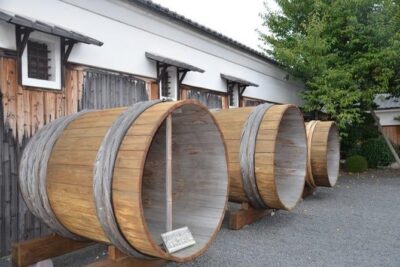
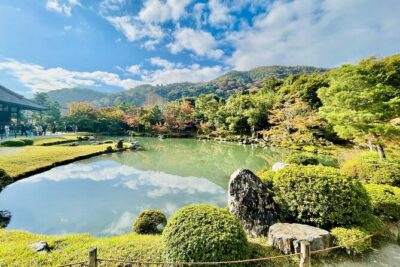
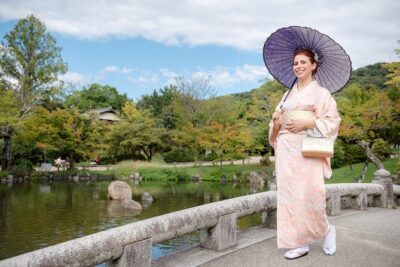
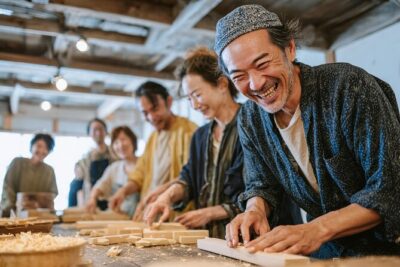
Japanese Craft and Calligraphy Workshops, side by side.
 ★ 5.0Tokyo Shinjuku Chopsticks Making ClassFrom $201,763 reviews
 ★ 4.8Chopstick Making Workshop in GinzaFrom $251,366 reviews
 ★ 5.0Chopsticks Making Workshop in Gion with Engraving OptionFrom $15958 reviews
 ★ 4.8Tokyo Sumo Experience: Chanko & Mochi with a Former ProFrom $103567 reviews
 ★ 5.0Kintsugi Experience: Art of Golden Joinery in TokyoFrom $59467 reviews
 ★ 5.0Tokyo Chopstick Making Workshop with ArtisanFrom $26466 reviews
 ★ 4.9Matcha Making Experience with Mochi Sweets in AsakusaFrom $22388 reviews
 ★ 4.8Authentic knife making experience at a blacksmith in KyotoFrom $154350 reviews
Filed on these lists too