
REVIEW · JAPANESE CRAFT AND CALLIGRAPHY WORKSHOPS
Kyoto: Calligraphy class at Buddhist temple in city center
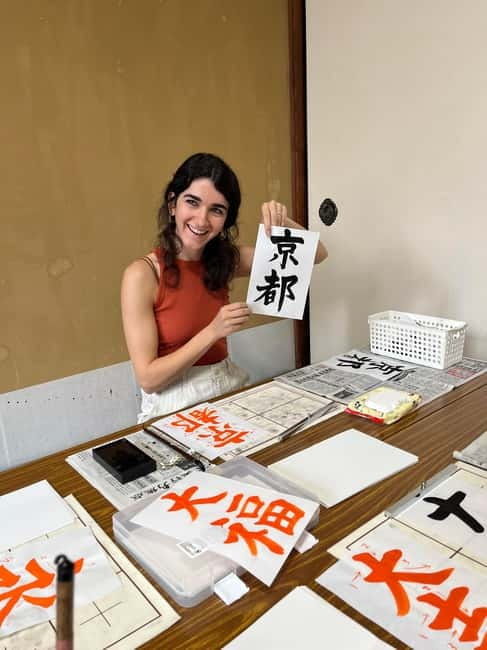
Kyoto calligraphy hits different when ink meets temple air. This 70-minute workshop puts you on tatami inside Seigan-ji Temple, where a Japanese calligraphy teacher guides you through picking a Kanji, practicing the strokes, and completing a piece you can take home. Two things I really like: you get real, step-by-step instruction (with translation support from Jose or Saskia), and the souvenir is personal, your own work on shikishi, plus a small keychain with your chosen character. The one drawback to plan for is that most seating is on the floor with zabuton cushions, and some people find the kneeling posture tough on legs after a while.
What makes this class practical is that it is not just watching. You work through basics first, then you apply them to your word, so you leave with a finished piece instead of a half-done craft. The atmosphere stays calm, not a silent library, but quiet enough that you can focus on the brush.
Quick take: price is $55 and it is worth it if you want a true skill moment, not a quick photo stop. If you want a full temple tour, this is not that kind of session.
In This Review
- Key highlights I think you should care about
- Tatami Seating at Seigan-ji, Meeting Jose and the Workshop Team
- Choosing Your Kanji First, Then Learning What Strokes Really Do
- Tools and Technique in a Washitsu: Ink, Brush Control, and Stroke Pressure
- Your Final Shikishi Piece: Writing With Real Feedback
- The OMIYAGE Moment: Keychain Souvenir and Take-home Keepsake
- Price, Timing, and Value of $55 for Skill, Not a Performance
- Comfort, Quiet Focus, and Who Should Book This Kyoto Workshop
- Should You Book This Kyoto Calligraphy Class?
- FAQ
- How long is the Kyoto calligraphy class?
- How much does the experience cost?
- Where do I meet for the workshop?
- Can I choose what I write?
- Are food or drinks included?
- Is the workshop wheelchair accessible?
Key highlights I think you should care about
- Temple setting in central Kyoto: Learn shodo inside Seigan-ji, with the mood of a real Buddhist space.
- Small group size (up to 6): You get more than one-size-fits-all instructions.
- Your Kanji choice: You pick a character or word, then practice until your final version feels right.
- Tatami and zabuton seating: A real washitsu experience, with some comfort tradeoffs for legs.
- Take-home OMIYAGE: You leave with your shikishi board and a keychain made using your character.
- Step-by-step pacing: Basics first, then your chosen Kanji, with guidance on tools and technique.
Make something to take home. Other workshops
- Kyoto : Chopsticks Making Workshop in Gion with Engraving Option
★ 5.0 · 958 reviews - Authentic knife making experience at a blacksmith in Kyoto
★ 4.8 · 350 reviews - Kyoto: Calligraphy class at Buddhist temple in city center
★ 5.0 · 167 reviews - Roketsu dyeing experience: M course Roketsu Dyeing Experience
★ 5.0 · 163 reviews
Tatami Seating at Seigan-ji, Meeting Jose and the Workshop Team
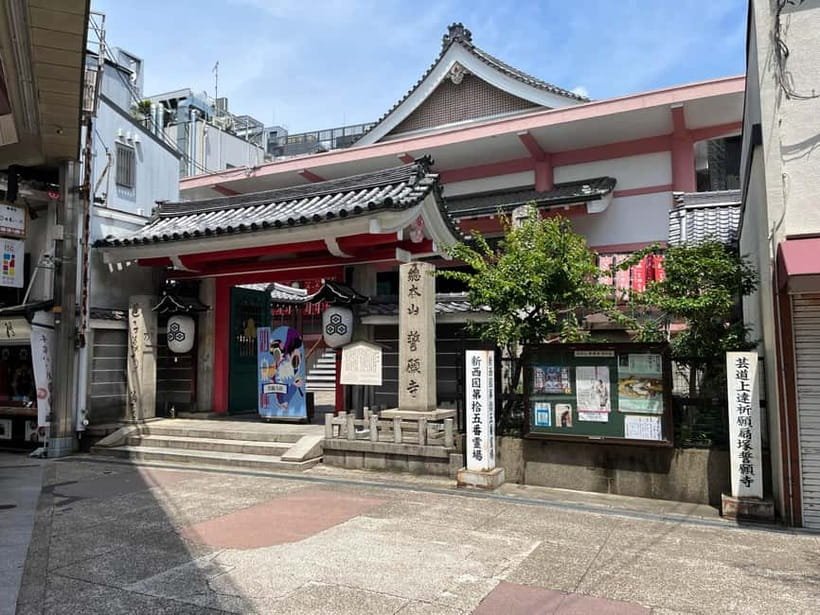
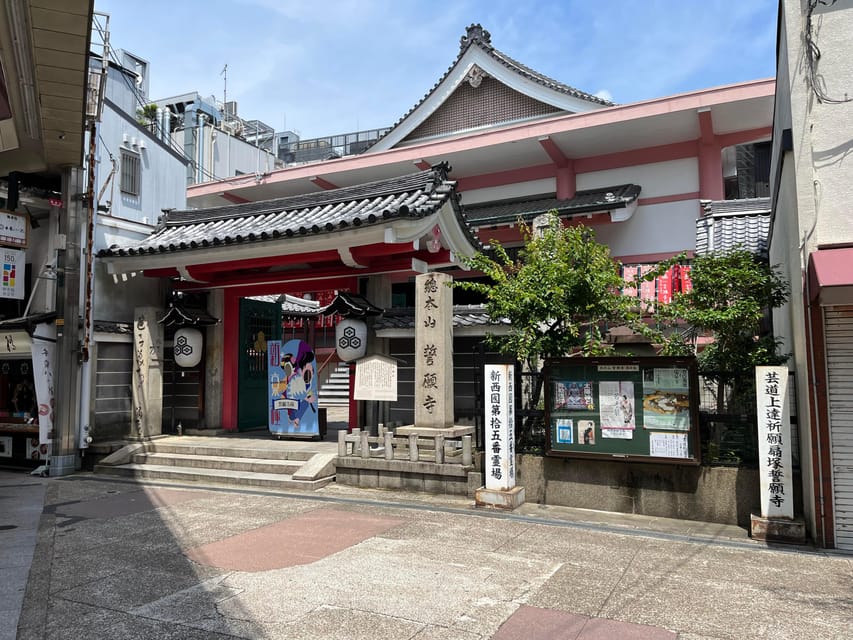
You start right at the temple. The meeting point is in front of Seigan-ji Temple on the SHINKYOGOKU shopping street. Look for the person holding a red lantern on a stick under the roofed part of the street, and wait there.
Once you’re with the team, the flow is simple. You do not need to hunt around, and you should not go up the stairs to enter on your own. Just wait for your host and follow them in when it is time. This keeps the experience smooth for everyone, and it helps you avoid the awkward moment of being unsure if you are in the correct spot.
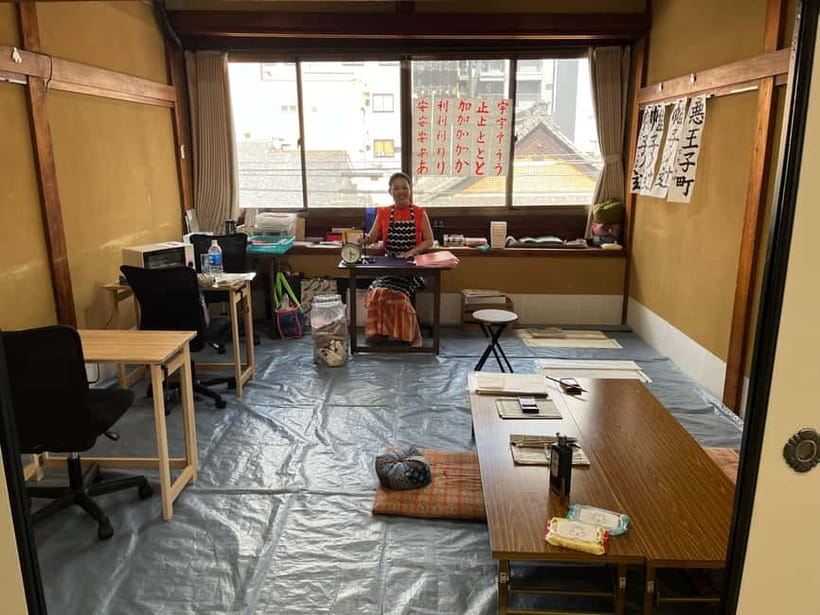
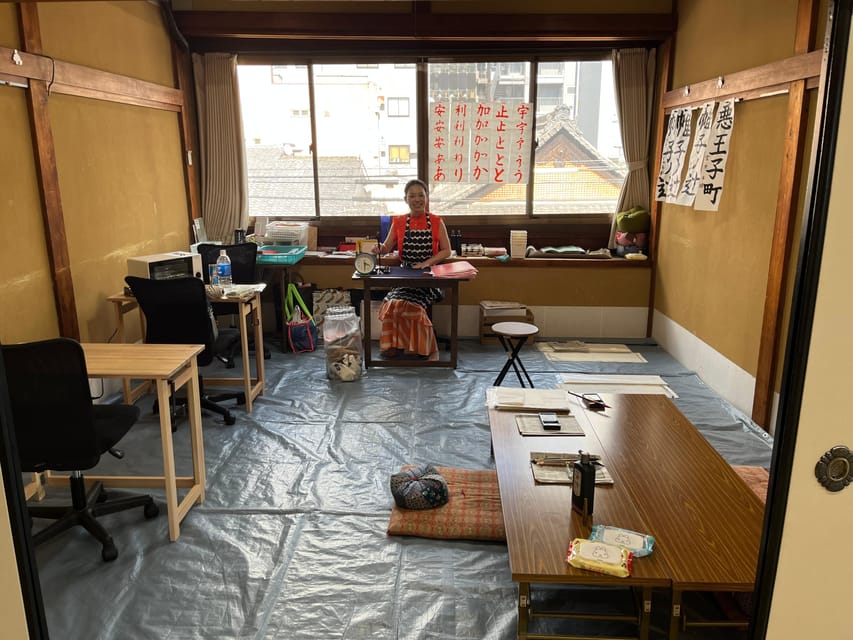
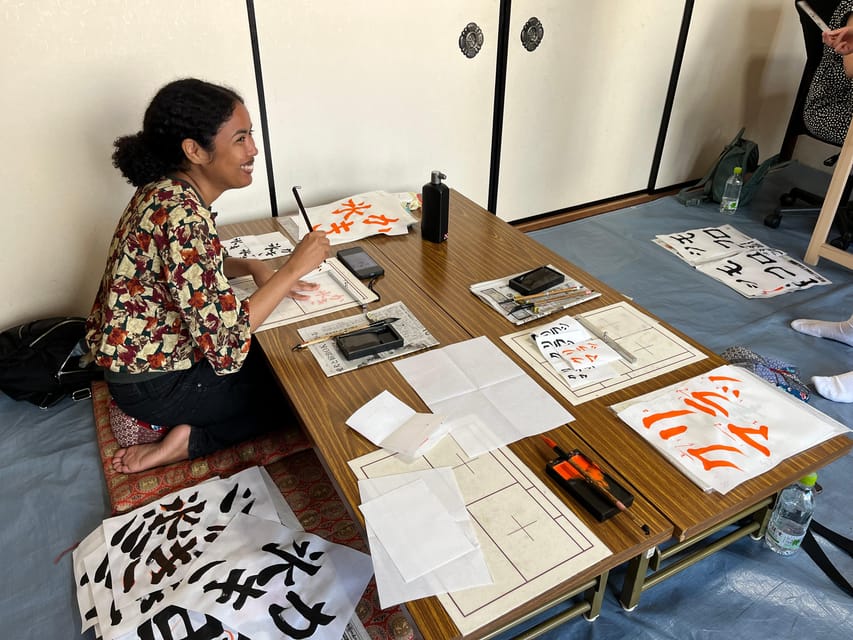
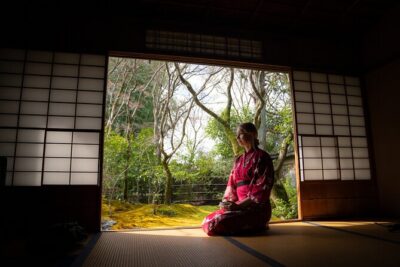
Inside, you shift into Japanese room mode. The workshop happens in a washitsu with tatami flooring. Most guests sit on zabuton (floor pillows). There are desks, but they are limited. That matters because your body position changes the feel of the strokes. Good posture helps your brush control, and floor seating is part of the training environment.
What I like here is how it ties you to Japanese everyday tradition. You are not just copying symbols on paper. You are learning the physical habits that come with writing in a Japanese room, using the real tools, with a teacher who cares about how you hold the brush and how you guide the ink.
Also, the group stays quietly focused. It is not a complete silence bubble, but the writing work naturally creates a calm rhythm. In a city where you might spend the day rushing from shrine to shrine, this feels like a pause you can actually feel in your shoulders.
Choosing Your Kanji First, Then Learning What Strokes Really Do
Before you touch the final shikishi board, you choose what you will write. You select the word or Kanji you want. There are examples you can pick from, but you will get the best results if you come with a few ideas in mind. You do not want to invent your choice five minutes before writing.
The teacher then starts building your piece from the ground up. The session typically follows a clear sequence:
1) introduction with the Japanese teacher and translator support,
2) selection of the Kanji,
3) explanation of the tools,
4) practice of basic lines,
5) practice of your chosen character,
6) final artwork on shikishi,
7) take-home moment.
Two things make this feel authentic and not dumbed down. First, you learn basics like line types before you tackle a full character. Second, you practice the strokes enough to understand the logic of the writing, not just copy a shape.
One detail I really appreciate is pacing advice around fatigue. If you practice too much, your arm gets tired, and the final piece can suffer. That is not poetic. It is a very real technique issue with brush work. So you are aiming for smart practice, not marathon practice.
Translation support is key. The class runs in several languages, and the teacher leads in Japanese. Guides like Jose or Saskia help translate instructions so you actually understand what the teacher means when she corrects your brush angle or stroke flow.
From the reviews, I also see a pattern: the teacher and translator teams work together smoothly, so you are not stuck guessing. People mention individual tips during writing, and that is exactly what you want when you are learning a new skill in front of strangers.
Tools and Technique in a Washitsu: Ink, Brush Control, and Stroke Pressure
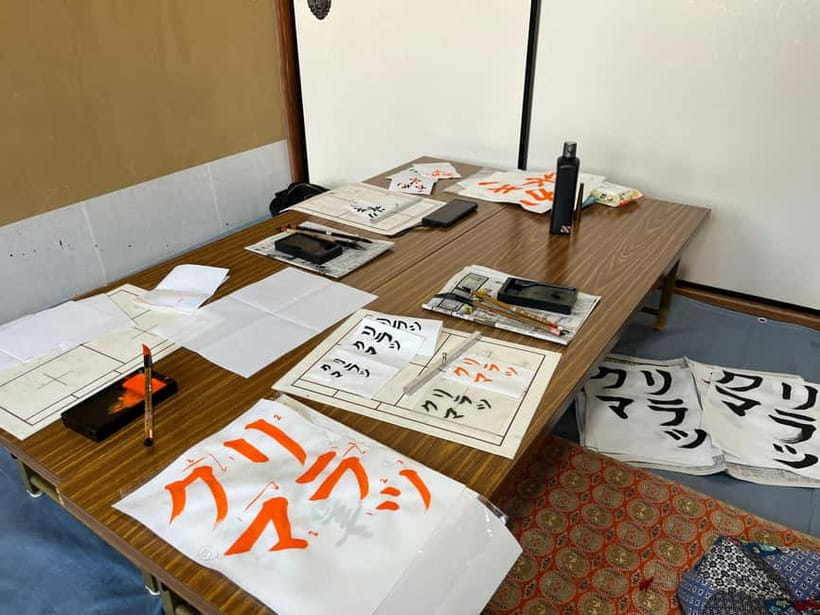
The workshop includes the full tool set, and it matters. You get the writing materials used for shodo, including washi, brush, ink, and specific supplies like bunchi and shitakami. Even if you have never written with brush and ink before, you are not left buying items or experimenting with random supplies.
The teacher shows you how to use the tools, then you try. Expect the class to teach the basics of:
- brush handling,
- controlling the start and finish of a stroke,
- learning how ink behaves as you write,
- keeping your chosen Kanji proportional.
This is where calligraphy stops being just pretty. It turns into technique. Brush calligraphy is sensitive. If your brush angle is off, the stroke changes. If you lift too early or press too late, the line looks wrong.
And here is where the quiet room helps. On a busy street, you have distractions. In the washitsu, your attention narrows. The result is that you can actually feel the difference between a hesitant stroke and a confident one.
I also like the tone. Several reviews describe the lesson as calming, professional, and encouraging. People say the teachers guide you step by step and correct without making it stressful. That is the right balance for beginners. You want honest feedback, not a lecture.
There is also a small human element in how it is hosted. Jose is often mentioned as friendly and supportive, and in multiple comments people appreciated that the guides help with understanding and even take photos as you work. Those little moments help you document the day without breaking the concentration.
- PERFECT KYOTO 1-Day Bus Tour★ 5.0 · 13,518 reviews
- Kyoto: Fushimi Inari, Kinkakuji, Bamboo Grove 1 Day Bus Tour★ 4.8 · 4,316 reviews
- Kyoto: Tea Ceremony in a Traditional Tea House in Kiyomizu★ 4.9 · 3,519 reviews
- Kyoto Geisha Walking Tour: Gion District & Hidden Gems★ 4.7 · 3,273 reviews
- Kyoto: Tea Ceremony Ju-An at Jotokuji Temple★ 4.9 · 3,207 reviews
Your Final Shikishi Piece: Writing With Real Feedback
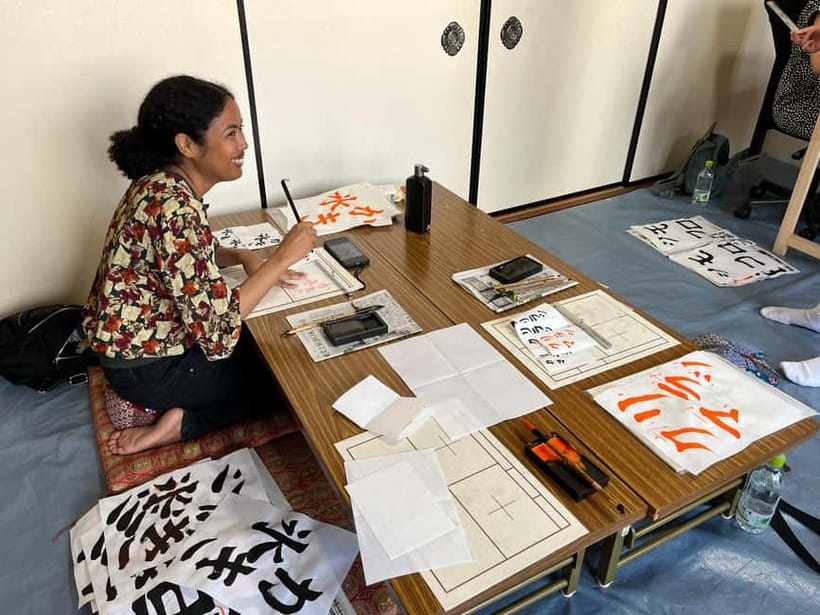
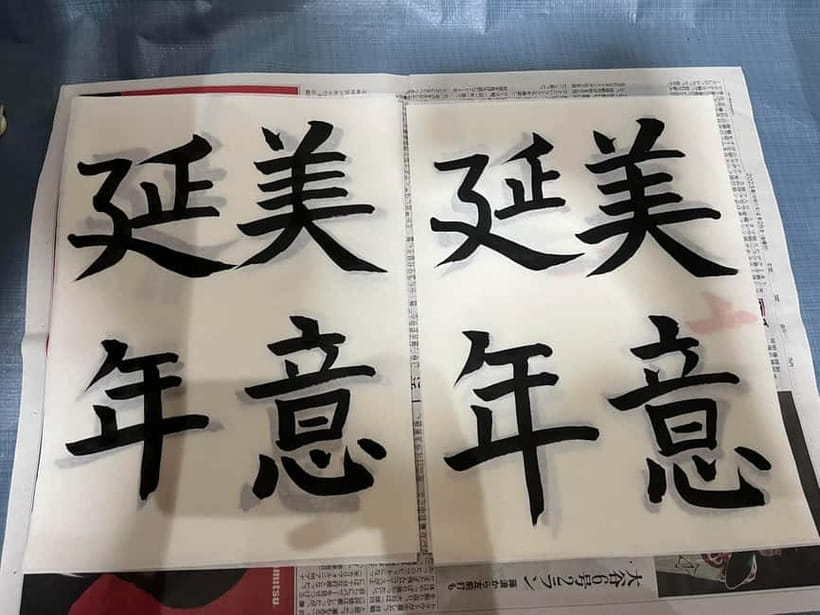
Now comes the main part you care about, your final artwork. After basics and practice, you write your Kanji on a shikishi, a special square board used for calligraphy display. This is the part that feels most rewarding because your earlier practice becomes a finished object.
The session is structured so you do not just jump to a final attempt. You practice basic lines first. Then you practice the character itself. Finally, you complete the shikishi piece. That pacing is why most people come away feeling proud, even if they started with zero experience.
What I think you should watch for while writing:
- Take your time on the first stroke. That one often sets the mood for everything after.
- Do not overthink every second. Your strokes should look intentional, not scrambled.
- Stop at the point where your arm is getting tired. The instruction about fatigue is real, and your final stroke quality matters more than the number of practice attempts.
Also, you are sitting on tatami. That changes how you lean and how you steady your hand. If you plan for it, you will adapt faster. If your legs get sore, you will want to shift your posture gradually, not wait until you are stiff.
Another practical note: some desks are available, but they are limited. If you have mobility constraints related to floor sitting, it is worth thinking ahead about whether tatami seating will work for you comfortably.
The lesson ends with completing your artwork. You get something you can actually keep, something with a personal connection to the character you selected.
The OMIYAGE Moment: Keychain Souvenir and Take-home Keepsake
You do not leave empty-handed. You take home your calligraphy work, and you also get a souvenir keychain featuring your chosen character. The keychain is made for you by the teacher, which is a nice touch because it matches your final piece rather than being a generic item.
In multiple reviews, people say the souvenir is one of the best parts of the experience. That makes sense. A lesson gives you context for what the piece means, and then the physical item becomes a reminder you can display.
If you want to make the experience even more valuable for your memory, plan to take a few photos before you pack up your board. Guides like Jose are specifically mentioned for taking photos, so you will likely have images of your process and your final artwork.
And yes, the atmosphere helps. One big reason people recommend this class is that it is not staged in a classroom. It is in a temple setting, so even if you only spend 70 minutes there, it feels like you walked into something traditionally Japanese.
Price, Timing, and Value of $55 for Skill, Not a Performance
At $55 for 70 minutes, you are paying for more than a souvenir. You are paying for instruction, materials, and a small-group setting.
Here is what makes the pricing feel reasonable:
- You get included tools and materials, so there is no surprise cost at the end.
- The group is capped at 6 participants, so your teacher can actually guide people individually.
- You finish a completed piece on shikishi, meaning the workshop does not stall out at “practice only.”
This is not a silent, make-one-character-and-leave sort of demo. The structure has multiple stages: tool explanation, basics, practice, then a final artwork. That is why people describe it as professional and thorough, and why it often becomes a highlight of a Kyoto trip.
Timing also matters. Seventy minutes is long enough to learn a few key techniques and finish a piece. It is not so long that your interest fades or your body gets overly exhausted. With tatami seating, the length feels like a good balance.
Language support is another value factor. The instructor teaches in Japanese, but the class includes English, Spanish, Japanese, and Dutch options, plus translation support. That helps you avoid the common problem of not understanding what you should be doing with your brush.
Comfort, Quiet Focus, and Who Should Book This Kyoto Workshop
This class is a good fit for people who want a hands-on Japanese cultural activity with real learning. It is especially appealing if you like slower travel moments, something that turns into a personal keepsake.
It is less ideal if:
- you hate floor seating, since most guests sit on tatami with zabuton cushions and desks are limited,
- you want a full temple sightseeing day, since this is a class in a temple space rather than a guided tour,
- you need an experience suited to certain vision needs, since the workshop is not suitable for visually impaired people based on the provided details,
- you are traveling with very young children, because the workshop is not suitable for children under 5.
Good to know: it is a quiet workshop, but not totally silent. You can expect a calm environment while people focus on writing.
Rules are straightforward. Smoking and vaping are not allowed, and you should not have alcohol or drugs. Bare feet are also not allowed. If you like following temple rules, you will feel comfortable here.
If you are someone who wants to understand Japanese culture beyond photos, calligraphy is a smart entry point. You will learn why Kanji strokes matter, how the tools are used, and how a teacher corrects technique. You end up leaving with a physical reminder, and that reminder has actual meaning because you made it stroke by stroke.
Should You Book This Kyoto Calligraphy Class?
I think you should book it if you want a Kyoto activity that trades “checklist” energy for actual skill. The $55 price makes sense because you leave with a finished shikishi piece, plus a keychain souvenir made with your chosen character. You also get a small group format, so you are not ignored while you write.
Skip it if floor seating will make you miserable or if you want a longer temple experience with lots of time walking around. This is a focused 70-minute workshop, and that is exactly its strength.
If you do book, the smartest prep move is simple: decide on a Kanji you like ahead of time. Bring two or three choices, not one. Then go in ready to practice carefully, not endlessly. Your finished piece will look better for it, and you will enjoy the process more.
FAQ
How long is the Kyoto calligraphy class?
The workshop lasts about 70 minutes.
How much does the experience cost?
It costs $55 per person.
Where do I meet for the workshop?
Meet in front of Seigan-ji Temple in the SHINKYOGOKU shopping street. Look for the person holding a red lantern on a stick under the roofed street.
Can I choose what I write?
Yes. You select the word or Kanji you want to write, and there are example options available too.
Are food or drinks included?
No food or drinks are included. You can buy drinks in the vending machines outside the temple.
Is the workshop wheelchair accessible?
Yes, the workshop is listed as wheelchair accessible.
Made by Hand, and Yours to Keep
Newest Kyoto write-ups from the Loving Japan desk

Japanese Craft and Calligraphy Workshops, side by side.
 ★ 5.0Tokyo Shinjuku Chopsticks Making ClassFrom $201,763 reviews
 ★ 4.8Chopstick Making Workshop in GinzaFrom $251,366 reviews
 ★ 5.0Chopsticks Making Workshop in Gion with Engraving OptionFrom $15958 reviews
 ★ 4.8Tokyo Sumo Experience: Chanko & Mochi with a Former ProFrom $103567 reviews
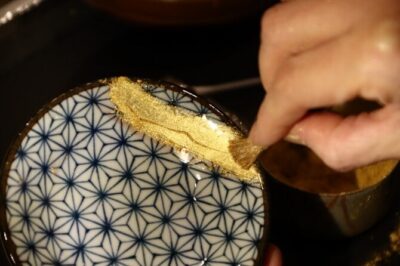 ★ 5.0Kintsugi Experience: Art of Golden Joinery in TokyoFrom $59467 reviews
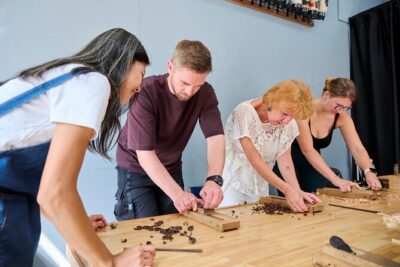 ★ 5.0Tokyo Chopstick Making Workshop with ArtisanFrom $26466 reviews
 ★ 4.9Matcha Making Experience with Mochi Sweets in AsakusaFrom $22388 reviews
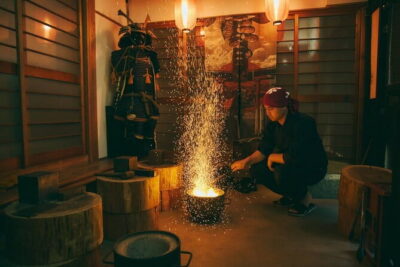 ★ 4.8Authentic knife making experience at a blacksmith in KyotoFrom $154350 reviews
Filed on these lists too