
REVIEW · JAPANESE CRAFT AND CALLIGRAPHY WORKSHOPS
Kyoto: Beginner Knife Sharpening & Handle Fitting Workshop
Fire, steel, and a new knife skill. This Kyoto workshop at HIRAI turns you into someone who can sharpen and fit a handle with confidence, in just 2 hours, with an English guide and a small group of up to 3. The big draw is hands-on sharpening paired with handle fitting, plus a short look at how Japanese knives became what they are today.
I especially like two things. First, you sharpen a knife in the workshop and then take it home, so the skill and the souvenir are the same object. Second, the teaching feels practical and low-pressure, with lots of hands-on correction so you can actually repeat the process later.
One consideration: during the handle fitting you use fire, so smoke and smell can happen. Plan to wear clothes you do not mind smelling a bit smoky for a while.
In This Review
- Knife Sharpening and Handle Fitting in Kyoto, Up Close at HIRAI
- Key Things You Can Do in This 2-Hour Knife Workshop
- Choosing Santoku, Deba, or Yanagi Before You Sharpen
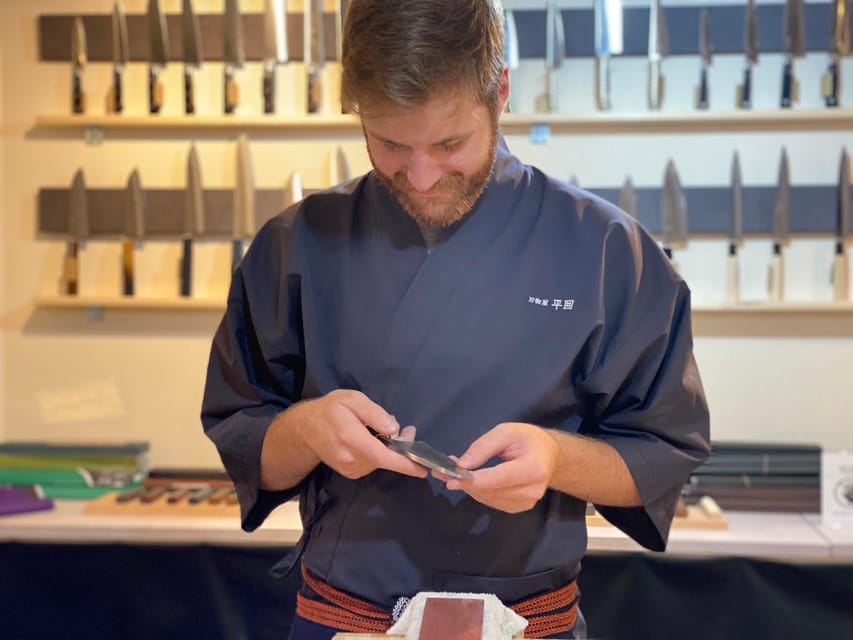
- The Sharpening Lesson That Makes Beginners Feel Capable
- Handle Fitting With Magnolia Wood, Plus the Fire Moment
- Engraving Options, and How to Request It Without Stress
- What You Actually Receive, From Uniform to Take-Home Packaging
- Where the Shop Is, What to Wear, and How to Arrive Smoothly
- Price and Value: What $161 Buys You in Real Terms
- Who This Workshop Fits Best, and Who Should Pass
- Should You Book This Kyoto Knife Workshop?
- FAQ
- What knife types can I choose for the workshop?
- How long is the class and how many people are in the group?
- Is an English guide available?
- Can I take my knife home after the workshop?
- Is engraving included, and how many characters can I request?
- Do I need to bring a whetstone?
Knife Sharpening and Handle Fitting in Kyoto, Up Close at HIRAI
This is the kind of Kyoto experience that makes sense even if you are not a serious chef. You come in as a beginner, and you leave with a functioning Japanese kitchen tool plus the know-how to keep it performing. It is also designed for real day-to-day use, not just a demo you forget by dinner.
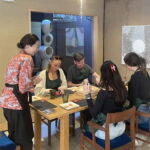
A key detail that shapes the whole experience is the small group size, limited to 3 participants. That keeps the class calm, lets the instructor correct your technique, and makes it easier to ask questions as you go. If you are nervous about sharpening a wet stone, this format helps because you are not waiting for your turn.
Make something to take home. Other workshops
- Kyoto : Chopsticks Making Workshop in Gion with Engraving Option
★ 5.0 · 958 reviews - Authentic knife making experience at a blacksmith in Kyoto
★ 4.8 · 350 reviews - Kyoto: Calligraphy class at Buddhist temple in city center
★ 5.0 · 167 reviews - Roketsu dyeing experience: M course Roketsu Dyeing Experience
★ 5.0 · 163 reviews
Key Things You Can Do in This 2-Hour Knife Workshop
- Choose your knife type for the workshop: Santoku, Deba, or Yanagi
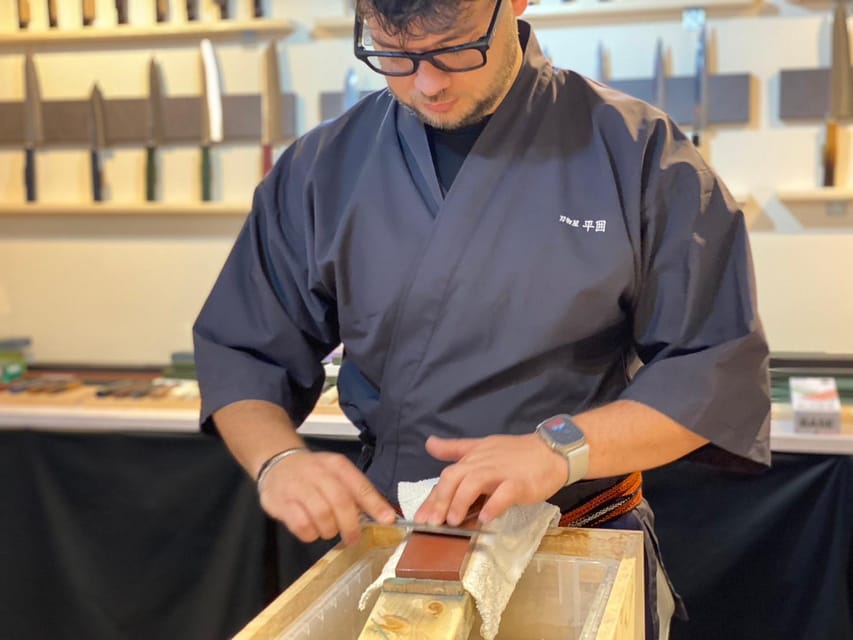
- Sharpen on a whetstone with step-by-step guidance (the shop provides the stone)
- Fit a magnolia tree handle using techniques that may involve fire and smoke
- Add engraving ahead of time, with up to 4 letters
- Take your finished knife home, packaged by the shop
Choosing Santoku, Deba, or Yanagi Before You Sharpen
At the start, you pick one knife for the workshop from three popular Japanese styles: Santoku, Deba, or Yanagi. Even if you do not know which one you want long-term, choosing one gives you a clear target for the sharpening practice.
Here is a simple way to think about it:
- Santoku is often the go-to all-rounder in Japanese-style kitchens.
- Deba is associated with fish prep and firmer cutting tasks.
- Yanagi is linked with long, clean slicing, often for sashimi-style prep.
The workshop is not about turning you into a knife critic. It is about learning the sharpening mechanics so your next knife, no matter the brand, stays sharper for longer.
The Sharpening Lesson That Makes Beginners Feel Capable
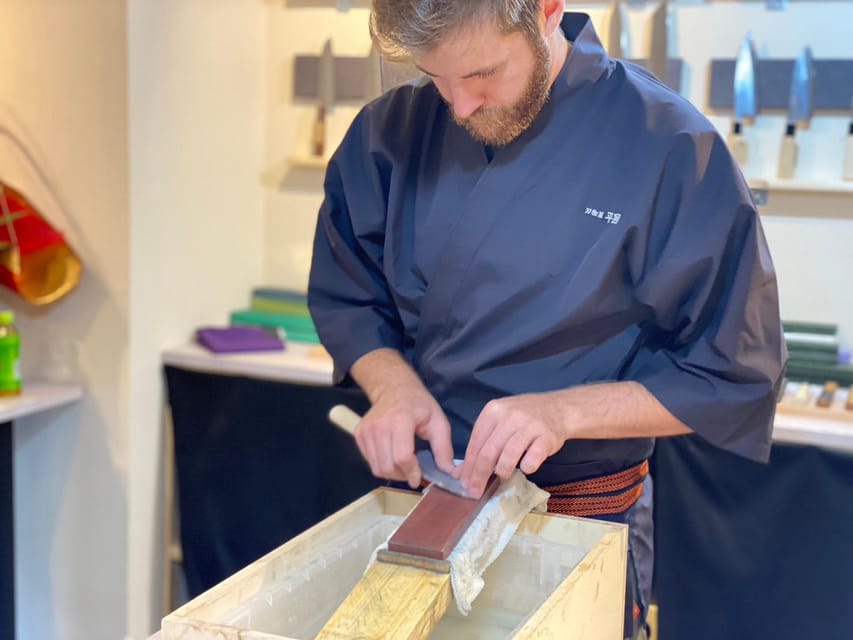
You will do sharpening as a core part of the class, with instruction that is built for beginners. The most useful approach here is not fancy talk, it is clear correction while you practice, so you can fix what you are doing wrong right away. That is exactly what helps when YouTube sharpening videos leave you with good intentions and a dull blade.
Because the shop provides the whetstones, you can focus on technique instead of shopping gear. You also get Japanese knife context during the workshop, so the tools feel less mysterious. In other words, you learn the how and the why, without turning the class into a textbook.
Practical habit you leave with: once you understand the basic sharpening motion, you start seeing what edge you are creating. That makes future touch-ups at home much less stressful.
- PERFECT KYOTO 1-Day Bus Tour★ 5.0 · 13,518 reviews
- Kyoto: Fushimi Inari, Kinkakuji, Bamboo Grove 1 Day Bus Tour★ 4.8 · 4,316 reviews
- Kyoto: Tea Ceremony in a Traditional Tea House in Kiyomizu★ 4.9 · 3,519 reviews
- Kyoto Geisha Walking Tour: Gion District & Hidden Gems★ 4.7 · 3,273 reviews
- Kyoto: Tea Ceremony Ju-An at Jotokuji Temple★ 4.9 · 3,207 reviews
Handle Fitting With Magnolia Wood, Plus the Fire Moment
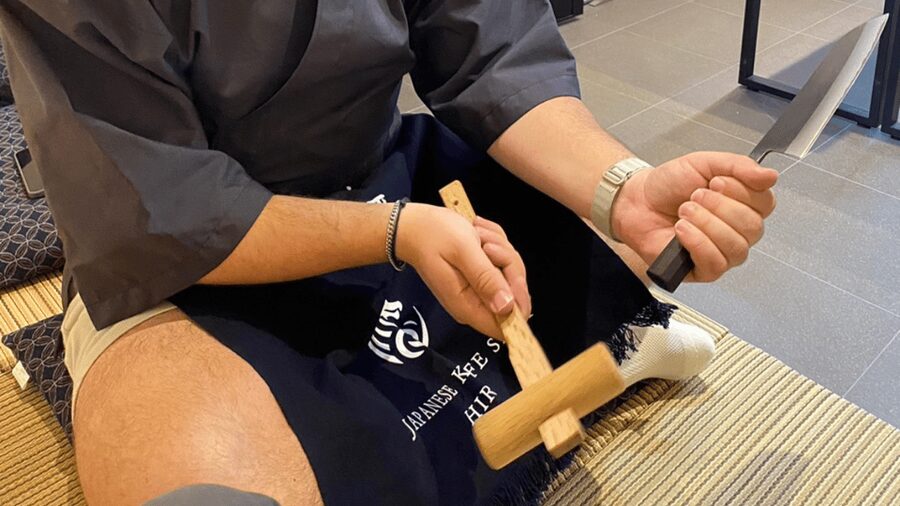
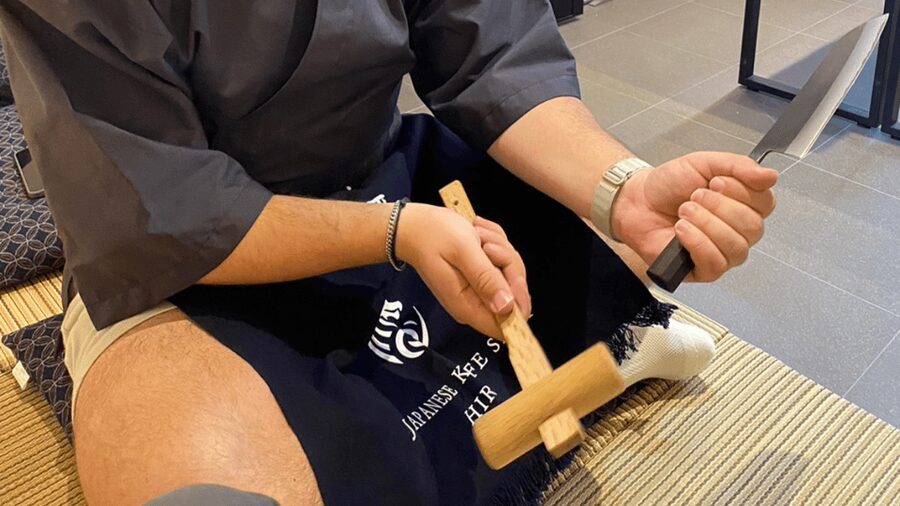
After sharpening, the class moves into handle fitting. The standard handle is a magnolia tree handle, which you attach during the workshop. This is where the experience becomes more hands-on than you might expect, because it is not just sharpening angles. It is also about making the knife feel right in your hand.
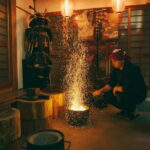
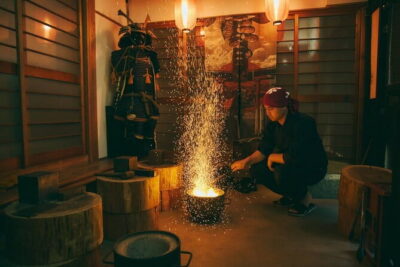
One specific detail to plan for: during the handle fitting, the workshop uses fire, and sometimes smoke comes out. If you do not want your clothes to smell smoky after class, wear something you are comfortable with getting that smell. Bringing a change of clothes for later can also be a smart move if you have dinner plans right after.
If you want a different handle type, you can choose alternatives for an additional fee. The cost changes depending on which handle you choose, so treat upgrades as optional rather than part of the base value.
Engraving Options, and How to Request It Without Stress
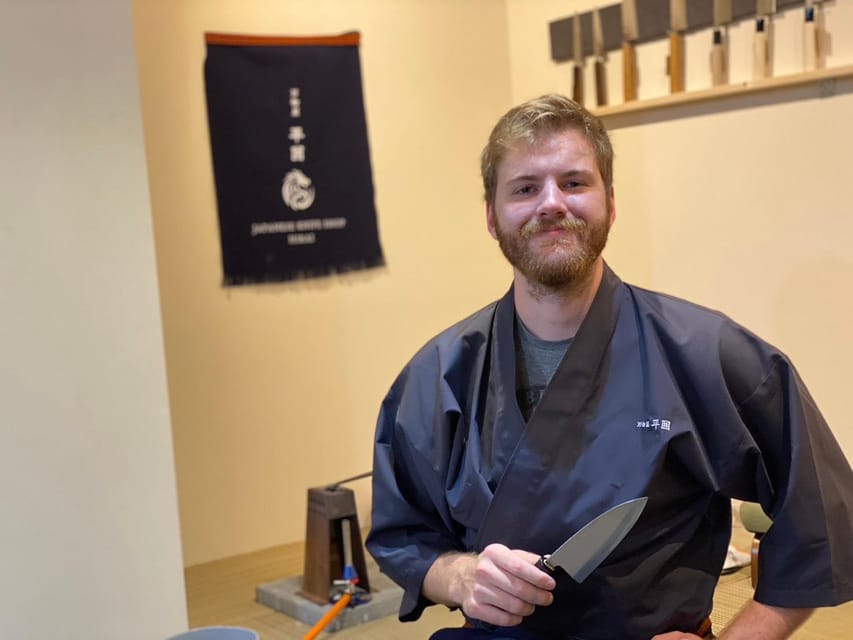
Engraving is available, and it is handled as part of the workshop experience. If you want engraving, you need to let the shop know in advance and specify what you want. The limit is up to 4 letters.
This matters because engraving becomes a small personal choice you can make before the class, rather than an add-on you scramble to decide in the moment. If you like the idea of a Kyoto-made knife that feels like a keepsake, engraving is usually the finishing touch that turns a nice souvenir into something more yours.
What You Actually Receive, From Uniform to Take-Home Packaging
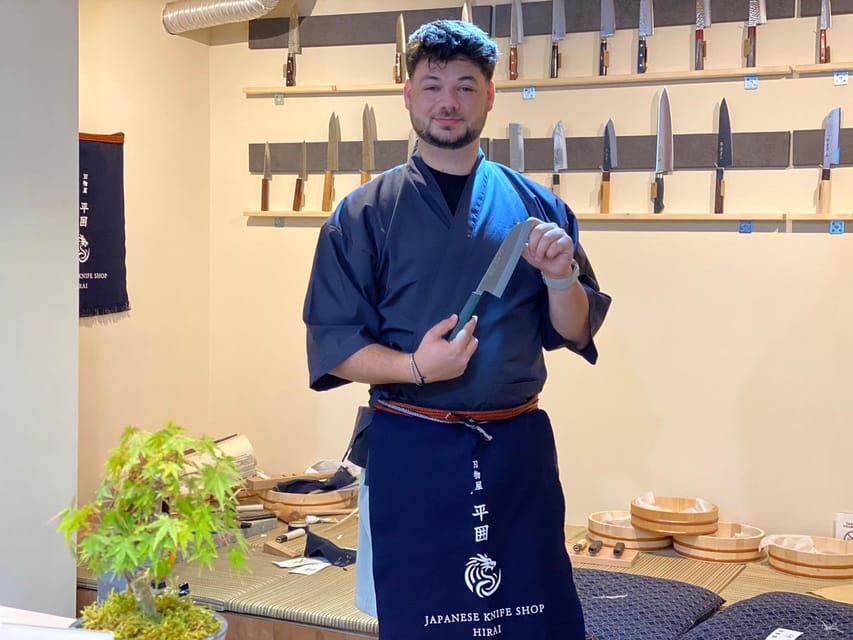
This workshop includes several items that remove friction. You get a Japanese working uniform and apron, so you are not trying to keep your favorite clothes clean while learning sharpening. You also get the knife you sharpen during the workshop, plus the magnolia handle you attach.
You can take your knife home after the workshop. The shop packages it for you, which is handy if you are carrying it through Kyoto later the same day. It also means you do not have to worry about how to transport your newly sharpened edge safely on your own.
If you are the type who likes to see a process end-to-end, this is satisfying. You do not just get instruction, you get a completed tool.
Where the Shop Is, What to Wear, and How to Arrive Smoothly
The meeting point is simple: come directly to the shop. You will see a white storefront curtain on the building. It helps to arrive a few minutes early, because you want to start smoothly.
One practical heads-up based on how the area works: the shop can be tricky to spot in a busy shopping zone. If you are using your phone for navigation, double-check the storefront when you think you are there, then confirm you are looking at the white curtain.
For clothing, the biggest variable is that fire is used in the handle fitting portion. A darker shirt, or something you do not mind smelling like smoke briefly, makes the day easier.
Finally, this workshop is not a noisy hangout. You cannot bring pets, baby strollers, or smoke, and you should keep noise to a minimum. Alcohol and drugs are not allowed either. It is a craft class, so treat it like one.
Price and Value: What $161 Buys You in Real Terms
The price is $161 per person for a 2-hour session. On the surface, that can sound like a lot for a class, until you look at what is included: the knife you sharpen, the handle you attach, the uniform and apron, and the engraving fee if you request it.
That is where the value lives. If you only wanted a Japanese knife, you could buy one. But if you want a knife you understand, and the ability to maintain it, you are paying for instruction plus a take-home tool.
A helpful way to judge it for your budget:
- If you plan to cook regularly and want one good knife you will actually care for, this tends to feel worth it.
- If you just want a quick souvenir and do not care about learning maintenance, you might feel it is pricier than a basic Kyoto craft stop.
Also, the workshop can replace uncertainty. Many people struggle with sharpening on their own. Learning the method with direct feedback lowers the odds you end up with a blade that never gets truly sharp at home.
Who This Workshop Fits Best, and Who Should Pass
This is designed for adults and older teens. The workshop is not suitable for children under 15 years, wheelchair users, and people over 80 years. If mobility is limited, you should treat this as a hard no based on the stated suitability rules.
It also suits certain personalities. If you are curious but a little intimidated by wet stones, this kind of beginner approach tends to work well because you practice, you get corrections, and you leave with something usable immediately.
If you are sensitive to smoke smell, remember the fire step in handle fitting. You can manage that by wearing the right clothes, but if smoke is a deal-breaker, pick another activity that does not include it.
Should You Book This Kyoto Knife Workshop?
Book it if you want a meaningful Kyoto souvenir that also solves a practical problem at home: keeping a Japanese knife sharp. I like that the teaching is hands-on, the group stays small, and you get a completed knife at the end, not just a certificate.
Skip it if your goal is only a lightweight shopping experience, or if you cannot handle the fire and possible smoke smell during handle fitting. Also, if you are expecting a broad, tour-bus kind of itinerary, this is focused and workshop-style, with rules to keep it quiet and safe.
If you fall into the middle, the best move is to come ready to learn. Choose your knife style thoughtfully, decide on engraving in advance if you want it, and wear clothes you are comfortable with after the fire step. Then you will leave with both confidence and a knife that feels like it has a story.
FAQ
What knife types can I choose for the workshop?
You can choose one knife for the workshop from Santoku, Deba, and Yanagi.
How long is the class and how many people are in the group?
The workshop lasts 2 hours and is limited to a small group of up to 3 participants.
Is an English guide available?
Yes. The instructor offers English (and Japanese as well).
Can I take my knife home after the workshop?
Yes. After the workshop, they package your knife so you can take it home.
Is engraving included, and how many characters can I request?
Engraving service is available. If you want it, you need to request it in advance and specify characters, up to 4 letters.
Do I need to bring a whetstone?
No. Whetstones are provided by the shop, and purchasing a whetstone is not included.
Made by Hand, and Yours to Keep
Newest Kyoto write-ups from the Loving Japan desk



Japanese Craft and Calligraphy Workshops, side by side.
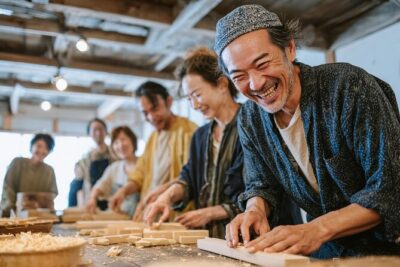 ★ 5.0Tokyo Shinjuku Chopsticks Making ClassFrom $201,763 reviews
 ★ 4.8Chopstick Making Workshop in GinzaFrom $251,366 reviews
 ★ 5.0Chopsticks Making Workshop in Gion with Engraving OptionFrom $15958 reviews
 ★ 4.8Tokyo Sumo Experience: Chanko & Mochi with a Former ProFrom $103567 reviews
 ★ 5.0Kintsugi Experience: Art of Golden Joinery in TokyoFrom $59467 reviews
 ★ 5.0Tokyo Chopstick Making Workshop with ArtisanFrom $26466 reviews
 ★ 4.9Matcha Making Experience with Mochi Sweets in AsakusaFrom $22388 reviews
 ★ 4.8Authentic knife making experience at a blacksmith in KyotoFrom $154350 reviews
Filed on these lists too