
REVIEW · JAPANESE CRAFT AND CALLIGRAPHY WORKSHOPS
Roketsu dyeing experience: M course Roketsu Dyeing Experience
Bucket dyeing lets you make a real Kyoto keepsake. This Roketsu workshop is built around one simple idea: you draw and dye your own design, using the traditional process in a way that feels hands-on rather than like a show.
I especially love the focus on 100% bucket dyeing, because it is the full technique, not a shortcut. I also like the studio’s calm, patient pace, where the instructors guide you step by step and help you get a result you can actually be proud of. One possible drawback to consider: English can be limited, so having a sketch or being comfortable with visual instruction will make it smoother.
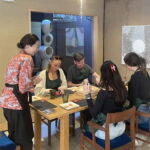
If you want something quieter than temple-hopping, this fits the bill. You’ll sit down, pick (or design) your pattern, apply the wax-resist work, then see your dyed piece become your own.
The overall timing is listed around 90 to 120 minutes, but I would plan on a bit more if you choose a complex design, because the process takes the time it takes and you will not be rushed.
In This Review
- Key things to know before you go
- Roketsu bucket dyeing, not just watching the craft
- Pick your item and design, from stencils to your own sketch
- Choose what to make
- Choose your pattern style
- Do a practice run
- The workshop flow: how your time usually goes
- Step 1: Meet, choose, and get guided
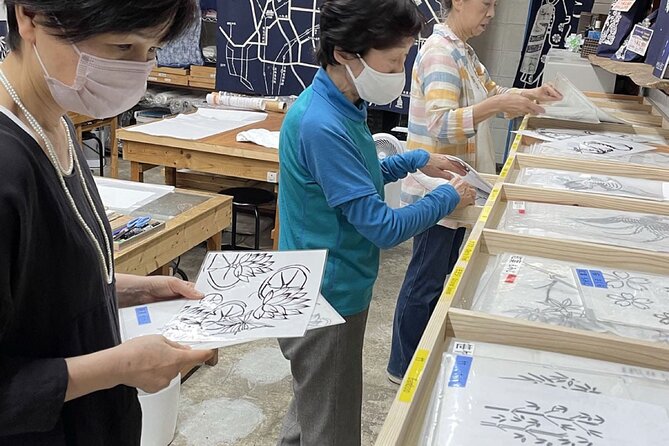
- Step 2: Wax-resist painting
- Step 3: Dyeing in the bucket
- Step 4: Finish and take it home same day
- What you end up with, and why it feels different
- Personal, not generic
- Something you can actually use
- A soothing break from touring
- Teaching style and language reality: plan for visuals
- How to make communication easier
- The human touch
- Location in Kyoto: a calm workshop outside the main tourist crush
- Getting there
- Group size and pacing
- Price and value: why $25.77 makes sense here
- Weather matters, so keep this flexible
- Who should book this Roketsu dyeing workshop
- Book it or skip it? My practical call
- FAQ
- How long is the Roketsu dyeing experience in Kyoto?
- Where is the meeting point for the workshop?
- What can I dye or make during the workshop?
- Can I use my own sketch for the design?
- Is the class beginner-friendly?
- Is weather a factor for this activity?
- Can I cancel for free?
Key things to know before you go
- You control the design: Choose from many patterns or bring your own sketch for an original result.
- Bucket dyeing is the main event: This is the full process, centered on dyeing in a bucket.
- Wax-resist style craft: You paint melted wax onto fabric to create the final pattern effect.
- Take it home same day: Your finished item is made so you can leave with it.
- Small group feel: Maximum group size is 30, and it reads like a hands-on workshop, not a mass class.
- A family-run atmosphere: Guidance often comes from the owner and his mother, with very patient coaching.
Make something to take home. Other workshops
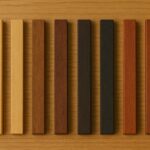
- Kyoto : Chopsticks Making Workshop in Gion with Engraving Option
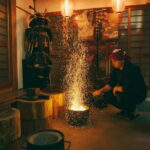
★ 5.0 · 958 reviews - Authentic knife making experience at a blacksmith in Kyoto
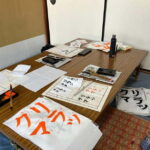
★ 4.8 · 350 reviews - Kyoto: Calligraphy class at Buddhist temple in city center
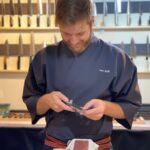
★ 5.0 · 167 reviews - Roketsu dyeing experience: M course Roketsu Dyeing Experience
★ 5.0 · 163 reviews
Roketsu bucket dyeing, not just watching the craft
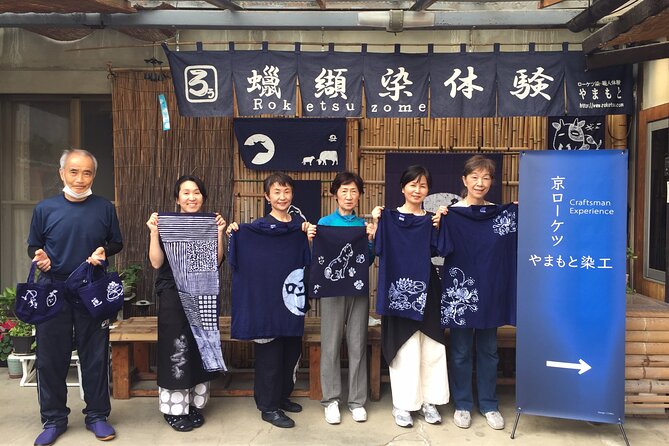
Kyoto is packed with eye candy. This experience is different. Instead of standing around, you get to do the work.
Roketsu is a dyeing technique where wax acts as a resist. In practical terms, that means you create your design before dyeing, and the wax helps control which areas take color. The result is the kind of graphic patterning people recognize as distinctly Japanese textile art.
What makes this workshop particularly appealing is that the goal is not just to learn a few steps. It is to produce something you can wear or hang as a souvenir. The workshop description is very clear about doing the dyeing process itself, and the reviews back up that you are not stuck in observer mode.
Pick your item and design, from stencils to your own sketch
Before you start dyeing, you make two key choices: what you will dye, and what your pattern will look like.
Choose what to make
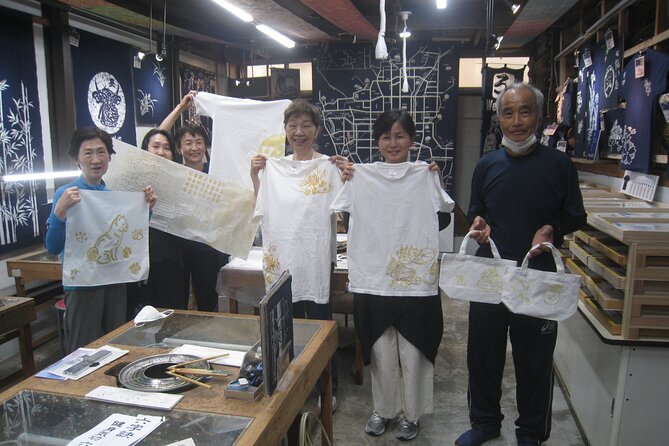
You can typically create items like a T-shirt, tote bag, or a decorative banner/wall hanging, depending on what the workshop offers for your course. Reviews mention multiple item types, and the studio clearly supports different sizes and formats, not just one product.
This matters because your design will feel more personal when it fits your souvenir plan. If you want something you will actually use, a T-shirt or tote bag is the obvious move. If you want something more “Kyoto-on-the-wall,” a hanging banner can be more memorable.
- PERFECT KYOTO 1-Day Bus Tour★ 5.0 · 13,518 reviews
- Kyoto: Fushimi Inari, Kinkakuji, Bamboo Grove 1 Day Bus Tour★ 4.8 · 4,316 reviews
- Kyoto: Tea Ceremony in a Traditional Tea House in Kiyomizu★ 4.9 · 3,519 reviews
- Kyoto Geisha Walking Tour: Gion District & Hidden Gems★ 4.7 · 3,273 reviews
- Kyoto: Tea Ceremony Ju-An at Jotokuji Temple★ 4.9 · 3,207 reviews
Choose your pattern style
You have options:
- Use one of the studio’s many designs, often described as dozens to hundreds of stencils.
- Bring a sketch and make an original version, if you have your own drawing idea.
I like that the workshop gives you structure when you want it, but still leaves room for creativity. If you are not confident drawing freehand, stencils are a lifesaver. If you are more artistic, bringing a sketch can help you translate your idea directly onto the fabric.
Do a practice run
A few reviews describe doing a quick practice on a small piece before you start on your main item. That is smart. It helps you get your hand used to the wax-resist feel without stressing about ruining your final souvenir.
The workshop flow: how your time usually goes
The experience is listed around 2 hours (approx.), with a full journey often described as 90 to 120 minutes. That said, the reviews strongly suggest the class length depends on design complexity and drawing time.
So here is how to think about the timing: you are not paying for a rushed assembly line. You are paying for time to work. If you pick an intricate design, your hands do the talking and you will likely spend longer.
Step 1: Meet, choose, and get guided
You start at Roketsu73 Nishikyogoku Umazukachō, Ukyo Ward, Kyoto (615-0885). The activity ends back at the same meeting point. That is convenient. You do not have to wonder how to get back across town after your workshop.
During the early part, instructors help you select your design and set up. Even with limited English, the teaching is described as very step-by-step and visual, which works well for this type of craft.
Step 2: Wax-resist painting
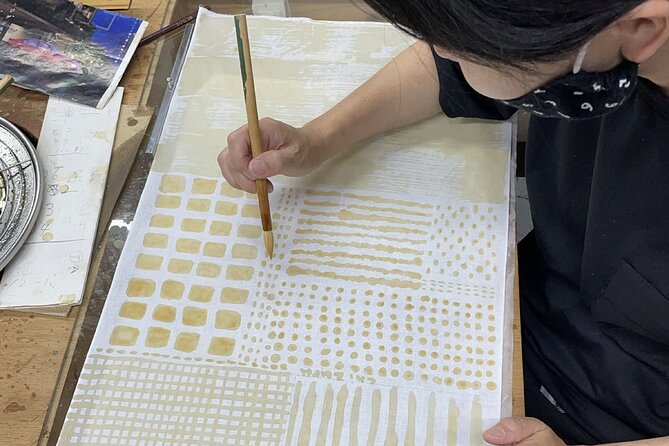
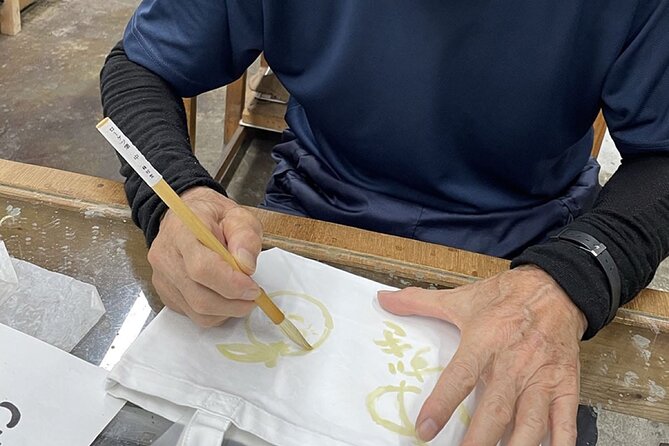
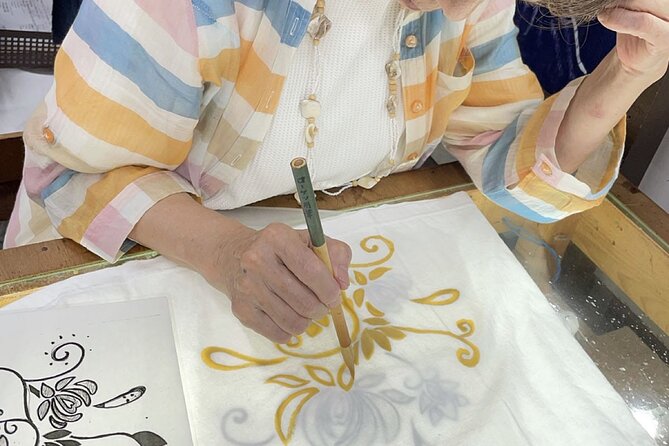
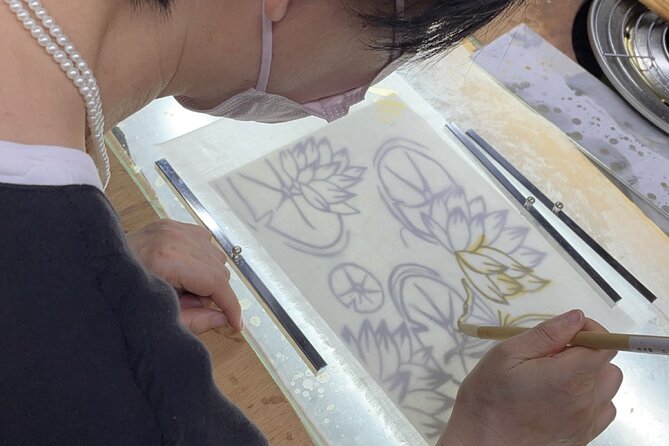
Next comes the wax-resist work. Reviews describe painting melted wax onto the chosen fabric to build your pattern. This is the heart of the technique.
This is where patience pays off. If you go slow and steady, the design tends to look cleaner. If you rush, your edges and lines may show it. The good news is that instructors are repeatedly described as gentle, kind, and not pushy. You get help when you need it.
Step 3: Dyeing in the bucket
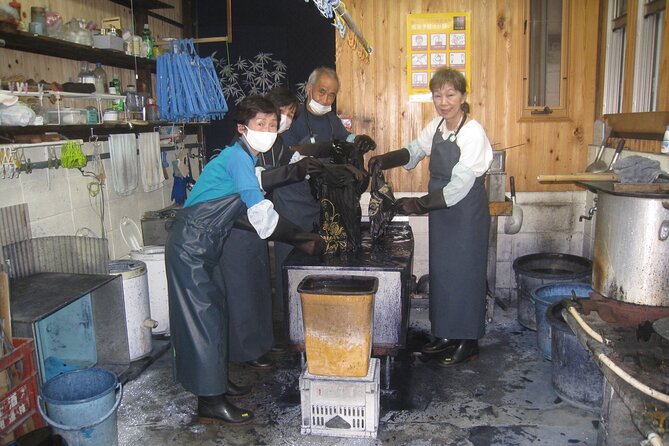
After the wax pattern is placed, the dyeing happens. This is why the workshop is worth seeking out if you care about tradition. The description says it is the only workshop where you can experience 100% bucket dyeing, and the way reviews describe the process matches that hands-on dyeing focus.
You are essentially creating a “resist map” with wax, then letting dye work where it is supposed to. When you see the colors appear, it feels like magic even when you know it is chemistry and technique.
Step 4: Finish and take it home same day
Your finished piece is designed so you can take it out on the day. Multiple reviews mention that you leave with a souvenir you made, not a product sent to you later.
That same-day payoff is one of the biggest practical advantages in Kyoto. You can schedule this between temple visits, or use it to break up long sightseeing days when your feet and attention both need a reset.
What you end up with, and why it feels different
The workshop is priced low enough that it works as a real activity, not just a pricey craft stop. More importantly, it creates a souvenir with meaning.
Personal, not generic
Even when you use stencils, wax-resist dyeing results can vary with conditions and handling. One review notes that it is difficult to recreate the same work from the same rough sketch, and that is part of the charm of batik-style resist work. In other words, your item is not a “kit outcome.” It is a one-of-a-kind result based on your lines and your choices.
Something you can actually use
A lot of dye souvenirs end up living in a drawer. This one tends to get used because it is designed as wearable or hangable art. When the design fits a T-shirt, you get a “Kyoto memory you can wear.” When it is a tote or banner, it becomes decor that reminds you of the day you made it.
A soothing break from touring
Many people book this because they are tired of being on their feet or tired of the constant walking and listening. The studio pace is described as relaxing and therapeutic, with room to slow down and focus on one task. That matters more than it sounds. When your trip rhythm gets too intense, a craft like this can restore your enjoyment of the rest of your day.
Teaching style and language reality: plan for visuals
Here is the honest part that can save you time and stress: language can be limited.
Several reviews say the instructors speak little to no English, but they also say the process is understandable once you are there. The key is that this is a hands-on craft with clear demonstrations. Visual teaching goes a long way.
How to make communication easier
- Bring your own sketch if you have one. It gives the instructors a clear reference point.
- If you do not have a sketch, choose from the available stencils.
- Don’t overthink perfection. The instructors are focused on guiding you to a solid result.
The human touch
A repeated theme is kindness. The owner and his mother are mentioned often, including a review that calls out the mother named Yoko. That family-style support is part of the value. You are not just paying for materials and time, you are paying for patient coaching.
Location in Kyoto: a calm workshop outside the main tourist crush
The meeting point is in Ukyo Ward, at Roketsu73 Nishikyogoku Umazukachō. The workshop is described as being outside Kyoto’s most tourist-heavy areas.
That can be a plus. You escape crowds and noise, and the studio environment feels more like local life than a themed storefront for travelers. Reviews also describe the studio as clean, comfortable, and spacious.
Getting there
The listing notes it is near public transportation. That helps because Kyoto can be awkward if you rely only on taxis. I suggest you plan your arrival with a little buffer, not because the workshop is difficult to find, but because you want time to settle in and start relaxed.
Group size and pacing
The maximum group size is 30 travelers. In practice, craft classes often feel smaller once you are inside, because everyone is working at their own pace. Reviews describe that people who finished earlier did not create a rushed atmosphere.
Still, if you are the type who needs precise timing, do keep in mind that complex drawings can extend the session. The good news is that you feel supported, not pressured.
Price and value: why $25.77 makes sense here
At $25.77 per person, this workshop prices like an easy add-on. But the value is not just the cost. It is what you get for it.
You are paying for:
- Instruction and support during multiple steps (design setup, wax-resist painting, dyeing)
- A take-home finished item made through the dye process
- A real cultural craft that is not a quick factory-style souvenir
In Kyoto, it is easy to spend the same amount on a snack plus a small trinket you will forget. Here you are leaving with something functional or display-worthy that you helped create. That emotional return is part of the value, and the reviews reflect it repeatedly through comments about souvenirs that feel personal and impressive.
Weather matters, so keep this flexible
One practical note: the experience requires good weather. If it is canceled due to poor weather, you are offered a different date or a full refund.
This is not a dealbreaker, but it does affect planning. Kyoto has lots of weather swings. If your schedule is tight, try not to book this as your only option on a day forecast could go sideways.
Who should book this Roketsu dyeing workshop
This is a strong match if you:
- Want a break from temple days and want to sit down and make something
- Love hands-on cultural activities where you control the result
- Appreciate traditional techniques, especially resist dyeing and bucket dyeing
- Want a souvenir that feels personal, not generic
It is also a great family activity. One review describes a group with a 6-year-old, and the tone is that the process is guided and supportive for different skill levels.
If you dislike crafts or you need strict “watch and leave quickly” structure, you might find this too participatory. But if you can handle a quiet, focused workshop, it is exactly the kind of day trip that gives your Kyoto memories another dimension.
Book it or skip it? My practical call
I would book this if you want a take-home artwork and a calm change of pace. The technique is the real draw, and the format is simple: you pick, draw, wax, dye, and you leave with the result the same day.
I would think twice if your schedule cannot flex and you might hit rain, or if you absolutely require detailed English explanations. Even then, the workshop is described as hands-on and visual, so it is often manageable. Just plan to communicate through your sketch or your chosen stencil and follow the steps as they are shown.
If you are on the fence, book it for a day that is not already packed. Treat it like your reset button. Kyoto will still give you the big sights, but you will also come home with something you made, not just something you bought.
FAQ
How long is the Roketsu dyeing experience in Kyoto?
The full journey is about 90 to 120 minutes. It is listed at around 2 hours (approx.), and if you choose more intricate designs you may spend additional time.
Where is the meeting point for the workshop?
The start point is Roketsu73 Nishikyōgoku Umazukachō, Ukyo Ward, Kyoto, 615-0885, Japan. The experience ends back at the meeting point.
What can I dye or make during the workshop?
The workshop includes dyeing items like T-shirts and tote bags, and reviews also mention decorative banners or wall hanging style pieces.
Can I use my own sketch for the design?
Yes. The workshop notes that if you have your own sketch, you can produce original works based on it.
Is the class beginner-friendly?
Most travelers can participate. Reviews also emphasize that you do not need to be an expert artist because instructors provide guidance through the steps.
Is weather a factor for this activity?
Yes. The experience requires good weather. If it is canceled due to poor weather, you will be offered a different date or a full refund.
Can I cancel for free?
Free cancellation is available. You can cancel up to 24 hours in advance of the experience for a full refund. If you cancel less than 24 hours before the start time, the amount paid is not refunded.
Made by Hand, and Yours to Keep
Newest Kyoto write-ups from the Loving Japan desk

Japanese Craft and Calligraphy Workshops, side by side.
 ★ 5.0Tokyo Shinjuku Chopsticks Making ClassFrom $201,763 reviews
 ★ 4.8Chopstick Making Workshop in GinzaFrom $251,366 reviews
 ★ 5.0Chopsticks Making Workshop in Gion with Engraving OptionFrom $15958 reviews
 ★ 4.8Tokyo Sumo Experience: Chanko & Mochi with a Former ProFrom $103567 reviews
 ★ 5.0Kintsugi Experience: Art of Golden Joinery in TokyoFrom $59467 reviews
 ★ 5.0Tokyo Chopstick Making Workshop with ArtisanFrom $26466 reviews
 ★ 4.9Matcha Making Experience with Mochi Sweets in AsakusaFrom $22388 reviews
 ★ 4.8Authentic knife making experience at a blacksmith in KyotoFrom $154350 reviews
Filed on these lists too