
REVIEW · MORNING
Kyoto Early Morning Private Tour with Government-Licensed Guide
Early Kyoto feels like a secret. This private, early-morning tour lets you hit big-name places with way fewer crowds and more breathing room for questions. You can shape your morning around 2-3 chosen stops, then walk through the city as your guide shares what you would normally miss.
What I like most is the personal pacing. In the morning feedback I saw, guides like Tomy timed the start at 6:30am so spots like Kiyomizu-dera and Fushimi Inari were quiet enough to enjoy without rushing, and guides like Rie also built a smooth half-day with an easy finish for lunch.
The other big win is the cultural context. Guides named Yasu, Kay, and Mayumi talked through what you were seeing and how it fits into daily Japanese life, not just temple facts. One drawback to consider: this is a walking tour with no private vehicle, and some major admissions (like Nijo Castle or Kiyomizu-dera) are not included, so you still need to budget a little extra.
In This Review
- Key points I’d use to decide
- Why this early start changes everything in Kyoto
- Private, licensed guide, and how you actually use that time
- The big practical decision: picking 2-3 stops that fit your style
- Stop-by-stop: Fushimi Inari, Nijo Castle, and classic morning drama
- Fushimi Inari-taisha Shrine (usually a free, first-stop choice)
- Nijo Castle (UNESCO, but plan for paid admission)
- Gion and Nishiki Market: two easy wins for a Kyoto morning vibe
- Gion (the geisha district, best handled with a guide)
- Nishiki Market Shopping District (Kyoto’s Kitchen energy)
- Kiyomizu-dera and Higashiyama: the view-and-story combo
- Kiyomizu-dera Temple (big name, plan for admission)
- Higashiyama Ward (historic slopes and wandering)
- Temple variety without the tourist fatigue: Ginkakuji, Nanzenji, Toji, and more
- Ginkakuji (Silver Pavilion) and Zen garden mood
- Nanzenji Suirokaku (Zen temple grounds and a famous sight)
- Toji (East Temple, free admission)
- Kinkakuji (Golden Pavilion, premium payoff with paid entry)
- When your route swings west: Arashiyama bamboo, Tenryuji, and Togetsukyo
- Arashiyama + Togetsukyo Bridge (iconic river walk)
- Bamboo Forest Street (short walk, big mood)
- Tenryu-ji (top Zen temple stop, paid admission)
- Price and value: what you are really paying for
- Logistics that can surprise you: walking tour with limited vehicle support
- The “it might go wrong” reality check
- Who should book this Kyoto early morning private tour
- Should you book it?
- FAQ
- How long is the Kyoto early morning private tour?
- Is this a walking tour, and do I get picked up in a car?
- Can I choose which sites to visit?
- Are entrance fees included?
- Is the guide English speaking and licensed?
- Is this tour private or shared?
- What if I need to cancel?
Key points I’d use to decide
- Start early, skip the worst queues at popular Kyoto landmarks
- Government-licensed, English-speaking guidance that helps you interpret what you see
- Custom route for 2-3 stops so you do not cram too much
- Walking-focused format that gets you close to streets and viewpoints
- Some site admissions are extra, even when the guide is included
Licensed guides working the same ground
- Kyoto 6hr Private Tour with Government-Licensed Guide
★ 5.0 · 1,369 reviews - Kyoto 4hr Private Tour with Government-Licensed Guide
★ 5.0 · 629 reviews - Kyoto: Private Tour with Local Licensed Guide
★ 4.8 · 463 reviews - Private Kyoto Tour with Licensed Guide & Vehicle (Max 15 persons)
★ 5.0 · 417 reviews
Why this early start changes everything in Kyoto
Kyoto gets crowded fast, especially around famous temple gates and shrine paths. When you start early, you feel the city wake up in a gentler way, with fewer people blocking your view.
I also like that the tour is designed around a calmer rhythm. Instead of spending your morning threading through tour groups, you get time to slow down, look up, and ask questions.
And yes, it can get hot or uncomfortable later in the day, so an early departure is not just about crowds. One guide’s note I saw basically summed it up: start early, then enjoy Kyoto before the day turns into a sweat test.
Private, licensed guide, and how you actually use that time
This is a private tour, meaning it is built for just your group. That matters in Kyoto because the difference between a good morning and a stressful morning is often simple things like knowing where to stand, which side to walk on, and what to expect once you reach the next gate.
You also get a licensed local English-speaking guide. In practice, that translates into more than background chatter. Guides named Yoshi, Nabet, Yoji, and Yasu were praised for answering questions about Japanese culture and daily life, not only describing buildings.
The route flexibility is the other key. You do not have to force yourself into a rigid mega-itinerary. You choose 2-3 attractions from the available set, and your guide helps stitch them together into a logical morning.
The big practical decision: picking 2-3 stops that fit your style
Because the tour lasts about four hours, you want to pick stops that work as a morning circuit. If you choose places that are far apart, you may lose time walking between areas and waiting for connections.
Here is the smart way to decide what fits you:
- If you want iconic Kyoto photos with minimal crowds, pick a combo like Fushimi Inari plus a nearby classic area such as Gion or Higashiyama.
- If you prefer architecture and temple interiors, pick one major paid site plus one free shrine or street area.
- If you want atmosphere and wandering, choose a district stop like Pontocho or Nishiki Market as one of your three.
You can also keep it simple and stay focused. A lot of the joy in Kyoto is in the small streets and viewpoints, not only the headline attraction.
- PERFECT KYOTO 1-Day Bus Tour★ 5.0 · 13,518 reviews
- Kyoto: Fushimi Inari, Kinkakuji, Bamboo Grove 1 Day Bus Tour★ 4.8 · 4,316 reviews
- Kyoto: Tea Ceremony in a Traditional Tea House in Kiyomizu★ 4.9 · 3,519 reviews
- Kyoto: Tea Ceremony Ju-An at Jotokuji Temple★ 4.9 · 3,207 reviews
- Kyoto: 45-Minute Tea Ceremony Lesson Experience★ 4.3 · 2,378 reviews
Stop-by-stop: Fushimi Inari, Nijo Castle, and classic morning drama
Fushimi Inari-taisha Shrine (usually a free, first-stop choice)
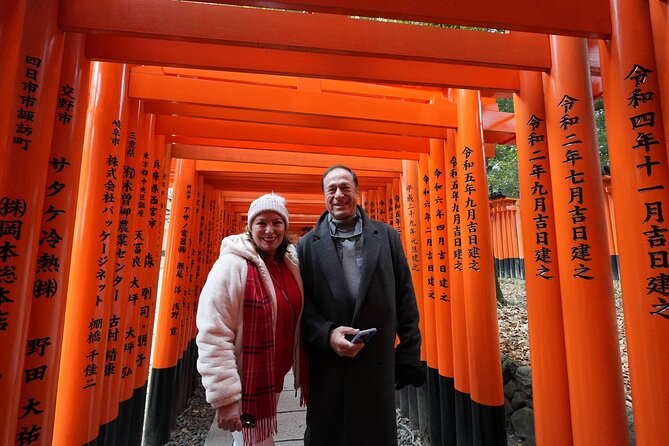
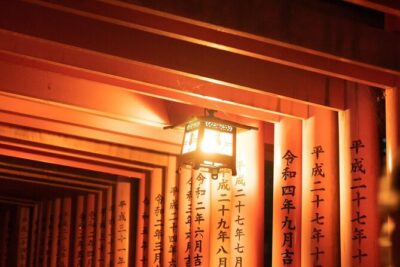
Fushimi Inari is famous for its vermillion-red torii gates, but the point of going early is not just the pictures. In the quiet morning light, you notice details that are easy to miss when people are shoulder-to-shoulder.
The shrine is free for admission, which makes it a good anchor for your morning. If your goal is to feel like you discovered it, early timing is your friend.
Possible drawback: the paths can still be longer than you expect once you start walking into the gate-lined corridors. If you have limited mobility, tell the guide so the route can be adjusted.
Nijo Castle (UNESCO, but plan for paid admission)
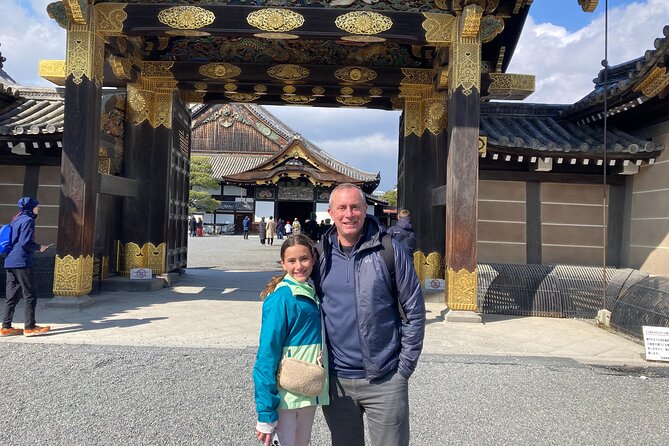
Nijo Castle is a UNESCO site tied to the Tokugawa era, built in 1603 as the Kyoto residence of Tokugawa Ieyasu. The castle is a strong pick when you want something more structured than shrine wandering.
Admission is not included, so you should expect to pay your own ticket. Also, castles involve indoor rooms and staircases, so wear shoes you can move comfortably in.
Why it works in a private morning: the guide can help you pace through the key areas so you do not waste time guessing where to go next.
Gion and Nishiki Market: two easy wins for a Kyoto morning vibe
Gion (the geisha district, best handled with a guide)
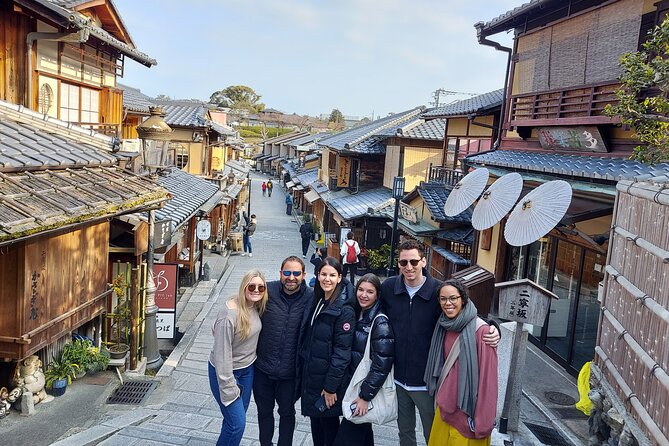
Gion’s narrow streets can feel confusing fast, especially if it is your first time. A guide helps you avoid the dead ends and find the quieter lanes where you can actually enjoy the atmosphere.
Admission here is free, so you get value immediately. You also get the benefit of context, so you understand what you are looking at instead of only recognizing it from photos.
One consideration: early mornings are calmer, but shops and side streets may be less active than later. If your dream is street-level shopping and snacks, pair Gion with a market stop.
Nishiki Market Shopping District (Kyoto’s Kitchen energy)
Nishiki Market is known as Kyoto’s Kitchen, with a stretch of shops and food counters. In a morning tour format, it works well because you can sample, look around, and still keep your schedule tight.
Admission is free, and this is a good place to spend 20 to 30 minutes when your feet need a break from pure temple walking. The tradeoff is that it is a shopping street, so you will spend time deciding what to eat, which is fun, but it can slow you down if you try to do everything.
Kiyomizu-dera and Higashiyama: the view-and-story combo
Kiyomizu-dera Temple (big name, plan for admission)
Kiyomizu-dera is one of Kyoto’s most popular temples, and the early-morning strategy is obvious. When you arrive before the main crush, the grounds feel more contemplative, and you get better space to understand how the complex is laid out.
Admission is not included, so factor in your ticket budget. This is also a location where you might be tempted to rush, but the guide’s job is to help you slow down at the right points for views and viewpoints.
In the feedback I saw, guides specifically highlighted early timing as the reason Kiyomizu-dera could feel relaxed rather than frantic.
Higashiyama Ward (historic slopes and wandering)
Higashiyama is one of Kyoto’s best preserved historic areas, especially along the eastern mountain slopes. It is a perfect match for an early private tour because you can walk at a human pace and let the neighborhood guide you.
Most of it is free to explore, which makes it a high-value addition. The consideration is simple: it is walking, and some streets are steeper than they look on a map.
Temple variety without the tourist fatigue: Ginkakuji, Nanzenji, Toji, and more
You can build a morning around temple styles, not just “temples.” That is a big reason this format can feel better than a one-size-fits-all group tour.
Ginkakuji (Silver Pavilion) and Zen garden mood
Ginkakuji is a Zen temple associated with Ashikaga Yoshimasa’s retirement villa plans. Admission is not included, so this is a paid-stop choice.
It is worth it if you want that specific slow Zen vibe and a chance to pay attention to the garden setting rather than only the landmark structure.
Nanzenji Suirokaku (Zen temple grounds and a famous sight)
Nanzenji is an important Zen temple area with spacious grounds at the foot of the Higashiyama mountains. Admission is not included, but this one tends to reward time spent just walking slowly.
If you want an early morning that feels spacious instead of crowded, this type of temple stop is a smart pick.
Toji (East Temple, free admission)
Toji is part of the Heian-era Kyoto story, and it is free to enter. This makes Toji an easy value stop if you want to keep your paid admissions limited.
Kinkakuji (Golden Pavilion, premium payoff with paid entry)
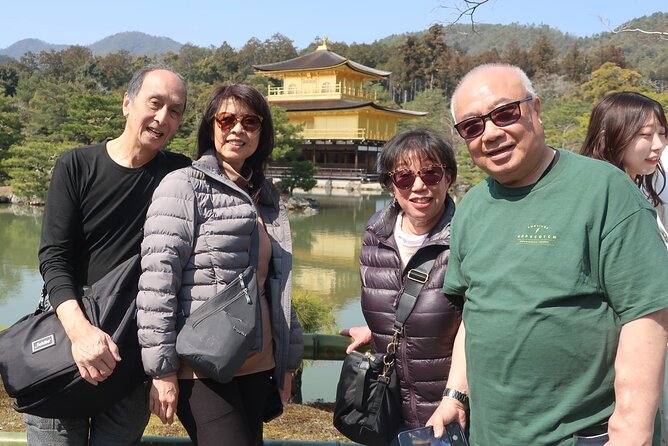
Kinkakuji is the famous Golden Pavilion, with top floors covered in gold leaf. Admission is not included, so plan on paying your own entry ticket.
This is a great stop when your group wants the headline Kyoto icon without losing the morning. The private early format helps you experience it with fewer bottlenecks, even though it will still be popular.
When your route swings west: Arashiyama bamboo, Tenryuji, and Togetsukyo
If your chosen stops include Arashiyama, your morning can take on a different feel, more forest-edge and river-edge than shrine-and-street.
Arashiyama + Togetsukyo Bridge (iconic river walk)
Arashiyama is a well-known district with a long history tied to nobles and the natural setting. Togetsukyo Bridge is a signature landmark, and it is free to see.
This is a good choice if you want photos and fresh air with minimal ticket hassle. The tradeoff is that you may want to start very early to keep the bridge and paths comfortable.
Bamboo Forest Street (short walk, big mood)
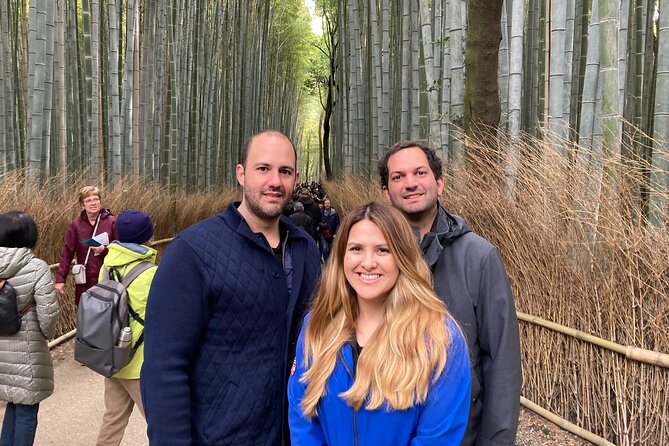
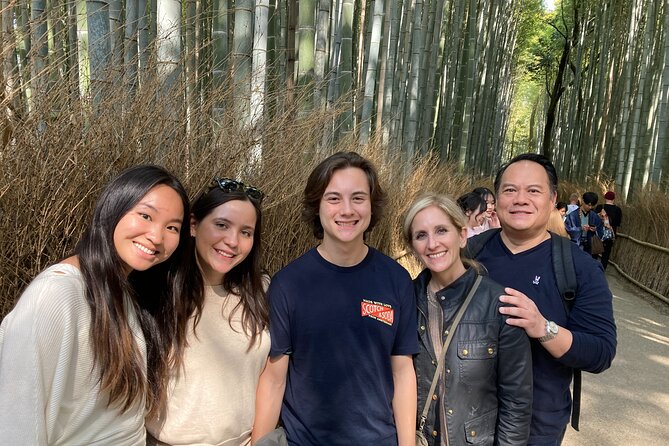
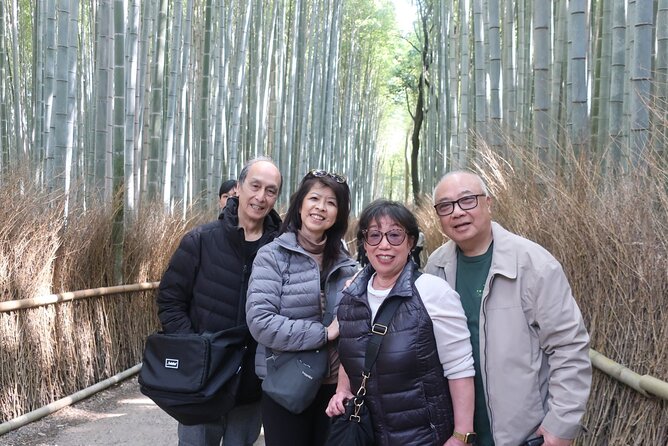
The bamboo paths in Arashiyama can feel magical early in the morning. In the feedback I saw, guides specifically praised the early timing for making the bamboo walk feel like a scene rather than a conveyor belt.
The walking is the point here, and admission is free. Still, you will be walking, so wear shoes you trust.
Tenryu-ji (top Zen temple stop, paid admission)
Tenryu-ji is one of Kyoto’s five great Zen temples and is registered as a world heritage site. Admission is not included, so treat it as your “paid anchor” if you add Arashiyama.
It is worth pairing with free stops around it so your money feels like it buys more than a single ticket.
Price and value: what you are really paying for
The price is $101.82 per person for about four hours, with group discounts offered. That sounds like a premium compared to a basic bus tour, but Kyoto is one of those cities where time and guide attention have real value.
Here is the honest value breakdown:
- You are paying for a licensed private guide who helps you navigate and understand what you see.
- You are paying for flexibility to choose 2-3 stops that match your interests.
- You are paying for an early start that protects your morning from the worst crowd bottlenecks.
Not included costs are the usual suspects: transportation fees, entrance fees, lunch, and any other personal expenses. Some major sights are marked as not included, including Nijo Castle, Kiyomizu-dera, Ginkakuji, Nanzenji, Kinkakuji, and others.
So the best way to think about price is this: the base cost covers your guide and the time. Your total day cost depends on which paid sites you choose.
Logistics that can surprise you: walking tour with limited vehicle support
This is a walking tour, and pickup is on foot. The meet-up point is within a designated area in Kyoto, so do not assume your guide will meet you at a distant hotel entrance with a private car.
Also, there is no private vehicle included. One guide in feedback described using public transportation for getting around, which makes sense for a walking-based private morning.
Another practical note: you cannot combine multiple tour groups. If you are trying to pull together separate bookings into one bigger group experience, that may not work.
Finally, if you are traveling with multiple must-sees, keep your list short. The tour’s strength is focus, not squeezing in everything.
The “it might go wrong” reality check
I always like to say the quiet part out loud: even well-run tours can have problems. One booking issue in the feedback showed a scenario where a guide did not arrive and refunds took time, which is the kind of headache you want to avoid.
How do you reduce risk? Confirm your meeting point clearly the day before. On the morning, be on time and ready to go, and keep your phone accessible in case the guide needs to reach you.
Most experiences run smoothly, but for peace of mind, treat the start time like the most important part of your day.
Who should book this Kyoto early morning private tour
Book it if you want a Kyoto morning that feels controlled and meaningful, not chaotic. It is especially good for:
- First-time Kyoto visitors who want help making sense of temple and shrine culture
- People who hate crowds and want to see the icons before they get slammed
- Small groups who want flexibility, like choosing 2-3 specific stops instead of a fixed route
It might not be ideal if your group needs lots of vehicle-based transit, because it is walking-focused with no private vehicle included. Also, if your must-do list includes many paid entry sites, your total spending may rise.
Should you book it?
If you are the kind of person who cares about timing, routing, and learning as you walk, I think this tour is a strong choice. The combination of early start, licensed guide, and customizable 2-3 stops is exactly how you get more Kyoto per hour without feeling trapped.
If you want to keep costs tight and only visit free sites, you can still build a great morning. Just remember some of Kyoto’s headline temples and castles come with separate admissions, and your total cost will depend on which ones you choose.
FAQ
How long is the Kyoto early morning private tour?
The tour is approximately 4 hours.
Is this a walking tour, and do I get picked up in a car?
It is a walking tour, and pickup is on foot within a designated meeting area. A private vehicle is not included.
Can I choose which sites to visit?
Yes. You can customize your tour by choosing 2-3 sites from the available options.
Are entrance fees included?
Not always. Admission is listed as free for some stops, and not included for others like Nijo Castle and Kiyomizu-dera. Guide entry fees are covered only for sights listed for what to expect.
Is the guide English speaking and licensed?
Yes. You get a government-licensed local English-speaking guide.
Is this tour private or shared?
It is private. Only your group participates.
What if I need to cancel?
You can cancel for a full refund if you cancel at least 24 hours before the experience’s start time. Free cancellation is available up to 24 hours in advance. Service animals are allowed.
Licensed Guides on the Same Ground
Newest Kyoto write-ups from the Loving Japan desk
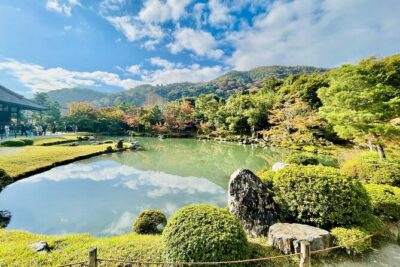
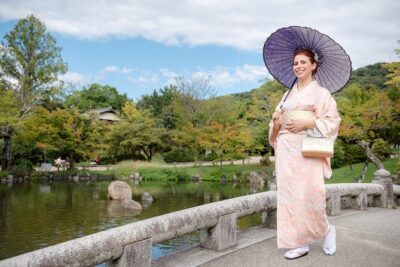
Morning, side by side.
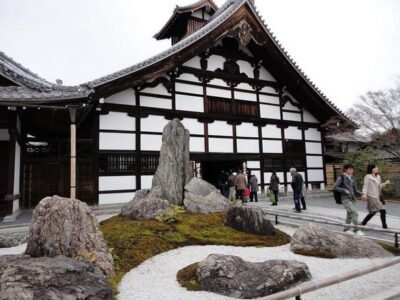 ★ 5.0Kyoto Early Morning Tour with English-Speaking GuideFrom $681,427 reviews
★ 4.9Early Morning Tour with English-Speaking GuideFrom $1011,128 reviews
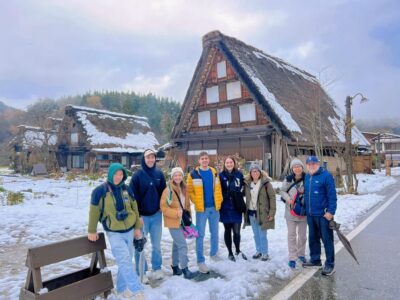 ★ 4.9World Heritage Shirakawa-go Morning Guided TourFrom $77988 reviews
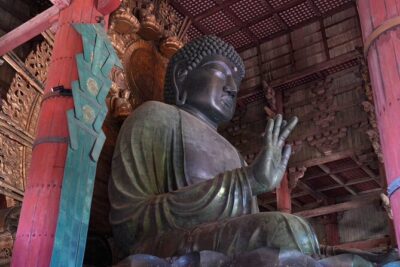 ★ 5.0Nara Early Morning Tour (Kyoto or Osaka Departure Available)From $61676 reviews
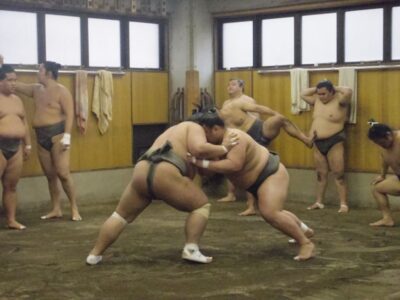 ★ 4.8Sumo Morning Practice Viewing TourFrom $81570 reviews
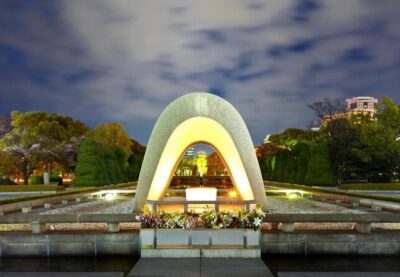 ★ 5.0Hiroshima in a Nutshell: Morning Bike AdventureFrom $72524 reviews
 ★ 4.4Sumo Morning Training VisitFrom $77370 reviews
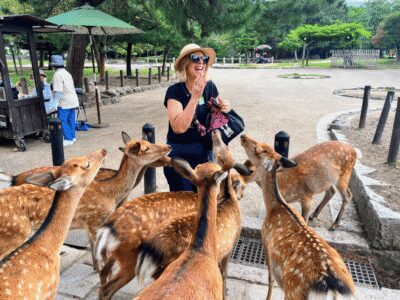 ★ 4.6From Kyoto: Nara Guided Morning TourFrom $77335 reviews
Filed on these lists too