
REVIEW · JAPANESE CRAFT AND CALLIGRAPHY WORKSHOPS
Kyoto: Kintsugi Jewelry Workshop with Natural Stones
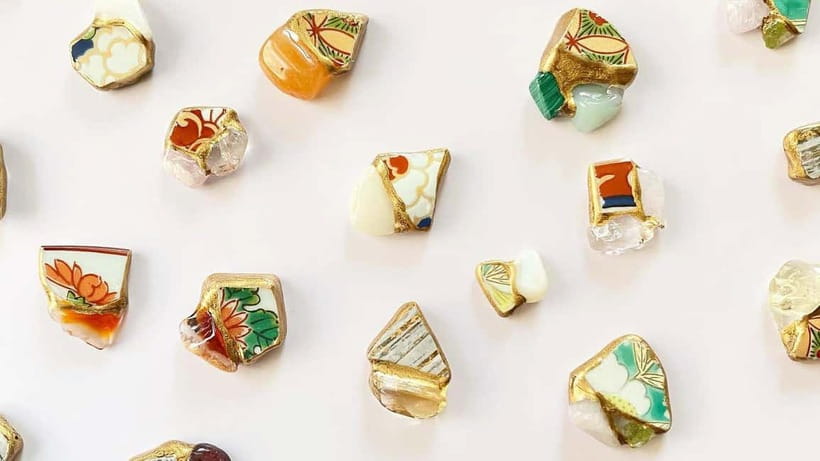
Golden repairs turn broken into wearable art. In this Kyoto workshop, you craft kintsugi jewelry using traditional ideas, but with a modern, allergy-aware approach in a calm, 100-year-old townhouse just steps from Fushimi Inari Taisha.
I love that you make something real to wear, not a quick craft, and you start from upcycled pottery shards plus natural stones. I also like the room to choose your look, from earrings to brooches, while learning what kintsugi means in Japanese culture.
One consideration: this experience is not suitable for wheelchair users, and the atelier is in a traditional townhouse setting with a narrow street near the entrance.
In This Review
- Key things I’d circle before you book
- A quiet creative break near Fushimi Inari Taisha
- What kintsugi means, and why it becomes jewelry so well
- Materials that avoid allergies, and still look like gold
- Picking pottery shards and natural stones for your one-of-a-kind design
- How the 150 minutes usually unfolds at the atelier
- Accessory choices: earrings, rings, necklaces, and more
- English-friendly instruction and a calm, supportive atmosphere
- Price and value: what $106 buys in real terms
- Who this Kyoto workshop suits best
- Before you go: finding the atelier and planning your day
- Should you book this Kyoto kintsugi jewelry workshop?
- FAQ
- How long is the Kyoto Kintsugi jewelry workshop?
- Where does the workshop take place?
- What is the meeting point near public transit?
- Is parking available at the atelier?
- What kinds of jewelry can I make?
- What materials are included?
- Will I be able to learn in English?
- Is the group size small?
- Is the workshop safe for allergies?
- Can I take my jewelry home the same day?
- Is there free cancellation?
Key things I’d circle before you book
- Small group (up to 10) keeps the pace unhurried and personal
- Kintsugi instruction in English and Japanese, with step-by-step guidance
- Synthetic lacquer plus gold powder, designed to avoid allergic reactions
- Pick your materials, including pottery from regions like Arita, Karatsu, Oribe, Kyoto, Shigaraki, and Hagi
- Accessory choice ranges from rings and necklaces to tie pins, cufflinks, and brooches
- Same-day takeaway so your Kyoto souvenir is actually finished when you leave
Make something to take home. Other workshops
- Kyoto : Chopsticks Making Workshop in Gion with Engraving Option
★ 5.0 · 958 reviews - Authentic knife making experience at a blacksmith in Kyoto
★ 4.8 · 350 reviews - Kyoto: Calligraphy class at Buddhist temple in city center
★ 5.0 · 167 reviews - Roketsu dyeing experience: M course Roketsu Dyeing Experience
★ 5.0 · 163 reviews
A quiet creative break near Fushimi Inari Taisha
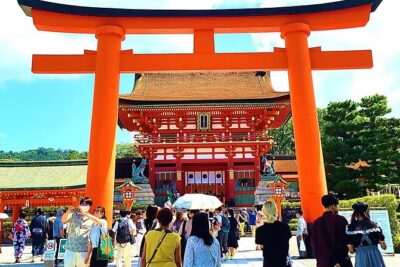
If Kyoto feels like it is moving at full speed, this is a smart counterbalance. You spend 150 minutes creating in a traditional, one-story Kyoto townhouse, with that lived-in calm you only get when a place is not trying to be a theme park. You are also close enough to Fushimi Inari Taisha that you can pair this with shrine time before or after, without giving up an entire day.
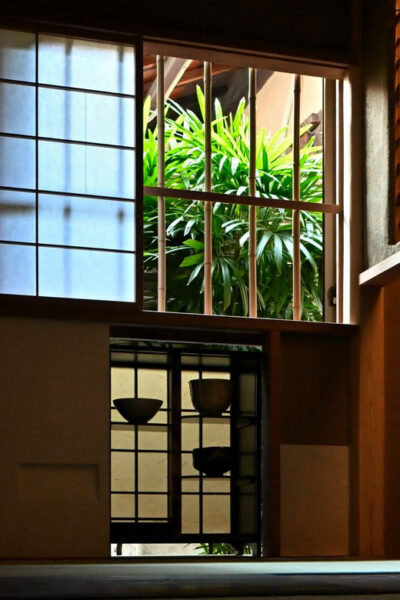
I particularly like the setting: the atelier is in a 100-year-old house, with a white entrance curtain you can spot when you arrive. It feels like you stepped into someone’s neighborhood, not into a factory. And because it is only a short walk from the shrine area, it is an easy plan even if your Kyoto schedule is already packed.
The location is also practical. You meet within easy walking distance of either Keihan Ryukoku Daimae-Fukakusa station (about 5 minutes on foot) or JR Inari station (also about 5 minutes). Parking is not available at the atelier, and the front street is too narrow for vehicles, so plan to arrive on foot or by transit.
What kintsugi means, and why it becomes jewelry so well
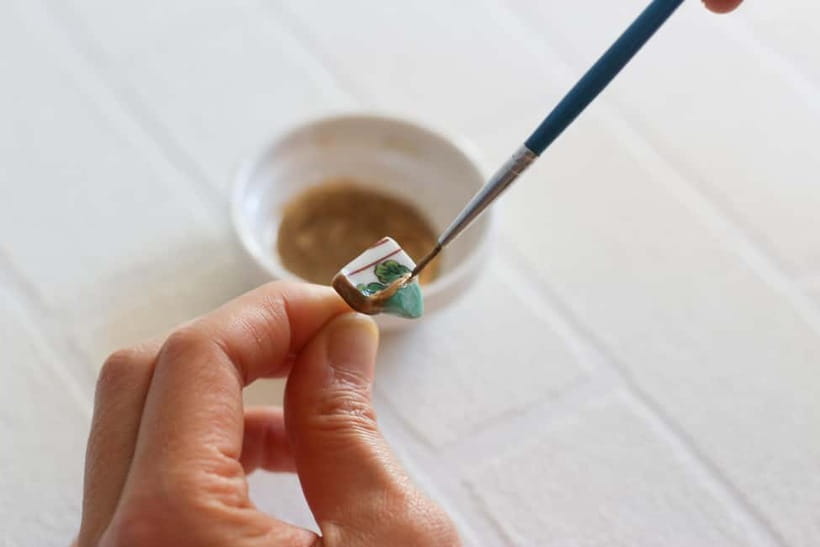
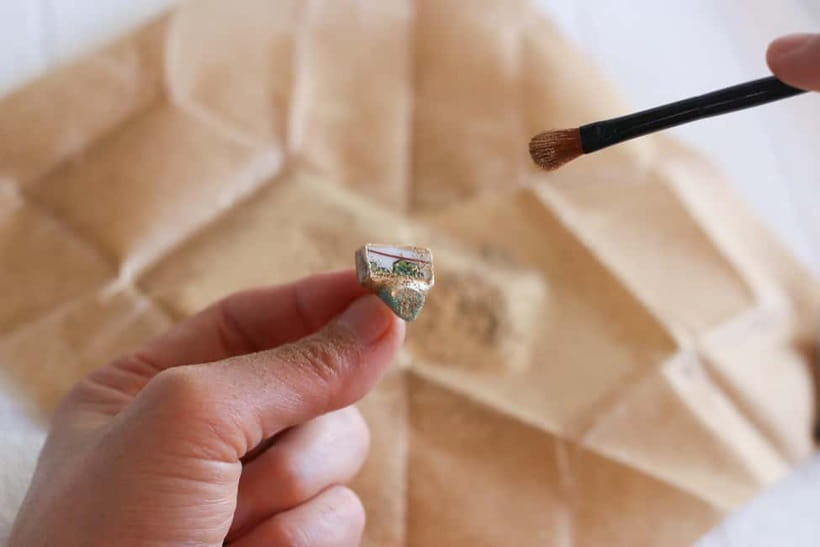
Kintsugi is the Japanese art of repairing broken ceramics with lacquer and gold. The idea is not hiding the break. It is making it part of the story, and treating the repaired piece as something new rather than ruined.
In a jewelry workshop, that philosophy clicks fast. A necklace or pair of earrings becomes wearable proof of that mindset. Instead of leaving cracks behind, you highlight them with gold-toned lines, then frame the rest of the design with stones, pearls, and colorful ceramic fragments.
You also get the cultural context along the way, including the history and significance of kintsugi in Japanese culture. You are not just told what to do; you learn why people do it. That matters, because it turns your final piece from a souvenir into a memory with meaning.
And you will feel the change in pace while you work. Kintsugi is slow by nature: you handle small shards carefully, apply materials with intention, and build one detail at a time. Even if you are traveling solo, the craft has a meditative rhythm, and the workshop gives you enough time to design without rushing.
Materials that avoid allergies, and still look like gold
This workshop uses synthetic lacquer along with gold powder for the kintsugi effect. That is a big deal if you have sensitive skin or worry about reactions, because synthetic lacquer is used specifically to avoid allergic reactions.
For you, that means you can focus on the craft instead of second-guessing the materials. And it also means the workshop can keep things comfortable for a mixed group, including people who might not normally try hands-on activities while traveling.
You are also working with actual pottery pieces, not generic imitations. You can choose from different pottery types linked to Japanese regions, such as Arita, Karatsu, Oribe, Kyoto, Shigaraki, and Hagi. That gives you more than just color options. Each ceramic style carries its own visual character, and that affects the way the gold repair lines look against the glaze and texture.
On top of that, you can add decorative elements like stained glass, natural stones, shells, and pearls. The result is jewelry that looks handmade because it is built from real fragments, not because it is mass-produced in a different form.
- PERFECT KYOTO 1-Day Bus Tour★ 5.0 · 13,518 reviews
- Kyoto: Fushimi Inari, Kinkakuji, Bamboo Grove 1 Day Bus Tour★ 4.8 · 4,316 reviews
- Kyoto: Tea Ceremony in a Traditional Tea House in Kiyomizu★ 4.9 · 3,519 reviews
- Kyoto Geisha Walking Tour: Gion District & Hidden Gems★ 4.7 · 3,273 reviews
- Kyoto: Tea Ceremony Ju-An at Jotokuji Temple★ 4.9 · 3,207 reviews
Picking pottery shards and natural stones for your one-of-a-kind design
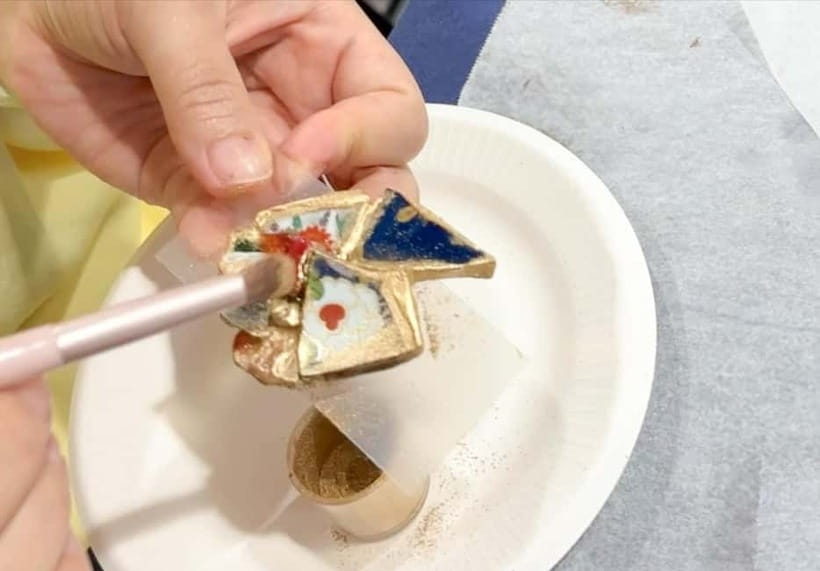
The best part of a kintsugi workshop is design freedom, and this one gives you real options. You choose the ceramic shards, then pair them with stones and other materials to create a piece that fits your taste.
You will see a variety of pottery shards available, and you also get access to colorful natural stones and decorative additions like shells and pearls. That means you can go in multiple directions:
- Keep it minimal and let gold lines do the storytelling
- Go colorful and let stones and ceramics steer the palette
- Create a balanced contrast, with darker glaze areas and brighter stones
Your access to different pottery types is also useful for planning. If you like a certain look, you can choose shards that match that vibe from the start, rather than trying to force one style later. And since you can also include stained glass elements, you can make something that reads more modern or more playful, depending on what you pick.
The workshop is set up for upcycling too, so the broken pieces are not treated as trash. They are treated like raw material with personality. If you enjoy the idea of sustainability, this craft gives it a very concrete form.
How the 150 minutes usually unfolds at the atelier
You are in the workshop for 150 minutes, and it is structured around learning, designing, crafting, and finishing. The pace is unhurried, and the instructor gives step-by-step guidance rather than dropping you into the materials and hoping for the best.
Most sessions start with understanding kintsugi: what it is, how repairs work, and why gold is part of the Japanese tradition. After that, you choose your ceramic shards and accessory style, then you move into making your piece. You work with synthetic lacquer and gold powder to create the kintsugi repair effect on your chosen components.
Design time is not rushed. You can build your jewelry gradually, making decisions about the look as you go. That flexibility is important because small choices matter in kintsugi jewelry. Where the gold repair line lands, how the shard sits, and how the stones frame the ceramic all affect the final look.
Then you finish and take your work home the same day. That is a major advantage in a country where many crafts are beautiful but require later pickup or shipping. Here, you leave with your finished accessory.
Accessory choices: earrings, rings, necklaces, and more
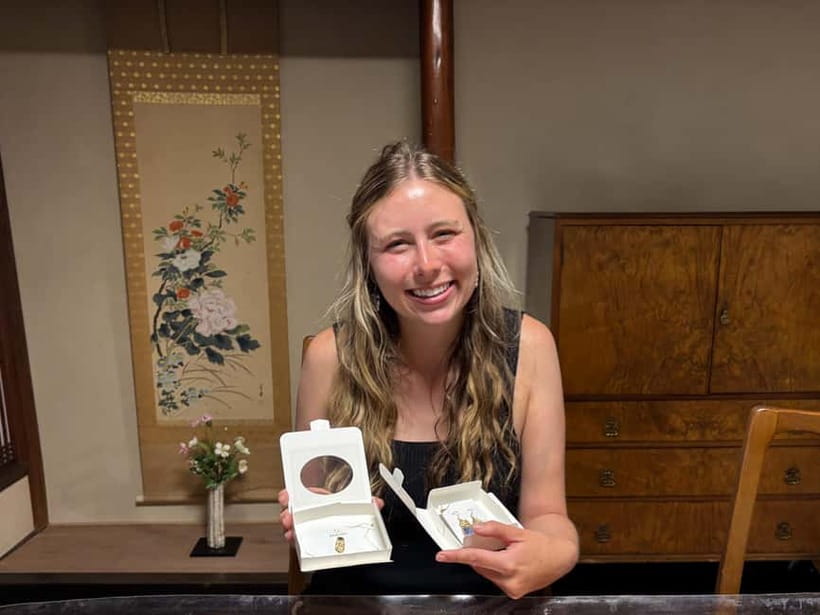
This is not a one-size-fits-all craft. You get to choose what kind of jewelry you want to make, including items like:
- Earrings
- Rings
- Necklaces
- Brooches
- Tie pins
- Cufflinks
You may also find additional accessory options offered during your selection time, depending on what is available that day. The key point is that you are not limited to a pendant or charm. The workshop lets you pick something that fits how you actually wear jewelry.
I like this approach because it reduces the disappointment factor. If you are not an earrings person, you can choose a different accessory. If you prefer something formal like cufflinks or a brooch, you can aim for that look.
Because you are building with upcycled pottery and stones, the pieces feel personal. Even if two people choose similar materials, the shards and assembly decisions differ. That is what makes your souvenir feel like yours.
English-friendly instruction and a calm, supportive atmosphere
The instructor speaks English and Japanese, and the workshop is designed for a small group limited to 10 participants. That matters because kintsugi is detail work. You do not just need general direction, you need enough time to ask questions and get hands-on help.
You should expect a patient, step-by-step approach. The craft can be new, even if you have seen kintsugi photos before. The instructor guidance helps you translate the technique from an idea into a piece you can actually wear.
The atmosphere is also described as relaxing by participants, which makes sense given the 150-minute block and the careful nature of the work. If Kyoto stress is wearing you down, this is the kind of activity that gives your brain a different job. You focus on placement, texture, and finish instead of crowd navigation.
One more practical point: some participants noted refreshments during the session. Even if you are not counting on it, plan to slow down and treat the workshop as an actual break in your day.
Price and value: what $106 buys in real terms
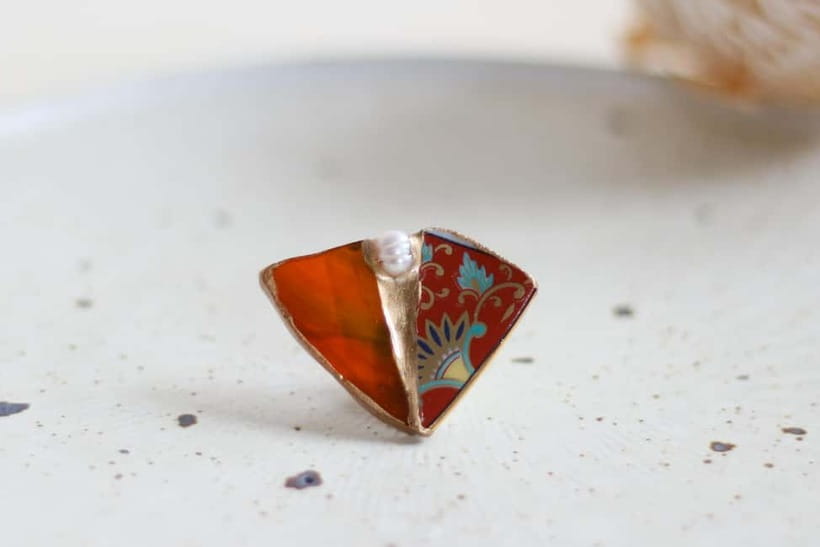
The price is $106 per person for 150 minutes. That might sound steep if you compare it to a typical street-market souvenir. But compare it to what you actually get here: materials, instruction, and a handmade piece built from upcycled pottery plus natural stones with gold kintsugi effects.
This is also not just watching someone else work. You actively design and create. And multiple participants specifically described making two pieces of jewelry through the workshop process, which is a strong value signal for your money. Even if your final output varies based on your choices, you are still leaving with wearable jewelry you made yourself, not a print or a cheap craft kit.
Another value angle: you are paying for a guided cultural craft, not only for the end product. Kintsugi is a technique with meaning, and the workshop includes history and significance. You walk away with context you can actually use when you look at your own piece later.
For me, that is the real deal. The cost feels justified because you get time, materials, and a skill-based experience that becomes a personal artifact.
Who this Kyoto workshop suits best
This is a great fit if you want a break from Kyoto’s main-sight energy and you like hands-on arts. It is also a strong choice if you love design decisions, because you get to choose pottery regions, stones, and the jewelry accessory type.
It is ideal for:
- Couples who want a shared activity with a lasting souvenir
- Solo travelers who want a small group setting with calm pacing
- People who enjoy slow crafts and don’t mind careful, detailed work
- Anyone looking for a rainy-day plan in Kyoto
It may be less ideal if you are looking for a fast, high-energy tour. This workshop is about patience and focus.
Also note the limitation: it is not suitable for wheelchair users. If mobility is a concern, consider how you handle walking on uneven surfaces and moving through a traditional townhouse setting.
Before you go: finding the atelier and planning your day
Getting there is straightforward once you choose your station. You are within about a 5-minute walk from either Keihan Ryukoku Daimae-Fukakusa station or JR Inari station. Use the provided photo map route to get your bearings fast, since the atelier is in a narrow alley area and parking is not available.
What to wear is simple. You will be working with small materials and doing careful handling. Comfortable clothes and shoes help. Keep in mind this is a creative workshop, so you might not want to wear your most precious outfit.
If you are pairing it with Fushimi Inari Taisha, build your schedule so you have time to arrive without sprinting. A workshop like this goes best when you let yourself settle in rather than timing it like a train connection. Since it is only a short walk from the shrine area, you can fit it before sunset and still enjoy a relaxed evening.
Should you book this Kyoto kintsugi jewelry workshop?
Yes, if you want a meaningful Kyoto souvenir and you enjoy the idea of turning broken ceramic into something beautiful. The combination of gold kintsugi repair, natural stones, and careful instruction in a small group makes this feel more like learning a craft than doing a quick photo stop.
Skip it only if you need wheelchair access or if you prefer fast, on-the-go sightseeing. This is a sit-and-make experience, and it rewards people who are okay slowing down.
If you are deciding between yet another shrine photo and a hands-on art memory, this workshop is the type of choice you remember later. You leave with jewelry you designed, plus an understanding of why kintsugi matters.
FAQ
How long is the Kyoto Kintsugi jewelry workshop?
The workshop lasts 150 minutes.
Where does the workshop take place?
It takes place in a 100-year-old traditional Kyoto townhouse near Fushimi Inari Taisha.
What is the meeting point near public transit?
You meet within about a 5-minute walk from Keihan Ryukoku Daimae-Fukakusa station or JR Inari station.
Is parking available at the atelier?
No. There is no parking available, and the street in front of the atelier is a narrow alley not suitable for vehicles.
What kinds of jewelry can I make?
You can choose from accessory types such as earrings, rings, necklaces, brooches, tie pins, cufflinks, and more.
What materials are included?
You get materials including synthetic lacquer and gold powder, plus a choice of pottery shards, natural stones, and pearls.
Will I be able to learn in English?
Yes. The instructor provides instruction in English and Japanese.
Is the group size small?
Yes. The workshop is limited to a small group of up to 10 participants.
Is the workshop safe for allergies?
The workshop uses synthetic lacquer to avoid allergic reactions.
Can I take my jewelry home the same day?
Yes. Participants can take home their creations on the same day.
Is there free cancellation?
You can cancel up to 24 hours in advance for a full refund. The booking also offers reserve now and pay later.
Made by Hand, and Yours to Keep
Newest Kyoto write-ups from the Loving Japan desk

Japanese Craft and Calligraphy Workshops, side by side.
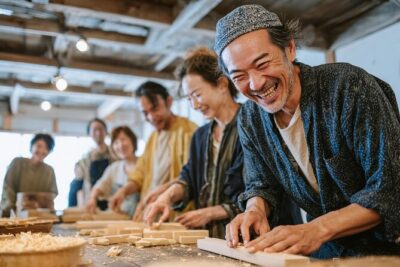 ★ 5.0Tokyo Shinjuku Chopsticks Making ClassFrom $201,763 reviews
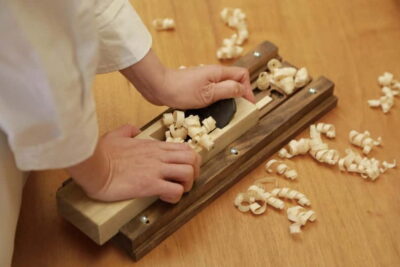 ★ 4.8Chopstick Making Workshop in GinzaFrom $251,366 reviews
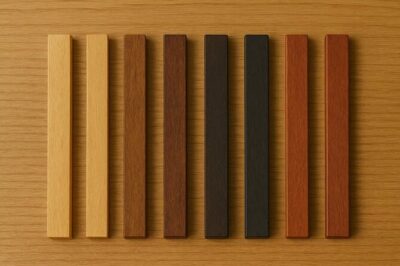 ★ 5.0Chopsticks Making Workshop in Gion with Engraving OptionFrom $15958 reviews
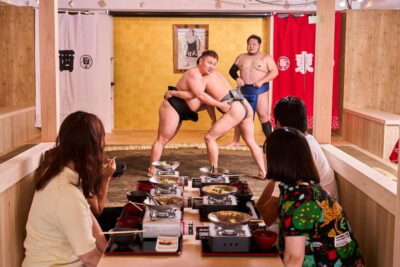 ★ 4.8Tokyo Sumo Experience: Chanko & Mochi with a Former ProFrom $103567 reviews
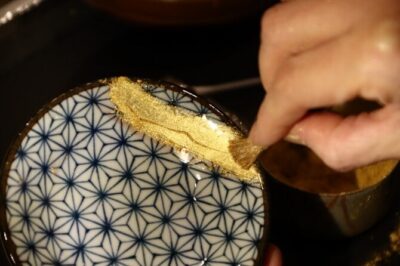 ★ 5.0Kintsugi Experience: Art of Golden Joinery in TokyoFrom $59467 reviews
 ★ 5.0Tokyo Chopstick Making Workshop with ArtisanFrom $26466 reviews
 ★ 4.9Matcha Making Experience with Mochi Sweets in AsakusaFrom $22388 reviews
 ★ 4.8Authentic knife making experience at a blacksmith in KyotoFrom $154350 reviews
Filed on these lists too