
REVIEW · JAPANESE CRAFT AND CALLIGRAPHY WORKSHOPS
Kyoto Ninenzaka : Japanese Calligraphy Class in Townhouse
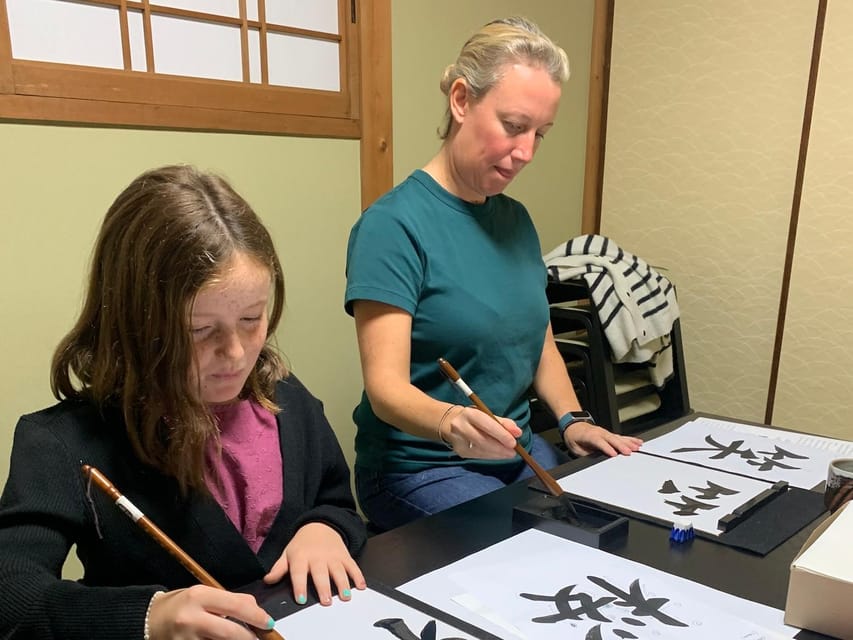
Brushwork beats scrolling through Kyoto. In a calm Ninenzaka townhouse setting, this shodō class turns a famous neighborhood into something personal and hands-on.
I love the authentic feel of the instruction, especially the step-by-step coaching on brush pressure and stroke control. I also love the payoff: you leave with your own handmade kanji keepsake.
The one catch is simple, but important: you need socks and clothes that can get dirty, because ink work is messy by nature.
In This Review
- Key things to know before you go
- Shodō in Ninenzaka: why this class feels like Kyoto, not a show
- Finding the townhouse studio near Kiyomizu Temple
- What the 50 minutes actually covers (and why it works)
- The tools lesson: why inkstone basics are part of the magic
- Brush handling and pressure: the skill that instantly levels you up
- Writing kanji with balance, placement, and calm focus
- The seasonal touch: culture that shows up in the strokes
- What you get included, and what to expect leaving the studio
- Price and value: is $49 worth it in Kyoto?
- Practical planning: socks, clean hands, and ink reality
- Who should book this shodō class, and who should skip it
- Should you book the Kyoto Ninenzaka shodō class?
- FAQ
- Where is the meeting point?
- How long is the class?
- How much does it cost?
- Is the class beginner friendly?
- What language is used during the class?
- What should I bring?
- Is anything included besides the instruction?
- Is a kimono included?
- Is the class suitable for children?
Key things to know before you go
- Right by Kiyomizu and Ninenzaka: Start your class just after exploring the slopes and alleys around Kiyomizu Temple.
- Real calligraphy tools and technique: You get taught how to use brushes, ink stick, inkstone, and proper paper handling.
- Beginner-friendly shodō: No Japanese or art background needed.
- Small, question-friendly vibe: The format gives you time to ask questions and get corrections.
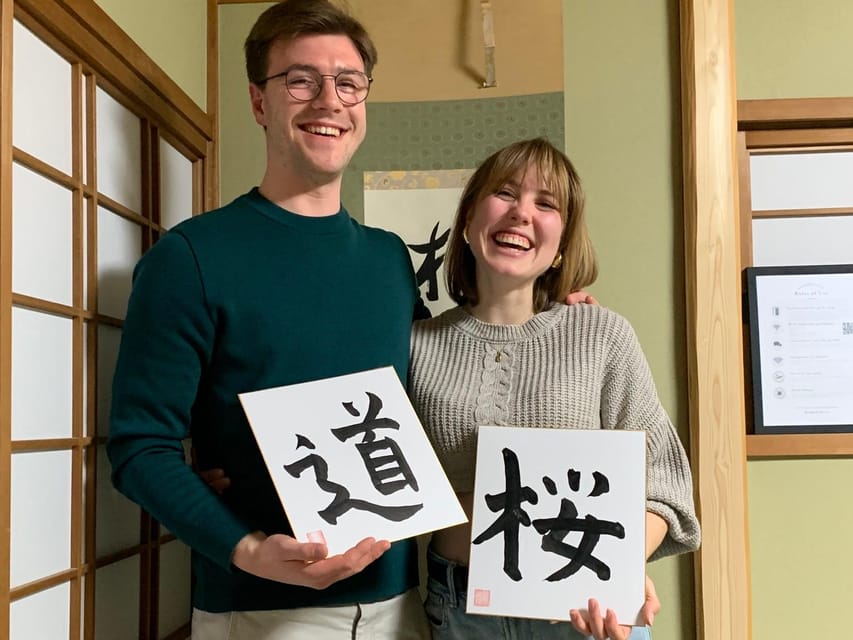
- You take your work home: Your finished calligraphy becomes your souvenir, not just a memory.
- A peaceful 50 minutes: It is short, focused, and intentionally calm.
Make something to take home. Other workshops
- Kyoto : Chopsticks Making Workshop in Gion with Engraving Option
★ 5.0 · 958 reviews - Authentic knife making experience at a blacksmith in Kyoto
★ 4.8 · 350 reviews - Kyoto: Calligraphy class at Buddhist temple in city center
★ 5.0 · 167 reviews - Roketsu dyeing experience: M course Roketsu Dyeing Experience
★ 5.0 · 163 reviews
Shodō in Ninenzaka: why this class feels like Kyoto, not a show
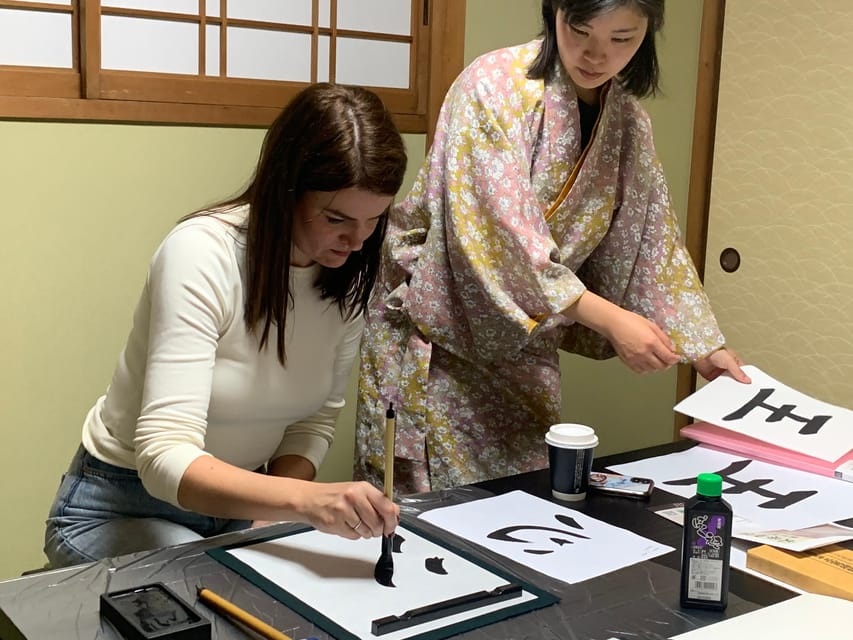
If you want Kyoto experiences that actually stick, a calligraphy class is one of the best formats. You are not just looking at Japanese culture through glass. You are making it, slowly, with your own hand. And that changes the whole day.
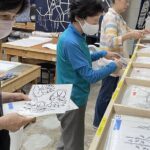
What I like most is the atmosphere. The studio sits close to the walkways you already came for, like the Ninenzaka area near Kiyomizu Temple, but the class itself runs at a quieter tempo. Once you are inside, the pace drops. You focus on brush pressure, posture, and the rhythm of making dots and lines. It feels meditative, even though you are learning something very practical.
Also, it is a good fit for first-timers. The teaching is structured, and the class is designed so you do not need Japanese skills or prior art experience to get results you can be proud of. You are guided through the basics like you are supposed to start here.
Finding the townhouse studio near Kiyomizu Temple
Your meeting point is easy to spot if you are already walking Ninenzaka. The studio is at the end of a narrow alley next to a Starbucks on Ninenzaka, near Kiyomizu Temple.
That matters more than you might think. Kyoto is full of beautiful streets, but figuring out tiny entrances can burn time right when you want to be relaxed. Here, you can treat the calligraphy class like a planned pause during your sightseeing loop. Go early, get oriented, then step into the calmer side of the neighborhood.
Once you arrive, you will be met by an English-speaking host or greeter. The class is also set up to run smoothly for non-Japanese speakers, which helps you focus on what you are doing with the brush.
What the 50 minutes actually covers (and why it works)
This is not a long workshop. It is a focused 50-minute session. That is exactly why it is good value in Kyoto, where so many experiences are either rushed or spread out.
Here is the flow, in the same order you will experience it:
First, you get an introduction to calligraphy and its cultural background. The goal is not to lecture you. It gives you enough context to understand why the technique matters, not just how to copy a symbol.
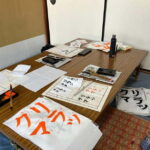
Next comes tools. You learn what each essential piece is for, and how to handle it properly. You cover things like brushes, ink sticks, inkstones, and writing paper. This is useful because many people struggle not with the writing, but with the setup.
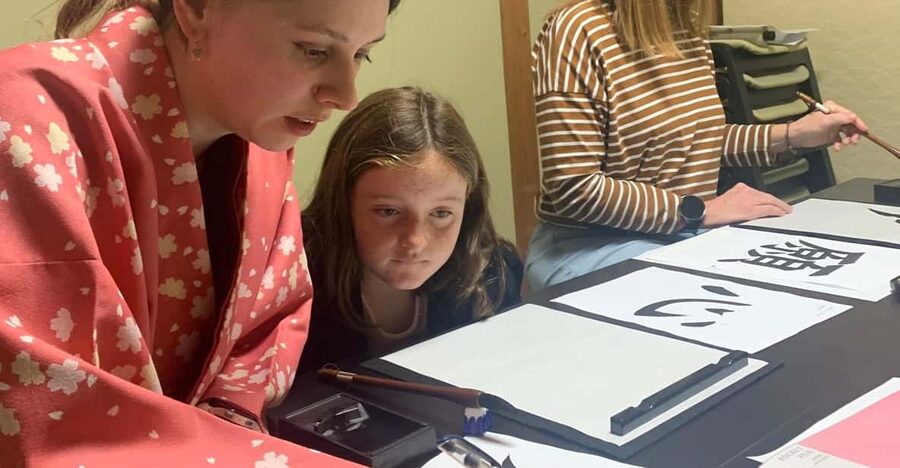
Then you move into brush handling. Expect clear instruction on how to hold the brush and how brush pressure changes the look of a stroke. This part can feel slightly technical at first, but it pays off fast, because you immediately use it.
After that, there is a practical prep stage. You learn how to prepare for calligraphy using the writing paper and paperweight. This is one of those steps that feels small, but it helps you slow down and get ready mentally.
After prep, you practice basic brush techniques like drawing lines, making strokes, and doing dots or sweeps. This is where you start seeing progress, because you are working with repeatable movements.
Once your hands understand the basics, you write simple kanji. The teaching emphasizes balance, including vertical and horizontal placement. You are not just copying a shape, you are learning how the character should sit.
Finally, you deepen the cultural understanding through seasonal themes and expressions connected to calligraphy. You might not have time to memorize theory, but you leave knowing that shodō is tied to the seasons and moments in Japan, not random decoration.
- PERFECT KYOTO 1-Day Bus Tour★ 5.0 · 13,518 reviews
- Kyoto: Fushimi Inari, Kinkakuji, Bamboo Grove 1 Day Bus Tour★ 4.8 · 4,316 reviews
- Kyoto: Tea Ceremony in a Traditional Tea House in Kiyomizu★ 4.9 · 3,519 reviews
- Kyoto Geisha Walking Tour: Gion District & Hidden Gems★ 4.7 · 3,273 reviews
- Kyoto: Tea Ceremony Ju-An at Jotokuji Temple★ 4.9 · 3,207 reviews
The tools lesson: why inkstone basics are part of the magic
If you have ever tried to do calligraphy with generic supplies, you know the frustration. Real shodō has a feel that depends on the materials. That is why the class takes time to teach tool basics instead of skipping straight to writing.
You are guided through using and caring for tools like the brush and inkstick, plus inkstone work and paper handling. Even if you never fully master the equipment, learning what each tool does helps you avoid the most common mistakes, like using the wrong pressure or not preparing ink the way the brush expects.
There is also a quiet satisfaction in the prep itself. Using a paperweight to keep the paper steady, then taking care with how you prepare to write, makes the session feel intentional. You get that Kyoto calm in a very physical way, not just as a mood.
Brush handling and pressure: the skill that instantly levels you up
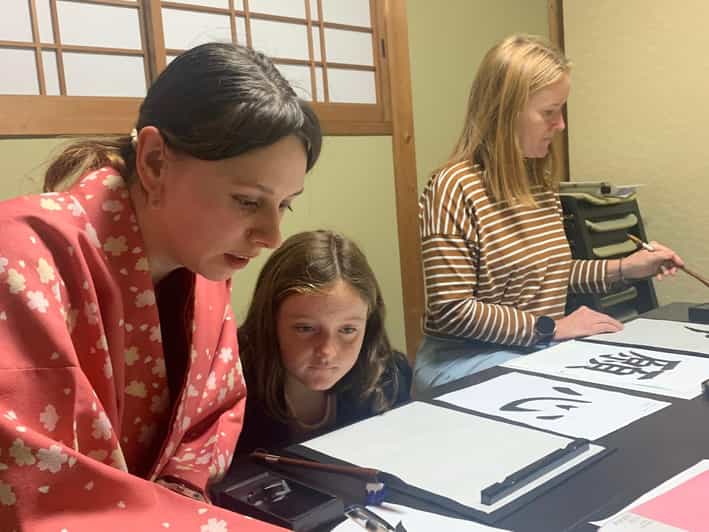
The brushwork section is the heart of the class. You get detailed instruction on how to hold the brush correctly and how to adjust pressure.
Here is the practical part: pressure controls the character’s energy. Light pressure creates a different visual rhythm than heavier pressure. If you keep the brush grip steady but change pressure at the right moments, you can make your strokes look more confident even as a complete beginner.
You also practice the building blocks, like straight lines, curve-like strokes, and dots or sweeps. These may sound simple, but in shodō they are not filler. They are the components your final kanji depends on.
You will likely notice one helpful thing quickly. When you focus on stroke quality first, the kanji becomes less intimidating. Instead of thinking, I must draw this character perfectly, you think, I am making the correct strokes in the correct balance. That mental shift is huge.
Writing kanji with balance, placement, and calm focus
When you start writing simple kanji, the class emphasizes vertical and horizontal balance and letter placement. That means you learn to think about where each part of the character sits, not just the outline.
Even though the class is only 50 minutes, it is enough time to feel the difference between random copying and guided placement. Your corrections come in real time, and you can adjust as you go.
One detail I appreciate is that you are not left to struggle alone. Reviews mention kind and patient instruction, plus lots of chances to ask questions in a small class format. That matters for beginners, because your biggest errors are usually tiny, like grip, angle, or how you restart a stroke.
By the time you finish, you are not just producing a souvenir. You have practiced the core logic of shodō and can see the results of technique in your own work.
The seasonal touch: culture that shows up in the strokes
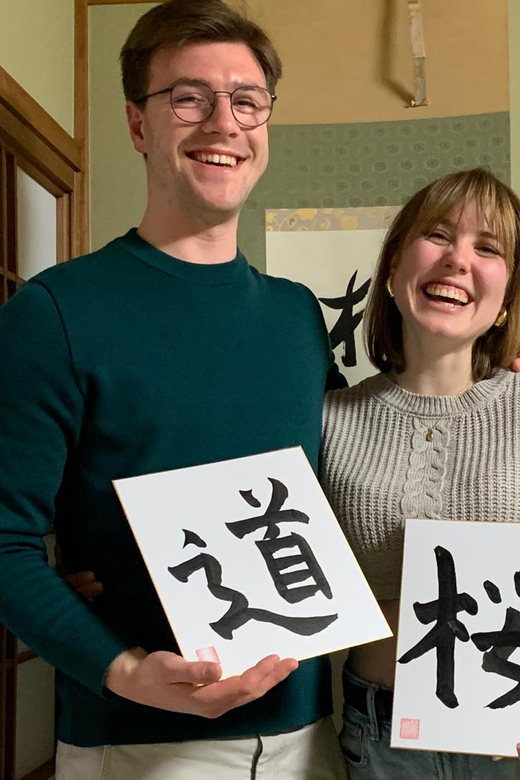
Near the end of the session, you deepen your understanding of Japanese culture through seasonal themes and expressions tied to calligraphy.
This is more meaningful than it sounds. Kyoto is a city of seasons, and shodō is connected to that same idea. When you connect the character and expression to a seasonal theme, the writing feels like it belongs in the place where you are standing. It stops being a generic workshop and turns into something Kyoto-specific.
Even if you do not remember every detail, you will keep the feeling. You will know why your calligraphy is more than decorative ink.
What you get included, and what to expect leaving the studio
This class includes experienced instructors, careful guidance, and an original booklet about calligraphy. You also take home your finished calligraphy, which becomes a real souvenir you can keep.
I like that the souvenir is not just a photo opportunity. You walk out with something physical that has your effort in it. It is also a great gift option, because the class is beginner-friendly and the final result is personalized.
One practical point: kimono is not included. So you should not count on wearing one unless you decide to pay for it separately. Plan to come in comfortable clothes you can sit and work in.
Price and value: is $49 worth it in Kyoto?
At $49 per person for a 50-minute class, this is priced like a focused skill session with real materials and real instruction, not a generic tourist craft.
Here is what you are paying for, and why it matters:
- You get step-by-step coaching on brush technique, not just a demo.
- You learn how to use and care for the tools, including core calligraphy items like ink sticks and inkstones.
- You receive a booklet you can refer back to.
- You take home your own handmade kanji, which has genuine personal value.
In Kyoto, half-day cultural activities can cost more and still feel like you are watching rather than making. This one is short enough to fit cleanly into a sightseeing schedule, but structured enough that you actually learn something. That is strong value.
If you are on a tight day, the timing also helps. 50 minutes is long enough for real instruction, and short enough that you can still do an evening walk through the streets around Kiyomizu.
Practical planning: socks, clean hands, and ink reality
Before you go, make your life easier with the few rules that matter.
Bring socks. If you forget, socks can be provided for a fee. Wear clothes that you do not mind getting dirty. Ink work can be unpredictable, and you are using real materials.
Also plan for the studio rules. Pets and baby strollers are not allowed. Luggage or large bags are not allowed. Selfie sticks are not allowed. Smoking indoors is not allowed. You also should avoid making noise during the session.
If you are traveling with a larger day bag, I suggest leaving it at your hotel or storing it somewhere secure so you can arrive light and calm. That makes it easier to focus on the class instead of managing gear.
Who should book this shodō class, and who should skip it
This is a great choice if you:
- Want a hands-on Kyoto experience that does not require Japanese language skill
- Like learning by doing, especially with clear step-by-step guidance
- Prefer short, focused activities over long tours
- Want a memorable take-home souvenir made by you
It is not a good fit if you are bringing very young kids. Children under 10 are not suitable for this class.
It is also better suited to travelers who can follow calm indoor rules. If you need a high-energy experience with lots of movement and noise, a calligraphy session is not that.
Should you book the Kyoto Ninenzaka shodō class?
If you are deciding between another walking tour or another museum stop, I would book this. It is one of those experiences where the value comes from technique and repetition, not from being in the right place at the right time.
Book it if you want something personal, peaceful, and genuinely beginner-friendly. You will learn the basics of shodō, practice strokes and simple kanji, and walk away with your own calligraphy, plus a booklet to keep the learning going.
Skip it only if you hate mess, forget socks, or want a fast photo-driven activity. Otherwise, this is a smart way to slow down in Kyoto and make something you can hold.
FAQ
Where is the meeting point?
You meet near Kiyomizu Temple at the end of the alley on Ninenzaka, next to the Starbucks.
How long is the class?
The class runs for about 50 minutes.
How much does it cost?
The price is $49 per person.
Is the class beginner friendly?
Yes. You do not need Japanese or art experience to take part.
What language is used during the class?
The class is in English.
What should I bring?
Bring socks and clothes that you do not mind getting dirty.
Is anything included besides the instruction?
Yes. You get experienced instructors, careful guidance, an original calligraphy booklet, and you keep your calligraphy as a souvenir.
Is a kimono included?
No. A kimono (2-piece type) is not included, but you may be able to arrange it separately for a fee.
Is the class suitable for children?
Children under 10 years old are not suitable for this class.
Made by Hand, and Yours to Keep
Newest Kyoto write-ups from the Loving Japan desk

Japanese Craft and Calligraphy Workshops, side by side.
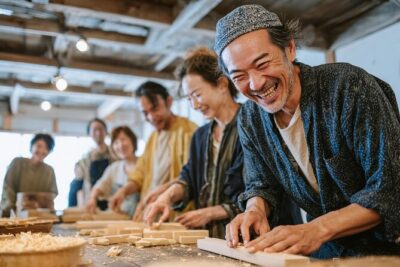 ★ 5.0Tokyo Shinjuku Chopsticks Making ClassFrom $201,763 reviews
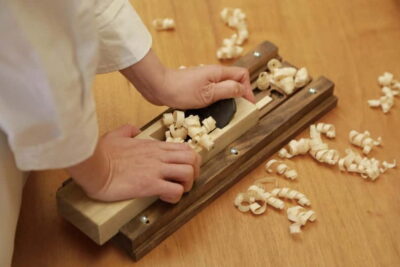 ★ 4.8Chopstick Making Workshop in GinzaFrom $251,366 reviews
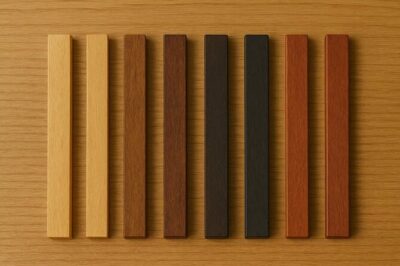 ★ 5.0Chopsticks Making Workshop in Gion with Engraving OptionFrom $15958 reviews
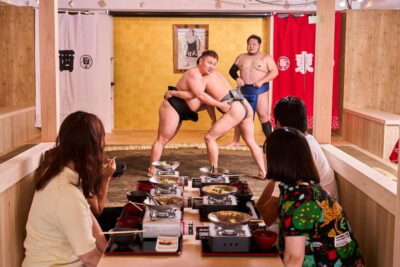 ★ 4.8Tokyo Sumo Experience: Chanko & Mochi with a Former ProFrom $103567 reviews
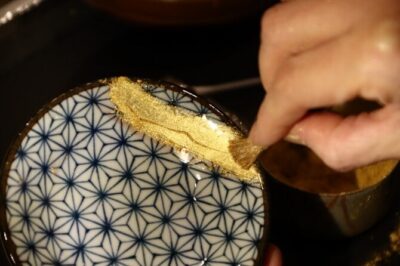 ★ 5.0Kintsugi Experience: Art of Golden Joinery in TokyoFrom $59467 reviews
 ★ 5.0Tokyo Chopstick Making Workshop with ArtisanFrom $26466 reviews
 ★ 4.9Matcha Making Experience with Mochi Sweets in AsakusaFrom $22388 reviews
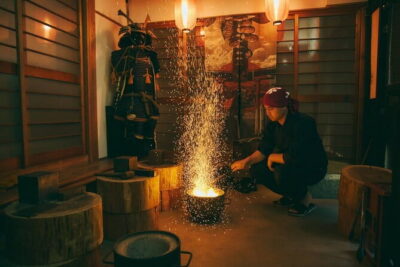 ★ 4.8Authentic knife making experience at a blacksmith in KyotoFrom $154350 reviews
Filed on these lists too