
REVIEW · JAPANESE CRAFT AND CALLIGRAPHY WORKSHOPS
Kyoto: Traditional Kimono Fabric Handicrafts Workshop
Want a Kyoto souvenir you actually made? In this 2-hour Temari workshop, you craft a traditional Japanese decoration using pieces of kimono fabric in a relaxed shop setting near major sightseeing. It is an easy cultural activity where the result is personal, not mass-made.
I especially like the chance to choose from many kimono fabric options, with patterns and colors that make every Temari look unique. I also like how host May (who is consistently praised for her friendliness and clear instruction) guides you step by step in English, so even total beginners feel confident.
The one possible drawback is that this is first and foremost a hands-on craft session. If you want nonstop temple time, you will need to pair this with sightseeing before or after, not replace it.
In This Review
- Key points before you go
- Temari craft in Kyoto, right in the sightseeing zone
- Choosing kimono fabric is the real start of the fun
- A 2-hour Temari workshop: what you do, step by step
- Complimentary drink and Japanese confectionery, a small reset that matters
- Small group (up to 4) means better teaching and easier questions
- Is $25 good value for a Kyoto hands-on souvenir?
- Where to place it in your Kyoto day
- Who should book this Temari kimono fabric workshop
- My bottom line, should you book it
- FAQ
- What is the workshop length?
- What will I make?
- Do I need any crafting or sewing experience?
- What is included in the price?
- What is not included?
- Where do I meet the host?
- What languages are used for instruction?
- Is it a large group?
- Is the workshop wheelchair accessible?
Key points before you go
- Pick your kimono fabric colors and patterns so your Temari feels like your trip.
- Learn Temari making at a calm pace with help from a local crafts master.
- Small group of up to 4 means more attention and easier questions.
- A complimentary drink plus a Japanese confectionery are included, so you can slow down mid-day.
- Take home a one-of-a-kind souvenir you made yourself.
- Easy to combine with nearby shrines and temples, including the Philosophers Path area.
Rental shops we have actually walked into
- Kimono Tea Ceremony at Kyoto Maikoya, NISHIKI
★ 5.0 · 911 reviews - Kyoto: Kimono Rental with Hairstyling and Accessories
★ 4.8 · 653 reviews - Kyoto: Kimono Tea Ceremony at Orizuruya Gion
★ 4.9 · 618 reviews - KYOTO Tea Ceremony with kimono near by Imamiya Jinjya Shrine
★ 5.0 · 343 reviews
Temari craft in Kyoto, right in the sightseeing zone
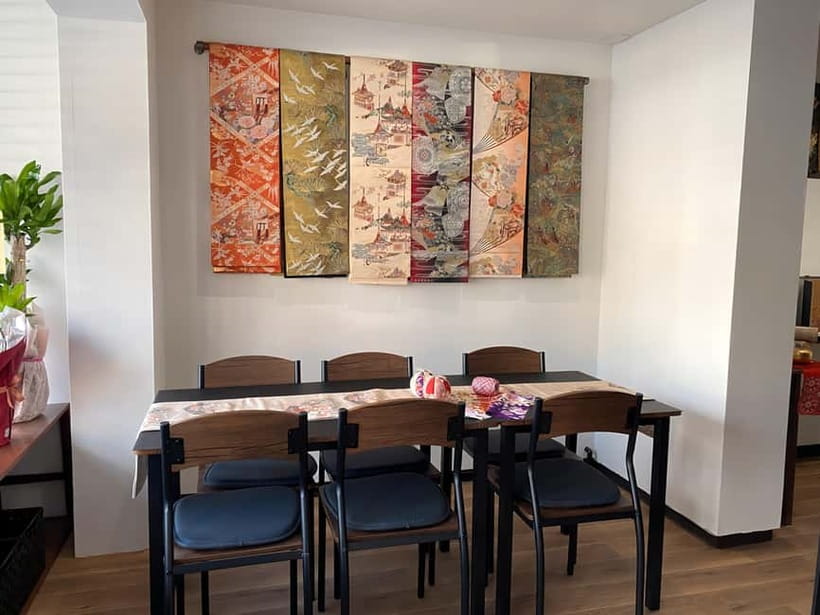
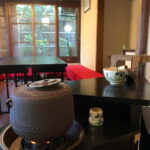
Kyoto can be intense. Temples, lines, crowds, and more steps than you planned. This workshop gives you a different rhythm, sitting you inside a traditional Japanese antique boutique store where you can focus on one small, satisfying project.
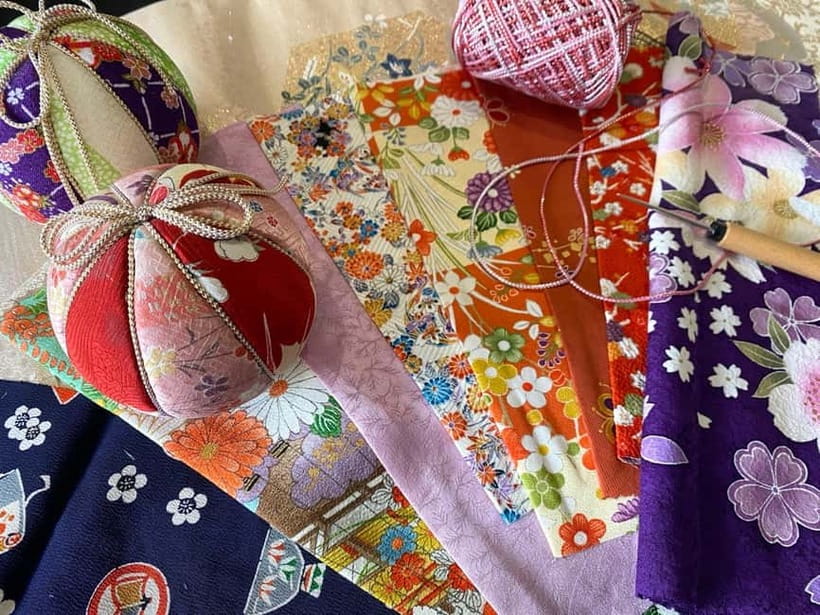
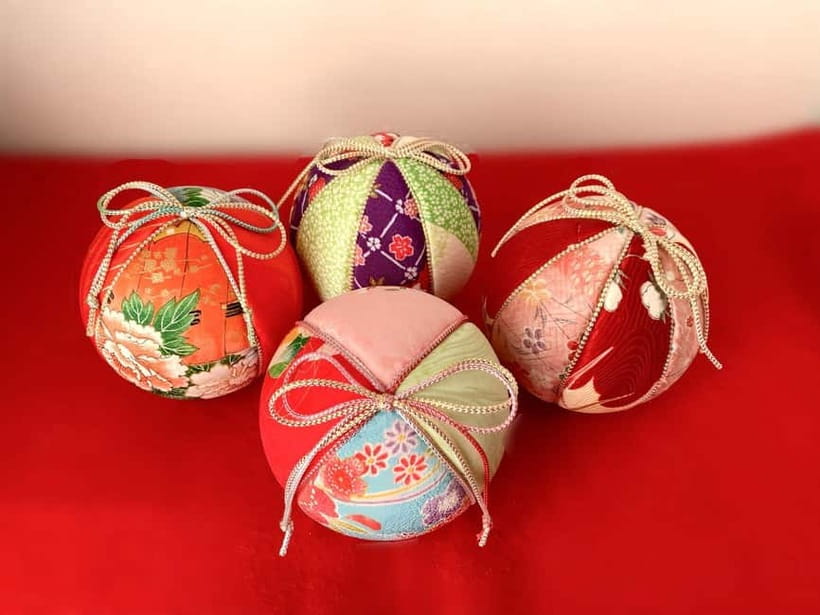
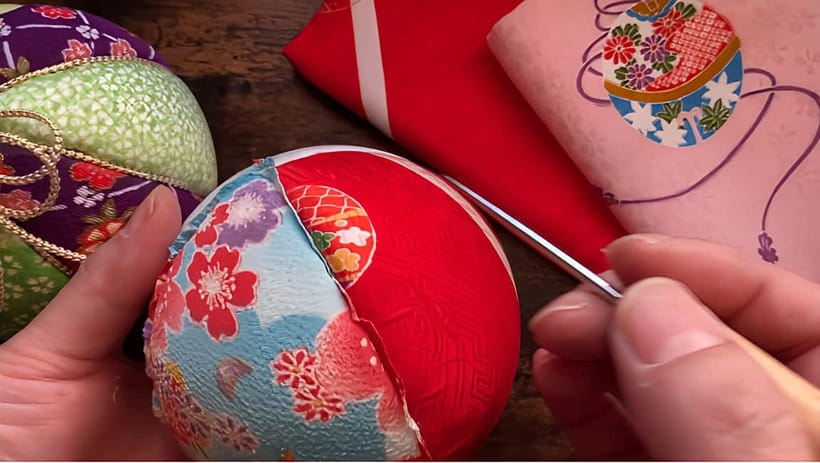
You will make a Temari, a handcrafted decorative item made by wrapping and shaping a ball, often used as an interior ornament and for celebrations across Japan. The twist here is the materials: you use kimono fabric pieces, turning something meaningful into something new.
The setting also helps. Multiple recent participants highlight that the shop itself feels special and worth lingering in, especially if you love textiles. Even if you are not a craft person, you can still enjoy the experience because the instruction is built for beginners and the atmosphere is relaxed.
Choosing kimono fabric is the real start of the fun
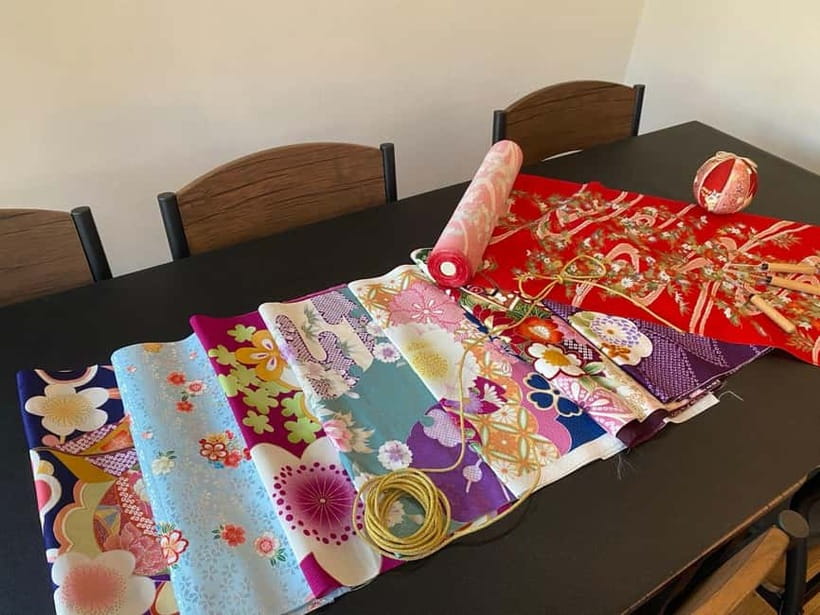
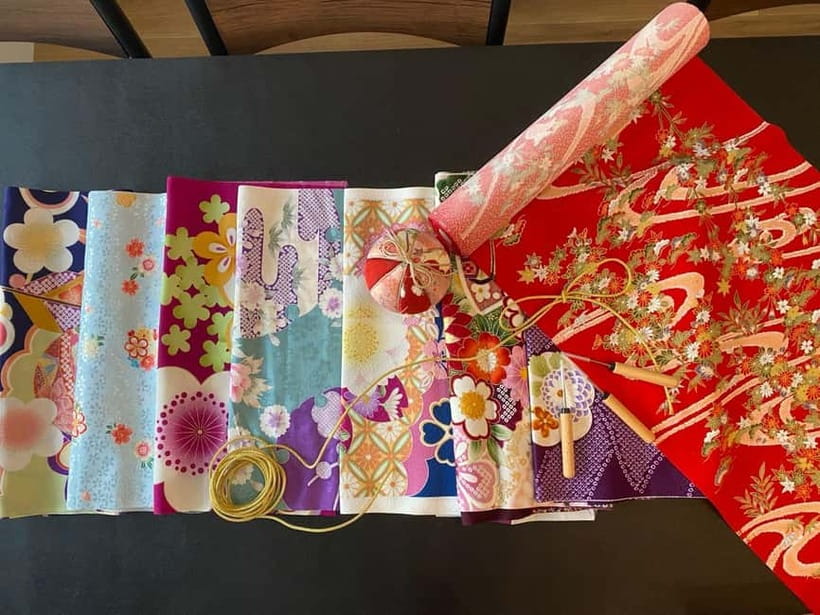
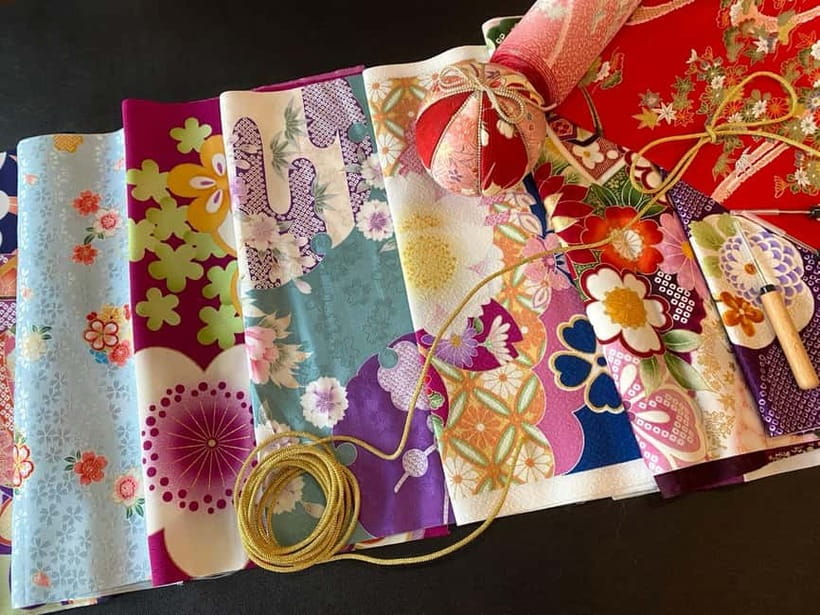
Before you start shaping and wrapping, you get to choose your materials. That choice matters more than you might expect. The fabric pattern drives the whole personality of the finished Temari, from bold and graphic to delicate and soft.
In the class, you work with multiple kimono fabric pieces (not one plain color). That gives you the chance to create a Temari that looks intentional rather than random. Many people also say the hardest part was deciding what to pick, which is a good sign. It means you will not just follow a generic template.
Practical tip: if you are worried about ending up with a color you dislike, pick a couple of favorites first, then fill the rest with coordinating options. You can treat the fabric like a mini design board. Your teacher can guide you as you go, but starting with a clear preference makes the final result feel more personal.
A 2-hour Temari workshop: what you do, step by step
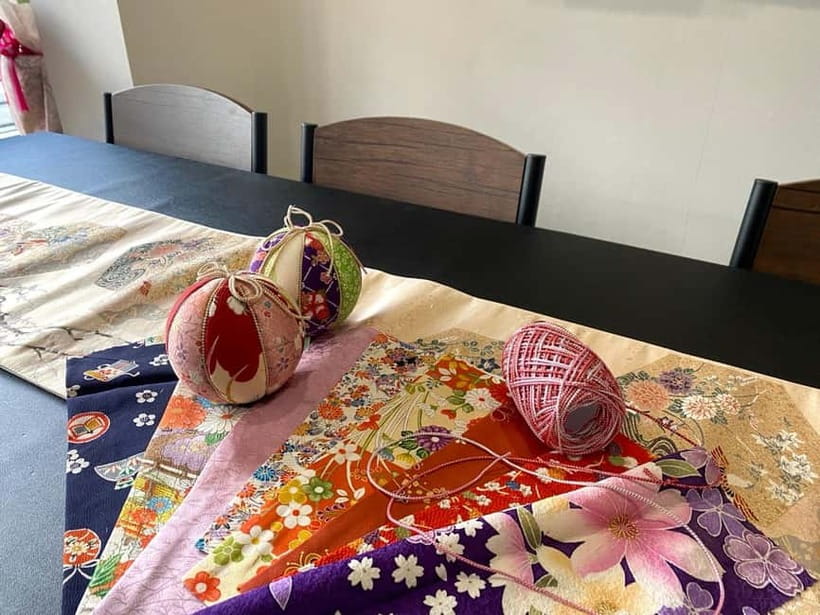
The whole experience lasts about 2 hours. That is long enough to learn something real, short enough that you do not feel trapped all afternoon. It is also ideal for families, because the craft is designed to be doable without prior skills.
Here is the practical flow you can expect:
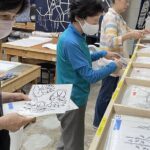
- Arrive and get settled: your host waits for you, and you enter the workshop when you arrive.
- Choose fabrics: you select the kimono fabric pieces that will become your Temari.
- Learn the process: a local crafts master explains what you are doing and why, then helps you follow each step.
- Craft at your pace: the work is guided, with clear explanations in English (and Japanese support).
- Finish and take it home: you leave with a Temari souvenir you made yourself.
A big reassurance from the feedback is how beginner-friendly it is. People specifically note that the process is not so difficult and that kids can handle it with help. That lines up with how the class is marketed, with no experience required.
Also, because the workshop is hands-on and problem-solving light, it is a great break from the mental load of sightseeing. You will go from thinking about train routes and lines to focusing on color combinations and how the wrapping comes together.
Make something to take home. Other workshops
- Authentic knife making experience at a blacksmith in Kyoto★ 4.8 · 350 reviews
- Kyoto: Calligraphy class at Buddhist temple in city center★ 5.0 · 167 reviews
- Roketsu dyeing experience: M course Roketsu Dyeing Experience★ 5.0 · 163 reviews
- Kyoto: Beginner Knife Sharpening & Handle Fitting Workshop★ 4.9 · 141 reviews
- Kyoto: Small-Group Authentic Sushi Making Workshop★ 5.0 · 137 reviews
Complimentary drink and Japanese confectionery, a small reset that matters
This is not just a craft. It includes a complimentary drink and a traditional Japanese confectionery of your choice. In a city like Kyoto, where you might be walking and snacking all day, having this built into the experience is a real perk.
Several participants mention enjoying things like matcha latte and tea during the class, plus tasty local sweets. Even if you normally skip dessert, this is worth taking seriously because it turns the workshop into a proper pause, not a rushed activity.
What I like about this kind of inclusion: it supports the feel of the workshop as a calm cultural break. When your class includes refreshments, it signals that you are meant to slow down, choose your materials thoughtfully, and enjoy the process.
One note: additional food and drinks are not included, so if you want more than the complimentary items, you will need to pay extra.
Small group (up to 4) means better teaching and easier questions
This workshop is limited to 4 participants. That small size shows up in how learning feels. When you are not competing for attention, it is easier to ask for help when your hands do something different than your brain expects.
The teaching style gets consistent praise. People describe the instructor as kind, welcoming, and patient, and they highlight that English instruction is clear. That matters, because the Temari technique involves a few steps that are easier when you can see what to do and understand the logic behind it.
If you are traveling with kids, the small group format helps a lot. One parent-style comment you will feel in your own planning: it is suitable for ages 10 and up, but also works well for adults who want a gentle start. The class is structured so you do not have to be confident with tools before you arrive.
Is $25 good value for a Kyoto hands-on souvenir?
At $25 per person for a 2-hour session, this is priced like a serious value craft activity, not a pricey luxury workshop. You are getting more than “a nice story.” You get materials, instruction, and a souvenir you take home.
Here is what is included:
- all necessary materials for the Temari process
- a complimentary drink
- traditional Japanese confectionery
- the Temari workshop
- a local crafts master
And what is not included:
- additional drinks and food
So the math is pretty straightforward. You are paying for instruction plus the components that make the Temari possible, and you get the cultural context along the way. Since the group is small, your time with the teacher is not diluted by a large crowd.
Also, the souvenir angle is important. A Temari is not a generic keychain you will toss later. When you make something yourself, you tend to keep it, display it, or at least remember how it was made. That is the kind of value that does not show up in a simple price comparison.
Where to place it in your Kyoto day
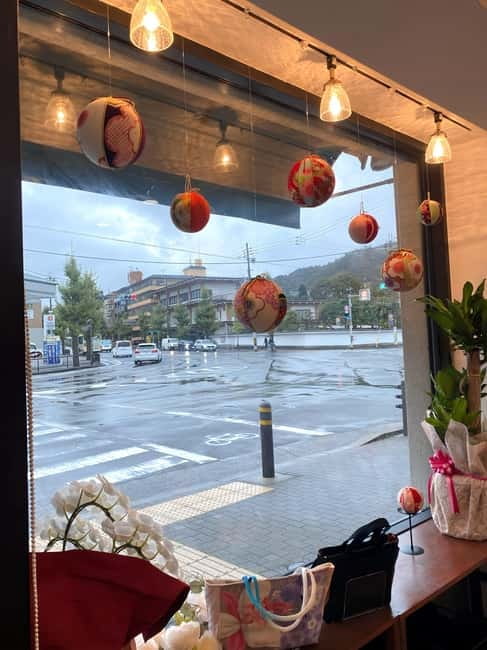
The workshop sits in the Kyoto sightseeing area, and you can usually treat it like a mid-day or late-afternoon activity. The biggest clue is location style: it is near historically significant temples and shrines, and one person specifically mentions Philosophers Path nearby.
That means you can build a simple day around it:
- Morning: choose a temple or shrine circuit that matches your energy level.
- Midday: come to the workshop to reset.
- After: walk toward Philosophers Path or pop into nearby cafes.
If you are trying to avoid over-scheduling, this placement is smart. You get a planned break that feels culturally connected, not like you just sat down because you were tired.
Who should book this Temari kimono fabric workshop
I think this workshop fits best if at least one of these is true for you:
- you want a take-home souvenir that is actually made by your hands
- you enjoy textiles, patterns, and crafting, even lightly
- you want a calmer activity between temple stops
- you are traveling with kids or you want a beginner-friendly class
- you like learning a bit of cultural context while you do something practical
It is also a good option if you are not confident about your skills. The class is designed so no prior experience is required, and the instruction is in English with Japanese support.
One more practical factor: it is wheelchair accessible. If mobility access matters for your plans, this is useful to know upfront.
My bottom line, should you book it
Yes, if you want a high-satisfaction Kyoto activity that does not require skill and ends with a meaningful souvenir. The combination of kimono fabric choices, clear step-by-step instruction from host May, and the included drink and sweet make it feel like real care went into the experience, not just ticket sales.
I would pass only if you are in a strict sightseeing mode and want to spend every minute outside walking temples. This class is the opposite of that, by design. You are trading a slice of walking for a hands-on craft that slows you down and gives you something you can keep.
If you have room in your schedule, book it. It is one of those rare travel add-ons where you leave with both a skill you can describe and an object that still looks good back home.
FAQ
What is the workshop length?
The Temari workshop lasts about 2 hours.
What will I make?
You will make a traditional Japanese Temari using kimono fabric.
Do I need any crafting or sewing experience?
No. The workshop is beginner-friendly, and no prior experience or skills are required.
What is included in the price?
It includes a complimentary drink, a traditional Japanese confectionery of your choice, all necessary materials, the workshop itself, and instruction from a local crafts master.
What is not included?
Additional drinks and food are not included.
Where do I meet the host?
You should enter the workshop upon arrival. Your host will be waiting to greet you.
What languages are used for instruction?
The instructor supports English and Japanese.
Is it a large group?
No. It is a small group limited to 4 participants.
Is the workshop wheelchair accessible?
Yes, the workshop is wheelchair accessible.
Made by Hand, and Yours to Keep

Rental Counters, Compared

Newest Kyoto write-ups from the Loving Japan desk


Japanese Craft and Calligraphy Workshops, side by side.
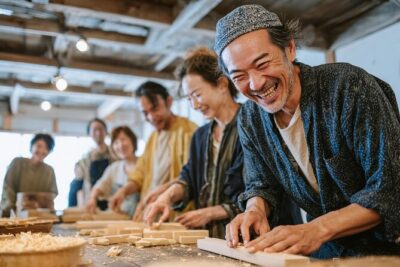 ★ 5.0Tokyo Shinjuku Chopsticks Making ClassFrom $201,763 reviews
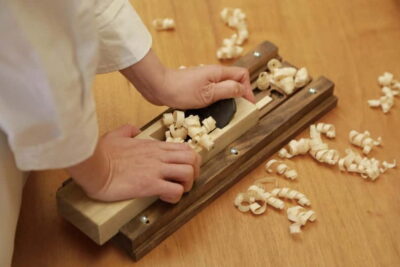 ★ 4.8Chopstick Making Workshop in GinzaFrom $251,366 reviews
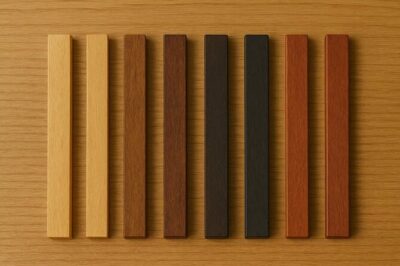 ★ 5.0Chopsticks Making Workshop in Gion with Engraving OptionFrom $15958 reviews
 ★ 4.8Tokyo Sumo Experience: Chanko & Mochi with a Former ProFrom $103567 reviews
 ★ 5.0Kintsugi Experience: Art of Golden Joinery in TokyoFrom $59467 reviews
 ★ 5.0Tokyo Chopstick Making Workshop with ArtisanFrom $26466 reviews
 ★ 4.9Matcha Making Experience with Mochi Sweets in AsakusaFrom $22388 reviews
 ★ 4.8Authentic knife making experience at a blacksmith in KyotoFrom $154350 reviews
Filed on these lists too