
REVIEW · NARA DEER PARK AND TODAI-JI
Nara – Highlights Bike Tour
One ride, two religions, and a pocket-sized route you can manage. The Nara Highlights Bike Tour strings together big-name sights like Todai-ji and Kasuga Taisha, then slows down for the deer and a pretty photo stop.
I like how you cover a lot in just a few hours without spending your whole day in transit. I also love the mix of stops, from the monster scale of Todai-ji to the lantern glow at Kasuga Taisha.
The main drawback to consider is timing and pacing. You may feel a bit rushed at the end, and the fit of the route can be harder on people who do not handle hills or longer sidewalk sections well.
In This Review
- Key points to know before you go
- Why cycling Nara feels so efficient
- Getting set up at Japan Tour Adventure and why timing matters
- Todai-ji Namdaimon: the South Gate and its guardians
- Todai-ji Temple: why that big wood structure matters
- The knife shop detour: Kikuichi Monju Shiro Kanenaga
- Kasuga Grand Shrine and its lantern world
- Nara Park deer time and a calm finish at Sagi Pond
- Pace, hills, and who will enjoy the ride
- Price and value at around $72.67 for a half day
- Guides and the kind of storytelling you get
- Should you book the Nara Highlights Bike Tour?
- FAQ
- How long is the Nara Highlights Bike Tour?
- What is included in the tour price?
- Are admission tickets included?
- How many stops does the tour include?
- Is there an option to buy something at the knife shop?
- What is the maximum group size?
- Where does the tour start and end?
- Is this tour suitable for solo travelers?
Key points to know before you go
- Bike-first sightseeing means faster movement between Nara’s major sights.
- Todai-ji includes admission, while other stops are listed as free entry.
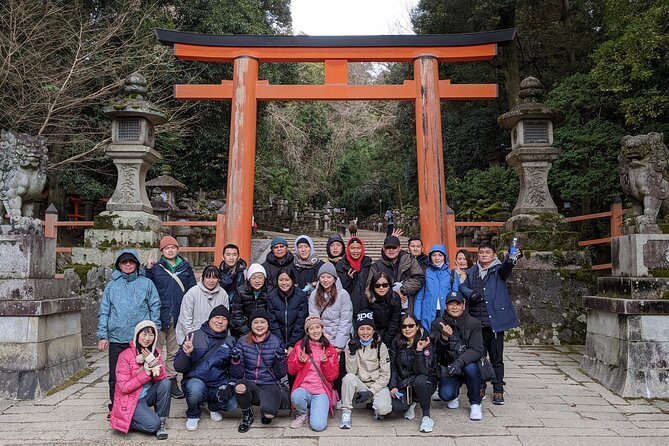
- Small group size (max 10) helps the guide keep an eye on everyone.
- Knife shop stop is a standout option, with the chance for free blade engraving if the engraver is available.
- You finish with deer time and a calm pond, a good way to close the loop.
- Some riders find the last stretch tight on photo time, so plan on quick stops for best shots.
A half day in Nara goes several ways
- World Heritage Kyoto & Nara Uji Authentic Matcha Experience
★ 5.0 · 1,573 reviews - Nara Half Day Trip Walking Tour (Private Option Available)
★ 5.0 · 937 reviews - Nara Early Morning Tour (Kyoto or Osaka Departure Available)
★ 5.0 · 676 reviews - Osaka: Nara and Uji Day Trip with Deer Park and Hot Spring
★ 4.4 · 302 reviews
Why cycling Nara feels so efficient
Nara is famous for its temples and shrines, but it is also spread out enough that walking can chew up your whole day. This tour fixes that with a bike route built for short attention spans and limited time. You bounce between sights, and the guide keeps the story moving so you are not just looking at buildings, you are connecting why they matter.
The best part is the emotional rhythm of the route. You start in the temple world with Todai-ji, then shift into Shinto at Kasuga Taisha, then end in nature with deer at Nara Park and a quiet pond at Sagi Pond. If you want variety without building a complicated self-guided plan, this half-day format is a smart fit.
Getting set up at Japan Tour Adventure and why timing matters
The tour meets at Japan Tour Adventure in Nara, at 297-9 Furuichichō. It is listed as near public transportation, and you will get a bicycle plus a helmet and other bike gear, with bottled water included.
One practical thing I would plan for is the distance between the meeting area and the main park zone. Some guests flag that it can feel far from Nara Park and a metro station. If that is you, a simple strategy is to take a taxi to the bike meeting point, then use public transport back after the tour. That approach shows up in real-world feedback and saves you from dragging bags or burning energy before the ride.
Also, bike fit matters on hills. Feedback highlights guides like Jerome, Robert, and Remi taking time to adjust bikes to riders’ heights. When your seat and handlebars fit, the ride feels smoother and the whole day feels less like work.
Todai-ji Namdaimon: the South Gate and its guardians
Stop one is Todai-ji Namdaimon, the Grand South Gate. You get about 15 minutes here, and admission is listed as free. Even if you already know Todai-ji from photos, the scale hits differently in person. The two fierce guardians are part of that effect, and they do more than decorate the entrance. They set the tone for the whole area, like a dramatic prologue.
This is a good stop to orient yourself. You see where you are headed next, you get your camera ready, and you start picking up details that your guide will connect later. If you are someone who likes to understand the why, this gate works well as a warm-up.
Cover Nara on two wheels instead
- E-Bike Nara Highlights – Todaiji, Knives, Deer, Shrine★ 4.8 · 186 reviews
- Nara: Bike Tour in Ancient Capital UNESCO World Heritage★ 5.0 · 43 reviews
- E-Bike Nara Highlights – Todaiji, Knives, Deer, Shrine, and Gems★ 4.5 · 34 reviews
- Nara: City Highlights Shared Group or Private Bike Tour★ 4.9 · 34 reviews
Todai-ji Temple: why that big wood structure matters
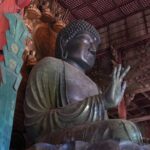
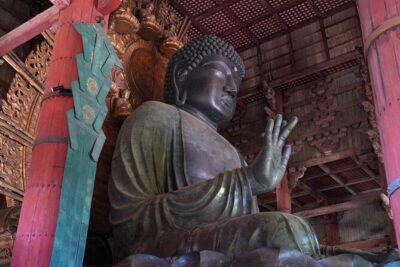
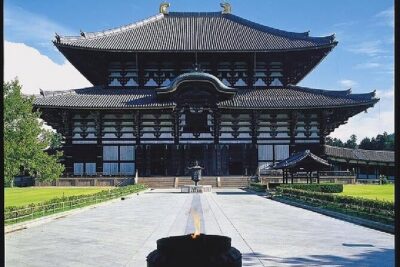
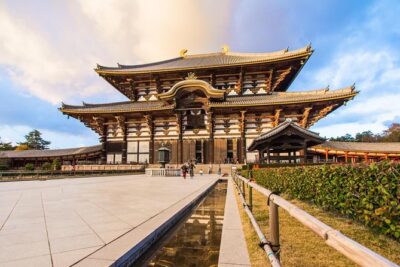
Next is Todai-ji Temple itself, with about 40 minutes and admission included. This is the stop most people come to for the famous scale: it is described as the biggest wood structure in the world and one of the most impressive temples in Japan.
What makes this time feel worth it is not just the size, it is the story your guide frames around the site. The tour is built around short background bursts while you are on the move and while you pause at each landmark. You get context for how Buddhist temple life developed here, and you can connect what you are seeing to the wider tradition.
A practical tip: plan for crowds. Todai-ji is a high-demand place, and the pace is guided. If you want the closest possible photo, you will likely need to move with the group and keep your timing tight rather than lingering at one angle.
The knife shop detour: Kikuichi Monju Shiro Kanenaga
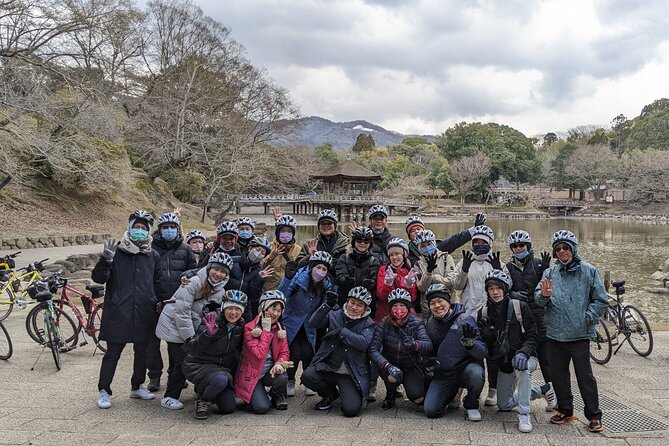
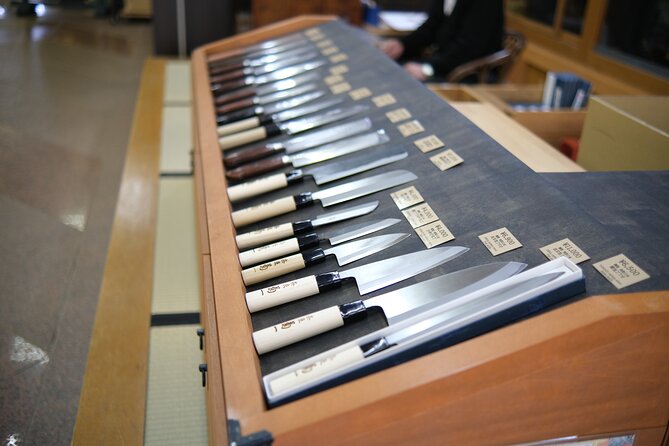
Then comes a stop that surprises a lot of visitors: Kikuichi Monju Shiro Kanenaga, a shop linked to Japanese cutlery. You spend around 15 minutes, and entry is listed as free.
Here is what makes it special for many people. The tour notes the chance to buy knives on-site, and if the engraver is available, you can get FREE BLADE ENGRAVING while joining the bike tour. In other words, this is not just a look-and-walk past a store. It gives you an actual souvenir moment tied to Japanese craft.
If that does not interest you, you can still enjoy the culture angle. Knife-making and metalworking traditions are a window into daily life and skill in Japan, not only into temples and shrines. One of the most consistently praised moments in the feedback is that this shop stop feels personal and memorable, not random.
Kasuga Grand Shrine and its lantern world
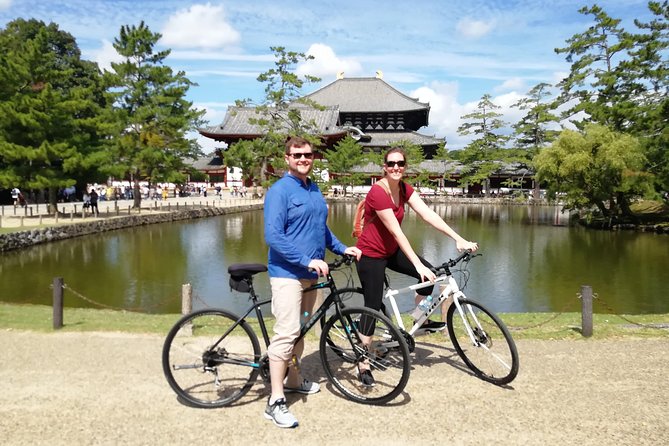
Stop four is Kasuga Grand Shrine, with about 30 minutes and free entry. This is the Shinto counterpart that balances Todai-ji’s Buddhist weight. The star attraction is the thousand lanterns, and the effect is exactly why Kasuga is on so many Nara short lists.
What you should expect from this stop is time for looking and for guided explanation. The tour style is designed to help you read the shrine like more than scenery. You get background about what shrines are doing culturally and how Kasuga became known for its lantern tradition.
If you are into photography, this is a good place to slow down for a minute and watch how other visitors position themselves. Lantern displays can create busy sight lines, so quick decisions matter.
Nara Park deer time and a calm finish at Sagi Pond
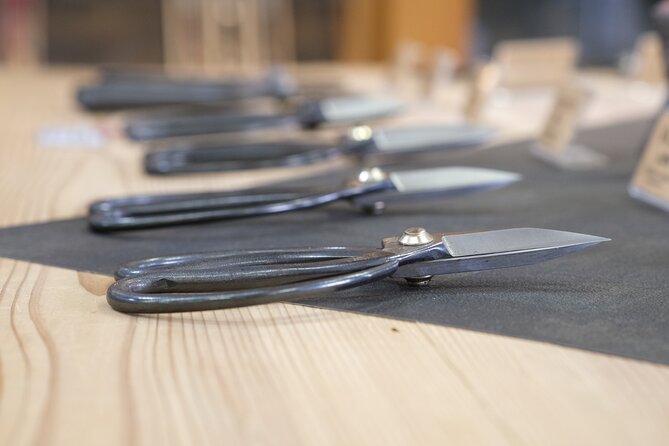
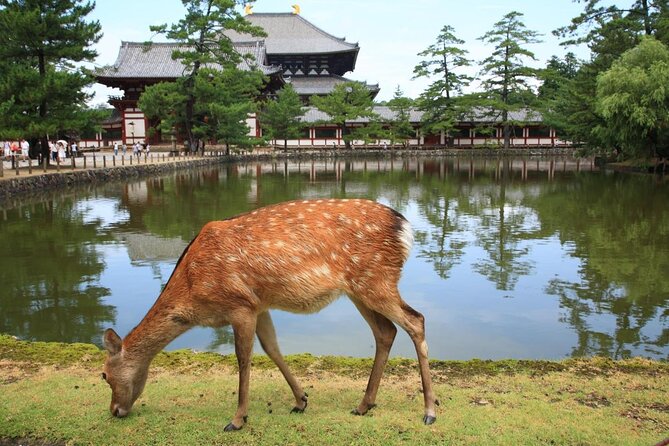
The tour then heads into Nara Park for deer time, with about 10 minutes there, followed by a final 10-minute stop at Sagi Pond for a peaceful photo spot.
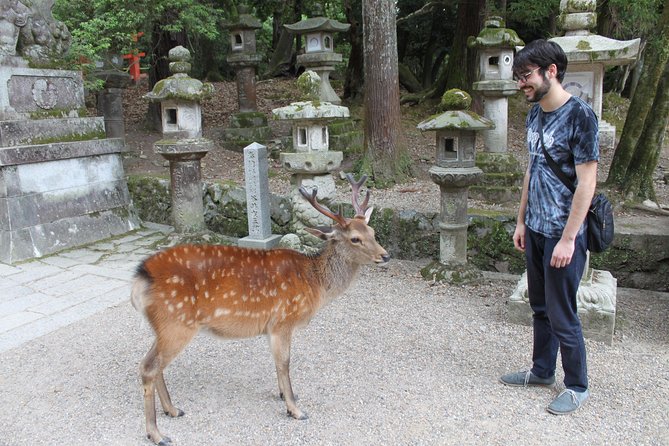
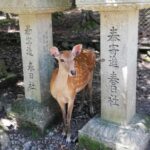
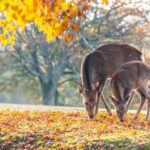
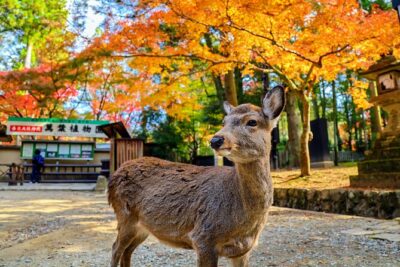
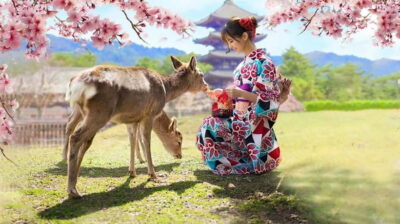
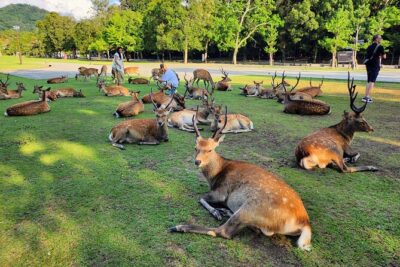
The deer section is why many people say the tour feels fun, not just educational. You are not stuck in a temple only loop. You ride into nature, see the deer, and get that iconic Nara moment. One detail that shows up in the tour experience is the deer bowing, which can feel oddly charming and surreal if you have only seen it in videos.
Then you finish at Sagi Pond, which works as a reset. Instead of squeezing in one more major building, you get a quieter scene and a clean ending. It is a good way to avoid the day feeling like nonstop sightseeing.
A small consideration: if you are someone who wants long photo sessions, the final stretch can feel quick. Some riders mention wanting extra time for pictures once you reach the parks. If that is your style, focus on getting one or two solid shots per stop rather than trying to nail every angle.
Pace, hills, and who will enjoy the ride
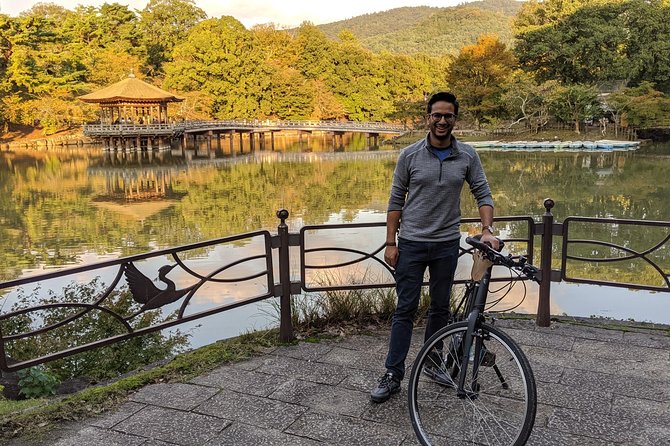
This tour is described as a half-day cycle with a ride that is meant to be manageable. Feedback repeatedly points to a pace that is pleasant exercise, not exhausting. Still, Nara has hills and uneven sidewalk areas, and the tour includes moving between locations by bike.
What I would take seriously is the warning that the side route to reach certain areas can feel rigorous. One feedback example includes a 12-year-old and a 70-year-old finding a sidewalk section very hard, and another notes a potentially dangerous stretch. That does not mean the whole tour is unsafe, it means you should judge your group carefully.
Here is how to make the ride work for you:
- Wear comfortable shoes you trust on uneven ground.
- If you have mobility limits, ask yourself if hills are okay for you for a few hours.
- If you bring kids, consider whether they can handle bike time plus walking connections.
The good news is that the bikes include gears, and feedback highlights that this makes sub hills more manageable. When your bike has the right gear range, the route feels more like sightseeing and less like a workout.
Price and value at around $72.67 for a half day
At $72.67 per person, the value depends on what you want from a sightseeing morning. What you get is not just a bike rental. You get a guided route covering multiple major highlights in a short window.
Your inclusions are meaningful for the math: bicycle use, helmet and other gear, and all fees and taxes. Admission is listed as included for Todai-ji Temple, while other stops are listed as free entry. That blend matters because temples and big sites can add up fast if you are paying as you go.
Where some people disagree is content depth and time per stop. One complaint is that the tour can feel expensive for the duration, with relatively short time in each location and a pickup and return distance that can add friction. That feedback is fair if you expect a long, slow, very detailed visit at each landmark.
So I would frame it like this: this is a highlight sampler. If you want your day packed with major sights and you are okay with shorter stops, the price can feel fair. If you want museum-level depth and lots of free time at each location, you might feel the squeeze.
Guides and the kind of storytelling you get
One reason small-group tours feel better is the human factor. In feedback, different guides show up, including names like Christophe, Jerome, Robert, Elodie, Remi, and Melody. Across those mentions, the consistent praise is that the guide keeps the day moving while explaining what you are seeing in plain terms.
A few specific moments show how guides add value:
- Waiting for late arrivals and helping adjust bikes to height.
- Giving clear narration while riding, so you do not feel lost between stops.
- Making the day feel friendly, with a focus on both temples and shrine culture.
If you prefer to learn without being bombarded, this tour style often lands well because it bundles explanations into the gaps between big sights.
Should you book the Nara Highlights Bike Tour?
Book it if you want an efficient half-day plan that hits Todai-ji, Kasuga Taisha, and deer time without building your own route. It is a smart choice for first-timers and for anyone who wants a guided shortcut through Nara’s main highlights.
I would pause and consider alternatives if:
- You want long photo stops at every landmark.
- Your group struggles with hills or longer walking connections.
- You are sensitive to pickup and return distance feeling inconvenient.
If you are a comfortable bike rider and you want a fun, structured way to see Nara, this tour is an easy yes. It balances major cultural sights with a dose of nature, and the knife shop stop adds a practical, memorable twist beyond the usual temple checklist.
FAQ
How long is the Nara Highlights Bike Tour?
The tour runs about 3 to 4 hours, with time allotted for each stop.
What is included in the tour price?
Included are bicycle use, a helmet and other bike gear, bottled water, and all fees and taxes.
Are admission tickets included?
Admission to Todai-ji Temple is included. Other listed stops are free entry according to the tour details.
How many stops does the tour include?
The tour includes six stops: Todai-ji Namdaimon, Todai-ji Temple, Kikuichi Monju Shiro Kanenaga, Kasuga Grand Shrine, Nara Park, and Sagi Pond.
Is there an option to buy something at the knife shop?
Yes. The Kikuichi Monju Shiro Kanenaga stop notes the possibility to buy knives on-site. It also mentions FREE BLADE ENGRAVING while joining the bike tour if the engraver is available.
What is the maximum group size?
The tour has a maximum of 10 travelers.
Where does the tour start and end?
It starts at Japan Tour Adventure in Nara (297-9 Furuichichō, Nara, 630-8424, Japan) and ends back at the meeting point.
Is this tour suitable for solo travelers?
Solo travelers can book directly, but there is a 2 guests minimum rule. If the minimum is not met, the session might be canceled and you would be notified with options like rescheduling or a full refund.
Bicycles and E-Bikes We Have Ridden

Half a Day in Nara
Newest Nara write-ups from the Loving Japan desk
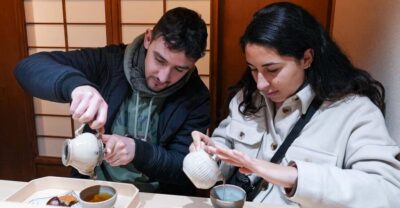
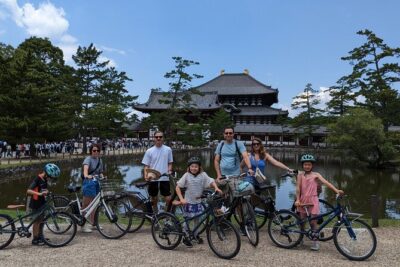
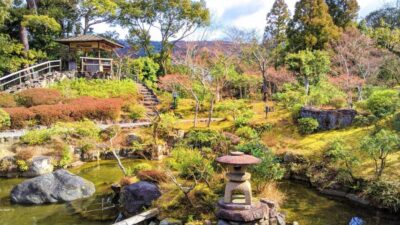

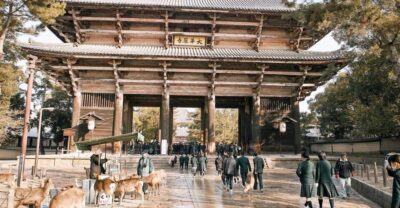
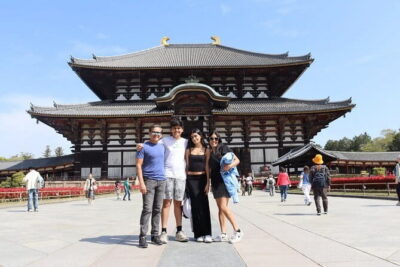
Nara Deer Park and Todai-ji, side by side.
 ★ 5.0World Heritage Kyoto & Nara Uji Authentic Matcha ExperienceFrom $1291,573 reviews
 ★ 4.7Kyoto/Osaka: Nara, Fushimi Inari Taisha, Arashiyama Bus TourFrom $521,275 reviews
 ★ 5.0Nara Half Day Trip Walking Tour (Private Option Available)From $105937 reviews
 ★ 4.4Osaka/Kyoto: Arashiyama, Nara & Fushimi Inari Shrine w/LunchFrom $61754 reviews
 ★ 5.0Nara Early Morning Tour (Kyoto or Osaka Departure Available)From $61676 reviews
 ★ 4.5Kyoto and Nara Day Trip from KyotoFrom $194445 reviews
 ★ 5.0Full Day Guided Tour to Kyoto and Nara from Osaka by VanFrom $106420 reviews
 ★ 4.5Nara Afternoon Tour from Kyoto or OsakaFrom $102390 reviews
Filed on these lists too