
REVIEW · JAPANESE CRAFT AND CALLIGRAPHY WORKSHOPS
Authentic Knife Making Experience at a Blacksmith in Kyoto
Hammering steel feels like a mini workout. In Kyoto, studio NIN has you dress in a goldsmith-style uniform and use hand tools with an English guide to forge a fully functional Japanese kitchen knife. I love how closely Diaki and the team coach you while your hands are still learning, and I love that you leave with a sharp knife sized about 13 to 15 cm. The main drawback to plan for is that it is genuinely strenuous, especially during the hammering and grinding phases.
I also like the fact that the class is designed for real beginners. You do not need to hunt down protective clothing or bring gear, because the uniform and tools are provided, and the group stays small (max 6 people). If you want one Kyoto activity that feels handmade, practical, and memorable, this is hard to beat.
In This Review
- Key highlights worth your time
- Why Kyoto is a great place to forge a Japanese kitchen knife
- Studio NIN to Rurikoin: what the start feels like and how to show up ready
- Dressing up and tools: where the workshop becomes personal fast
- Forging at Rurikoin: making the blade through the traditional process
- Sharpening and polishing: turning a shaped piece into a usable kitchen knife
- Your take-home knife: size, handle options, and how to pack it
- How hard is it, and who will enjoy it most
- Price and value: what $158.52 buys you in Kyoto
- The bottom line: should you book this knife making workshop
- FAQ
- How long is the knife making experience in Kyoto?
- What is included in the price?
- Do I need to bring protective clothing or tools?
- What size knife will I make?
- How many people are in the group?
- What is the cancellation policy if my plans change?
Key highlights worth your time
- Small group coaching: a maximum of 6 people means you get help as you forge, grind, and finish.
- You wear a proper workshop uniform: no need to source protective clothes for the session.
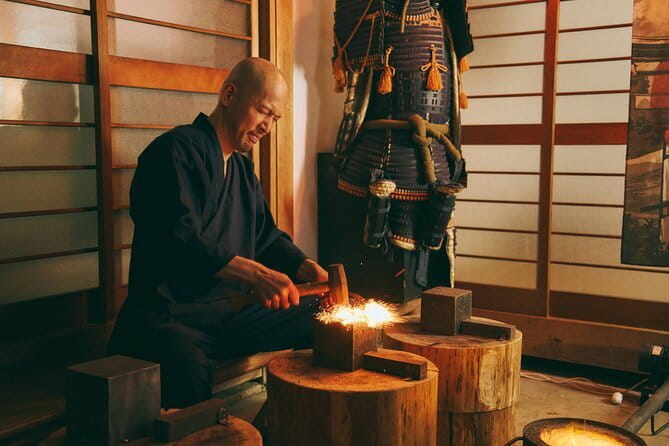
- Real knife making, not a demo: you hammer hot steel, then sharpen and polish so the knife is actually usable.
- English support: an English guide is included, and instructors are patient with amateur attempts.
- A Kyoto-made kitchen tool: your take-home knife is about 13 to 15 cm, handmade and slightly different for each person.
- Better value than a long, expensive craft session: a full-size knife can take 5+ hours and cost 400+ dollars, while this class focuses on a smaller 2.5 to 3 hour forging experience.
Make something to take home. Other workshops
- Kyoto : Chopsticks Making Workshop in Gion with Engraving Option
★ 5.0 · 958 reviews - Authentic knife making experience at a blacksmith in Kyoto
★ 4.8 · 350 reviews - Kyoto: Calligraphy class at Buddhist temple in city center
★ 5.0 · 167 reviews - Roketsu dyeing experience: M course Roketsu Dyeing Experience
★ 5.0 · 163 reviews
Why Kyoto is a great place to forge a Japanese kitchen knife
Kyoto is all about crafts that connect daily life to tradition. So making a knife here feels extra right. This is not just a souvenir you hang on a wall. It is kitchenware, built through a process that Japanese makers treat seriously.
And the workshop is set up to respect your time and energy. Studio NIN offers a shorter, more accessible forging experience, so you can experience the key part of Japanese knife making without spending a whole day in the shop. That matters, because most people want one unforgettable activity, not a second job.
Studio NIN to Rurikoin: what the start feels like and how to show up ready
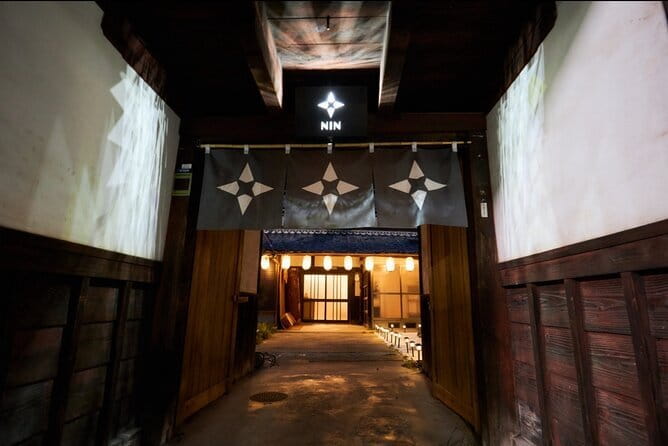
The class starts at studio NIN, 八瀬168-1 Yasenosechō, Sakyo Ward, Kyoto, 601-1254, Japan. Your activity ends back at the meeting point, so you do not need to figure out complicated late-day logistics.
You get a mobile ticket, and it is near public transportation. That said, one practical tip from real experiences: expect some walking once you get close. The location is described as tucked within a residential area, so I suggest you save the meeting pin before you go. If you lose phone signal at the station, you do not want to play guesswork.
Plan to arrive with a little physical readiness. The workshop lists moderate physical fitness as a requirement. This lines up with what you will do during the class: hammering, then grinding and sanding work that asks your arms, shoulders, and hands to stay focused.
Dressing up and tools: where the workshop becomes personal fast
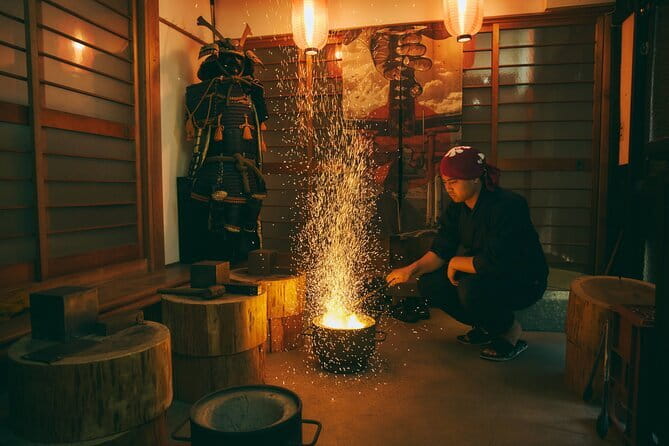
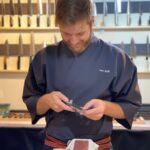
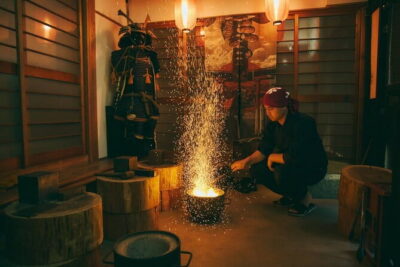
The early part of the session is built for you to get into the craft quickly. You dress in traditional goldsmith-style attire, then you get an English guide and instruction on how to use the tools.
Two things make this section work well. First, it lowers the intimidation factor. You do not need prior metalworking skills. Second, the instructors keep attention on safety and technique, not just output. That matters because mistakes are easy when you are new, and the shop is set up for correction.
What I find especially useful is that you are not left to figure things out alone. Multiple experiences highlight instructors stepping in to fix amateur mistakes while still letting you keep ownership of what you are making. That is the sweet spot for a hands-on workshop.
- PERFECT KYOTO 1-Day Bus Tour★ 5.0 · 13,518 reviews
- Kyoto: Fushimi Inari, Kinkakuji, Bamboo Grove 1 Day Bus Tour★ 4.8 · 4,316 reviews
- Kyoto: Tea Ceremony in a Traditional Tea House in Kiyomizu★ 4.9 · 3,519 reviews
- Kyoto Geisha Walking Tour: Gion District & Hidden Gems★ 4.7 · 3,273 reviews
- Kyoto: Tea Ceremony Ju-An at Jotokuji Temple★ 4.9 · 3,207 reviews
Forging at Rurikoin: making the blade through the traditional process
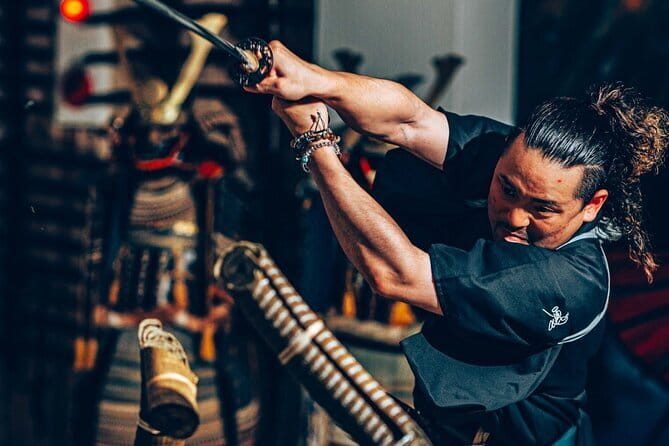
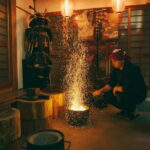
The workshop’s core is forging, and they are very clear that this is the focus. You learn the process of forging in depth, using the same traditional approach associated with Japanese kitchen knives.
Here is what that usually means in practice: you work with hot steel, hammer it, and shape it into the start of your blade form. The rhythm is repetitive, but it is also very satisfying. You watch the metal change shape under your hands, then you move on to the next stage with a blade that is truly yours.
Also note the knife size target. The finished knife is approximately 13 to 15 centimeters, and because it is handmade it can vary a bit. That length is a big part of why the class stays doable in about 3 hours. Longer blades mean more time and more cost in traditional work, and the workshop is designed to keep the experience accessible.
If you are wondering whether this is realistic for a beginner, the answer is yes, because the experience is built around beginners learning the process. You still do real forging work, but you are supported when technique matters.
Sharpening and polishing: turning a shaped piece into a usable kitchen knife

Forging is the dramatic part, but sharpening and polishing are what separate a souvenir from a tool.
During the later stages, you grind and finish the blade. You also do sharpening and polishing, with guidance from the staff. Even when your hands are brand new to sanding belts and sharpening angles, you are not on your own.
A few practical points based on real class experiences:
- You should expect some physical effort during grinding. One person described it as strenuous, like a workout, because you are doing the real shaping rather than watching.
- Technique matters most during the finishing steps. If you rush, you can end up with a blade that looks less clean than you hoped. The good news is staff help with corrections and finishing so you still leave with something you can use.
- You may see a mix of work stages, where you do the hammering and grinding, then the instructors handle the final sharpening and professional-level finishing touches. That balance is part of why novices still tend to leave happy.
You also get a presentation at the end. One experience mentions the knife being wrapped up and presented in a gift bag, and another notes a small photo included as a kind of keepsake.
Your take-home knife: size, handle options, and how to pack it
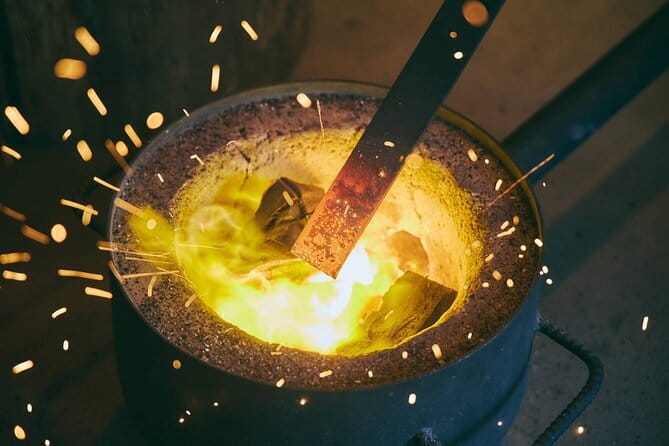
Your take-home item is a handmade Japanese kitchen knife. The blade length is about 13 to 15 cm.
About the handle, the workshop info emphasizes an iron handle and says there are no wooden handles in the described knife. But one detailed experience also mentions an option to add a wooden handle for ¥5000, to be attached later by the participant. So the safest way to think about it is this: the base experience centers on an iron handle, and there may be an add-on option depending on what the shop offers that day.
Shipping and carrying it home is something you should plan for. One experience warns that if you are flying, the blade length can exceed carry-on rules, so checking a bag may be the way to go. Even if you do not fly, pack it like a real knife: protected, not loose in a pouch.
Also remember the knife is handmade, so it can vary slightly by person. That is normal. In fact, that is part of the charm.
How hard is it, and who will enjoy it most
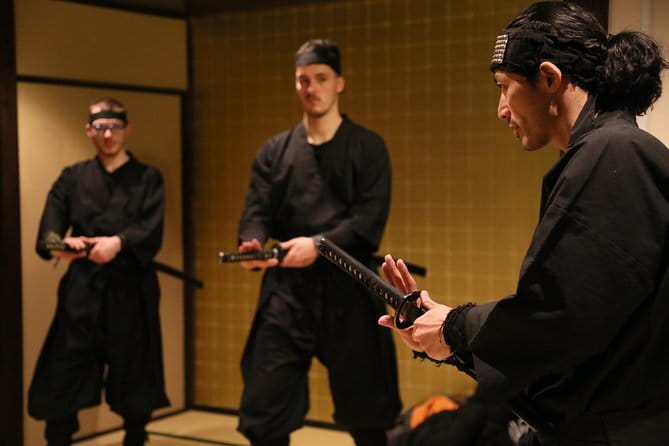
This is one of those classes where the description matches the reality. You will not just watch. You hammer, grind, and finish.
So who fits it best?
- First-timers who like active learning: If you enjoy learning by doing, this works well.
- Food lovers and cooks: This is especially satisfying if you care about tools. You are basically making a piece of kitchen equipment, not just art.
- Couples and small groups: The workshop max is 6 people, and that makes it feel more like a shared craft class than a production line.
- Teens who can handle the effort: One experience mentions a 13-year-old participating and getting guidance even in tight space.
Who should think twice?
- If you have trouble with arm strength or stamina, hammering and grinding may feel like too much. The tour lists moderate physical fitness, so trust that.
For comfort, one person specifically wished for more guidance about sanding belt safety and mentioned safety shoes rather than bare feet. I cannot say what footwear you will be required to wear, but I can say this: ask the shop what footwear they recommend, and come prepared. The goal is to stay safe while you are focused on technique.
Price and value: what $158.52 buys you in Kyoto
At $158.52 per person for about 3 hours, this is not the cheapest way to spend an afternoon in Kyoto. But you should judge value by what you leave with and how much of the craft you actually do.
Here is the value logic:
- You are paying for real materials and instruction, not a watched hands-on demo.
- You make a functional knife around 13 to 15 cm, sized like a kitchen tool.
- You get uniforms, an English guide, and a set of tools used to make knives.
- The group is small, so instruction time is not diluted.
The workshop also gives you useful context: a full-size cooking knife in the traditional world can take more than 5 hours and cost more than $400. Studio NIN is offering a shorter experience, roughly 2.5 hours focused on forging, so more people can participate without the huge time and price tag. That makes the cost feel more reasonable, especially if you value authenticity over convenience.
If you are the type who usually buys high-quality kitchen gear, this is a category purchase that you can justify. You are not just buying a knife, you are buying the story and the skill transfer.
The bottom line: should you book this knife making workshop
If you want a Kyoto activity with hands-on craft, leave with a knife you can actually use, and you like learning by doing, I say book it. The experience is designed for beginners, and the small group size helps you get real corrections and steady coaching from instructors like Diaki.
I would only hold back if you know you are not comfortable with physical work. Hammering and grinding are part of the deal, and the class is built around you doing the work. If you can handle that, this is one of the more memorable and practical souvenirs you can make in Japan.
FAQ
How long is the knife making experience in Kyoto?
It lasts about 3 hours (approx.), with the forging portion described as about 2.5 hours at studio NIN.
What is included in the price?
The experience includes a uniform, an English guide, and a set of tools used to make knives. Snacks and private transportation are not included.
Do I need to bring protective clothing or tools?
No. You are provided with a uniform, and the experience is designed so you do not need to source protective clothes or bring materials.
What size knife will I make?
The knife size is approximately 13 to 15 centimeters, and it may vary slightly because it is handmade.
How many people are in the group?
The workshop has a maximum group size of 6 travelers.
What is the cancellation policy if my plans change?
You can cancel for a full refund if you cancel up to 24 hours in advance of the experience start time. Changes made less than 24 hours before the start time are not accepted.
Made by Hand, and Yours to Keep
Newest Kyoto write-ups from the Loving Japan desk




Japanese Craft and Calligraphy Workshops, side by side.
 ★ 5.0Tokyo Shinjuku Chopsticks Making ClassFrom $201,763 reviews
 ★ 4.8Chopstick Making Workshop in GinzaFrom $251,366 reviews
 ★ 5.0Chopsticks Making Workshop in Gion with Engraving OptionFrom $15958 reviews
 ★ 4.8Tokyo Sumo Experience: Chanko & Mochi with a Former ProFrom $103567 reviews
 ★ 5.0Kintsugi Experience: Art of Golden Joinery in TokyoFrom $59467 reviews
 ★ 5.0Tokyo Chopstick Making Workshop with ArtisanFrom $26466 reviews
 ★ 4.9Matcha Making Experience with Mochi Sweets in AsakusaFrom $22388 reviews
 ★ 4.8Authentic knife making experience at a blacksmith in KyotoFrom $154350 reviews
Filed on these lists too