
REVIEW · JAPANESE CRAFT AND CALLIGRAPHY WORKSHOPS
Japanese miniature kimono made with origami in Osaka
Origami becomes wearable art in Osaka. In this workshop you fold a miniature kimono made with origami, an instructor original design that you learn step-by-step from the start. It is hands-on, beginner-friendly, and you finish with a real patterned piece you can keep.
I love how patient instruction keeps the hard folds from feeling intimidating, especially when you hit a snag. I also love the practical payoff, the miniature kimono has a clever design that can hold small items, and you get a QR code video plus a folding diagram so you can try again at home.
One consideration: it is a small, focused class, so if you want big-ticket sightseeing or a long experience, plan to spend the rest of your time around Abeno Harukas, Tsutenkaku, and Tennoji Zoo.
In This Review
- Key highlights worth your time
- Why the origami kimono workshop feels special in Osaka
- Where you meet: Abeno Station Exit 7 and the classroom setup
- The 90-minute plan: from practice fold to your finished kimono
- Folding with Dr. Hiroko: teaching that stays calm
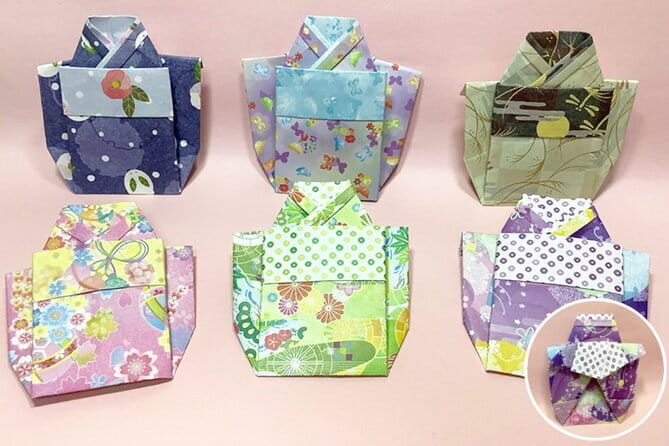
- What you actually make: a miniature kimono with pocket-like function
- What you take home: QR video, folding diagram, and a keepable keepsake
- Price and value: $65.32 for a private, hands-on class
- Who this is best for, from curious beginners to families
- How to plan your day around the class
- Should you book the Osaka origami miniature kimono class?
- FAQ
- Where do I meet for the origami kimono workshop?
- How long does the activity take?
- Is pickup available?
- Is this a private group experience?
- What is included in the price?
- What do I get to take home?
- Can beginners or children join?
- What if I need to cancel?
Key highlights worth your time
- Near Abeno Station Exit 7, easy to pair with your Osaka sightseeing day
- Instructor original origami kimono designs, not a generic craft template
- Beginner practice fold before you tackle the final patterned kimono
- Take-home QR video and a folding diagram, so you can re-fold later
- Optional extra choices if you have time, from a set of traditional works
Rental shops we have actually walked into
- Osaka: Sumo Show & Experience w/ Optional Kimono & Hot Pot
★ 4.5 · 609 reviews - Learning Zen of Japanese Calligraphy in kimono near Osaka Castle
★ 4.5 · 53 reviews - Osaka: Kimono or Yukata Rental &Photos Service Options
★ 4.9 · 25 reviews - Kimono photoshoot-Includes 100 photo data
★ 5.0 · 21 reviews
Why the origami kimono workshop feels special in Osaka
Osaka is great for food and neon energy, but it is also full of quiet creative corners. This class gives you something different from the usual souvenir run: you make a tiny kimono that looks right, holds detail, and feels personal.
The kimono design is made from origami, but it is not just paper folding for folding’s sake. The instructor’s work is an original, so the result has a specific look you likely will not see anywhere else. That originality matters, because it turns the activity into a true memory from Osaka, not a generic craft you can do anywhere.
There is also a nice “real object” effect. Even though the kimono is miniature, you are still making something that reads like a kimono, with a front and back shape. That visual satisfaction is what makes people keep folding carefully, even when their first attempt feels awkward.
Where you meet: Abeno Station Exit 7 and the classroom setup
You meet at Abeno Station, at the bottom of the stairs, Exit 7. The address listed is 大阪府大阪市阿倍野区阿倍野筋3丁目4先, so it is easy to plug into maps.
From there, you walk together to the classroom. The workshop is located in a building close to the station, in a general facility with many stores. That means you are not stuck in some remote workshop room far from your transit. Instead, you can arrive, focus, and still have an easy way to get back out afterward.
If you are planning your day, this location helps. You can do the class in the middle of a sightseeing loop. Nearby are the Abeno Harukas area, Tsutenkaku Tower, and Tennoji Zoo. Even if you do not visit all three, you have options for what to do before or after your folding session.
The 90-minute plan: from practice fold to your finished kimono
The class runs about 1 hour 30 minutes, and the flow is simple. It is designed for people who have never folded before, and it also works if you want a calming craft session rather than a lecture.
Here is how the time usually breaks down:
First, you sit at your table and choose your origami paper. That matters more than it sounds. Choosing your paper gives you a sense of ownership right away, and it can set expectations for how bold or delicate your finished kimono will look.
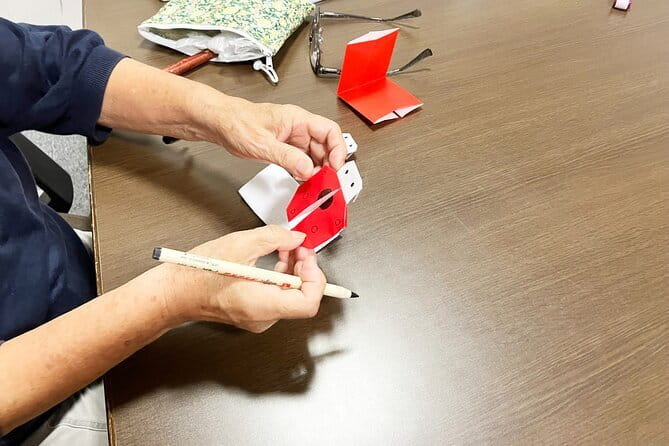
Next comes a practice fold. You fold together once for practice, then you get comfortable with the steps. This is the part that helps beginners most, because you learn the “language” of the folding, like where the crease needs to be sharp and when you should slow down.
After that, you fold the real thing, a piece with a beautiful pattern. This final fold is where your patience pays off. The class is paced so you can keep up, and you end with a kimono you can safely take home.
If you have more time, you may also choose your favorite piece from 20 traditional works. That is a great add-on if you want variety, or if you know you will want a second design to compare styles.
Make something to take home. Other workshops
- Osaka: Traditional Mochi Pounding Experience with Tasting★ 4.9 · 306 reviews
- 1.5〜2 Hours Traditional Kintsugi Work Shop in Namba Osaka★ 5.0 · 75 reviews
- 【For adult】Traditional Mochi Pounding Experience with Tasting★ 5.0 · 67 reviews
- Osaka: Private Japanese Calligraphy Experience★ 5.0 · 66 reviews
- From Osaka: Sakai Knife Maker or Blacksmith Walking Tour★ 4.9 · 64 reviews
Folding with Dr. Hiroko: teaching that stays calm

The best part of this experience is the way the instruction stays clear, even when the folds are tricky. Many people start out thinking they are hopeless at origami. The tone in the room is gentle and encouraging, and the teacher explains in a way that lets you ask questions and keep moving.
In the feedback I saw, the instructor is referred to as Dr. Hiroko. That shows up alongside comments about her being patient and easy to understand. People also mentioned how they could fix things after getting stuck, which is a big deal in a folding class. One wrong crease can spiral fast, but patient guidance helps you recover without feeling rushed.
You also benefit from learning as a group, not just watching videos. When someone else makes the same mistake you are making, you get a quick correction that saves your next step. It is a small group skill, and the teacher keeps it understandable.
What you actually make: a miniature kimono with pocket-like function
The finished product is a Japanese miniature kimono made with origami, and it is not just decorative. The design includes pockets and is intended to hold small items.
That pocket idea is more fun than it sounds. It turns your craft into something you can use as a tiny gift wrapper or storage piece. The class also mentions using the kimono with small items like picks, coins, or otegami placed inside. So you can go beyond “look, I made this” and actually give it a purpose.
If you like souvenirs that feel interactive, this is a good match. It also makes the finished kimono more than a flat decoration. You have a 3D paper object that still reads as kimono when you set it down.
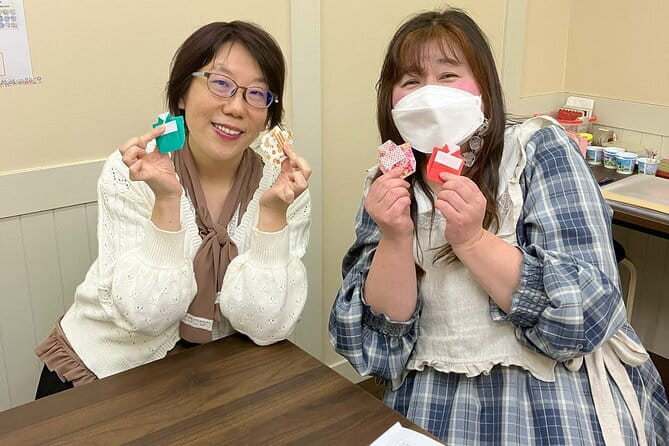
Also, because it is origami, the craft has that satisfying crisp look. Even when it is small, you can see the fold work. That is why people feel proud showing the results to friends after class.
What you take home: QR video, folding diagram, and a keepable keepsake
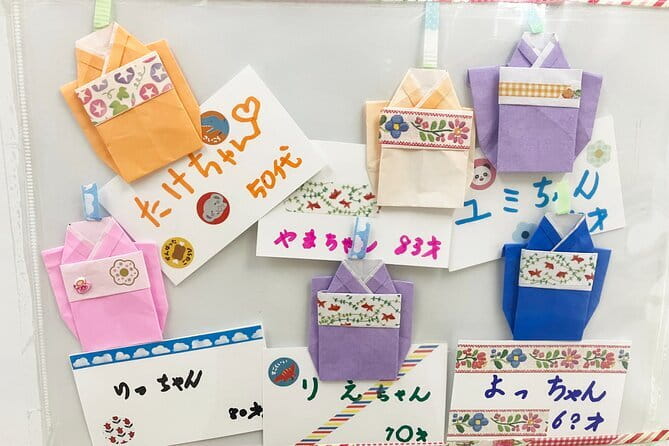
You get materials during the class, and when you finish, you take home what you made. On top of that, you receive a QR code for a video and a folding diagram.
This is one of the best value features for a short workshop. Without it, your kimono is locked into the moment when the teacher helped you. With the QR video and diagram, you can re-fold it later at home, at your own pace, without trying to remember every step.
That means you get two experiences from one class. You get the in-person build, plus you get a future project. If you travel a lot, that future revisit is what makes craft activities feel worth it, instead of just a one-time item you put in a drawer.
Price and value: $65.32 for a private, hands-on class

At $65.32 per person, it is not the cheapest activity in Osaka, but it is also not inflated for what you do. You are paying for three main things:
- A guided, step-by-step folding session that helps you finish
- The instructor’s original kimono design, which adds real uniqueness
- A take-home learning tool, the QR video and folding diagram
You should also know the structure is a private tour/activity, meaning it is only your group. That can be a value win if you are traveling with friends or family who want focused attention. There are also group discounts, so if you can travel with at least a small party, you may get better overall value.
If you are booking far ahead, note that on average this is reserved about 155 days in advance. That is a sign it fills up, so you will want to plan your Osaka schedule early, especially if you want a specific time.
Who this is best for, from curious beginners to families

This is genuinely beginner-friendly. The class is designed so beginners and small children can enjoy it together. That matters, because some craft activities are really “for kids who already know origami.” Here, you start with practice folds and guided steps, so you are not thrown into the deep end.
It is also great if you have tried origami before but got stuck. In the kind of feedback this workshop generates, people describe rediscovering the process after hitting difficulty and realizing they just needed clearer guidance.
If you are traveling with someone who likes tactile activities, this is a win. You do not need museum stamina. You do not need to hunt down complicated directions. You sit, fold, and create.
If you are the type who wants a big itinerary and constant movement, you might find this more relaxed than you expect. But if you like calm, hands-on culture and a tangible souvenir, you will probably love it.
How to plan your day around the class
Because the meeting point is near the station, you can structure your day around it easily.
A simple plan:
1) Arrive at Abeno Station area and find your Exit 7 meeting point
2) Do the class, then walk out into the neighborhood
3) Spend time around Abeno Harukas or head toward Tsutenkaku and Tennoji Zoo
The building is part of a general shopping and store area. That means you can grab snacks or browse nearby shops without feeling like you are far from your next activity.
Also, the workshop offers pickup. The details of exactly where pickup goes are not listed here, but if you are thinking about it, it is worth asking during booking, especially if you have mobility constraints or you are coordinating with a group.
Finally, it uses a mobile ticket, so have your phone ready.
Should you book the Osaka origami miniature kimono class?
If you want a souvenir that feels like a story, book it. This is one of those activities where the “making” is the point. You leave with a small kimono, plus a way to repeat the steps later with the QR video and folding diagram.
I would especially recommend it if:
- You like crafts that become practical gifts, not just decorations
- You want a beginner-friendly cultural activity in Osaka
- You are traveling with someone who enjoys instruction and hands-on creativity
Skip it only if you are chasing a long, sightseeing-heavy day. This is focused, calm, and creative, not an all-day tour. But for the time you spend, it is strong value, and the final result feels genuinely special.
FAQ
Where do I meet for the origami kimono workshop?
You meet at Abeno Station, at the bottom of the stairs of Exit 7.
How long does the activity take?
The duration is about 1 hour 30 minutes.
Is pickup available?
Yes, pickup is offered.
Is this a private group experience?
Yes. It is a private tour/activity, and only your group participates.
What is included in the price?
The price includes the tools and materials needed for the activity.
What do I get to take home?
You take home the miniature kimono you fold. You also receive a QR code video and a folding diagram for instructions.
Can beginners or children join?
Yes. The experience is described as suitable for beginners and small children.
What if I need to cancel?
Cancellation is free up to 24 hours before the start time for a full refund. If you cancel less than 24 hours before, it is not refunded.
Made by Hand, and Yours to Keep



Rental Counters, Compared


Newest Osaka write-ups from the Loving Japan desk





Japanese Craft and Calligraphy Workshops, side by side.
 ★ 5.0Tokyo Shinjuku Chopsticks Making ClassFrom $201,763 reviews
 ★ 4.8Chopstick Making Workshop in GinzaFrom $251,366 reviews
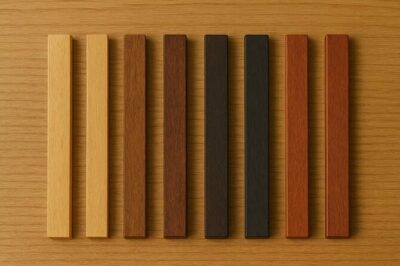 ★ 5.0Chopsticks Making Workshop in Gion with Engraving OptionFrom $15958 reviews
 ★ 4.8Tokyo Sumo Experience: Chanko & Mochi with a Former ProFrom $103567 reviews
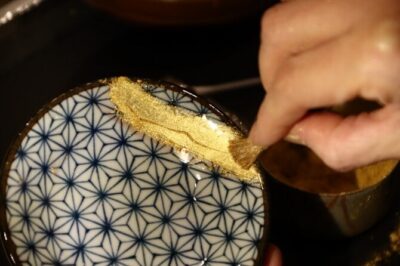 ★ 5.0Kintsugi Experience: Art of Golden Joinery in TokyoFrom $59467 reviews
 ★ 5.0Tokyo Chopstick Making Workshop with ArtisanFrom $26466 reviews
 ★ 4.9Matcha Making Experience with Mochi Sweets in AsakusaFrom $22388 reviews
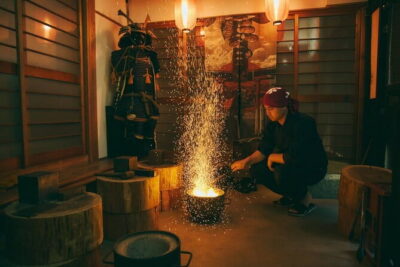 ★ 4.8Authentic knife making experience at a blacksmith in KyotoFrom $154350 reviews
Filed on these lists too