
REVIEW · JAPANESE CRAFT AND CALLIGRAPHY WORKSHOPS
Kyoto: Japanese Calligraphy Workshop
Kyoto’s ink and paper can feel surprisingly calming. This hands-on Shodo workshop at Gojo Paradiso lets you learn the basics, then create a real kanji piece with step-by-step guidance you can follow even as a beginner. One catch to plan around, it is not suitable for children under 10.
I also like that the whole thing is easy to fit into a Kyoto day. You meet at Gojo Paradiso along the Takase River on Kiyamachi Street, a short walk from Keihan Kiyomizu Gojo Station, and you join a small group limited to 10. The instructor works in English and Japanese, and all supplies are included.
- Beginner-first teaching: you practice brush strokes before moving to writing kanji characters
- You take home your work: your calligraphy is finished as a one-of-a-kind memento on rice paper
- Signed in kanji and stamped: you can leave with a piece that looks and feels complete
- Small group support: the instructor and helpers spend time checking your technique during exercises
- Central Kyoto, quiet setting: it is in a calmer space even though you are in the city core
- More to do at the end: you can take photos, explore the gallery, and place special orders
In This Review
- Why Shodo at Gojo Paradiso Feels Like Real Kyoto Art Class
- Where You Meet Near the Takase River (and Why It’s Convenient)
- The 1 to 2 Hour Workshop Flow: What Happens in Order
- 1) A short introduction to what you are doing
- 2) Brush stroke practice you can actually feel
- 3) Writing kanji characters with guided corrections
- 4) Add your name in kanji, then complete your piece
- 5) Photos, gallery time, and special orders
- Brush Strokes and Kanji: How Beginners Get a Real Result
- The Instructor Setup: Small Group, Big Attention
- Price and Value: Is $32 a Good Deal?
- Who Should Book This Calligraphy Class in Kyoto
- Practical Tips So You Enjoy the Class More
- Do You Need to Know Kanji Before You Go?
- Booking and Timing Notes That Matter
- Should You Book Kyoto Japanese Calligraphy Workshop?
- FAQ
- How long is the Kyoto Japanese Calligraphy Workshop?
- How much does it cost?
- Where is the meeting point?
- Is the workshop suitable for beginners?
- What languages are used during the class?
- Is it good for families with kids?
- Is the workshop wheelchair accessible?
- Can I take photos during the workshop?
- Do I need to reserve in advance?
Why Shodo at Gojo Paradiso Feels Like Real Kyoto Art Class
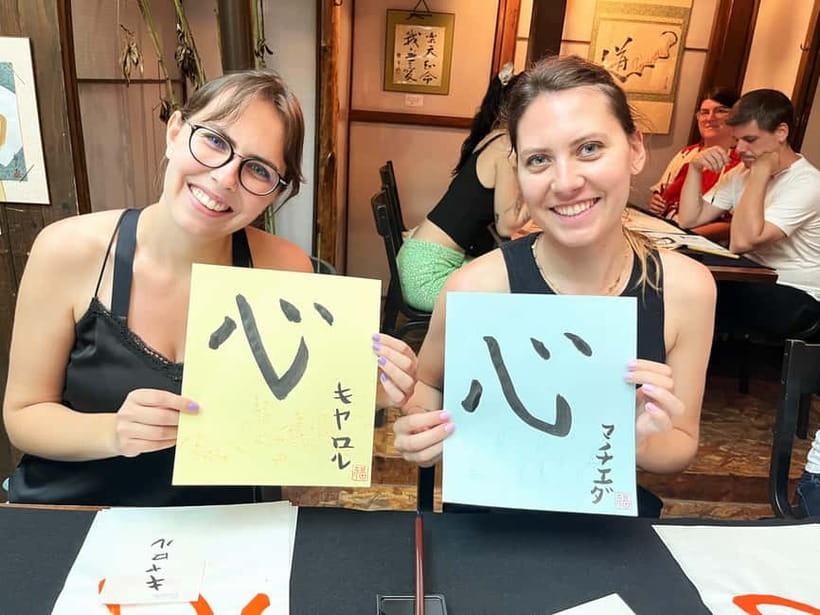
Shodo is the Japanese art of calligraphy, and the best part is that it is not just watching someone else write. You practice the strokes yourself, which is how you start to understand why brush control matters. In a workshop like this, the goal is very practical: you learn a method, then you turn that method into a piece you can keep.
I like two things right away. First, the teaching is step by step, so you are not thrown into complicated characters. Second, you end with a true take-home artwork, not a worksheet. That difference matters in Kyoto, where it is easy to spend money and leave with nothing you can touch again.
The main consideration is also simple. This experience is not suitable for children under 10, so it is really built for older kids, teens, and adults.
Make something to take home. Other workshops
- Kyoto : Chopsticks Making Workshop in Gion with Engraving Option
★ 5.0 · 958 reviews - Authentic knife making experience at a blacksmith in Kyoto
★ 4.8 · 350 reviews - Kyoto: Calligraphy class at Buddhist temple in city center
★ 5.0 · 167 reviews - Roketsu dyeing experience: M course Roketsu Dyeing Experience
★ 5.0 · 163 reviews
Where You Meet Near the Takase River (and Why It’s Convenient)
You will meet at Gojo Paradiso, on Kiyamachi Street along the Takase River. It is about a 5-minute walk from Keihan Kiyomizu Gojo Station, and roughly a 10-minute walk from Keihan Shichijo Station. The location is very walkable, which helps if you are doing a standard Kyoto day with temples and streets.
That river-side setting also helps your brain settle. Calligraphy asks you to slow down, pay attention, and make steady movements. If you start the class with a long, stressful journey, it is harder to enjoy the quiet focus that good instruction creates.
The 1 to 2 Hour Workshop Flow: What Happens in Order
The workshop runs 1 to 2 hours, depending on timing and availability. The structure is designed so you do not just copy a character, you build it in stages.
1) A short introduction to what you are doing
You begin with the meaning and background of Japanese calligraphy. You learn what the style is trying to capture, and why a brushstroke is more than just ink on paper. For beginners, this is useful because it gives purpose to what might otherwise feel like random practice.
- PERFECT KYOTO 1-Day Bus Tour★ 5.0 · 13,518 reviews
- Kyoto: Fushimi Inari, Kinkakuji, Bamboo Grove 1 Day Bus Tour★ 4.8 · 4,316 reviews
- Kyoto: Tea Ceremony in a Traditional Tea House in Kiyomizu★ 4.9 · 3,519 reviews
- Kyoto Geisha Walking Tour: Gion District & Hidden Gems★ 4.7 · 3,273 reviews
- Kyoto: Tea Ceremony Ju-An at Jotokuji Temple★ 4.9 · 3,207 reviews
2) Brush stroke practice you can actually feel
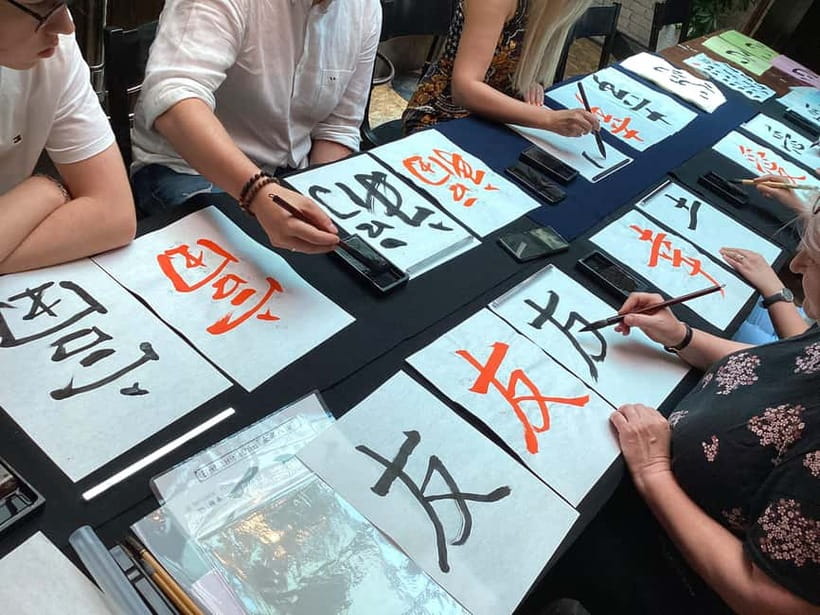
Next comes the part your hand will remember: basic brush strokes. You practice the fundamentals until you see how the brush tip behaves, how pressure changes the mark, and how direction affects the result. This is where the class earns its keep, because you build control step by step rather than guessing.
3) Writing kanji characters with guided corrections
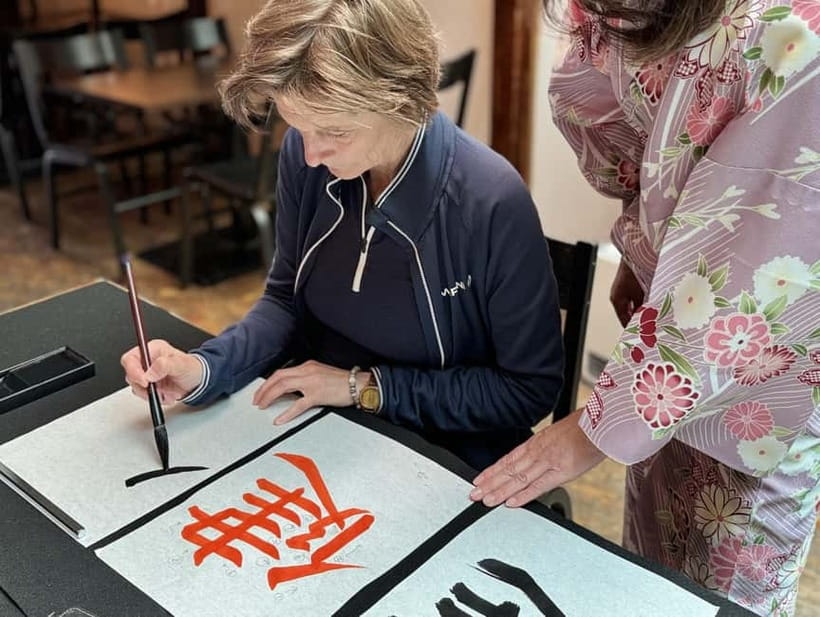
After the stroke practice, you move to kanji writing. The instructor guides you through what to do and how to do it, and you learn how to form the character carefully. You should expect hands-on coaching, including moments where the instructor (and helpers) help you adjust your technique.
4) Add your name in kanji, then complete your piece
A fun payoff comes near the end: writing your name in kanji. This turns the session from a generic demonstration into something personal. When your calligraphy is finished, you can take it home as your one-of-a-kind creation.
5) Photos, gallery time, and special orders
In the final part, you can take photos, explore the gallery, and place special orders if you want to go further than the workshop. This is a nice touch. You are not rushed out the door after you finish your sheet.
Brush Strokes and Kanji: How Beginners Get a Real Result
Calligraphy has a reputation for being intimidating. The trick is that this workshop teaches the basics in a way that reduces guessing. You start with simpler stroke work, then gradually build into kanji.
Here is what makes that beginner approach work in real life:
- You get specific technique cues instead of vague advice.
- You practice the same muscle memory repeatedly before you attempt a finished character.
- You receive support while you write, so small mistakes are corrected while they are still easy to fix.
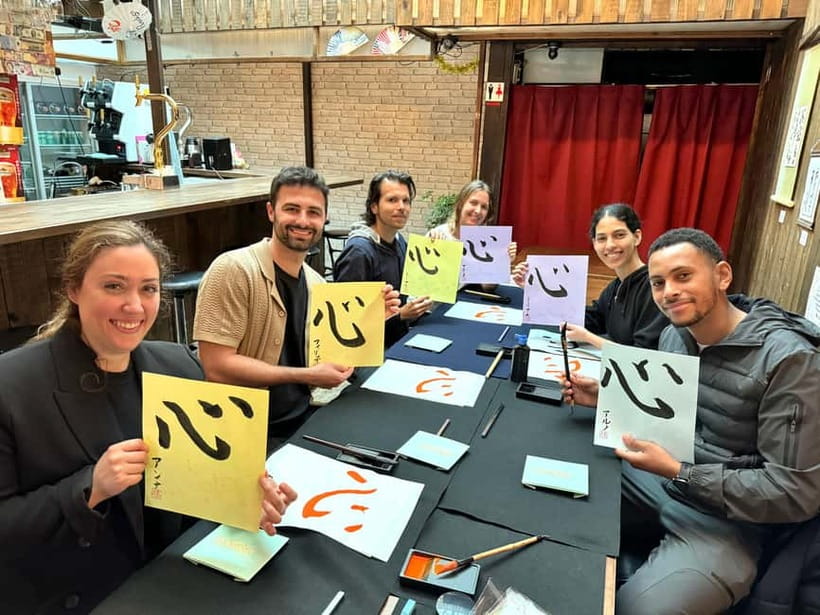
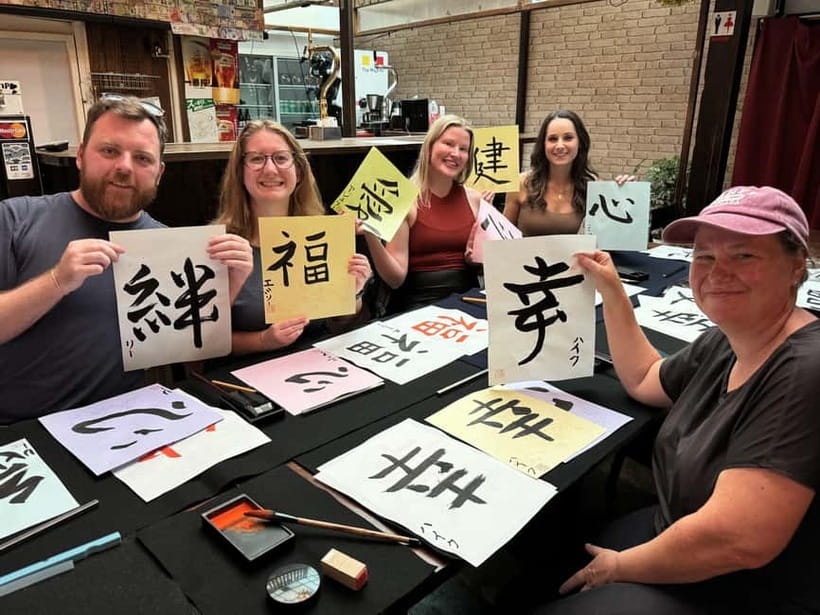
One detail that stands out is how the session ends with a completed keepsake. Your work is prepared on rice paper, and you can leave with your piece signed in kanji and stamped. When a class gives you a finished, polished final result, you can actually frame it later, or at least keep it without it feeling unfinished.
In one example, the instructor also provided an extra handmade calligraphy gift with gold accents. That is not guaranteed for every session, but it shows the workshop can go beyond the basics when the instructor wants you to feel inspired.
The Instructor Setup: Small Group, Big Attention
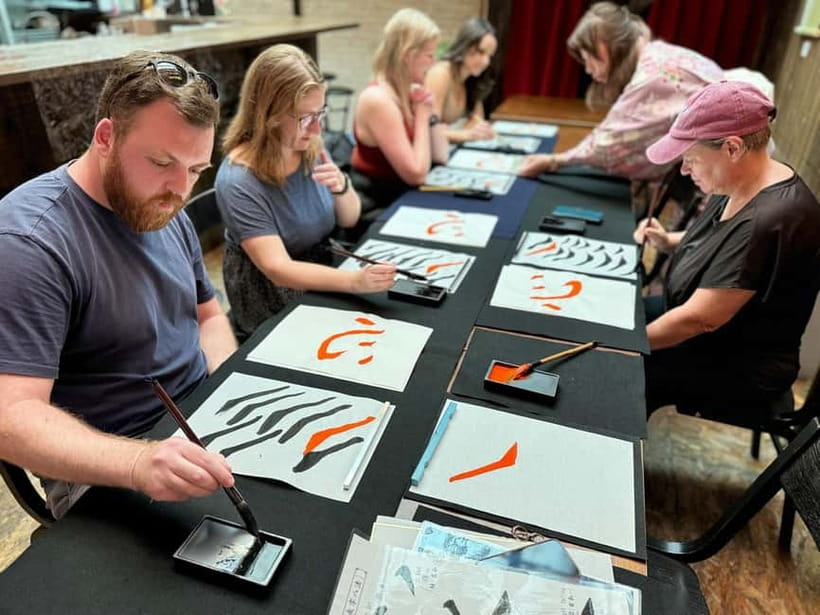
This is a small group format, limited to 10 participants. That number matters more than you might think. Calligraphy is hands-on, and brush movements are hard to correct from across a room. Smaller groups mean you are more likely to get direct feedback during the practice.
The instructor teaches in English and Japanese, and the vibe tends to be patient and encouraging. The class includes supplies, and there are often helpers present to support you during exercises. In practice, that means you are not stuck waiting for someone to hand you materials or fix a problem after you get frustrated.
If you are the type who likes to ask questions, this setup is a good match. If you are quiet, it is still a good match because the structure and pacing reduce pressure. You follow the steps, practice, then get coaching as needed.
Price and Value: Is $32 a Good Deal?
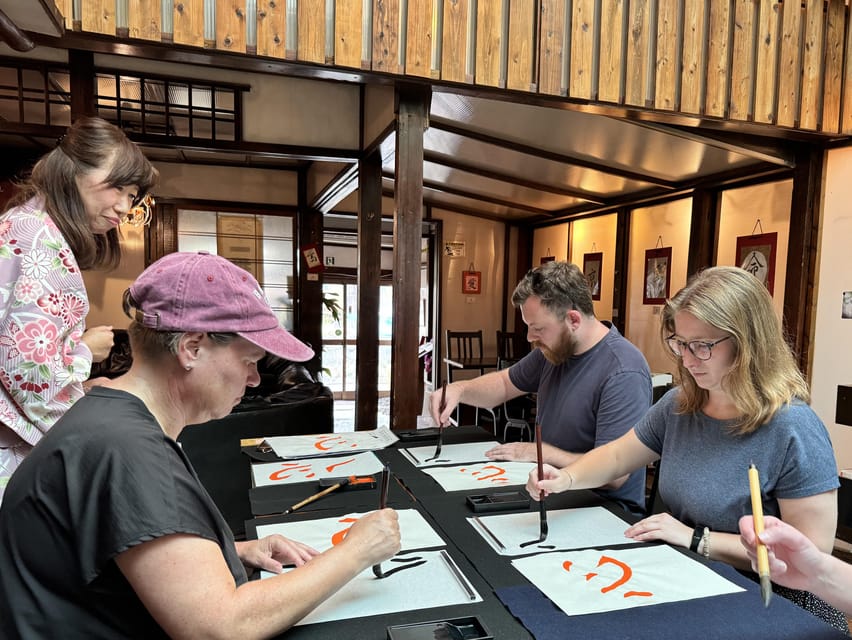
At $32 per person, the workshop is priced like a cultural activity, not a luxury art tour. What makes the value feel real is what is included: an expert calligraphy instructor, all necessary supplies, and a finished calligraphy piece you take home.
You should also think about what $32 buys you in Kyoto. A lot of city experiences are either short photo stops or guided walks that end with knowledge but no object. Here, you walk away with something physical, something you can look at later. That makes the cost easier to justify.
The time is also reasonable. With 1 to 2 hours, you can fit this around a temple visit, a riverside stroll, or a meal without rearranging your whole itinerary.
Who Should Book This Calligraphy Class in Kyoto
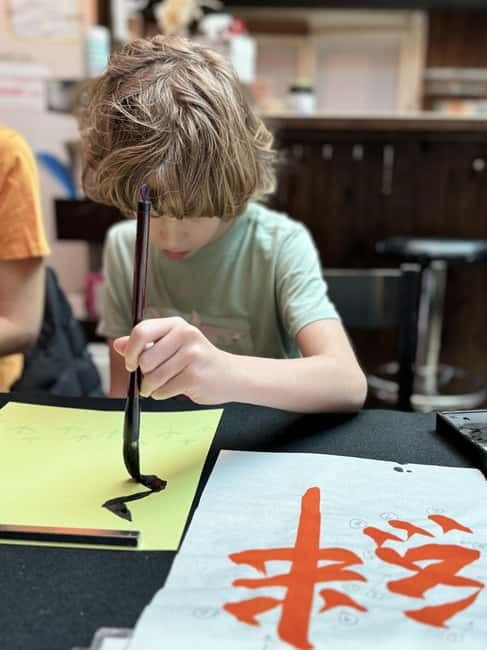
This workshop is especially well-suited for:
- First-time calligraphy learners who want clear instruction
- Couples who want an interactive Kyoto experience at a relaxed pace
- Solo travelers who like structured activities and want a meaningful souvenir
- Anyone who appreciates crafts, writing, or slow focused skills
It is not a fit if you are traveling with children under 10. It is also a better match if you can enjoy quiet concentration. If you want constant sightseeing or a fast-paced tour with many stops, this is not that kind of experience.
Practical Tips So You Enjoy the Class More
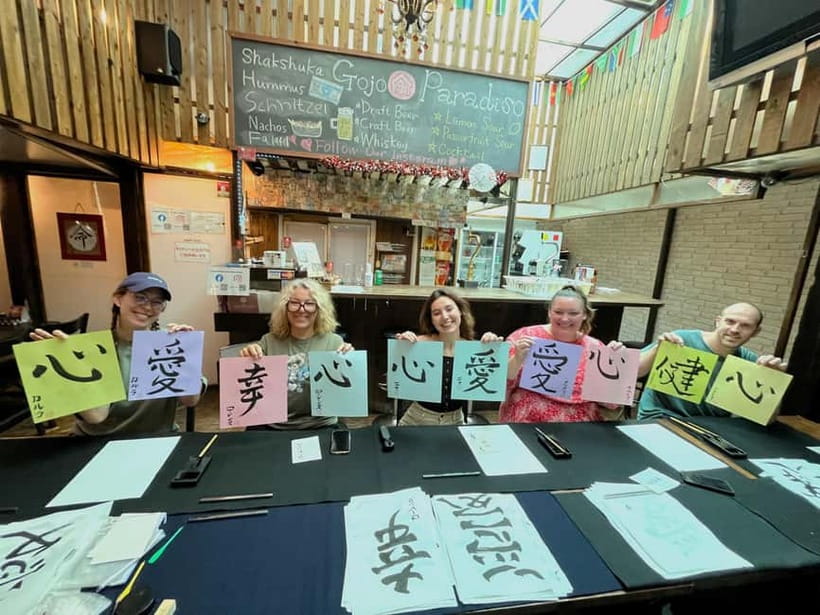
You do not need special skills. The bigger factor is how you show up.
1) Wear comfortable clothes
You will be writing and sitting for a while. Comfortable footwear and simple clothing make it easier to focus on your brush control.
2) Plan your timing with a calm mindset
Give yourself a little buffer before the class. When you start relaxed, the practice feels more enjoyable and less like a test.
3) Expect guidance as you write
Do not be surprised if the instructor adjusts your position, brush handling, or stroke direction. That is part of the learning.
4) Take photos at the end
You can take photos during the final part, after you finish. That timing helps you capture your work when it looks complete, not while you are still mid-practice.
5) Consider ordering if you want more
Since there is gallery time and you can place special orders at the end, you might want to check out what is available before you decide you are done.
Do You Need to Know Kanji Before You Go?
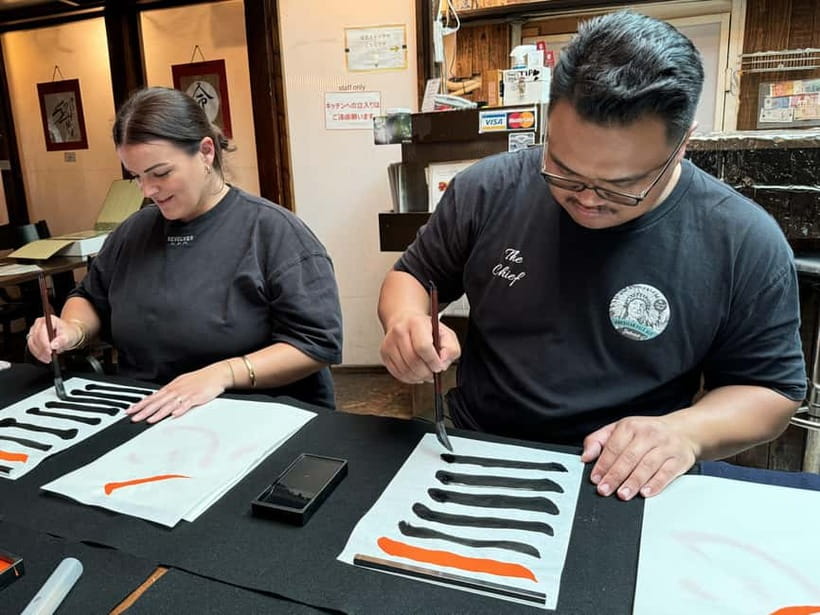
No. The workshop is built for beginners, and the instruction is step by step. You will practice basic brush strokes first, then write kanji characters with guidance. The class also includes writing your name in kanji, which is a fun way to get something meaningful even if you have never written Japanese before.
If you already have some experience, you may still benefit from how the instructor breaks strokes into manageable parts. Even skilled writers often learn something new about pressure, timing, and brush angle.
Booking and Timing Notes That Matter
You do need a reservation at least 1 day in advance. The duration is 1 to 2 hours, so check availability for the best time slot for your Kyoto day.
If you like planning with flexibility, the booking options include reserving and paying later. Cancellation is also available up to 24 hours in advance for a full refund, which can help if your Kyoto schedule shifts.
Should You Book Kyoto Japanese Calligraphy Workshop?
Book it if you want an authentic Kyoto craft experience where you actually make something. For my money, the strongest reason to choose this class is the combination of beginner-friendly instruction and a take-home finished piece with your own name in kanji, signed and stamped.
Skip it if you need a high-energy sightseeing tour, or if you are traveling with children under 10. And if you hate sitting still and focusing for an hour or two, this may feel slower than you want.
Overall, this is one of those Kyoto activities that turns culture into a tangible souvenir. You leave with a piece of Japanese calligraphy you can keep, plus the satisfaction of having learned strokes you can try again later.
FAQ
How long is the Kyoto Japanese Calligraphy Workshop?
The workshop lasts 1 to 2 hours.
How much does it cost?
It costs $32 per person.
Where is the meeting point?
You meet at Gojo Paradiso, located along the Takase River on Kiyamachi Street, about a 5-minute walk from Keihan Kiyomizu Gojo Station and about a 10-minute walk from Keihan Shichijo Station.
Is the workshop suitable for beginners?
Yes. The instructor gives step-by-step instruction and the class is designed for complete beginners as well as those with some experience.
What languages are used during the class?
The instructor works in English and Japanese.
Is it good for families with kids?
It is not suitable for children under 10.
Is the workshop wheelchair accessible?
Yes, it is wheelchair accessible.
Can I take photos during the workshop?
Yes. In the final part of the workshop, you can take photos.
Do I need to reserve in advance?
Yes. You need to reserve at least 1 day in advance.
Made by Hand, and Yours to Keep
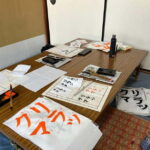
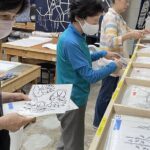
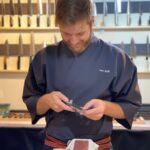
Newest Kyoto write-ups from the Loving Japan desk
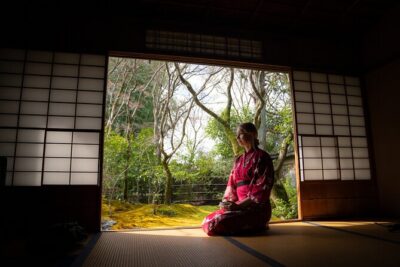

Japanese Craft and Calligraphy Workshops, side by side.
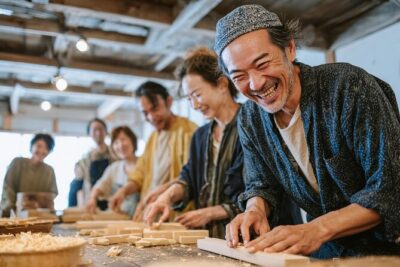 ★ 5.0Tokyo Shinjuku Chopsticks Making ClassFrom $201,763 reviews
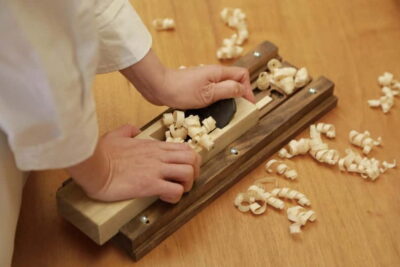 ★ 4.8Chopstick Making Workshop in GinzaFrom $251,366 reviews
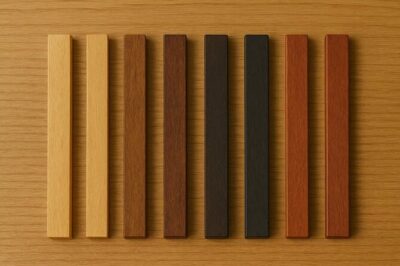 ★ 5.0Chopsticks Making Workshop in Gion with Engraving OptionFrom $15958 reviews
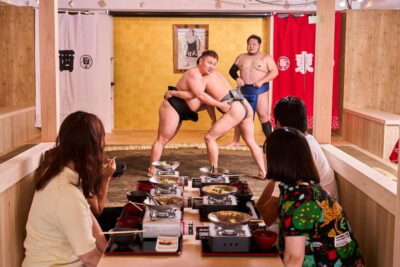 ★ 4.8Tokyo Sumo Experience: Chanko & Mochi with a Former ProFrom $103567 reviews
 ★ 5.0Kintsugi Experience: Art of Golden Joinery in TokyoFrom $59467 reviews
 ★ 5.0Tokyo Chopstick Making Workshop with ArtisanFrom $26466 reviews
 ★ 4.9Matcha Making Experience with Mochi Sweets in AsakusaFrom $22388 reviews
 ★ 4.8Authentic knife making experience at a blacksmith in KyotoFrom $154350 reviews
Filed on these lists too