
REVIEW · JAPANESE COOKING CLASSES
Kyoto Ramen and Gyoza Cooking Class with Professional Chefs
Ramen and gyoza, made by you. This Kyoto cooking class turns two of Japan’s favorites into a practical skill you can repeat after your trip, with professional chefs guiding every step. I love that it’s truly hands-on, from noodle prep to folding gyoza. I also like the mix of food and context, including insights on the history of Japanese dishes.
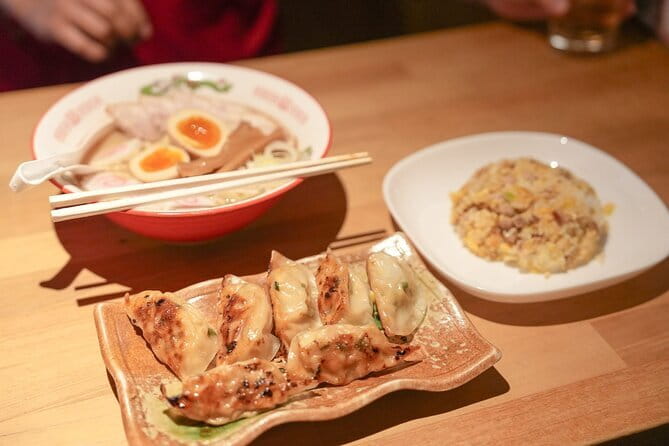
You’ll end up with a full meal, not just samples, including ramen, gyoza, and fried rice plus two drinks (beer or sake). Small groups, up to 8 people, help the class stay friendly and not rushed, which matters when you’re learning knife work and cooking techniques.
One possible drawback: it uses pork broth, so it is not vegetarian even if you skip meat toppings. Also, if you want every tiny element made fully from scratch, you may find some parts are streamlined (people have mentioned the broth base can be simpler than expected).
In This Review
- Key things to know before you cook in Kyoto
- Kyoto ramen and gyoza cooking class, what it really is
- What you learn, and why it matters at home
- The flow of the class: from meeting point to full meal
- Stop in Kyoto: the kitchen setting and group vibe
- Ramen station: noodles, toppings, and that pork-broth reality
- Gyoza station: folding technique and beer or sake pairing
- Fried rice add-on: why it makes the meal feel complete
- The guides and chefs: what to look for in your group
- Price and value: is $86.22 a good deal in Kyoto?
- Who this class is best for, and who should skip it
- Practical tips so you get the best meal and the best photos
- Should you book this Kyoto ramen and gyoza class?
- FAQ
- What dishes are included in the meal?
- Are drinks included?
- How long does the cooking class last?
- Is the tour in English?
- Can I request a vegetarian or vegan meal?
- Are allergies accommodated?
- What is the group size?
- Where do I meet the group?
- Is it okay for beginners?
- What if I’m late?
Key things to know before you cook in Kyoto
- You’ll cook a full meal: ramen, gyoza, and fried rice, plus beer or sake.
- Noodles and dumplings are the main event: knead, cut, wrap, and cook, not just watch.
- Recipes are provided so you can recreate the flavors later.
- Think about dietary needs first: pork broth is used, and vegetarian, vegan, or gluten-free requests can’t be accommodated.
- It’s time-sensitive: the tour starts on time, late arrivals can miss the experience.
- Group size stays small with a maximum of 8 travelers.
Cook it yourself instead. Other kitchens in Kyoto
- Sushi Making in Kyoto! Same-day bookings welcome!
★ 5.0 · 713 reviews - Kyoto: Ramen Cooking Class at a Ramen Factory with Souvenir
★ 4.9 · 532 reviews - Kyoto: Ramen, Gyoza, and Onigiri Cooking Class
★ 5.0 · 445 reviews - The Original Small-Group Sushi Making Class in Kyoto
★ 5.0 · 436 reviews
Kyoto ramen and gyoza cooking class, what it really is
This is a cooking class built around momentum. You don’t just get an introduction and then sit back. You knead, cut, assemble, wrap, and cook, with chefs and a guide helping you keep up.
The payoff is simple: you get a great meal in Kyoto, plus the know-how to make it again. That combo is why this kind of class is a smart use of an evening or a rainy-day plan, because you leave with both skills and food.
What you learn, and why it matters at home
The class centers on two dishes people remember for years: ramen and gyoza. You’ll learn how to make your own authentic ramen noodles and top them, and you’ll wrap your own gyoza. You’ll also make fried rice, so your meal feels complete, like something you’d actually eat for lunch in Japan.
What I like is how the skills connect. Noodle prep teaches you texture and handling. Gyoza folding teaches portioning and sealing. Then fried rice ties it together with timing and practical pan skills.
And yes, you’ll get recipes to take home. That’s the big difference between a hands-on class and a one-time meal. Even if you don’t cook often, those notes make your next attempt easier.
The flow of the class: from meeting point to full meal
The experience starts at a specific meeting location in Shimogyo Ward, Kyoto: 「北緯35物語」木村光佑Shincho, Shimogyo Ward, Kyoto 600-8001, Japan. It ends back at the meeting point, so you don’t have to worry about a complicated drop-off.
You should plan to arrive early, because the tour starts on time out of respect for everyone. Late arrivals will not be able to join, reschedule, or receive a refund. So treat this like a museum ticket with a strict entry time, not a casual meetup.
The class runs about 2 hours 30 minutes, which is long enough to feel like real cooking, but short enough that you can still enjoy the rest of Kyoto afterward. It’s also a mobile ticket experience, so you can keep it simple on your phone.
A bowl somewhere else in Kyoto
- Kyoto Ramen and Gyoza Cooking Class with Professional Chefs★ 5.0 · 282 reviews
- Home style Ramen and Homemade Gyoza in Kyoto★ 5.0 · 152 reviews
- Kyoto Michelin Ramen Workshop or Painting Ramen Essentials★ 4.9 · 100 reviews
- Kyoto Ramen Noodle Making Class★ 5.0 · 58 reviews
- Ramen Gyoza Onigiri Japanese Cooking Class in Kyoto★ 5.0 · 44 reviews
Stop in Kyoto: the kitchen setting and group vibe
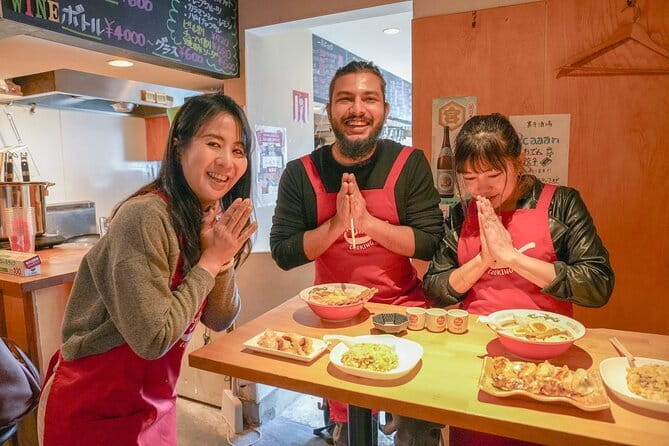
You’ll cook in a kitchen space designed for small groups. The experience is limited to a maximum of 8 travelers, and people have had relaxed moments even with tiny groups. That matters because you’re handling knives and learning technique, and you want guidance nearby.
One practical consideration: some kitchens have internal levels and stairs. If you have mobility concerns, this tour may not be the best fit, and a private option could be easier. Even if you are fine with stairs, it helps to wear shoes you can move in comfortably.
Guides often translate instructions and keep the pace understandable. From what I’ve seen in classes like this, that human support is what turns confusion into progress.
Ramen station: noodles, toppings, and that pork-broth reality
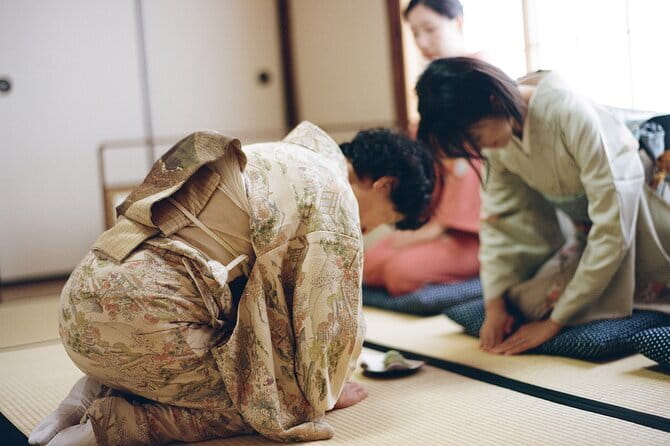
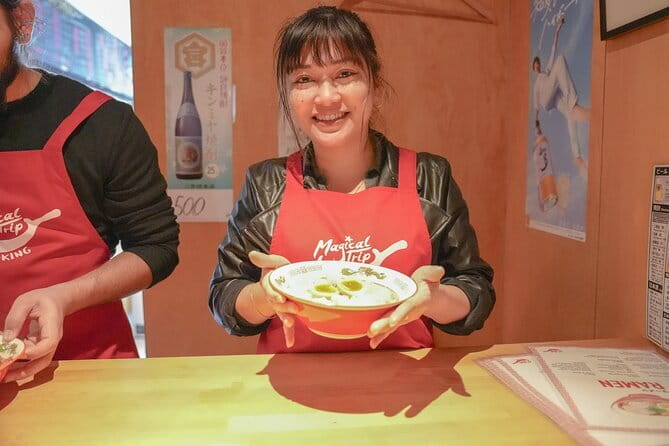
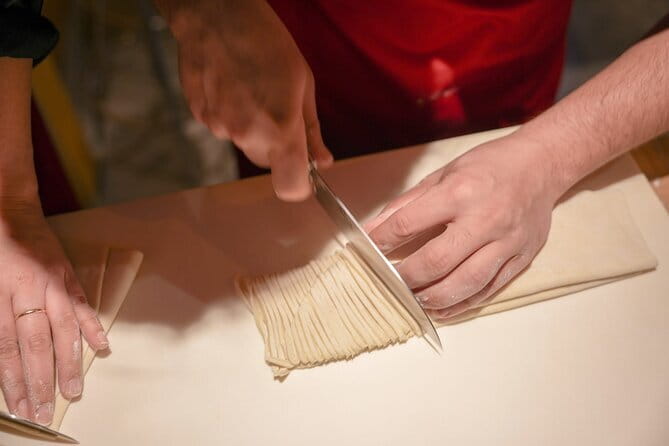
Ramen is the headline here, and the class treats it like one. You’ll make your own ramen from scratch, including kneading and cutting noodles. Then you’ll top your noodles as part of building the finished bowl.
Here’s the important detail to know up front: the ramen uses pork broth. Even if you add no meat toppings, it will still not be vegetarian. If you’re trying to eat vegetarian in Japan, double-check your plans before booking.
Also, don’t expect this to mean every component is labor-intensive in the fully old-school, from-scratch way. Some people have noted the broth base can be simplified (for example, made using a paste plus water rather than a fully traditional method). That can still taste great, but it’s worth knowing if you are a ramen nerd who expects every step to be homemade.
Gyoza station: folding technique and beer or sake pairing
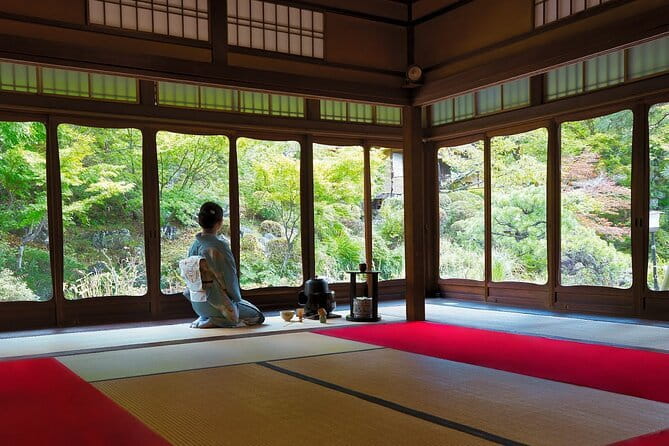
Gyoza in this class is hands-on from the first fold. You wrap your own dumplings, then enjoy them as part of the meal. It’s the kind of task where small corrections help a lot, especially for sealing and getting a consistent shape.
Then you’ll pair your gyoza with a drink. The experience includes two drinks total, either beer or sake. That pairing makes sense with gyoza, because the dumplings are rich and salty, and the drink helps cut through while you’re learning.
For many people, this is the most fun part, because you can actually see your work turn into food quickly. And if you’ve never folded gyoza before, the first successful dumpling is a real morale boost.
Fried rice add-on: why it makes the meal feel complete

Fried rice gets less attention in casual conversation, but it’s a smart inclusion here. It gives you a third dish to practice timing and cooking basics, not just one ramen bowl.
In a full meal format, fried rice also balances the heavier elements. You get variety on your plate, so the lunch you make feels like a proper set, not three small side dishes.
This also matters if you’re traveling with people who might prefer something beyond noodles or dumplings. Fried rice often wins even for picky eaters who don’t want to commit to one style.
The guides and chefs: what to look for in your group
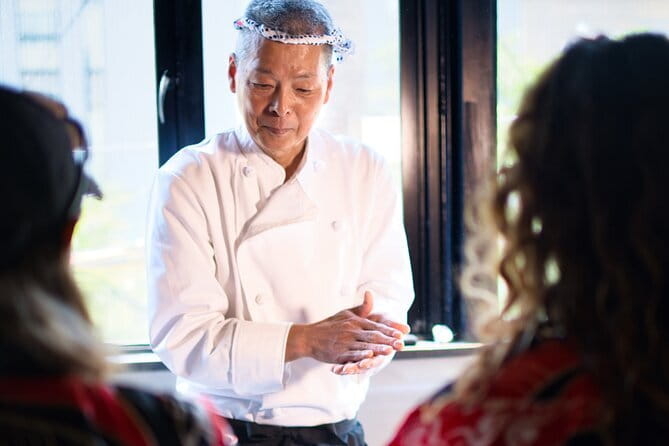
The class runs with a guide plus a professional chef. Guides often handle translation and keep instruction clear, especially for non-Japanese speakers. Names I’ve seen associated with excellent hosting include Rina, Ayuri, Emi, Yuki, MIU, Avinash, and Rika, with chefs described as patient, attentive, and focused on getting things right.
Here’s why that reputation matters: when you’re making noodles and gyoza, technique beats enthusiasm. If your chef checks your prep and your guide translates clearly, your food comes out better and you feel less stressed.
A standout pattern from positive experiences is patience. People commonly highlight staff who watched over shoulders, explained what to do next, and made sure you weren’t falling behind.
Price and value: is $86.22 a good deal in Kyoto?
At $86.22 per person for about 2.5 hours, this is not a cheap activity. But it also isn’t just a restaurant meal with a story attached.
You get:
- A hands-on cooking class with professional chefs
- A full meal: ramen, gyoza, and fried rice
- Two drinks (beer or sake)
- Recipes to take home
When I compare that to paying for ramen and drinks in Kyoto, you’re essentially trading some restaurant time for a skill-building session and a documented set of instructions. If you like learning, cooking, or food culture, it feels like good value. If you only want food and could care less about technique, you might find it hard to justify.
The strongest value comes when you cook along, not when you watch. If you enjoy hands-on experiences, this price makes more sense.
Who this class is best for, and who should skip it
This is ideal for:
- Food lovers who want to actually make ramen and gyoza, not just order them
- Couples and small groups who like guided experiences
- Families where kids can handle tasks safely, since children age 6 and above are welcome with adult supervision for knives or potentially dangerous steps
- Anyone who wants an easy-to-repeat dinner at home, thanks to the recipe guide
I’d be more cautious if:
- You need vegetarian, vegan, or gluten-free options. The class can’t accommodate those requests.
- You have serious allergies, because allergy-free meals can’t be guaranteed and cooking happens in kitchens that are not MagicalTrip kitchens.
- You have mobility issues, since this is not recommended for travelers who need accessibility accommodations.
If your needs are more complex, a private class could be safer, because you can discuss limitations directly.
Practical tips so you get the best meal and the best photos
Come hungry, but not overly stuffed. You’ll make and eat a full meal, so it helps to plan what you eat earlier that day. People often find the class leaves them very full at the end.
Wear comfortable shoes. You may be moving between work areas and possibly dealing with levels or stairs in the space.
If you drink beer or sake, treat it like part of the meal, not a reason to rush. You’re learning technique, so slow down and follow the instruction.
And keep your phone ready for the results. The meal you build is one of the few activities in Kyoto where you can take a real “I did this” memory.
Should you book this Kyoto ramen and gyoza class?
If you want more than a food stop, I think you should book it. This is one of those Kyoto experiences where the skill is the souvenir, and the meal is the reward. The small group size, the guide support, and the fact that you leave with recipes all push it toward high value.
Skip it if your diet is restrictive (especially pork broth concerns, vegetarian, vegan, or gluten-free requirements). Also skip if you want a totally traditional, every-step-from-scratch method with no shortcuts at all. If your expectations match a well-run class that balances speed, clarity, and quality, you’ll likely love it.
If you can, choose a day when you’ll have time afterward to enjoy Kyoto at a slower pace, because once you leave the kitchen, you’ll be full, warm, and happy in that food-coma kind of way.
FAQ
What dishes are included in the meal?
You’ll make and enjoy ramen, gyoza, and fried rice. The class is designed so you create a full meal, not just one item.
Are drinks included?
Yes. The experience includes two drinks, either beer or sake.
How long does the cooking class last?
It runs for about 2 hours 30 minutes.
Is the tour in English?
The tour includes a guide who provides translation and step-by-step instructions, but the specific languages are not listed in the provided details.
Can I request a vegetarian or vegan meal?
No. Vegetarian, vegan, or gluten-free requests cannot be accommodated. Also, the ramen uses pork broth.
Are allergies accommodated?
Allergy-free meals can’t be guaranteed because food is prepared in non-MagicalTrip kitchens. Substitutions may not always be possible, but adjustments are sometimes attempted when feasible.
What is the group size?
The tour has a maximum of 8 travelers.
Where do I meet the group?
You start at 「北緯35物語」木村光佑Shincho, Shimogyo Ward, Kyoto 600-8001, Japan, and the activity ends back at the meeting point.
Is it okay for beginners?
Yes. All cooking levels are welcome.
What if I’m late?
The tour starts on time. Late arrivals will not be able to join, and you won’t be able to reschedule or receive a refund.
One More Bowl
Kitchens You Can Book Into
Newest Kyoto write-ups from the Loving Japan desk





Japanese Cooking Classes, side by side.
 ★ 5.0Sushi Making Tokyo Roll and Authentic Japanese Sushi ClassFrom $593,971 reviews
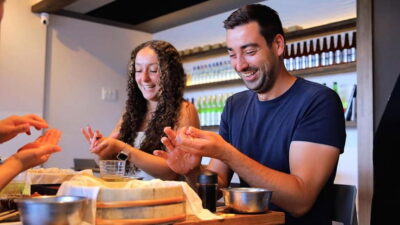 ★ 4.9Roll and Authentic Sushi Making Class in AsakusaFrom $581,957 reviews
 ★ 5.0Ramen Cooking Class at Ramen Factory in KyotoFrom $1311,937 reviews
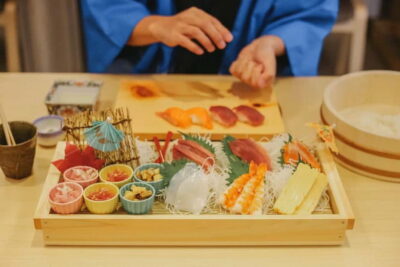 ★ 4.9Sushi Making Class in a Happi Coat near a Famous SpotFrom $421,377 reviews
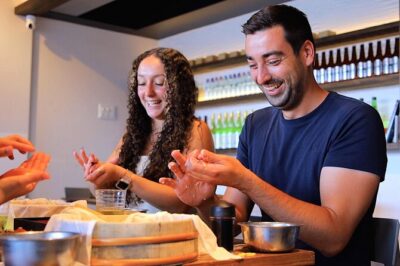 ★ 5.0Sushi Making Osaka Roll and Authentic Japanese Sushi ClassFrom $311,220 reviews
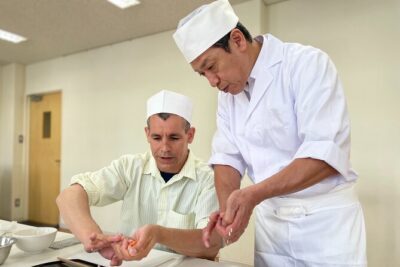 ★ 5.0Tokyo Sushi Making Class in Tsukiji with Professional ChefFrom $491,177 reviews
 ★ 5.0Ramen & Gyoza Cooking Class in Tokyo with Local Supermarket VisitFrom $122823 reviews
 ★ 5.0Tsukiji Fish Market Guided Tour and Sushi Making with Pro ChefFrom $104775 reviews
Filed on these lists too