
REVIEW · JAPANESE COOKING CLASSES
Kyoto Udon and Tempura Cooking Class with Professional Chefs
Fresh noodles, fried tempura, and sake. In this Kyoto cooking class, I love the hands-on pace of handmade udon from flour and water, guided by a local udon master and an English-speaking guide (including Josh and Nakajima-san). I also like that it ends with you eating everything you made, plus a mini sake tasting.
The possible catch: transportation is not included, and the meeting point is a specific 7-Eleven, so you will want to plan how to get there (and back) on time.
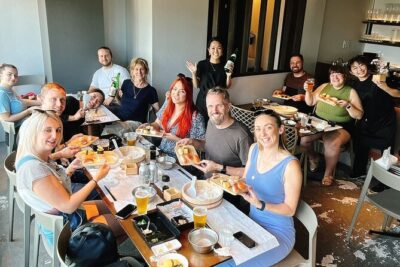
You get a focused 2 hours 30 minutes of cooking, not a sit-and-watch demo. The group stays small, max 8 people, which means more attention when you are rolling dough, shaping rice, and learning tempura technique.
In This Review
- Key highlights before you go
- From flour and water to chewy udon noodles
- Practical note: plan for hands-on work
- Onigiri and inari sushi: rice shapes you will actually remember
- Tempura frying: crisp technique, not just deep-fry chaos
- The realistic consideration
- The meal at the end: you eat udon, sushi, and tempura
- Why pairing matters
- Meeting point and timing: a 10:00 am start in central Kyoto
- Transportation is on you
- Small group teaching with Josh and Nakajima-san
- What you get in the package: recipes, photos, and enough food
- The recipes are not an afterthought
- Price and value in Kyoto terms
- What to bring and how to set yourself up for success
- Who should book this Kyoto udon and tempura class
- Should you book this cooking class
- FAQ
- How long is the Kyoto udon and tempura cooking class?
- What time does the class start?
- Where is the meeting point?
- What dishes will I make during the class?
- Do I get to eat what I cook?
- Is sake included?
- How big is the group?
- Are recipes included?
- Are transportation and transfers included?
- If I cancel, do I get a refund?
Key highlights before you go
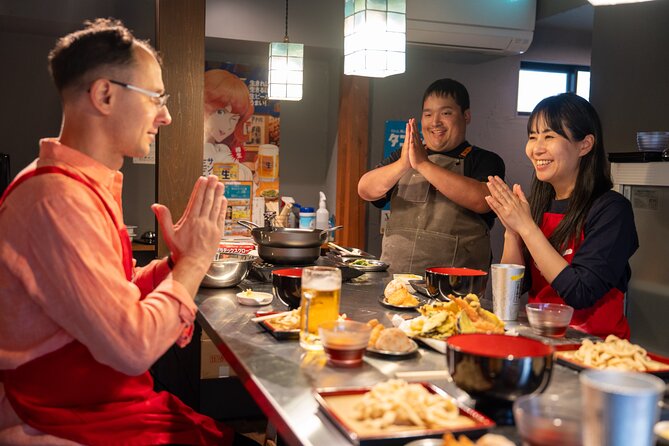
- Handmade udon from scratch: knead, roll, and cut chewy noodles by hand
- Four dishes, not one or two: udon, onigiri, inari sushi, and tempura
- Small-group teaching: maximum of 8 travelers, good for questions
- Meal plus tasting: you eat what you make, with two drinks and sake included
- You leave with tools: downloadable English recipes and tour photos by email
Cook it yourself instead. Other kitchens in Kyoto
- Ramen Cooking Class at Ramen Factory in Kyoto
★ 5.0 · 1,937 reviews - Sushi Making in Kyoto! Same-day bookings welcome!
★ 5.0 · 713 reviews - Kyoto: Ramen Cooking Class at a Ramen Factory with Souvenir
★ 4.9 · 532 reviews - Kyoto: Ramen, Gyoza, and Onigiri Cooking Class
★ 5.0 · 445 reviews
From flour and water to chewy udon noodles
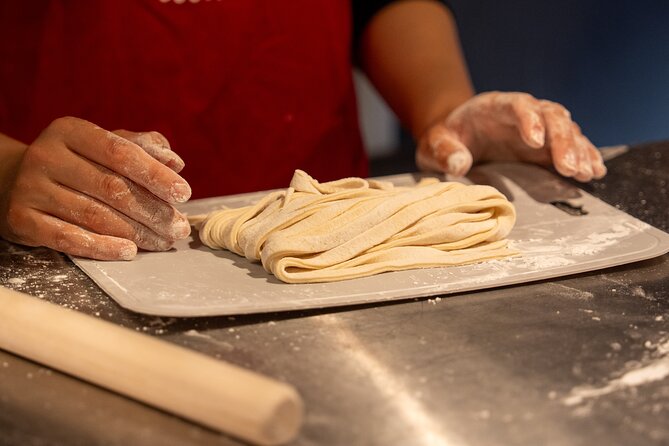
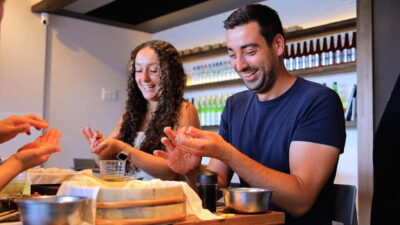
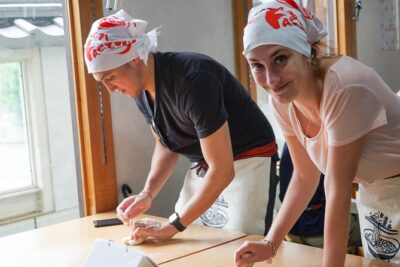
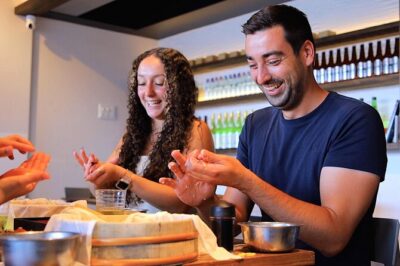
If you have ever looked at udon and thought, That looks complicated, this class is designed to ruin that fear. It starts with the basics: flour and water. You work the dough with guidance, then you roll and cut it into noodles.
This matters because udon is not just noodles. It is texture. A good udon bite comes from how you knead and handle the dough, and you get coached through that process. You are not guessing. You are doing, then adjusting as you go. That hands-on feedback is the real value here.
One smart thing about the way the lesson is set up is that it is paced for beginners. The idea is learning by doing, not collecting “tips” you never use. When you finish, you understand the workflow, so you are more likely to recreate it at home later.
Also, udon is versatile. In the session I’m describing from the supplied experience details, you can end up making both hot and cold udon styles. Even if your final meal leans one way, you will leave knowing there is more than one way to serve the same noodle dough.
Practical note: plan for hands-on work
Your hands will be busy. Bring the mindset of cooking, not tourism. If you love practical food experiences, this will click fast.
Onigiri and inari sushi: rice shapes you will actually remember
After udon, you shift to rice. That sounds simple, but it is where many cooking classes fail. The shapes matter, and so does the flavor logic.
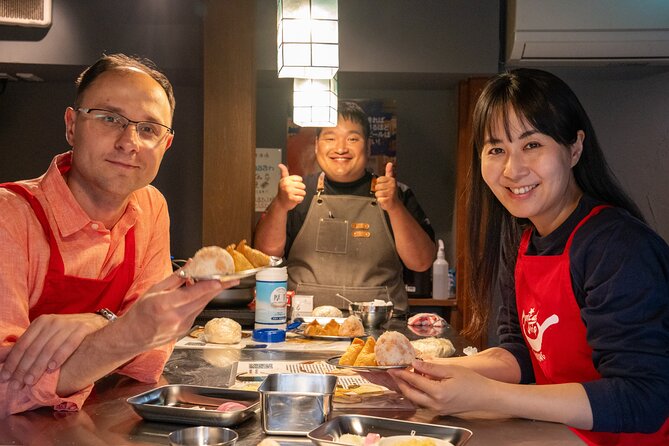
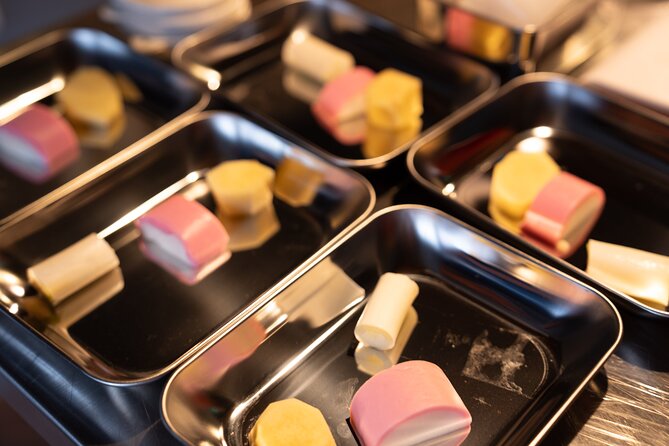
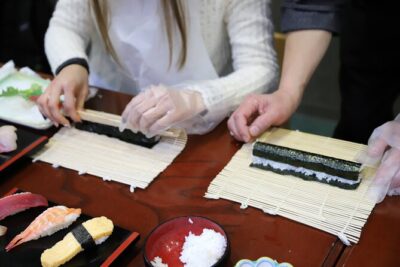
Here you learn to make classic Japanese rice dishes, including onigiri and inari sushi. Onigiri is a comfort-food skill: you shape rice neatly, then you think about how fillings and seasoning fit into the bite. Inari sushi adds another layer because it usually involves a specific approach to the pocket or wrapper and the sweet-savory balance that makes it addictive.
This part of the class is valuable because it teaches technique you can repeat without special equipment. You can do rice shaping with what you have at home, and the class provides easy English recipes so you can rebuild the steps.
One thing I especially like for visitors is that rice dishes tend to feel forgiving. Even if your first shape looks a little rough, it is still food. And at the end, you eat it.
A bowl somewhere else in Kyoto
- Kyoto Ramen and Gyoza Cooking Class with Professional Chefs★ 5.0 · 282 reviews
- Home style Ramen and Homemade Gyoza in Kyoto★ 5.0 · 152 reviews
- Kyoto Michelin Ramen Workshop or Painting Ramen Essentials★ 4.9 · 100 reviews
- Kyoto Ramen Noodle Making Class★ 5.0 · 58 reviews
- Ramen Gyoza Onigiri Japanese Cooking Class in Kyoto★ 5.0 · 44 reviews
Tempura frying: crisp technique, not just deep-fry chaos
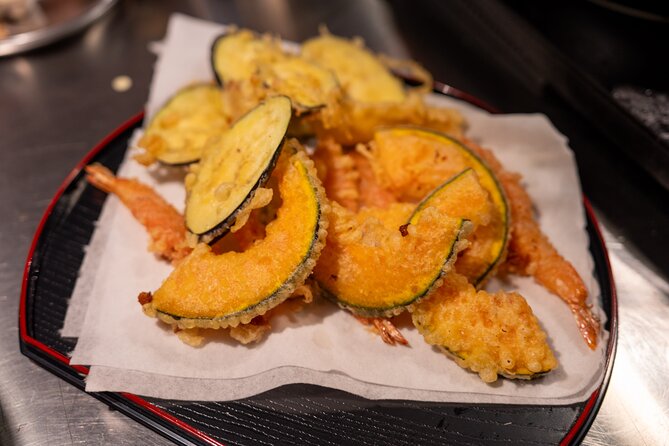
Tempura sounds like one thing. In practice, it is a method. You are taught how to fry tempura to get that crisp, golden result.
You will work with classic tempura ingredients, including shrimp and vegetables based on the experience details. That is a good choice because it shows how tempura batter behaves across different sizes and moisture levels.
Why this section is more than a snack lesson: tempura is all about contrast. Crunch versus tenderness. Hot oil versus quick fry timing. You learn the rhythm through instruction, then you apply it. Even if you do not become a tempura expert in 2.5 hours, you walk away with a workable process.
And yes, there is real payoff. When you sit down afterward, you are not just tasting someone else’s cooking. You fry it, you plate it, and you eat it while it is still fresh.
The realistic consideration
Tempura is hands-on and a bit messy by nature. Your experience will be much better if you treat this as a cooking class, not a formal dinner with perfect clothes. Wear something you can tolerate getting a little warm or slightly splattered.
The meal at the end: you eat udon, sushi, and tempura
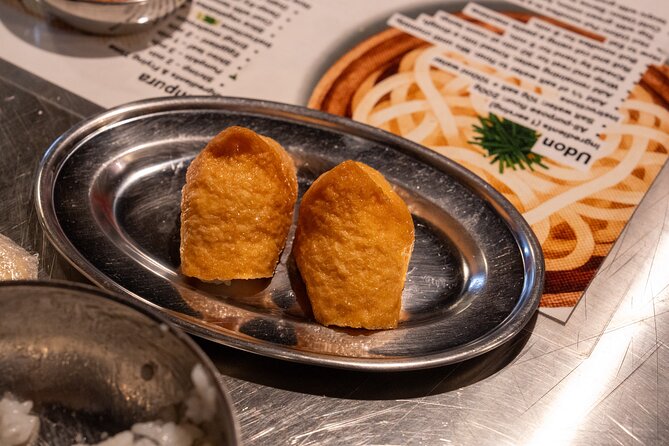
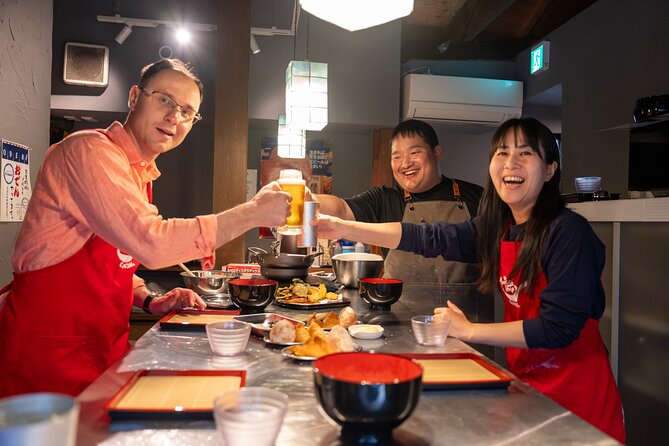
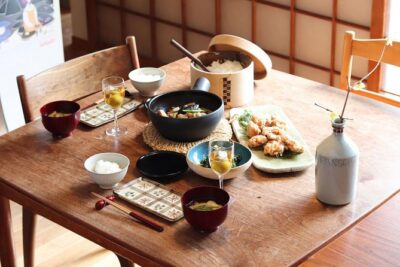
Most cooking classes end with a polite tasting. This one is built around eating the results. After the hands-on sections, you enjoy everything you’ve made: fresh udon, onigiri, inari sushi, and tempura.
That detail might sound obvious, but it’s actually huge for value. Cooking lessons can be fun, but if you do not eat enough, the experience feels like busywork. Here you get a full meal outcome.
Pair that with two drinks, with your choice of alcoholic or non-alcoholic options, and sake is included. The mini sake tasting is a nice Kyoto touch without turning into a separate activity. It also helps you connect the food flavors, especially with tempura’s crispness and udon’s gentle comfort.
Why pairing matters
Sake is not just a drink ticket. It is part of the flavor story. It gives you a framework for why Japanese meals often include small taste changes, not just a single sauce.
Meeting point and timing: a 10:00 am start in central Kyoto
The class starts at 10:00 am at 7-Eleven, 599 Uraderachō, Nakagyo Ward, Kyoto, 604-8041, Japan. It ends back at the meeting point.
That start time is great if you like mornings and you want the cooking class to anchor your day. It also means you do not waste time wandering looking for something to eat. You are cooking from the start.
One practical tip from how this style of class functions: skip breakfast. You will be working up an appetite and then eating multiple dishes. The supplied experience details specifically highlight bringing your appetite, which tracks with the structure here.
Transportation is on you
Transportation to and from the meeting point is not included. The good news is the meeting point is near public transportation, so it should be doable even if you are not driving. Just give yourself a buffer for transit and locating the exact 7-Eleven.
Small group teaching with Josh and Nakajima-san
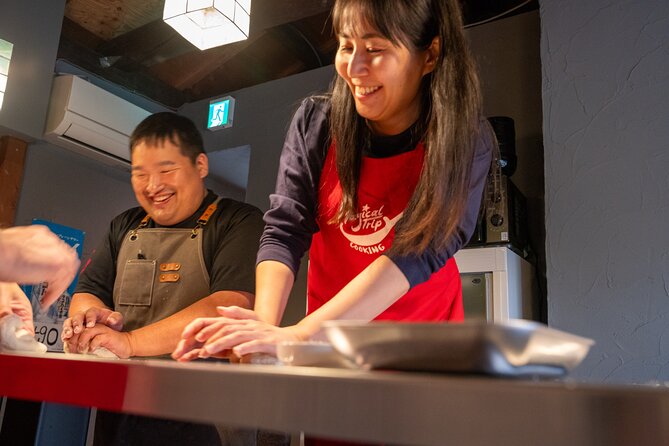
This class runs with a maximum of 8 travelers. That small size changes everything.
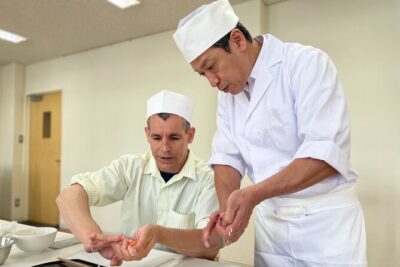
When there are only a handful of people, the guide can watch your noodle thickness, correct your shaping, and troubleshoot frying technique before it turns into frustration. It also makes it easier if you have questions, even if your Japanese is limited.
You work with a local udon master plus an English-speaking local guide. The instructor names Josh and Nakajima-san appear in the experience details, and that combination signals two things: craft and communication. You get both the food know-how and the translation support you need to actually learn what to do next.
For families, the small-group format tends to be more manageable. For solo travelers, it means you are not lost in a big crowd. Either way, you get more face time than in a large class.
What you get in the package: recipes, photos, and enough food
This is the part where you should judge value, not just cost. At $85.39 per person, the price might look steep if you compare it to a supermarket cooking show. But if you compare it to what you receive, it starts to make sense.
You get:
- Udon, tempura, onigiri, and inari sushi made from scratch
- Two drinks, including sake (with alcoholic or non-alcoholic options)
- Instruction from the udon master and an English-speaking local guide
- Downloadable English recipes
- Tour photos emailed after the experience
That list is important because it covers three categories of value. You get learning value (the techniques). You get food value (a meal you make). And you get take-home value (recipes and photos).
The recipes are not an afterthought
Downloadable English recipes matter because cooking classes usually end with memories, not meal repeats. If you want to keep the experience alive back home, recipes are the difference between fun and lasting skill.
Price and value in Kyoto terms
Let’s do the honest math in a practical way. You are paying for:
- A 2.5-hour, guided, hands-on cooking format
- Four distinct dishes made from scratch
- A meal outcome (not just tasting)
- Two drinks, including sake
- Photo follow-up and English recipes
In Kyoto, food experiences range from cheap tastings to full-on tours. This sits in the middle, but it is more “class” than “tour.” If you have ever taken a cooking class that was mostly observation, this feels more direct because you are actively cooking multiple dishes.
So, if your goal is skill and an actual meal, it is solid value. If your goal is purely sightseeing, you might prefer something else, because the class time is fully occupied with cooking.
What to bring and how to set yourself up for success
Because this is hands-on, your choices matter.
- Come with an appetite. You are making and eating multiple dishes, and the class starts in time for a full morning meal in cooking form.
- Wear comfortable clothes. Tempura frying can be warm and a little messy, and your apron or setup may not fully protect everything.
- Bring a phone for the photos if you like, but the guide will also take tour photos and send them to you afterward.
If you are sensitive to strong smells, you might want to consider that tempura frying does involve oil. The class is controlled and short, but it is still part of cooking.
Also, make sure you understand the meeting point. It is a specific 7-Eleven location, and the class ends back there. That makes the start easier if you plan your route.
Who should book this Kyoto udon and tempura class
This is a strong fit if you:
- Want a practical Kyoto food experience you can repeat at home
- Enjoy hands-on cooking more than watching
- Like the combo of Japanese staples, udon plus rice snacks plus tempura
- Prefer small-group instruction
- Want an English-friendly class with real guidance
It is also a good choice if you are traveling with family, since the experience details highlight a family-friendly feel and multiple dishes to sample.
If you hate frying, you might still enjoy it, but you will likely feel more comfortable if you are okay with learning a classic technique for tempura.
Should you book this cooking class
Here’s my decision guide.
Book it if you want a hands-on cooking day that ends with a full meal and practical recipes. The mix of handmade udon, onigiri, inari sushi, and tempura plus two drinks and sake makes it feel like you are paying for an experience, not just ingredients.
Skip or consider alternatives if you depend on transportation being included. Since it is not, you need to factor time and routing to the meeting point. Also, if you want mostly sightseeing time, the 2 hours 30 minutes of cooking will be your main activity, so plan your day around it.
If your style is learning food, eating well, and leaving with recipes you can use, this class is an easy yes.
FAQ
How long is the Kyoto udon and tempura cooking class?
It lasts about 2 hours 30 minutes.
What time does the class start?
The start time is 10:00 am.
Where is the meeting point?
You meet at 7-Eleven, 599 Uraderachō, Nakagyo Ward, Kyoto, 604-8041, Japan.
What dishes will I make during the class?
You will learn to make udon, tempura, onigiri, and inari sushi from scratch.
Do I get to eat what I cook?
Yes. After cooking, you enjoy everything you’ve made, including fresh udon, sushi, and tempura.
Is sake included?
Yes. You get two drinks, and sake is included as part of that.
How big is the group?
The maximum group size is 8 travelers.
Are recipes included?
Yes. You receive downloadable recipes in English.
Are transportation and transfers included?
No. Transportation to and from the meeting point is not included.
If I cancel, do I get a refund?
Yes. You can cancel for a full refund up to 24 hours in advance of the experience’s start time.
One More Bowl
Kitchens You Can Book Into
Newest Kyoto write-ups from the Loving Japan desk

Japanese Cooking Classes, side by side.
 ★ 5.0Sushi Making Tokyo Roll and Authentic Japanese Sushi ClassFrom $593,971 reviews
 ★ 4.9Roll and Authentic Sushi Making Class in AsakusaFrom $581,957 reviews
 ★ 5.0Ramen Cooking Class at Ramen Factory in KyotoFrom $1311,937 reviews
 ★ 4.9Sushi Making Class in a Happi Coat near a Famous SpotFrom $421,377 reviews
 ★ 5.0Sushi Making Osaka Roll and Authentic Japanese Sushi ClassFrom $311,220 reviews
 ★ 5.0Tokyo Sushi Making Class in Tsukiji with Professional ChefFrom $491,177 reviews
 ★ 5.0Ramen & Gyoza Cooking Class in Tokyo with Local Supermarket VisitFrom $122823 reviews
 ★ 5.0Tsukiji Fish Market Guided Tour and Sushi Making with Pro ChefFrom $104775 reviews
Filed on these lists too