
REVIEW · KYOTO TEA CEREMONIES AND MATCHA
Tokyo: Tea Ceremony Experience in Asakusa
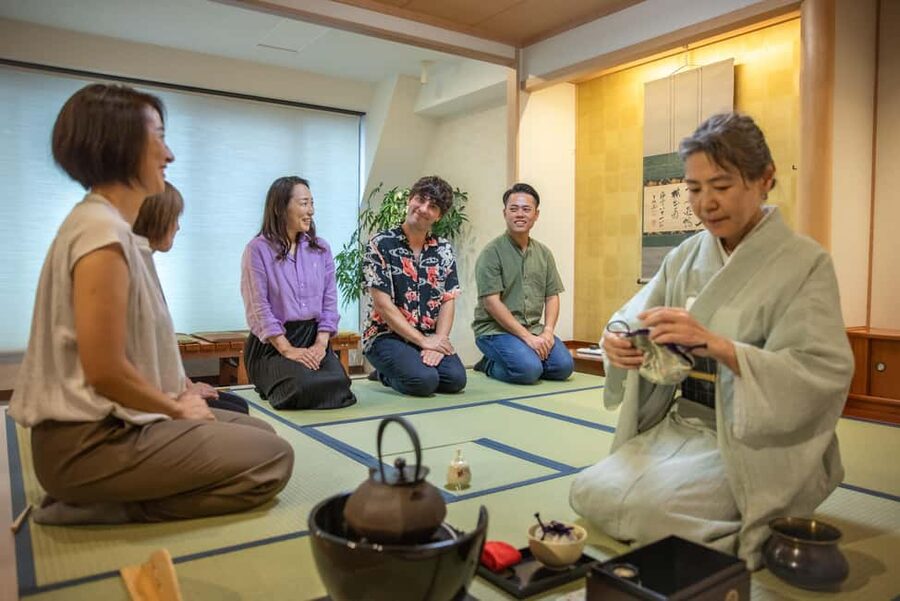
Slow down, learn matcha, and feel calm. This Tokyo tea ceremony in Asakusa is a beginner-friendly way to understand each step, not just watch it. You’ll whisk matcha, taste it fresh, and make your own bowl while a friendly English host explains the meaning behind the movements.
What I like most is the small group size (up to 8), which keeps the tone relaxed and lets you ask questions without rushing. I also love that you get a real practice moment, not a quick demo, so you leave knowing how to whisk and serve a bowl of matcha at your own pace.
The main drawback to consider is that this is a relaxed, beginner-focused ceremony, so if you’re hunting for a long, formal, high-ritual experience with kimono styling, this may feel more casual than you expected (and kimono rental is not included).
In This Review
- Key moments you’ll remember from this Asakusa matcha lesson
- Asakusa matcha in 1 hour: what makes this ceremony beginner-friendly
- Finding the right spot in Asakusa (Tokyo Tourist Lounge Asakusa, 5th floor)
- Your 1-hour matcha flow: whisk, taste, and make your own bowl
- 1) Settling in and getting the basic rhythm
- 2) Whisking matcha with attention to the why
- 3) Taste the tea you helped prepare
- 4) Make your own bowl and enjoy it at your own pace
- 5) Photos and questions, without breaking the mood
- Traditional Japanese sweets: why they pair well with matcha
- Price and value: what $25 gets you in real terms
- Who this experience fits best in your Tokyo plan
- Tips for getting the most out of your photos and questions
- Should you book this Tokyo tea ceremony in Asakusa?
- FAQ
- How long is the Tokyo tea ceremony experience in Asakusa?
- What is the price per person?
- Where does the tea ceremony meet?
- Is kimono rental included?
- Is the instruction in English?
- How big is the group?
- Can I take photos during the session?
- Does the experience include matcha preparation and tasting?
- Is it wheelchair accessible?
- Is free cancellation available?
Key moments you’ll remember from this Asakusa matcha lesson
- A calm, friendly tea ceremony designed for first-timers
- Meaning behind each step, explained in English
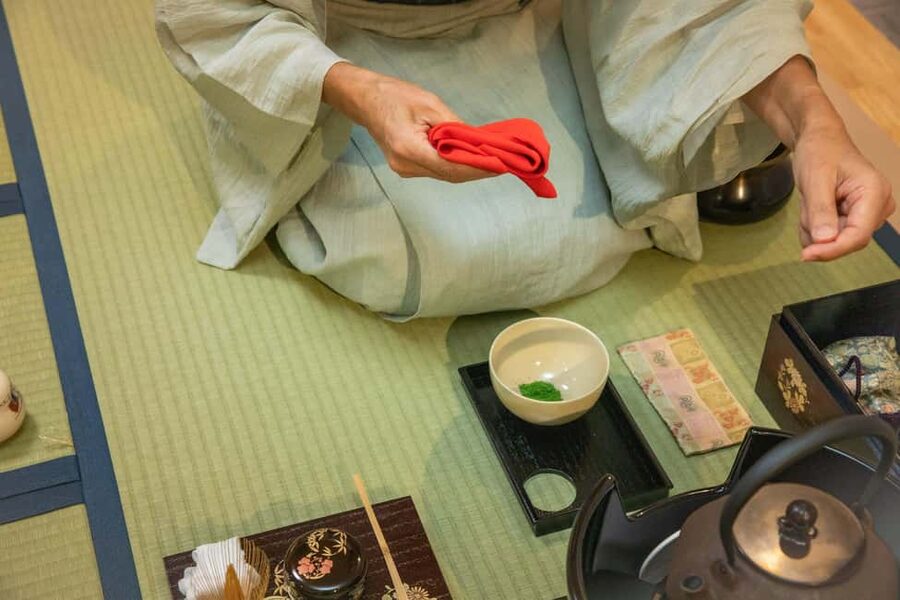
- Whisk and taste freshly made matcha during the session
- Make your own bowl and enjoy it slowly
- Traditional Japanese sweets served alongside your matcha
- Photos are welcome, and questions are encouraged
Still on the Sumida side? A few more Asakusa options
- Tokyo: Japanese Dance Cabaret Theater Asakusa-Kaguwa Ticket
★ 4.8 · 2,270 reviews - Tokyo: Meiji Shrine, Asakusa, Skytree Bus Tour and Cruise
★ 4.7 · 1,986 reviews - Tokyo: Roll and Authentic Sushi Making Class in Asakusa
★ 4.9 · 1,957 reviews - Tokyo: Asakusa Walking Tour with Sensoji Temple Visit
★ 4.8 · 1,583 reviews
Asakusa matcha in 1 hour: what makes this ceremony beginner-friendly
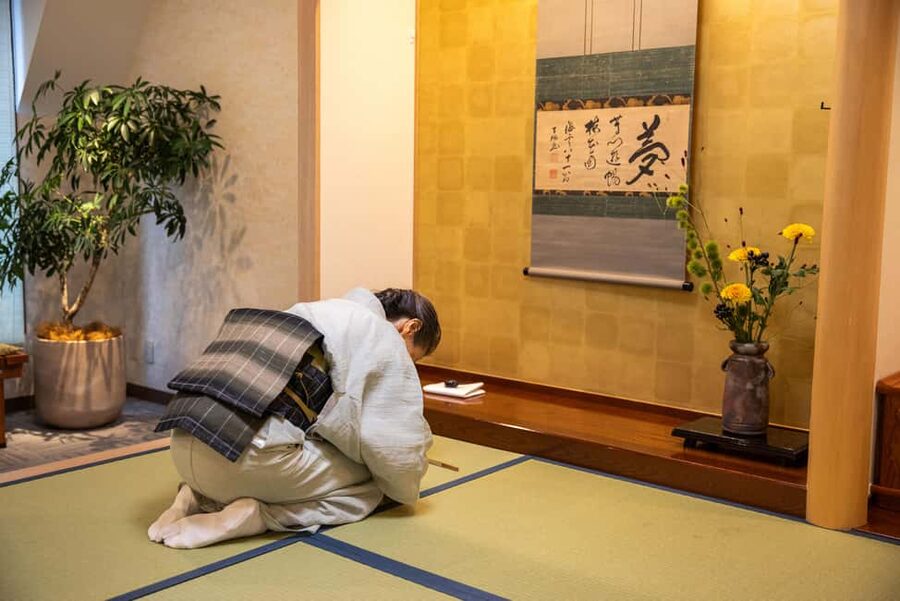
Tokyo has plenty of tea-related experiences, but this one keeps the atmosphere light and human. It’s built for people who are curious and a bit nervous about getting things wrong. The goal is simple: help you understand matcha and enjoy the ceremony rhythm, without the feeling that you must perform perfectly.
The big win is that you’re not stuck watching from the sidelines. You learn how to whisk powdered green tea, then you taste it while it’s fresh, and finally you make your own bowl. That order matters. It turns matcha from a visual experience into something you can actually do and remember.
You’ll also spend time connecting the steps to meaning. You’ll hear why water is poured a certain way and what the presentation is trying to communicate. The effect is practical. When you know what a movement is for, it stops being choreography and starts being culture you can repeat.
One more detail I appreciate: the host is described as friendly, relaxed, and English-speaking. That lowers the mental load. You can focus on the experience, not on translating everything in your head.
Finding the right spot in Asakusa (Tokyo Tourist Lounge Asakusa, 5th floor)
This experience meets at Tokyo Tourist Lounge Asakusa, located on the 5th floor of the building. It’s easiest to plug the name into Google Maps rather than relying on street-level guesswork. The coordinates are 35.7103757, 139.796744, which can help if you’re navigating by map pin.
Why this matters: tea ceremonies tend to run on a simple, tight schedule. If you show up late, you may miss the starting explanation. Plan to arrive a little early so you can get settled, use the facilities if you need them, and take a breath before the lesson begins.
Also, the session is described as wheelchair accessible. If mobility support is part of your planning, you’ll want to confirm any specific assistance needs in advance, but it’s good to know accessibility is considered.
Your 1-hour matcha flow: whisk, taste, and make your own bowl
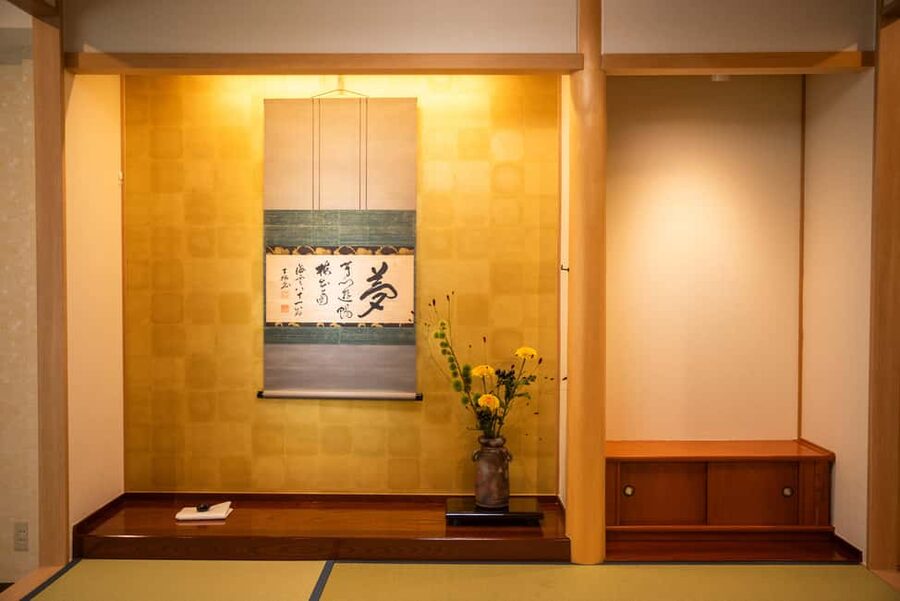
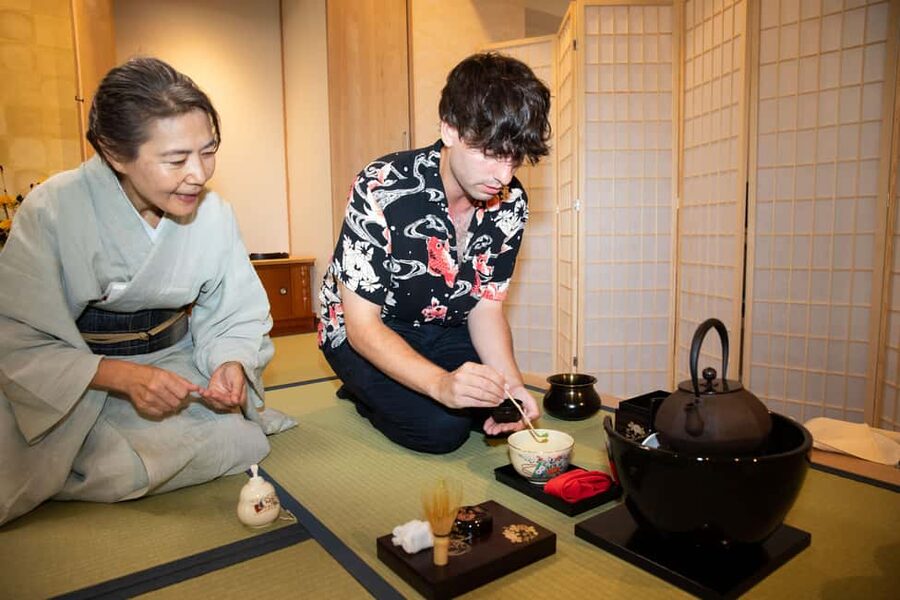
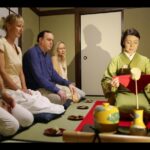
The heart of the experience is the ceremony itself, paced for real humans and real travel days. In your 1-hour session, the host guides you step by step, with a relaxed tone that keeps things welcoming even if it’s your first time.
Here’s the typical flow, and what it means for you:
Sit down somewhere quieter. Other tea rooms we booked
- Matcha Making Class in Tokyo with Authentic Japanese Sweets Set★ 5.0 · 744 reviews
- Tokyo: Traditional Tea Ceremony with a Tea Master★ 5.0 · 528 reviews
- Tokyo: Matcha Making Experience with Mochi Sweets in Asakusa★ 4.9 · 388 reviews
- Tokyo: Matcha and Kimono Experience★ 4.7 · 219 reviews
- Tea Ceremony Workshop in Tokyo by the Experienced Instrucor★ 5.0 · 189 reviews
1) Settling in and getting the basic rhythm
You’ll start seated comfortably while the host explains what you’re going to do. The tone is important here. Instead of throwing technique at you, you learn the purpose first. That makes the later whisking feel less random.
You’ll also be able to ask questions as you go. This is one of those small differences that changes the whole experience. You can clarify what you’re seeing instead of waiting until the end.
2) Whisking matcha with attention to the why
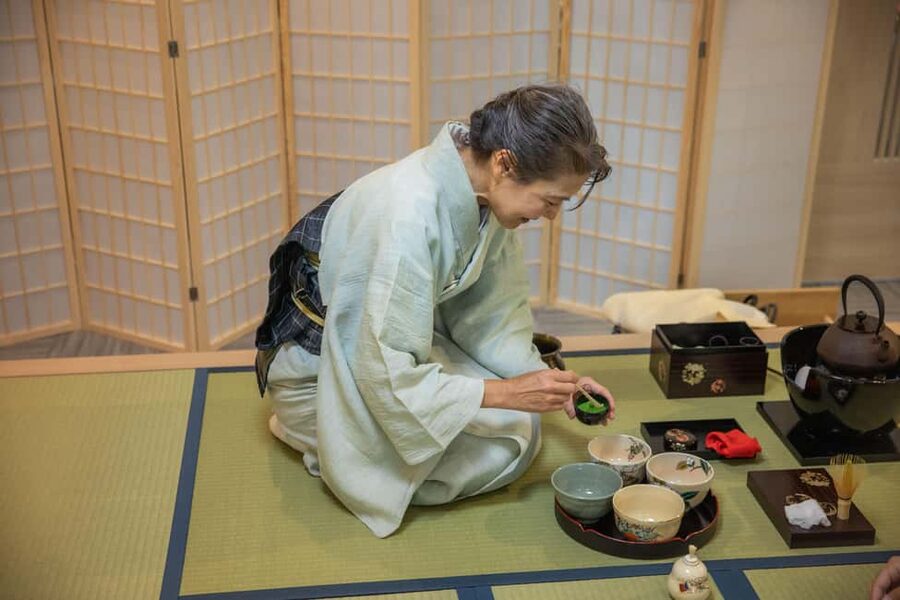
Next comes the matcha preparation lesson. You’ll learn how to whisk powdered green tea. This is where your hands learn what your brain can’t always picture from photos.
Your host will explain the meaning behind key moments, like how water is poured and how the tea is presented. When you understand what the step represents, it becomes more than mixing powder. It turns into a small lesson in hospitality and harmony.
3) Taste the tea you helped prepare
After whisking, you taste freshly prepared matcha. Fresh matters. It keeps the experience from becoming a lecture plus a sip you forget ten minutes later.
This taste moment is also a reality check in the best way. Matcha can taste different depending on how it’s prepared and how it’s whisked. By tasting right after learning the technique, you link your actions to the flavor.
4) Make your own bowl and enjoy it at your own pace
Then you move into the hands-on part where you make your own bowl. This is the portion that most strongly builds confidence. You don’t just learn the steps, you practice them.
The session is designed so you can savor your bowl. That means no frantic race to finish. You can take a moment, ask a follow-up question, and enjoy the quiet tempo of the tea ceremony.
If you end up with a host like Midori or Kaz, the experience has been noted for being especially kind and clear in explaining both technique and meaning. Even without assuming who you’ll get, you can expect the emphasis to be on friendliness and detailed guidance.
5) Photos and questions, without breaking the mood
You’re encouraged to take photos and ask questions in a relaxed setting. That’s a practical bonus in Tokyo, where good photo spots can be hard to find at off-peak hours. Here, you get permission and context, not the stress of wondering whether you’re doing something rude.
Just keep one thing in mind: tea ceremony space works best when it stays calm. So snap photos early or during natural pauses, not while someone is trying to explain a step.
Traditional Japanese sweets: why they pair well with matcha
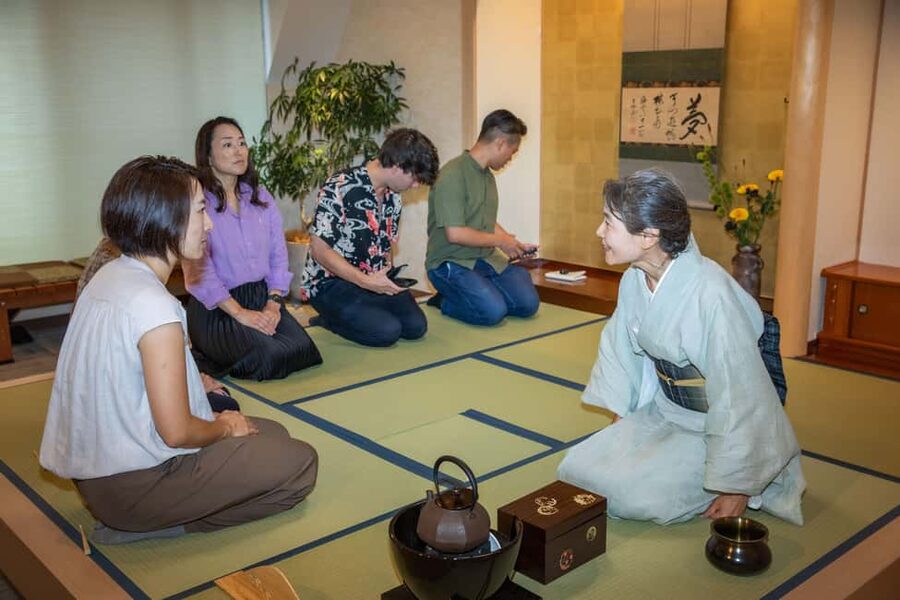
Matcha ceremonies in popular areas often focus on the tea alone, but this one includes traditional Japanese sweets. They’re not just a snack. They shape the whole experience.
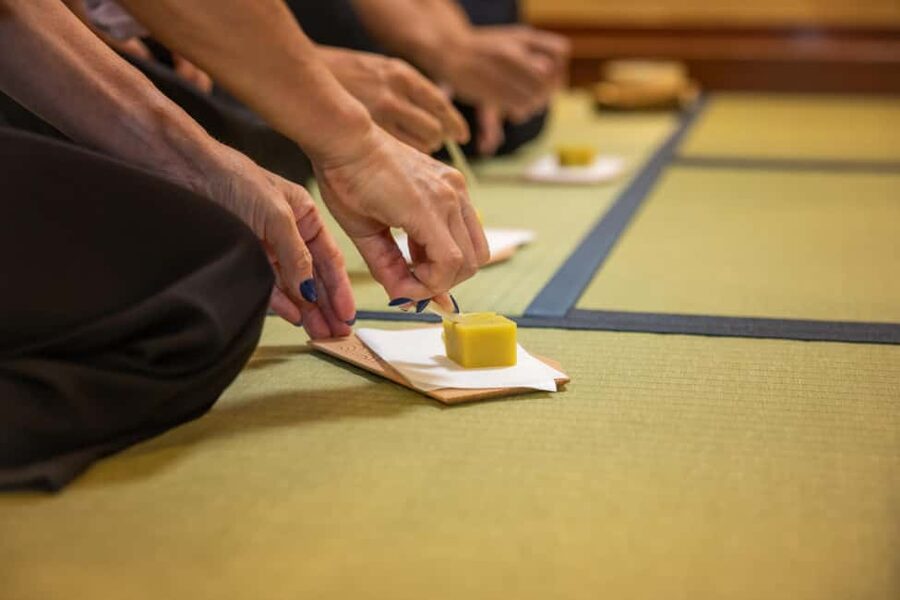
Sweets give you something familiar to anchor the flavor profile. Matcha can be grassy and intense, depending on preparation. A traditional sweet can soften the impact and help you appreciate the balance between bitterness and sweetness.
They also make the session feel more complete. Instead of being a quick tasting lesson, you get a small, structured food experience that supports the cultural theme of harmony and hospitality.
I like that this is included. It reduces decision fatigue. You don’t need to hunt for a separate dessert stop afterward, which is nice when your day is already packed.
Price and value: what $25 gets you in real terms
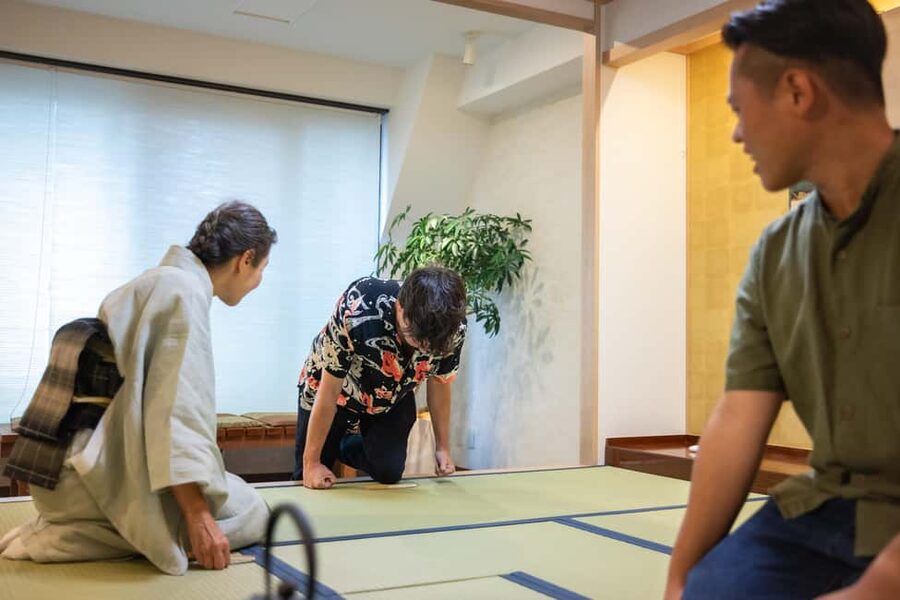
At $25 per person for 1 hour, this tea ceremony is priced like an experience, not a show. The value comes from what you actually do during the time.
You’re paying for:
- A guided Japanese tea ceremony in a small group (limited to 8)
- An English-speaking host who explains each step’s meaning
- Matcha preparation and hands-on whisking
- Fresh matcha tasting
- Traditional Japanese sweets
Many short cultural activities end up being mostly observation. Here, the lesson centers on participation: whisk, taste, and make your own bowl. That’s why the price feels fair. You leave with practiced technique, not only memories.
Also, the inclusion of sweets and a guided experience tends to make this a smoother spend than DIY matcha hunting. You might spend similar money on ingredients and tastings across multiple places, and still end up learning less about what each action means.
One more value point: the ceremony is described as relaxed and beginner-friendly. For first-timers, that saves time. You’re less likely to feel lost, and you’ll get better answers from the host rather than guessing on your own.
Who this experience fits best in your Tokyo plan
This tea ceremony in Asakusa is a good match for travelers who want something calm and cultural without turning the day into homework.
It’s especially suited for:
- First-time Japan visitors who want an authentic-feeling activity
- People who like hands-on experiences more than museum-style learning
- Anyone who wants a small group setting and room for questions
- Travelers who want a slower moment between busy sights in Tokyo
It’s less ideal if you’re looking for:
- A long, highly formal ceremony with heavy ritual expectations
- A full wardrobe experience, since kimono rental is not included
- A schedule that stretches beyond 1 hour
For families, it can work well because the tone is designed for beginners and curious travelers. But as always, check the pace with your group and decide if your kids will enjoy a quiet, seated experience.
Tips for getting the most out of your photos and questions
This session explicitly welcomes photos and questions, so use that. But do it with a little common sense so the mood stays respectful.
Here’s how I’d approach it:
- Bring your camera ready, but wait for natural pauses when the host isn’t mid-explanation
- Ask questions that help you connect the steps to meaning, like what a specific movement represents
- If you’re unsure what to do with your hands during whisking, ask right then, not at the end
- When you taste, take a slow moment. This isn’t a rushed coupon stop, it’s a small ritual lesson
If you’re the type who likes to learn while walking through a city, this offers a different kind of learning. You’re training attention, not just collecting facts.
Also, because the host explains the meaning behind each step, your photos become more than decoration. They help you remember the sequence, like a mini story you can replay later.
Should you book this Tokyo tea ceremony in Asakusa?
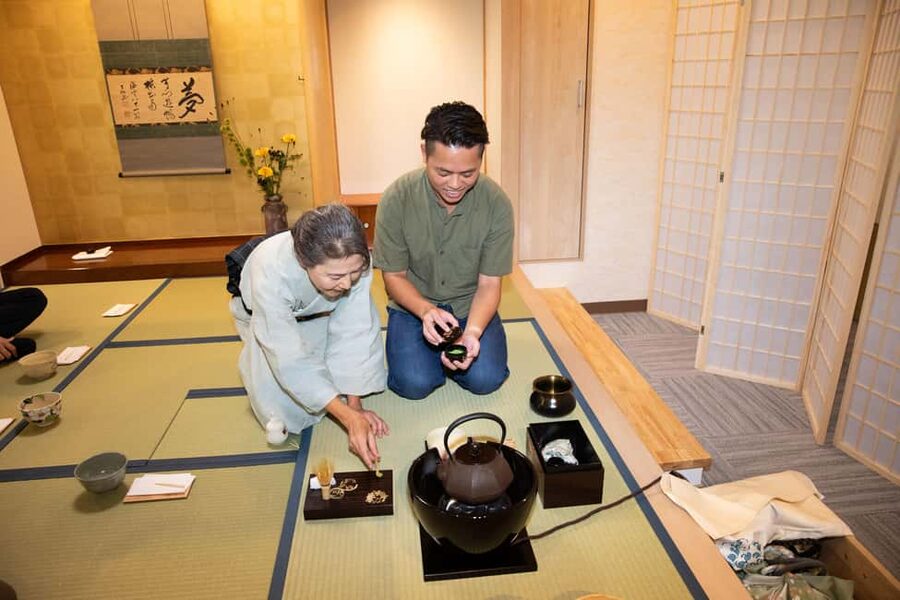
Book it if you want an easy, friendly introduction to matcha in Tokyo, with enough hands-on time to feel confident. At $25 for 1 hour, in a small group with English instruction and included sweets, the value is strong for first-timers.
I’d skip it if you’re specifically looking for a long formal ceremony, full kimono styling, or a more advanced, tradition-only approach. This is relaxed by design, so it’s best when you want calm and clarity, not strict formality.
If you’re building an Asakusa day and want one meaningful stop that actually teaches you something you can repeat at home, this tea ceremony is a great pick.
FAQ
How long is the Tokyo tea ceremony experience in Asakusa?
The experience lasts 1 hour.
What is the price per person?
The price is $25 per person.
Where does the tea ceremony meet?
Meet at Tokyo Tourist Lounge Asakusa. It’s on the 5th floor of the building. You can find it in Google Maps by searching Tokyo Tourist Lounge Asakusa.
Is kimono rental included?
No. Kimono rental is not included.
Is the instruction in English?
Yes, the instructor provides the experience in English.
How big is the group?
The group is small, limited to 8 participants.
Can I take photos during the session?
Yes. You are welcome to take photos during the session.
Does the experience include matcha preparation and tasting?
Yes. You get a matcha preparation lesson, and you taste freshly prepared matcha during the experience.
Is it wheelchair accessible?
Yes, the experience is wheelchair accessible.
Is free cancellation available?
Yes. You can cancel up to 24 hours in advance for a full refund.
Kyoto by the Bowl


Asakusa and the Skytree, Keep Going


Newest Tokyo write-ups from the Loving Japan desk


Kyoto Tea Ceremonies and Matcha, side by side.
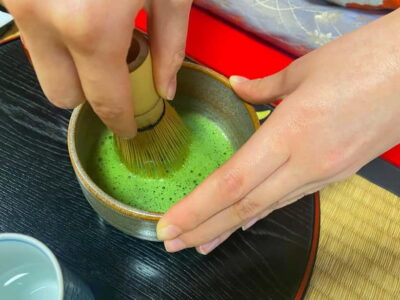 ★ 4.9Tea Ceremony in a Traditional Tea House in KiyomizuFrom $493,519 reviews
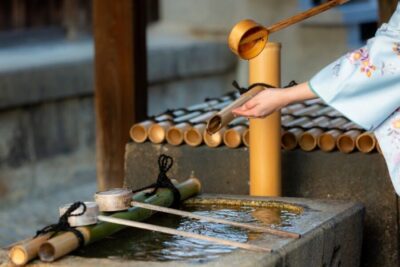 ★ 4.9Tea Ceremony Ju-An at Jotokuji TempleFrom $293,207 reviews
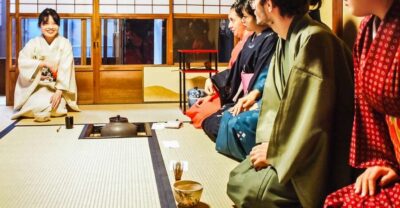 ★ 4.345-Minute Tea Ceremony Lesson ExperienceFrom $222,378 reviews
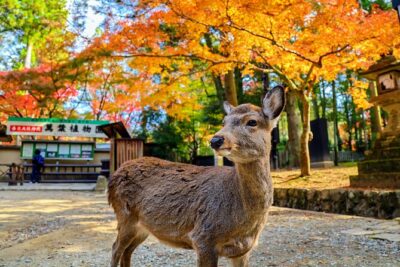 ★ 5.0World Heritage Kyoto & Nara Uji Authentic Matcha ExperienceFrom $1291,573 reviews
 ★ 4.9Tea Ceremony ExperienceFrom $251,426 reviews
 ★ 4.9Table-Style Tea Ceremony at a Kyo-MachiyaFrom $451,211 reviews
 ★ 4.8Kenrokuen Tea Ceremony ExperienceFrom $351,139 reviews
 ★ 5.0Kimono Tea Ceremony at Kyoto Maikoya, NISHIKIFrom $65911 reviews
Filed on these lists too