
REVIEW · KYOTO TEA CEREMONIES AND MATCHA
Sumi-e Ink Painting Suiboku-Ga Workshop in a Japanese Teahouse
Ink, water, and calm all in one hour.
What makes this workshop special is the small-group setup and the teahouse atmosphere, where you learn suiboku-ga in a relaxed, focused way. The class is led by award-winning artist and calligrapher Rensui, and you keep working until you have a piece that looks like you made it (because you did).
I really like two things here: the hands-on teaching that guides you through brush and ink control, and the fact that you leave with a finished souvenir plus a packet of Japanese green tea. One consideration: ink wash painting can feel tricky at first because the style is simple but not forgiving, so you’ll want to stay patient and let the ink do what it wants.
In This Review
- Key highlights worth marking on your Tokyo map
- Inside the teahouse experience in Tsukiji (Uogashi Meicha Chanomi Club)
- Why suiboku-ga feels different from other painting styles
- How Rensui teaches ink wash, stroke by stroke
- Small-group size (up to 8) means you’re not lost
- Choosing your subject: pine, bamboo, plum, orchid, chrysanthemum, or kanji
- What the hour-long class feels like, with tea as part of the rhythm
- Your take-home souvenir: artwork plus green tea
- Price and value: is $93.34 worth it?
- Who should book this sumi-e ink wash workshop
- FAQ
- FAQ
- How long is the sumi-e ink painting workshop?
- What is the group size?
- What is the price per person?
- What is included in the workshop fee?
- Does the workshop include hotel pickup or drop-off?
- Can I choose what I paint?
- What painting themes are available?
- Where do I meet for the workshop?
- How do I get my ticket?
- Is there confirmation after booking?
- Is free cancellation available?
- Should you book this suiboku-ga workshop in Tokyo?
Key highlights worth marking on your Tokyo map
- Max 8 people means you get real attention, not just a quick demo
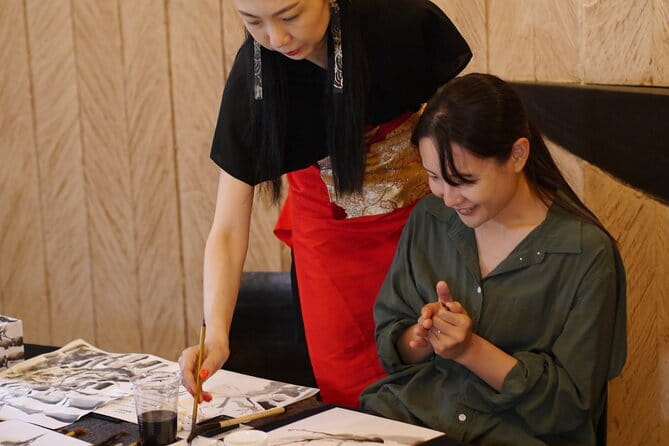
- Rensui’s instruction focuses on practical strokes like finishing with a single brushstroke
- Teahouse green tea included, plus a green tea packet to take home
- Theme choice at booking lets you decide what you paint from a set list
- Suiboku-ga style uses ink washes without lots of paint layers, so contrast and texture matter
Sit down somewhere quieter. Other tea rooms we booked
- Matcha Making Class in Tokyo with Authentic Japanese Sweets Set
★ 5.0 · 744 reviews - Tokyo: Traditional Tea Ceremony with a Tea Master
★ 5.0 · 528 reviews - Tokyo: Matcha Making Experience with Mochi Sweets in Asakusa
★ 4.9 · 388 reviews - Tokyo: Matcha and Kimono Experience
★ 4.7 · 219 reviews
Inside the teahouse experience in Tsukiji (Uogashi Meicha Chanomi Club)
The workshop meeting point is Uogashi Meicha Chanomi Club, 2-chōme-11-12 Tsukiji, Chuo City, Tokyo. From there, you’ll settle into the teahouse setting where the class happens, so your first “wow” is not the room size, it’s the tone. This is the kind of activity that slows you down on purpose.
The big practical win is that it runs about 1 hour and is near public transportation. That makes it easier to fit between other Tokyo plans without feeling like you’re sacrificing a whole afternoon to an art class.
Why suiboku-ga feels different from other painting styles
Suiboku-ga is a form of Sumi-e ink painting that relies on washes of ink to create texture and contrast. Here’s the key idea you’ll learn: this style doesn’t build up with many paint layers, so you’re not painting over mistakes. Instead, you work with water, ink, pressure, and timing.
The workshop also frames it as something close to the heart. The approach is simple on paper, but it asks you to pay attention. If you like crafts where small changes matter, you’ll probably enjoy the way each stroke turns into its own result.
How Rensui teaches ink wash, stroke by stroke
The class is led by award-winning artist Rensui, an experienced calligrapher and artist. Your instruction stays practical. You start with basics and move toward the kind of finishing details that make ink work feel complete.
A standout teaching point is the focus on finishing with a single brushstroke. That matters because in ink painting, one final line can change the whole balance. You’re not just filling space, you’re making choices.
Also, the teaching tone seems to fit beginners well. Even when ink feels hard, the workshop design pushes you toward achievable steps, so you can end with something you’ll actually be happy to show.
Make something to take home. Other workshops
- Tokyo Shinjuku Chopsticks Making Class★ 5.0 · 1,763 reviews
- Chopstick Making Workshop in Ginza★ 4.8 · 1,366 reviews
- Tokyo Sumo Experience: Chanko & Mochi with a Former Pro★ 4.8 · 567 reviews
- Kintsugi Experience: Art of Golden Joinery in Tokyo★ 5.0 · 467 reviews
- Tokyo Chopstick Making Workshop with Artisan★ 5.0 · 466 reviews
Small-group size (up to 8) means you’re not lost
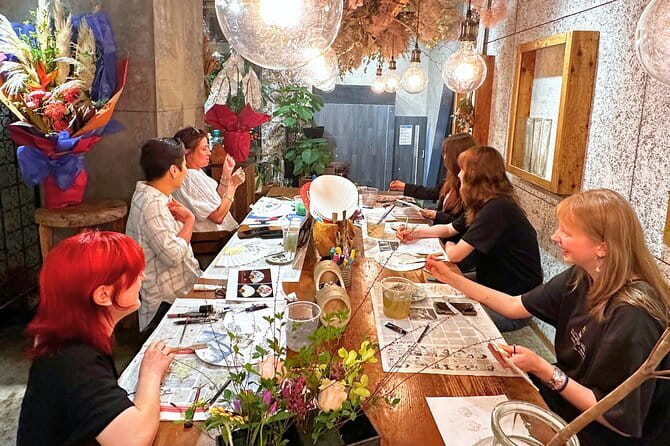
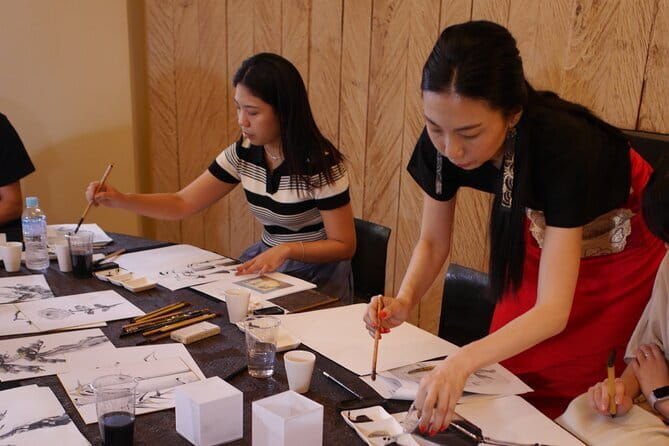
This isn’t a big lecture. It’s an intimate small-group class with a maximum of 8 travelers. That size changes everything: you can ask questions, you can get nudged on your brush handling, and you’re less likely to feel stuck while everyone else finishes.
If you’re traveling solo, this is also a good option because the group format is calm. You’re not performing. You’re learning.
And if you’re bringing kids, the smaller group format is even more important. One family experience highlighted how their sons participated well, with the artist working with them on a theme like bamboo or pine trees. In other words, this isn’t only for adults who already feel confident with art.
Choosing your subject: pine, bamboo, plum, orchid, chrysanthemum, or kanji
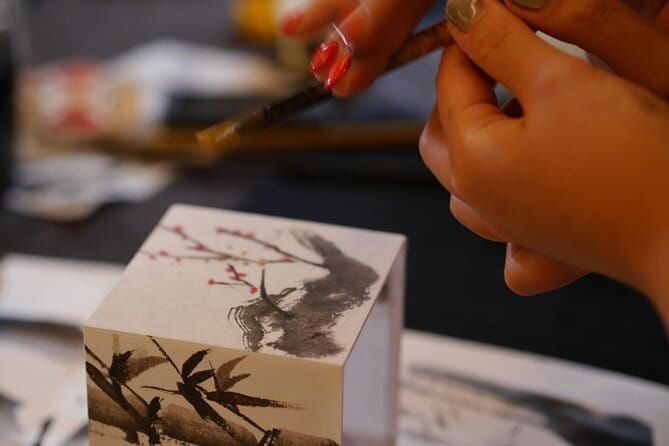
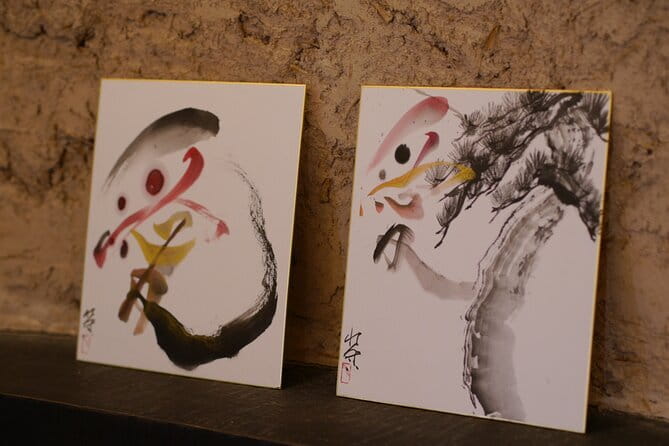
At booking, you choose which object you’d like to paint, then the workshop uses a theme from a set list. Your options are pine, bamboo, plum, orchid, chrysanthemum, and Chinese kanji characters.
This choice is valuable because it gives you personal buy-in right away. You’re more likely to stay engaged for the whole hour when you’re painting something you picked, even if the final look ends up being more abstract than you expected. Ink wash often rewards that kind of flexible mindset.
If you’re curious but worried about drawing skills, kanji themes can be a great angle. Letters are a bit of a mental puzzle, and ink encourages bold simplicity. If you prefer nature, bamboo and pine tend to be classic starting points for ink compositions.
What the hour-long class feels like, with tea as part of the rhythm
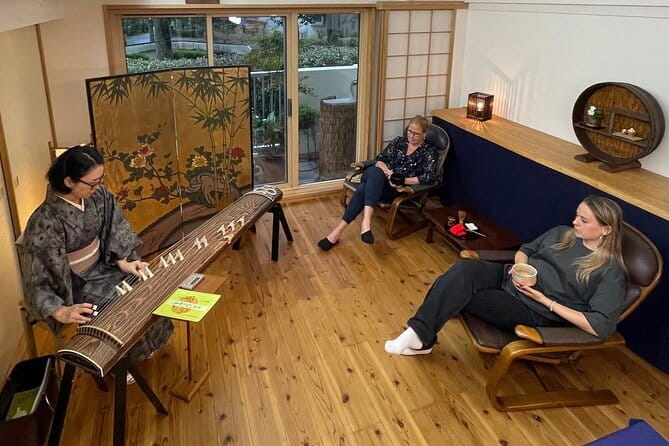
You’ll paint in a relaxing and comfortable environment while enjoying Japanese green tea. The workshop includes light green tea refreshment, and the overall pacing is built around learning and practice, not rushing.
Expect the class to follow a simple rhythm:
1) You settle in and drink tea
2) You get basics on using ink and water
3) You practice your strokes
4) You finish your piece with guidance, including that single-brush finishing idea
5) You wrap up and take your artwork home
The teahouse setting matters more than you might think. Ink painting is control, and control improves when you’re calm. Tea helps you slow down and focus on what your hand is doing instead of what it should be doing.
Your take-home souvenir: artwork plus green tea
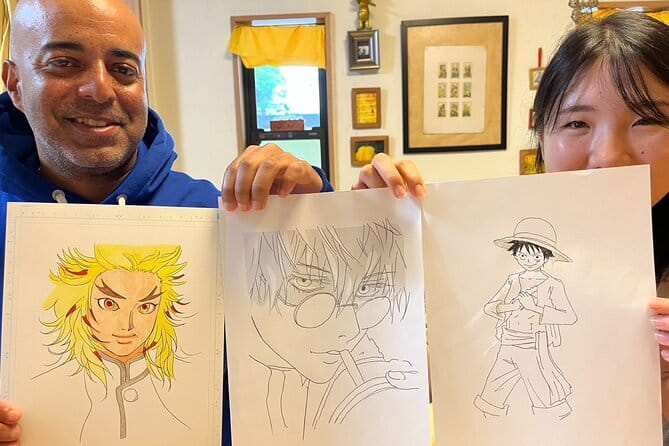
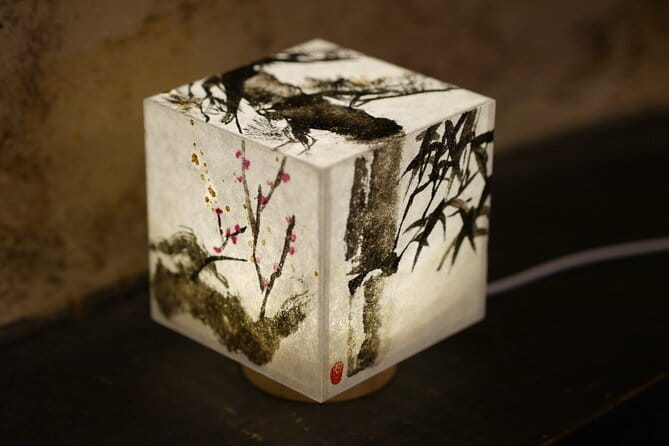
You finish with a piece you can take home or gift. That alone makes the experience feel worth doing, because it’s not just a photo opportunity. It’s a tangible reminder of the hour you spent learning something craft-based, with real instruction.
On top of that, you also take home a packet of green tea as a souvenir. This is a small detail, but it adds value because you’re leaving with something useful in addition to your artwork.
If you like buying experiences over buying things, this combo works well. You get a personal artwork that’s tied to what you chose to paint, plus a consumable souvenir that fits the theme of the workshop.
Price and value: is $93.34 worth it?
At $93.34 per person, it’s not a budget activity, but it also isn’t priced like a high-frills, multi-stop tour. The value comes from what’s included and how the class is structured.
Here’s what you get for the money:
- Workshop fee
- Materials
- Green tea souvenir
- Light green tea refreshment
- A guided class led by Rensui
- A small-group format capped at 8 people
When you factor in teaching time with an award-winning artist plus included materials, the price starts to make sense. A private lesson would usually cost far more, and a large-group workshop often gives less attention. This sits in a sweet spot: structured enough to learn, intimate enough to feel supported.
One practical note: this workshop is often booked in advance, with an average booking window around 25 days. If you’re serious about doing it, don’t treat it like a last-minute add-on.
Who should book this sumi-e ink wash workshop
This is a great match if you:
- Love art and want a skill you can bring home
- Want something authentic that most Tokyo tourists skip
- Like calm, structured activities rather than fast sightseeing
- Enjoy hands-on learning even if you’re a beginner
It’s also a good family option, at least for families with kids who are curious and willing to try. The small-group setup and guided steps help, and the themes are simple enough to connect with nature subjects like bamboo or pine.
You might reconsider if you:
- Only want passive activities and hate the idea of practicing strokes
- Need a very long time to get comfortable with a new craft
- Are expecting something like a paint-by-numbers project (ink wash doesn’t work that way)
FAQ
FAQ
How long is the sumi-e ink painting workshop?
It runs for about 1 hour.
What is the group size?
The workshop has a maximum of 8 travelers.
What is the price per person?
The price is $93.34 per person.
What is included in the workshop fee?
The price includes the workshop fee, materials, a green tea souvenir packet, and light green tea refreshment.
Does the workshop include hotel pickup or drop-off?
No. Hotel pickup and drop-off are not included.
Can I choose what I paint?
Yes. At booking, you can choose which object you’d like to paint on.
What painting themes are available?
Themes include pine, bamboo, plum, orchid, chrysanthemum, and Chinese kanji characters.
Where do I meet for the workshop?
The meeting point is Uogashi Meicha Chanomi Club, 2-chōme-11-12 Tsukiji, Chuo City, Tokyo 104-0045, Japan.
How do I get my ticket?
It uses a mobile ticket.
Is there confirmation after booking?
Yes. Confirmation is received within 48 hours of booking, subject to availability.
Is free cancellation available?
Yes. You can cancel up to 24 hours in advance for a full refund.
Should you book this suiboku-ga workshop in Tokyo?
If you want one Tokyo experience that feels personal, calm, and genuinely learnable, I’d book it. The small-group size, the tea in a Japanese teahouse setting, and the chance to take home a finished ink piece make it one of those “I’m glad I did that” activities.
Just go in with the right mindset: ink wash is simple, but it asks for patience. If you’re okay with that, you’ll likely come away impressed by how much you can create in just one hour under Rensui’s guidance.
Made by Hand, and Yours to Keep


Kyoto by the Bowl


Newest Tokyo write-ups from the Loving Japan desk






Kyoto Tea Ceremonies and Matcha, side by side.
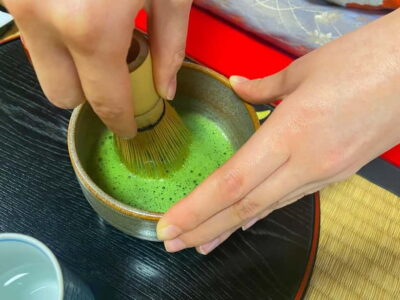 ★ 4.9Tea Ceremony in a Traditional Tea House in KiyomizuFrom $493,519 reviews
 ★ 4.9Tea Ceremony Ju-An at Jotokuji TempleFrom $293,207 reviews
 ★ 4.345-Minute Tea Ceremony Lesson ExperienceFrom $222,378 reviews
 ★ 5.0World Heritage Kyoto & Nara Uji Authentic Matcha ExperienceFrom $1291,573 reviews
 ★ 4.9Tea Ceremony ExperienceFrom $251,426 reviews
 ★ 4.9Table-Style Tea Ceremony at a Kyo-MachiyaFrom $451,211 reviews
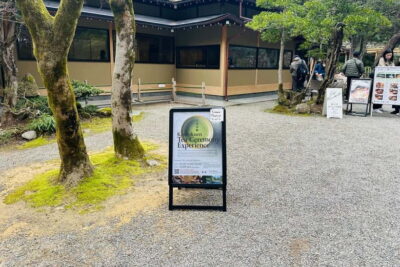 ★ 4.8Kenrokuen Tea Ceremony ExperienceFrom $351,139 reviews
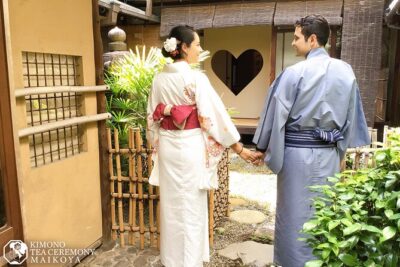 ★ 5.0Kimono Tea Ceremony at Kyoto Maikoya, NISHIKIFrom $65911 reviews
Filed on these lists too